


Electric Hoist Load Capacity, Duty Cycle & Maintenance: A Complete Technical Overview
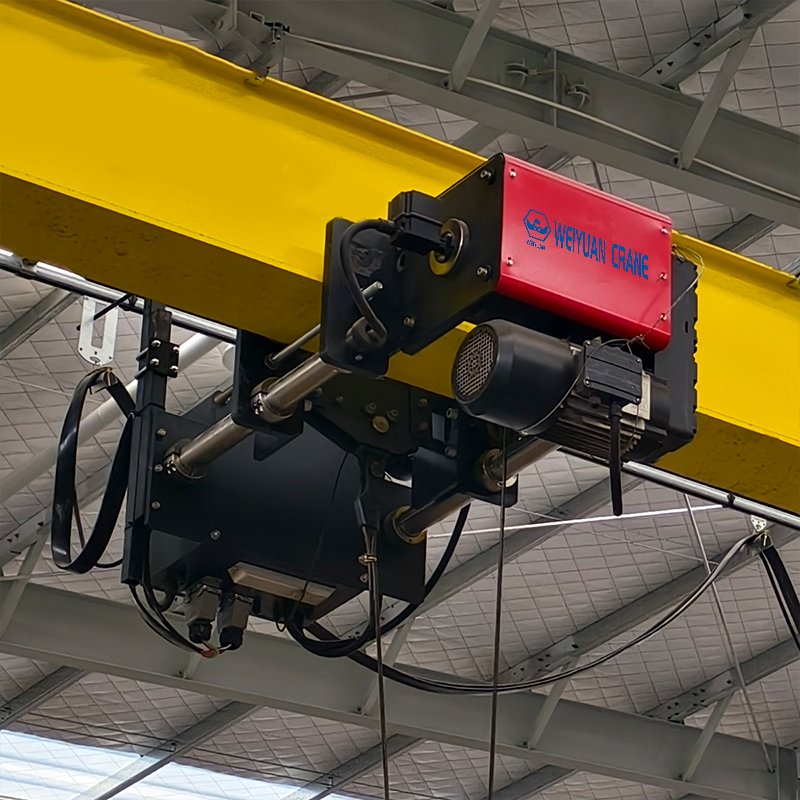
Understanding the engineering parameters that govern electric hoist performance is essential for anyone responsible for specifying, purchasing, or maintaining lifting equipment. Load capacity determines whether a hoist can safely lift your heaviest load; duty cycle determines whether it can do so repeatedly without overheating or failing prematurely; and maintenance practices determine whether it will still be doing so safely five, ten, or fifteen years from now. This technical overview gives you the depth of knowledge to manage all three dimensions with confidence.
Load Capacity: The Engineering Reality Behind the Number
Every hoist carries a nameplate rating, typically expressed as Working Load Limit (WLL) in kilograms or tonnes. This number represents the maximum load the hoist is designed to lift under normal, controlled conditions. What is less well understood is the safety factor embedded in this figure and the conditions under which it may be compromised.
International standards generally mandate a minimum design factor (also called proof load factor) of 4:1 for hooks and load-bearing components, meaning a hoist rated for 1 tonne WLL must withstand a static proof test of at least 2 tonnes and be designed to fail at no less than 4 tonnes. However, this safety factor applies to static vertical loading only. The following real-world factors can effectively reduce the usable capacity:
- Side-pull (off-vertical loading): Even a 15° deviation from vertical can reduce the effective capacity by up to 10% and dramatically increases lateral stress on the hook and chain/rope attachment point.
- Shock loading: Picking a load off the ground at high speed creates dynamic impact forces that can be 1.5–3× the static load weight. This is the leading cause of unexpected overload failures in practice.
- Temperature effects: Above +40 °C, motor winding insulation degrades at an accelerated rate, and chain/rope strength can be marginally reduced. At sub-zero temperatures, lubricant viscosity increases and brake response time may be affected.
- Rigging angle: When using multi-leg slings, the angle at which the legs meet multiplies the force in each leg. At a 60° included angle, each sling leg carries 115% of the hook load; at 120°, this rises to 200%.
Duty Cycle: The Parameter Most Often Ignored
Duty cycle is the single most misunderstood parameter in hoist specification. A duty cycle rating quantifies how hard a hoist can work over time before its thermal and mechanical limits are reached. It is defined in two complementary ways:
Relative Operating Time (ROT)
Expressed as a percentage, ROT is the proportion of time the motor is energised within a standard observation period (typically 1 hour or 30 minutes depending on the standard). A hoist rated at 25% ROT can run the motor for a cumulative 15 minutes in any given hour. Exceeding this ratio causes the motor windings to overheat, accelerating insulation degradation and ultimately leading to winding failure.
FEM / ISO Duty Classification
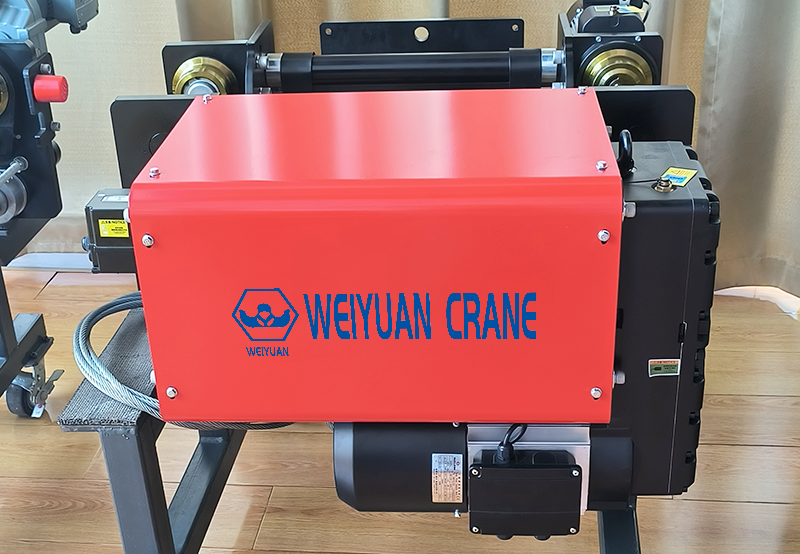
The European FEM 1.001 standard (now largely aligned with ISO 4301) classifies hoist mechanisms from M1 to M8 based on a combination of total design life in hours and load spectrum. The classification directly determines the structural dimensions, bearing sizes, brake design, and motor frame of the hoist.
| FEM Class | Design Life (hrs) | Typical ROT | Typical Application |
| M3 | 3,200 | 15% | Occasional workshop use |
| M5 | 12,500 | 25% | General manufacturing |
| M6 | 25,000 | 40% | Heavy production |
| M8 | 100,000+ | 60%+ | Continuous process industry |
The practical implication of duty class is significant: a hoist specified at M3 that is actually operated at M6 duty levels will fail prematurely — often within 18–24 months — because every major component was dimensioned for a lighter workload. When in doubt, always specify one duty class higher than your calculated requirement.
Maintenance: The Foundation of Hoist Longevity
A structured maintenance programme is the most cost-effective investment you can make in lifting equipment. Industry data consistently shows that unplanned breakdowns of lifting equipment cost 3–5× more to remediate than equivalent planned maintenance interventions, once lost production time is factored in. The following three-tier schedule aligns with the requirements of ASME B30.16 and EN 14492-2.
Tier 1: Daily Operator Pre-Use Inspection
Before each shift or work session, the hoist operator should conduct a functional check that takes no more than 5 minutes:
- Run the hoist through its full travel range (up/down, traverse if fitted) without a load and confirm smooth operation.
- Visually inspect the chain or wire rope for obvious damage, kinking, or contamination.
- Check that the bottom hook rotates freely and the safety latch engages positively.
- Confirm the upper and lower limit switches stop travel at the correct points.
- Listen for unusual noises — clicks, grinding, or irregular brake chatter — that were not present previously.
Tier 2: Monthly Competent Person Inspection
A competent person — defined as someone with the training and practical experience to identify hoist deficiencies — should conduct a more detailed inspection monthly. This includes:
- Measure chain elongation using a pitch gauge and compare against the manufacturer’s wear limit (typically 2% elongation triggers replacement).
- Inspect all structural welds on the suspension, trolley, and hook block for cracks.
- Check motor brake adjustment and lining thickness; most brakes require replacement at 50% lining wear.
- Test the overload protection device by applying a known test load (typically 110% WLL).
- Inspect all electrical connections for corrosion, looseness, or insulation damage.
- Lubricate chain, rope, gears, and bearings per the lubrication chart in the manufacturer’s maintenance manual.
Tier 3: Annual Thorough Examination
In most jurisdictions, an annual thorough examination by a qualified lifting equipment engineer is a legal requirement. The examiner will prepare a written report specifying any defects found, their severity, and recommended corrective actions. The certificate generated by this examination is a legal document that must be retained and made available to inspectors on request.
During the annual examination, the engineer will typically conduct non-destructive testing (NDT) of hooks and other critical components using dye penetrant or magnetic particle inspection, load-test the hoist to its proof load (125% WLL for most standards), and verify all safety device settings against the original calibration records.
Common Failure Modes and How to Prevent Them
Field data from hoist service providers identifies the following as the most common failure modes in electric chain hoists and their wire rope counterparts:
▶ Motor overheating: Cause: Operating beyond duty cycle limits or in ambient temperatures above rated range. Prevention: Strictly observe ROT limits; install thermal overload relays if not factory-fitted.
▶ Chain/rope wear: Cause: Inadequate lubrication, abrasive contamination, or operation beyond WLL. Prevention: Follow lubrication schedule; keep chain container covers in place to exclude swarf and grit.
▶ Brake failure: Cause: Contamination of brake linings with oil or grease; worn linings; incorrect adjustment. Prevention: Inspect brake gap monthly; ensure motor oil seals are intact.
▶ Hook cracking: Cause: Shock overloading, side-pull, or in-service corrosion. Prevention: De-rate for shock load applications; inspect hooks annually with NDT; never straighten a bent hook.
▶ Control pendant failure: Cause: Physical damage, moisture ingress, or cable fatigue from repeated flexing. Prevention: Use pendant holders to prevent the cable taking the full pendant weight; replace cracked grip handles.
Spare Parts Strategy: Planning for Continuity
One of the most overlooked aspects of hoist ownership is spare-parts availability. For electric chain hoists from major brands, standard wear parts — chain, brake linings, contactor sets — are typically available off the shelf or on short lead times. However, electronic components such as VFD boards and limit switch assemblies for older models can have lead times of 8–16 weeks, or may be discontinued entirely once a model is superseded.
Best practice is to hold a minimum stock of the following items on-site for each hoist in service: one full length of load chain (or one rope cut), one set of brake linings, one set of contactors (for non-VFD units), one bottom hook assembly, and one pendant cable assembly. For VFDs and PCBs, consult the manufacturer about their end-of-supply commitments and consider purchasing a spare board at the time of initial hoist procurement.
Frequently Asked Questions
Q: How do I know if my hoist has been overloaded?
A: Symptoms include permanent chain elongation beyond normal wear limits, hook deformation, brake slippage at rated load, motor winding failure without apparent cause, and audible cracking or popping sounds during a lift. If any of these are observed, immediately remove the hoist from service and arrange a thorough examination.
Q: What is the correct lubricant for an electric chain hoist chain?
A: Use only lubricants specifically approved by the chain manufacturer — typically a mineral or semi-synthetic chain oil with good penetration properties. Avoid heavy greases that attract abrasive particles, and never use WD-40 or similar water-dispersant products as a long-term lubricant.
Q: Can I increase the WLL of my hoist by using a multi-fall reeving?
A: Multi-fall configurations can increase the effective lifting capacity by dividing the load across two or more falls of chain or rope, but this must be engineered into the hoist at the design stage. Never attempt to modify the reeving of a hoist in the field without manufacturer approval and a re-certification of the unit.