


Gantry Crane Maintenance: A Complete Guide to Extending Equipment Life
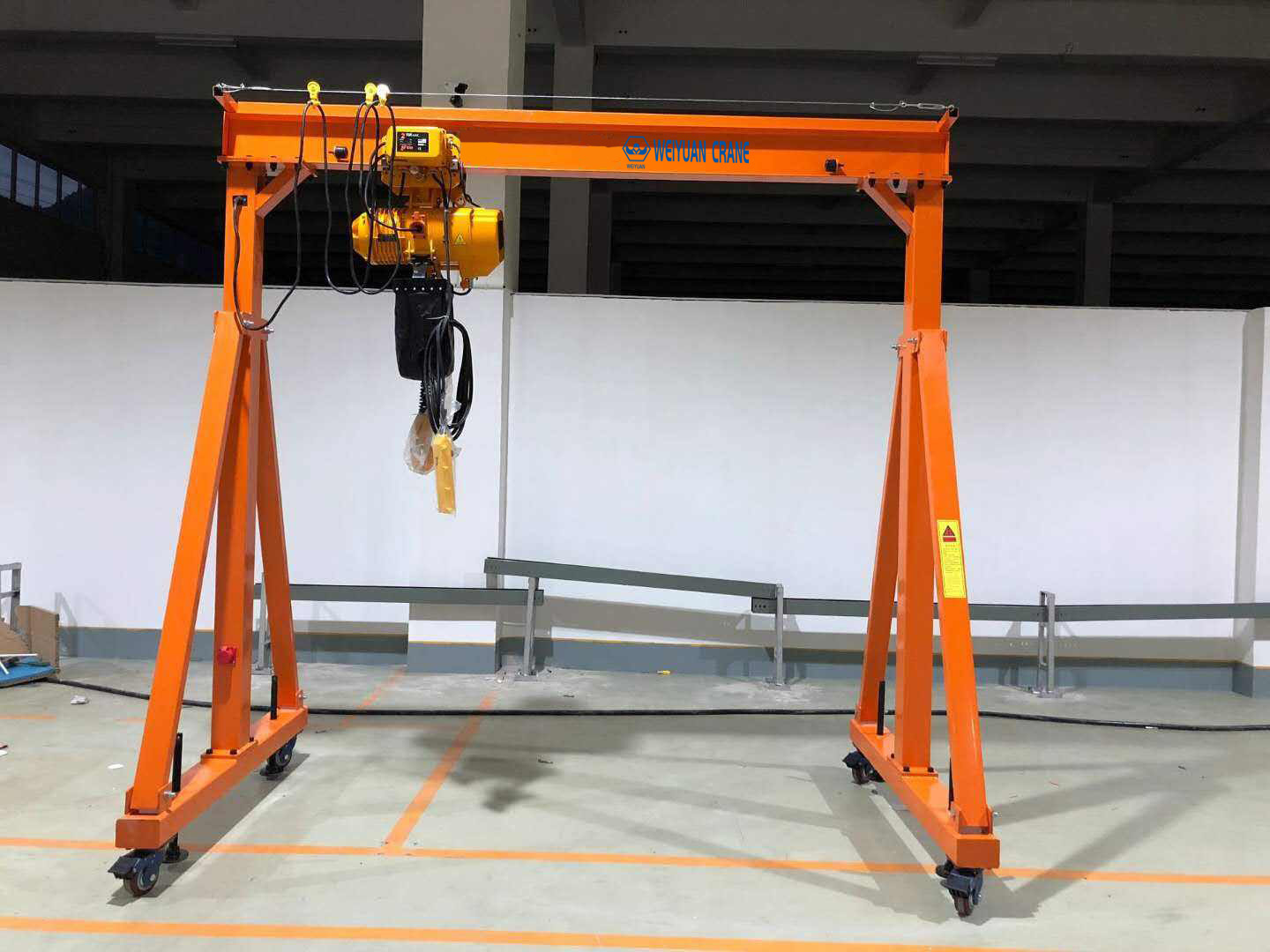
A gantry crane that runs reliably for twenty years does not do so by accident. Behind every long-service machine is a maintenance program that treats small problems seriously before they become expensive ones. Conversely, most premature crane failures — seized end trucks, snapped wire rope, burned-out hoists — trace back to maintenance routines that were either skipped, poorly documented, or performed without the right knowledge.
This guide covers the full maintenance lifecycle of a gantry crane: what to inspect, when to inspect it, how to identify wear before it becomes failure, and how to build records that protect both your equipment and your team.
Why Gantry Crane Maintenance Is Different From General Machinery Upkeep
Most industrial machinery fails in place. A conveyor stops; production pauses; a technician fixes it. A gantry crane failure carries a different consequence profile entirely. When a component fails under load, the risk is not just equipment damage — it is a suspended load losing controlled support above a working floor.
This reality shapes everything about how maintenance should be structured. The goal is not just keeping the crane running. It is ensuring that every safety-critical component — brakes, wire rope, structural connections, limit switches — performs reliably under full rated load, every time, without exception. Maintenance that keeps a crane moving while allowing safety margins to erode is worse than no maintenance at all, because it creates false confidence.
Understanding this distinction changes how you prioritize your time, your inspections, and your documentation.

Weiyuan Heavy Duty MG Type Gantry Crane for Outside Lifting
The Weiyuan Heavy Duty MG Type Gantry Crane is a powerful and resilient outdoor lifting solution engineered for demanding outside lifting operations, combining a robust A-frame double-girder structure with weatherproof components for reliable performance in outdoor stockyards, construction and industrial environments. :contentReference
View Product / Get QuoteThe Four Maintenance Intervals Every Technician Should Know
Gantry crane maintenance does not operate on a single schedule. Different components wear at different rates, and effective programs organize inspections by frequency rather than lumping everything into a single annual event.
Daily checks are the operator’s responsibility before every shift. These are not a formality — they are the first line of defense against in-service failures. Operators should visually scan the wire rope or load chain for visible damage, confirm that hooks rotate freely and latches engage cleanly, test the emergency stop and all directional controls without a load, and listen for any grinding, knocking, or irregular sounds during no-load travel. Anything abnormal gets documented and reported before the crane enters service.
Weekly checks go a level deeper. A technician should inspect the brake linings for wear thickness, check that all limit switches activate at the correct positions, examine the trolley wheels and runway rail contact surfaces for uneven wear patterns, and verify that all electrical enclosures are sealed and dry. Loose terminal connections inside control panels are a surprisingly common cause of intermittent faults and should be checked during this interval.
Monthly checks bring in structural and mechanical scrutiny. Inspect all bolted structural connections on the bridge girder, end trucks, and leg assemblies for signs of loosening or fatigue cracking at the weld toes. Lubricate end truck wheel bearings, trolley wheel bearings, and open gear sets per the manufacturer’s specified lubricant type and quantity. Check gearbox oil levels and look for evidence of seal leaks. If the crane runs on a runway rail system, inspect rail clips and rail joints for movement or wear.
Annual checks require a comprehensive, documented inspection by a qualified person — typically a certified crane inspector or the OEM’s service team. This includes a thorough wire rope or chain assessment against ASME B30.2 retirement criteria, brake torque measurement under load, structural integrity assessment of the main girder including camber measurement, load testing if the crane has undergone repairs, and a full electrical system audit.
Wire Rope: The Component Most Technicians Underestimate
Wire rope is the most safety-critical wear component on most gantry cranes, and it is also the most consistently underinspected. The reason is straightforward: rope looks fine until it does not, and the failure mode when it does not is catastrophic.
ASME B30.2 defines specific discard criteria for wire rope that every technician should memorize. Removal from service is required when any of the following conditions are present: six or more randomly distributed broken wires in one rope lay length; three or more broken wires in one strand within one lay length; wear of one-third or more of the original wire diameter on the outer wires; any kinking, crushing, bird-caging, or core protrusion that has permanently distorted the rope structure; or any evidence of heat damage or corrosion that has pitted the outer wire surface.
Pay particular attention to the sections of rope that experience the most repeated bending: the point where the rope enters the drum at full hoist height, and the section that passes over the upper sheaves most frequently. These zones accumulate fatigue damage faster than the rest of the rope and should be inspected with extra care at every weekly interval.
Rope lubrication is often neglected on older equipment. Proper lubrication reduces internal wire-on-wire friction, which is the primary driver of internal fatigue breaks — the type of break you cannot see during a visual inspection. Use a penetrating lubricant specifically formulated for wire rope, applied while the rope is moving slowly through the hoist cycle. Heavy grease applied to the outside of the rope seals in moisture and does more harm than good.
Brake Maintenance: Measuring What You Cannot See
The holding brake is the component that keeps a suspended load from descending when you do not want it to. It does its job silently and invisibly — until it does not. By the time brake slippage becomes noticeable during operation, the safety margin has already been significantly compromised.
Effective brake maintenance requires measurement, not just observation. At each annual inspection, measure the brake lining thickness against the manufacturer’s minimum specification and replace linings before they reach that threshold, not after. Check the air gap between the brake disc and friction pads — excessive gap reduces braking torque and indicates lining wear even before thickness gauging. Measure brake torque directly using a torque wrench or brake dynamometer and confirm it meets the minimum specification, typically 150% of rated load torque for a hoist brake.
Spring-set electromagnetic brakes — the standard fail-safe design on most industrial hoists — also require periodic spring force verification. Springs fatigue over time, reducing the clamping force the brake applies when power is removed. A brake that passes a visual inspection but has fatigued springs will hold less torque than its design spec, with no visible indication of the problem.
When replacing brake components, always replace brake linings and springs as a matched set rather than mixing old and new components. Mismatched lining thickness or spring rates produce uneven braking force distribution across the disc surface, which accelerates wear and creates the exact condition you were trying to prevent.
End Truck and Rail Maintenance: The Foundation of Smooth Operation
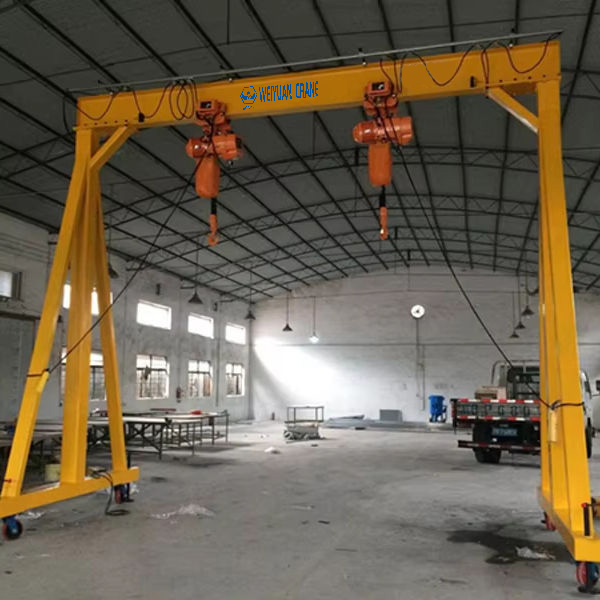
End trucks carry the entire weight of the bridge, trolley, and load — and they do it while rolling back and forth across a runway rail thousands of times per year. When end truck maintenance is neglected, the consequences show up as accelerated rail wear, side loading on the bridge structure, and eventually wheel flange contact with the rail that makes controlled travel impossible.
Wheel flange wear is the most visible indicator of end truck misalignment. Significant wear on one side of the flange indicates that the truck is not tracking square to the rail. Left unaddressed, this creates lateral forces on the bridge girder that it was not designed to carry. Check flange wear during every monthly inspection and measure tread diameter with a wheel wear gauge when significant flange contact is evident.
Rail surface condition directly affects wheel life and structural loading. Inspect the running surface for spalling, pitting, or wave deformation — all signs that the rail is being subjected to impact loading beyond its design capacity. Check that rail clips are tight and that there is no movement between the rail and its mounting surface. A loose rail that shifts laterally under load creates a misalignment event with every pass.
For cranes that operate outdoors or in environments with temperature swings, check rail joint gaps at each monthly inspection. Rails expand with heat, and joints without adequate gap allowance can buckle, creating an abrupt surface change that impacts wheels hard enough to damage bearings and accelerate fatigue in the bridge structure.
Documentation: The Maintenance Task That Protects Everyone
Thorough maintenance records do two things simultaneously. They protect your equipment by creating a historical record of component condition that makes trend-based decisions possible. And they protect your organization by demonstrating due diligence if an incident ever triggers a regulatory investigation or liability claim.
Every inspection — daily, weekly, monthly, or annual — should be documented with the date, the name of the person performing the inspection, the specific items checked, any findings or measurements, and the disposition of any identified deficiencies. “Inspected crane — OK” is not a maintenance record. It is a legal exposure.
Build your inspection forms around specific, measurable criteria wherever possible. Instead of “checked brake,” record “measured brake lining thickness: 6.2mm, minimum spec 4.0mm, within tolerance.” Instead of “checked wire rope,” record “inspected per ASME B30.2 criteria, no broken wires observed, lubrication applied.” Measurable records allow you to track wear trends over time and make replacement decisions proactively rather than reactively.
Tag-out documentation deserves particular discipline. Any time a deficiency is found that requires the crane to be removed from service, the tag-out record should identify the specific deficiency, the date it was identified, who made the removal decision, and what is required to return the equipment to service. Close the loop with a return-to-service record signed by a qualified person confirming the deficiency was corrected.
When to Call in a Specialist
Most routine gantry crane maintenance can be performed by a trained in-house technician following manufacturer guidelines and applicable ASME standards. There are situations, however, where specialist involvement is not optional.
Any repair or modification to load-bearing structural members — welding on the main girder, replacing end truck frames, modifying runway rail attachments — requires engineering review before the crane returns to service. Field welding on crane structures without documented weld procedures and qualified welders can introduce fatigue vulnerabilities that are impossible to detect visually and may not manifest for years.
If a crane has been subjected to an overload event, shock loading from a dropped load or collision, or has been out of service for an extended period in a corrosive environment, a professional structural assessment should precede return to service. The visible condition of the crane is not a reliable indicator of its structural integrity after these events.
Similarly, any reconfiguration of the hoist, change in rated capacity, or installation of new control systems should be treated as a modification requiring documented engineering review and load testing before the crane handles production loads.
Frequently Asked Questions
How do I know when wire rope needs to be replaced versus just re-lubricated?
These are separate decisions with different triggers. Re-lubrication is a routine maintenance task performed on a scheduled basis regardless of visible condition. Replacement is triggered by specific discard criteria defined in ASME B30.2, including broken wire counts, measurable wear on outer wire diameter, and any structural distortion. Lubrication extends rope life by reducing internal fatigue, but it does not restore a rope that has already reached discard criteria. When in doubt, retire the rope — the cost of new rope is trivial compared to the consequences of in-service failure.
What is the correct lubricant for gantry crane end truck wheel bearings?
Always follow the bearing manufacturer’s specification first. In the absence of specific guidance, most industrial roller and ball bearings in end truck applications perform well with an NLGI Grade 2 lithium complex grease with EP (extreme pressure) additives. Avoid mixing grease types — incompatible base oils can liquefy under operating temperatures and run out of the bearing, leaving it unlubricated. When regreasing, purge old grease completely rather than adding new grease on top of degraded material.
How do I detect gearbox wear before it causes a failure?
Oil analysis is the most reliable early-warning tool available. Drawing a small oil sample from the gearbox at each annual inspection and sending it to a laboratory for wear metal analysis will reveal whether iron, copper, or aluminum particles are present at elevated concentrations — each indicating wear on specific internal components. This approach catches developing problems months before they produce noise or affect performance, and it costs a fraction of an emergency gearbox replacement.
Can I perform my own annual inspection, or does it need to be an outside party?
ASME B30.2 requires that periodic inspections be performed by a “qualified person” — defined as someone with the knowledge, training, and experience to identify hazardous conditions. This can be an in-house employee who meets that definition, though many organizations use third-party crane inspection services to ensure objectivity and access specialist expertise. In regulated industries or facilities subject to insurance requirements, the specific qualification requirements may be more prescriptive. Check your applicable standards and insurance terms before making this determination.
What should I do if the crane shows drift — slowly lowering a load when the hoist is supposed to be holding position?
Load drift indicates that the holding brake is not developing sufficient torque to hold the rated load. Take the crane out of service immediately. Do not attempt to continue using it with reduced loads or at lower speeds — a brake that drifts under load is a brake that may fail completely without warning. Inspect the brake lining thickness, check the air gap setting, verify spring force, and measure brake torque before returning the crane to service. If the brake components are within specification and drift persists, consult the hoist manufacturer before proceeding.