


Gantry Cranes in Action: Real-World Industrial Applications That Drive Results
Walk through any high-output manufacturing plant, busy shipyard, or large-scale construction site, and one piece of equipment consistently stands out for the work it quietly enables. Gantry cranes don’t make headlines, but remove them from the equation and entire operations grind to a halt. They sit at the intersection of raw lifting power and operational intelligence — and the industries that have committed to them know exactly why.
This article goes beyond the basics. Rather than covering what gantry cranes are, we focus on where they work hardest, why specific industries depend on them, and what real deployment looks like across different operational environments.
Steel and Metal Fabrication: Where Tonnage Is the Standard Unit of Measure
Steel fabrication facilities deal in extremes. Raw stock arrives in massive coils weighing anywhere from 10 to 30 tons. Finished structural beams, plates, and forgings move continuously between cutting stations, welding bays, and shipping staging areas.
In this environment, forklifts hit a hard ceiling fast. They can’t safely handle the awkward geometry of steel coils, and navigating tight fabrication floors with long structural members creates real collision risk. Track-mounted gantry cranes solve both problems cleanly. Running along ground-level rails, they carry loads directly over machinery and personnel without competing for floor space.
Double girder configurations dominate here because hook height matters. Fabricators often need to lower heavy material into fixtures or CNC machines — every inch of vertical travel adds operational flexibility. The high hook clearance of a double girder setup makes that possible in the same facility footprint.
Shipbuilding and Offshore Construction: Scale That Demands Engineering-Grade Lifting
Few industries test lifting equipment the way shipbuilding does. Hull sections alone can weigh hundreds of tons. Propeller shafts, engine blocks, and deck modules require simultaneous precision and brute force during assembly.
Shipyards typically deploy large-span gantry systems that straddle entire dry-dock bays, allowing components to be lowered directly into position during hull assembly. The key operational advantage here isn’t just capacity — it’s the ability to coordinate two separate hoisting units on the same bridge, enabling synchronized tandem lifts. This is how a 200-ton hull module gets rotated and seated with millimeter-level accuracy.
Outdoor operation is standard in this sector. Coastal environments mean salt air, moisture, and wind loading are daily realities. Equipment specified for shipyards requires marine-grade corrosion protection, sealed electrical enclosures, and drive systems rated to perform reliably in these conditions over multi-decade service lives.
Precast Concrete Manufacturing: Precision Placement at High Volume
A precast concrete facility runs on a tight production rhythm. Molds get filled, cured components get stripped, and finished panels, beams, or architectural elements move through quality control to the staging yard — day after day, piece after piece.
Each finished element is both heavy and structurally fragile. A precast wall panel might weigh 15 tons, but its face is an architectural finish that cannot be scratched or chipped during handling. This is precisely where gantry crane control systems justify their cost. Variable frequency drives allow operators to manage acceleration curves so precisely that loads move without jarring — smooth starts, smooth stops, no swinging.
Adjustable-height gantry systems are particularly common in this sector because facilities handle multiple product types. A stripping operation in the morning may require low clearance, while transferring finished elements to an outdoor yard in the afternoon demands full leg extension. One crane services both tasks without reconfiguration of the workspace.
Rail and Intermodal Freight: Speed Is the Competitive Advantage
At intermodal terminals and rail freight yards, the clock never stops. The entire business model depends on how quickly containers transfer between rail cars, trucks, and storage stacks. Delays at one node ripple outward across an entire supply chain.
Rail-mounted gantry cranes — sometimes called RMGs — are the workhorses of these environments. Running on parallel rails that span multiple container lanes, they lift standard ISO containers at speeds that manual or forklift-based alternatives simply cannot match. An experienced operator can cycle a 40-foot container from rail car to truck chassis in under two minutes during peak operation.
What distinguishes modern intermodal gantry systems is their automation potential. Facilities processing high container volumes increasingly integrate semi-automated or fully automated gantry systems with real-time positioning sensors and load management software. The equipment that once required an operator in a cab now executes programmed lift sequences with human oversight from a control room.
Wind Energy: A Growth Application Rewriting Equipment Specs
The renewable energy sector has created a lifting challenge that didn’t exist at scale a decade ago. Modern wind turbine nacelles weigh upward of 80 tons. Tower sections for offshore installations are massive cylindrical structures that require precision alignment during assembly. Rotor blades — lightweight but enormous — must be handled with exceptional care to avoid structural damage.
Wind turbine manufacturers now operate some of the most demanding gantry crane installations in the world. High-bay assembly buildings require systems with hook heights exceeding 30 meters. The combination of extreme height, significant span width, and load sensitivity makes equipment selection a detailed engineering exercise, not a catalog purchase.
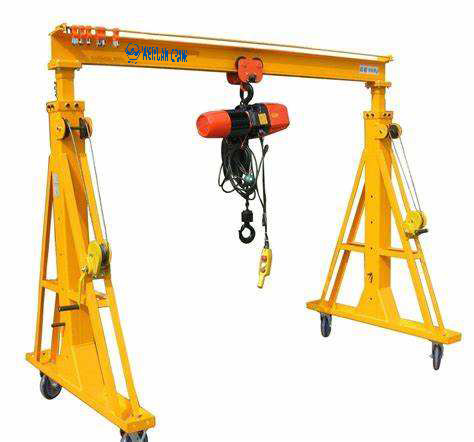
Beyond manufacturing, maintenance facilities servicing wind components have adopted portable gantry solutions for teardown and inspection work. These adjustable, wheeled systems can be moved directly to a disassembled nacelle and reconfigured to fit the specific component being serviced — practical flexibility that fixed infrastructure can’t offer.
Aerospace and Defense Manufacturing: When Tolerances Are Measured in Thousandths
Aerospace production doesn’t tolerate error. A fuselage section has to seat against a mating section within tolerances that make conventional heavy industry look approximate. Engine components must be positioned with the kind of precision that keeps personnel safe when the equipment eventually operates at 35,000 feet.
Gantry cranes used in aerospace facilities are typically specified with load sensing systems and fine-control hoisting mechanisms that allow operators to make micro-adjustments at load — not just coarse position changes. When a 12-ton wing spar needs to be lowered into an assembly jig, the operator isn’t working in inches; they’re working in fractions of them.
Clean environments are also a consideration in certain aerospace applications. Some facilities require cranes operating over sensitive components to use enclosed lubrication systems and specific materials that won’t contaminate work areas. Equipment specification in this sector is a collaborative engineering process between the crane manufacturer and the facility’s operational team.

Weiyuan Heavy Duty MG Type Gantry Crane for Outside Lifting
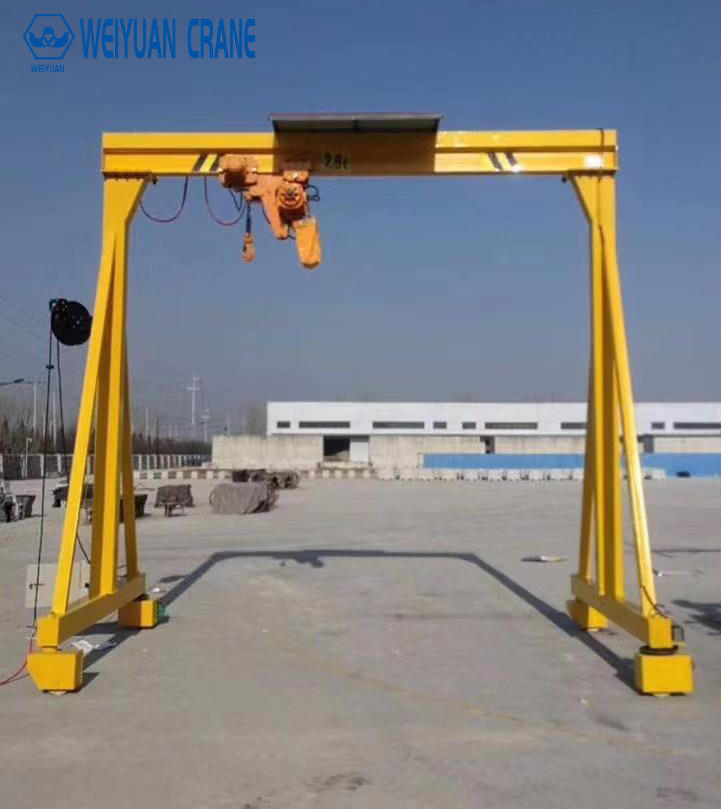
The Weiyuan Heavy Duty MG Type Gantry Crane is a powerful and resilient outdoor lifting solution engineered for demanding outside lifting operations, combining a robust A-frame double-girder structure with weatherproof components for reliable performance in outdoor stockyards, construction and industrial environments. :contentReference
View Product / Get QuoteEnergy and Power Generation: Lifelong Asset Management in Critical Infrastructure
Power generation facilities — whether coal, gas, nuclear, or large-scale hydro — require heavy lifts on two distinct timelines. During initial construction, major plant components like turbine stators, transformer assemblies, and generator rotors are positioned once using specialized lifting equipment. These are single-event lifts measured in hundreds of tons.
The second timeline is ongoing maintenance. Turbine overhauls, transformer replacements, and generator rewinds happen on multi-year cycles. Permanent gantry crane installations within turbine halls allow maintenance teams to perform these operations in place, without sourcing external lifting equipment on each maintenance cycle.
The ROI calculation for a permanently installed system in a power plant is straightforward. The crane that installs a turbine rotor also services it every five years for the 30-year life of the plant. That’s a capital investment measured once against decades of maintenance value.
Choosing the Right Configuration for Your Application
Every industry example above points to the same underlying principle: gantry crane selection is application-specific, not general-purpose. The right choice hinges on several operational parameters working together.
Span width determines whether the system can straddle your workstation, machine, or vehicle lane. Undersizing span creates workarounds that cost time and introduce risk.
Duty cycle is how often the crane lifts per shift and per year. A system rated for light-duty operation will wear prematurely in a high-cycle environment. Matching duty classification to actual usage is non-negotiable for equipment longevity.
Indoor vs. outdoor operation drives material and component selection across every part of the system — from the structural steel grade and paint specification to the motor enclosures and control panel protection rating.
Fixed vs. portable comes down to whether the lifting task is location-specific or distributed across a facility. A dedicated assembly station benefits from a fixed installation; maintenance teams working across a floor need portability.
Getting these parameters right at the specification stage prevents costly re-engineering later. Work with a supplier that treats the initial consultation as an engineering exercise, not a sales transaction.
Frequently Asked Questions
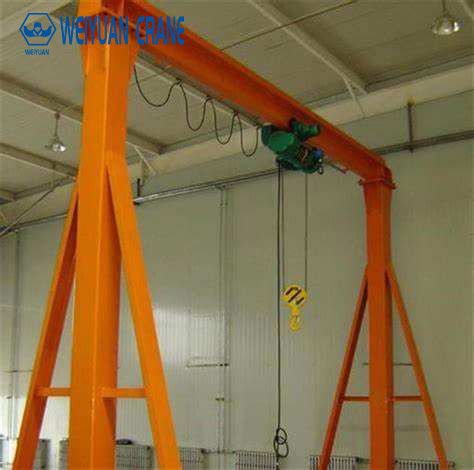
What is the difference between a gantry crane and a bridge crane? A bridge crane is suspended from overhead runway beams that are permanently attached to the building structure. A gantry crane is self-supporting — it stands on its own legs and transfers load directly to the floor. Gantry systems can be installed without structural modifications to the building and can be relocated if operations change.
How do I determine the right duty classification for my application? Duty classification is based on the number of lifts per hour, the average percentage of rated load being moved, and the total annual hours of operation. Most crane manufacturers follow FEM or ASME classification standards. A crane supplier should walk you through this calculation before specifying a hoist and structural package.
Are gantry cranes suitable for cleanroom or sensitive manufacturing environments? Yes, but the specification needs to reflect those requirements explicitly. Enclosed lubrication, stainless hardware, specific paint systems, and low-particulate drive components are all available and commonly specified for semiconductor, pharmaceutical, and aerospace applications.
What kind of floor is required to support a gantry crane installation? Track-mounted systems require a level, reinforced concrete floor capable of handling the dynamic load transferred through the rail and tie system. Portable caster-mounted systems also require a solid, flat surface. A structural engineer should assess the floor before installation for any high-capacity application.
How often should a gantry crane be recertified? Certification requirements vary by jurisdiction and industry. In most industrial settings, annual inspections by a certified third-party inspector are standard, with periodic load testing — typically every one to four years — depending on the duty cycle and applicable safety regulations. Operators should also conduct documented pre-shift inspections before every use.
Can a single gantry crane handle tandem lifts? Yes, provided the system is specifically designed and rated for tandem operation. This typically means two hoists mounted on the same bridge, with coordinated control systems that synchronize hook height and travel speed. Tandem lifts require careful load planning and trained operators — it is not a capability to improvise.