


How to Choose the Best Electric Hoist for Your Industrial Needs
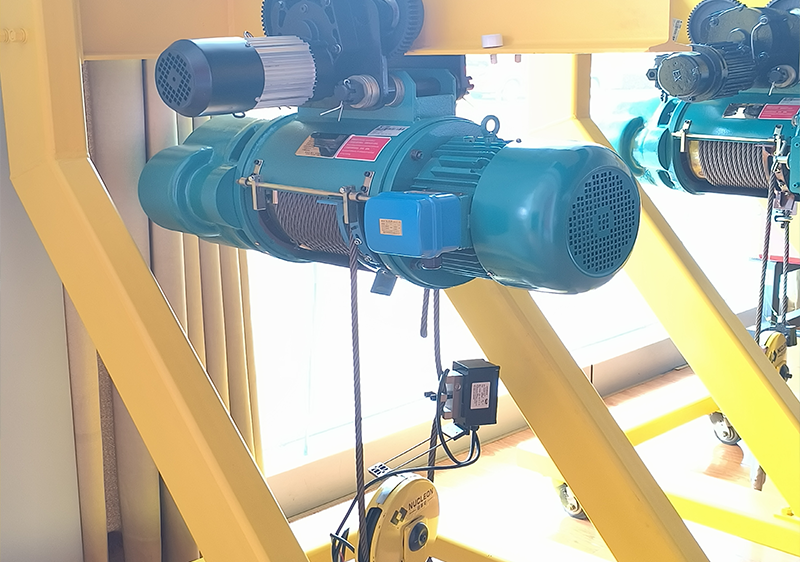
In any industrial operation, from a compact machine shop to a sprawling shipyard, the electric hoist is the workhorse. While the crane structure—be it a jib, bridge, or gantry—provides the reach, the hoist supplies the raw power and control needed to lift and position materials safely. Selecting the right hoist is far more than a simple purchasing decision; it’s a strategic choice that directly impacts your facility’s productivity, safety, and bottom line.
Choosing an under-specified hoist can lead to premature mechanical failure and dangerous safety liabilities. Conversely, an over-specified hoist can be an unnecessary capital expense. This guide provides a detailed walkthrough of the essential factors to consider, helping you navigate the technical specifications to select an electric hoist that is perfectly matched to your operational demands and delivers a strong return on investment.
1. The First Decision: Chain Hoist vs. Wire Rope Hoist
The most fundamental choice you will make is the lifting medium. This decision influences everything from lifting precision to long-term maintenance costs.
Electric Chain Hoists
An electric chain hoist uses a hardened steel load chain that moves over a pocketed wheel (load sheave). They are the standard for localized, workstation lifting.
- Key Advantage: Chain hoists provide a “true vertical lift.” This means the hook travels straight up and down without any lateral drift, which is absolutely critical for precise tasks like loading a CNC machine or assembling delicate components.
- Best For: Capacities under 10 tons, general manufacturing, assembly lines, and use on jib cranes or workstation bridge cranes.
Electric Wire Rope Hoists
A wire rope hoist uses a steel cable that winds onto a grooved drum. These are the heavy-duty champions of the lifting world, engineered for higher capacities and more demanding environments.
- Key Advantage: They offer much faster lifting speeds and are better at dissipating heat during frequent, continuous use. This makes them the standard for high-production process cranes.
- Best For: Capacities over 10 tons, high-speed requirements, long lift heights, and severe-duty applications. They are the default choice for large overhead bridge cranes and outdoor Gantry Cranes.
2. Capacity: The Importance of a Safety Buffer
The Working Load Limit (WLL), or capacity, is the most obvious specification, but it’s often miscalculated. Simply matching the hoist’s capacity to your heaviest part is a strategic error. The industry best practice is to add a “future-proof” buffer of 20-25% to your maximum anticipated load.
This buffer serves two critical functions:
- It accounts for rigging: The weight of slings, spreader bars, magnets, and other lifting attachments must be included in the total load.
- It ensures mechanical longevity: A hoist that consistently operates at 75-80% of its WLL will experience significantly less wear on its brakes, motor, and gearbox than one constantly pushed to its 100% limit.
3. Duty Cycle: Matching the Hoist to Your Workload

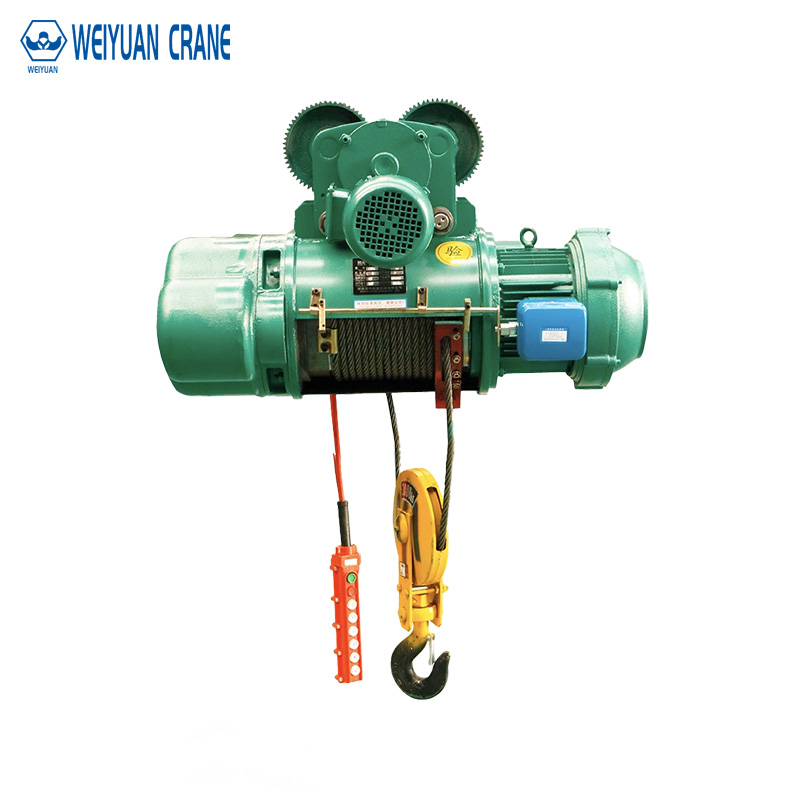
Weiyuan 1 Ton Remote Control Monorail Electric Hoist
The Weiyuan 1 Ton Remote Control Monorail Electric Hoist is designed for efficient material handling in workshops, warehouses, and light industrial environments. Equipped with wireless remote control and a monorail trolley system, it ensures precise load positioning, smooth travel, and safe lifting operations up to 1 ton.
View Product / Get QuoteIf capacity is how much a hoist can lift, the duty cycle is how often and for how long it can do so. This is arguably the most critical factor for ensuring a long service life and is often the most overlooked. Using a light-duty hoist for a heavy-duty application will cause rapid motor burnout and brake failure.
Hoist manufacturers use a classification system (like the H-ratings from the Hoist Manufacturers Institute) to define service life:
- H2 (Light Duty): For infrequent use, such as in a small maintenance garage or for standby purposes.
- H3 (Moderate Duty): The standard for most general machine shops and fabrication facilities with a moderate number of lifts per hour.
- H4 (Heavy Duty): For high-volume production environments like automotive assembly lines or busy warehouses where the hoist is in constant motion.
- H5 (Severe Duty): For continuous or near-continuous operation in extreme conditions, such as steel mills, foundries, or on hard-working outdoor Gantry Cranes.
Always be realistic about your operational intensity and select a hoist with a duty cycle rating that matches or exceeds your actual needs.
4. Lifting Speed and Control: The Power of VFDs
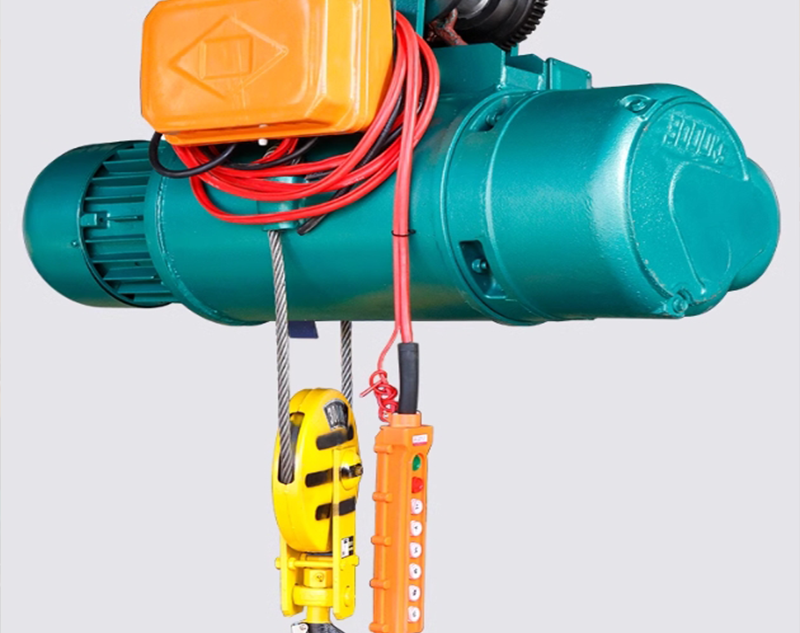
The level of control you have over the lifting speed directly impacts both safety and precision. While single-speed hoists are a budget-friendly option, modern industrial applications benefit greatly from advanced controls.
- Two-Speed: This option provides a fast main speed for efficiency and a slow “creeping” speed for the final, precise positioning of the load.
- Variable Frequency Drive (VFD): A VFD offers the ultimate in load control. It allows the operator to infinitely adjust the speed from zero to maximum, resulting in exceptionally smooth acceleration and deceleration. This “soft start” capability eliminates the sudden jerk that can cause a load to swing dangerously and allows for micro-positioning measured in millimeters.
For any application involving fragile, expensive, or complex loads, a VFD is a non-negotiable feature that enhances both safety and accuracy.
5. Environmental and Structural Considerations
Where the hoist will operate is just as important as how it will operate.
Mounting and Suspension
The hoist must be compatible with its support structure. A hoist can be hook-mounted for portability, lug-mounted for a fixed position, or integrated with a trolley. This trolley can be manually pushed, gear-operated, or fully motorized to move the hoist horizontally along the beam of a bridge or gantry crane.
Indoor vs. Outdoor Use
An outdoor hoist requires a “weatherization package” to protect it from the elements. This includes corrosion-resistant paint (often epoxy-based), water-tight electrical enclosures (NEMA 4X rated), and protective covers for the motor and brake assembly. Hoists on large outdoor Gantry Cranes in ports or yards face constant exposure and must be specifically engineered to resist humidity, UV rays, and temperature swings.
Hazardous Locations
Facilities that handle flammable materials or combustible dust require explosion-proof hoists. These units feature specialized enclosures, spark-resistant components (like bronze hooks and wheels), and other modifications to prevent ignition in a volatile atmosphere.
6. Safety Features: The Modern Standard
Safety is a core component of performance. A high-quality electric hoist from a reputable manufacturer should come standard with a multi-layered safety system.
- Overload Protection: A device, either a mechanical slip clutch or an electronic sensor, that prevents the hoist from lifting a load heavier than its rated capacity.
- Limit Switches: These switches automatically stop the hook’s travel at its uppermost and lowermost points, preventing the hook block from crashing into the hoist or the chain from running out.
- Electromagnetic Brake: A fail-safe brake that automatically engages and holds the load securely in the event of a power loss.
- Wireless Radio Remote: This is increasingly becoming the standard over wired pendants. It allows the operator to move freely, choose the safest vantage point away from the load path, and avoid the trip hazard of a dangling cable.
Frequently Asked Questions (FAQ)
Q1: How long does an industrial electric hoist typically last?
With proper maintenance and a duty cycle that matches the application, a quality electric hoist can have a service life of 10 to 20 years. Key components like the chain, wire rope, and brake pads are considered wearable and will require periodic replacement based on use.
Q2: What’s the main advantage of a chain hoist’s “true vertical lift”?
True vertical lift means the hook moves perfectly straight up and down. Standard wire rope hoists have a slight lateral drift as the rope winds onto the drum. For tasks requiring extreme precision, like setting a mold or aligning engine parts, the absence of hook drift is essential.
Q3: Can I install a hoist myself?
For safety and compliance reasons, hoist installation should be performed by a qualified and certified technician. This is especially true when dealing with electrical connections and ensuring the support structure (beam, trolley, etc.) is rated for the load.
Q4: Why are wire rope hoists preferred for large Gantry Cranes?
Large Gantry Cranes operate in demanding, high-capacity environments. Wire rope hoists are better suited for this because they offer higher capacities (often 50+ tons), faster lifting speeds, and their design is more effective at managing the heat generated from continuous, heavy lifts.
Q5: Is a higher voltage (like 480V) better for an industrial hoist?
Yes. For production-level use, a higher three-phase voltage (380V, 480V, or higher) is superior to single-phase power (like 220V). It allows the motor to run cooler and more efficiently under heavy, continuous loads, extending its lifespan.