


How to Choose the Right Jib Crane: A Buying Guide
Moving heavy materials safely requires more than just raw power. It demands the right equipment tailored exactly to your workspace. Relying on guesswork when purchasing industrial lifting machinery often leads to inefficient workflows, wasted floor space, and serious safety hazards. You need a targeted, localized solution that empowers your workforce to lift heavy components without waiting for shared facility resources.
This comprehensive guide breaks down everything you need to know to select the perfect jib crane for your operations. We will explore the different mounting styles available and how they impact your factory layout. You will learn how to accurately calculate your true load capacity requirements so your equipment performs flawlessly under pressure.
By the end of this article, you will understand how to match specific equipment features to your unique industry environment. We will also cover essential tips for evaluating manufacturers and ensuring strict compliance with safety regulations. Read on to discover how to make a smart, confident investment in your material handling infrastructure.
Understanding the Core Types and Mounting Options
The foundation of your purchasing decision rests on how you plan to install the equipment. The physical layout of your facility heavily dictates which mounting style makes the most sense. Let us look at the primary configurations available to industrial buyers.
Freestanding Pillar Units
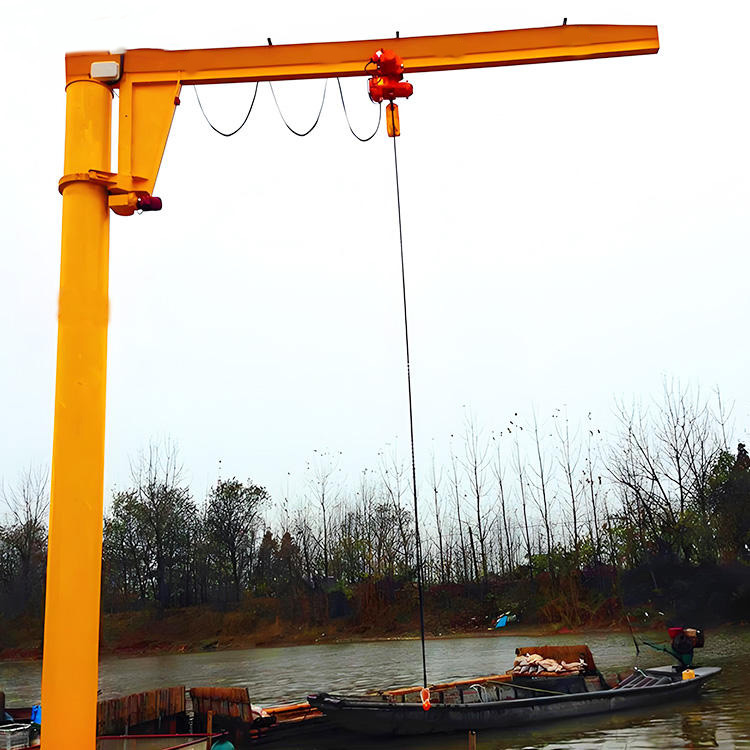
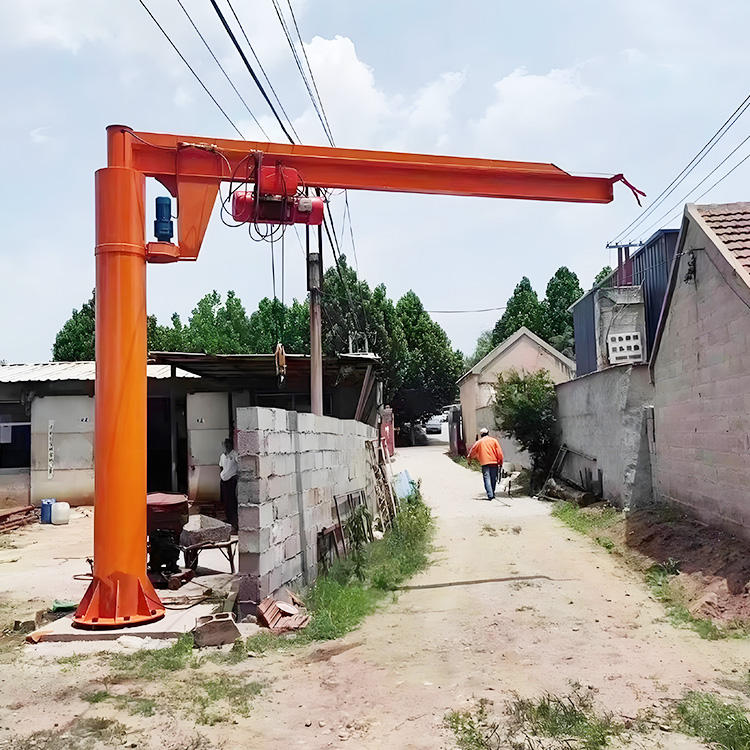
Freestanding models offer the highest weight capacities and the greatest degree of rotational freedom. Manufacturers build these units with a heavy-duty vertical steel mast bolted directly to your concrete foundation. Because they do not rely on your building for structural support, you can place them virtually anywhere on the factory floor.
These standalone units easily handle massive loads, often exceeding five tons. They are the ideal choice for open assembly areas or heavy machining centers where workers need complete 360-degree rotation. However, you must ensure your concrete floor is thick enough to withstand the immense point-load torque these systems generate.
Wall-Mounted and Column-Mounted Systems
If your facility lacks available floor space, you can utilize your existing building structure. Wall-mounted systems bolt directly to structurally sound concrete walls or heavy steel building columns. This design eliminates the vertical mast entirely, keeping your floor completely clear for foot traffic and forklift lanes.
These systems provide excellent localized lifting power but come with rotational limits. Because the building wall blocks the horizontal boom, you typically only get 200 degrees of rotation. You must also hire a structural engineer to verify that your building columns can safely support the immense pulling forces generated during a heavy lift.
Articulating Boom Options
Standard horizontal booms travel in a rigid, straight line. Articulating models feature a pivot point in the middle of the boom arm, allowing it to bend like a human elbow. This unique design lets operators reach around corners, dodge structural columns, or guide heavy materials into complex machinery enclosures.
Articulating models excel in highly congested workspaces where standard rigid booms would constantly hit obstacles. They easily reach into tight spaces, making them highly popular in automotive repair shops and specialized manufacturing cells. Keep in mind that these specialized arms generally handle lighter capacities than their rigid counterparts.
Calculating True Load Capacity
Guessing how much weight you need to lift causes catastrophic equipment failures. You must calculate your maximum load requirements with absolute precision. This calculation involves much more than simply weighing the raw materials you plan to move.
Factoring in the Hoist and Rigging Weight
The maximum capacity rating on a jib crane must account for everything hanging from the horizontal boom. First, determine the absolute heaviest single item your operators will handle on a daily basis. Next, you must add the physical weight of the motorized hoist, the rolling trolley, and the electrical cables.
You must also include the weight of any below-the-hook attachments. Heavy-duty spreader bars, lifting magnets, and thick wire rope slings add significant mass to the total lift. Engineers strongly recommend calculating this total combined weight and then adding a 20 percent safety margin to determine your final required capacity.
Preparing for Future Operational Growth
Buying a system that barely meets your current needs leaves zero room for business expansion. Industrial workflows evolve constantly. The products you manufacture today might grow larger and heavier in the coming years.
If you anticipate handling larger components in the next five years, you must invest in a higher capacity system right now. Upgrading a motorized hoist later is relatively simple and affordable. Replacing an entire structural steel mast and boom because you underestimated your long-term needs wastes a massive amount of capital.
Evaluating Rotation and Spatial Requirements
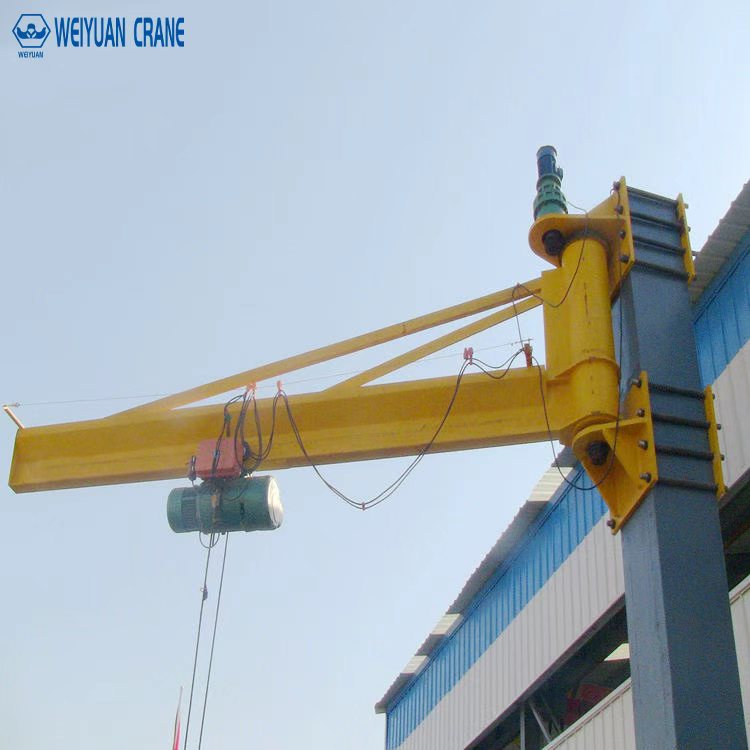
Weiyuan 500kg Wall Mounted Jib Crane
The Weiyuan 500kg Wall Mounted Jib Crane is a compact and efficient lifting solution designed for workshops, assembly lines, and warehouse operations. Mounted directly to a structural wall or column, it saves valuable floor space while providing smooth 180° slewing coverage for precise material handling up to 500 kg.
View Product / Get QuoteA localized lifting station only provides value if the boom can actually reach your materials. You must carefully measure your workspace to ensure the equipment provides adequate coverage. This involves evaluating both the boom length and the required rotational arc.
Determining the Necessary Boom Span
The boom span dictates how far the hoist can travel away from the support mast. You must measure the distance from the center of the mast to the furthest point your workers need to reach. Choose a boom length that easily covers this entire work envelope.
However, avoid buying a boom that is excessively long for your space. An oversized boom might swing into nearby machinery, strike structural building columns, or interfere with overhead bridge systems. The goal is to cover the specific workstation thoroughly without creating physical hazards for neighboring assembly lines.
Defining Your Rotation Needs
Different tasks require different degrees of rotational freedom. If a worker simply needs to lift a heavy part off a conveyor belt and place it onto an adjacent workbench, 180 degrees of rotation works perfectly. A wall-mounted unit easily satisfies this requirement.
Conversely, if an operator needs to unload raw materials from a staging area, swing them over to a CNC machine, and then rotate them to an outbound pallet, they need complete freedom. In this scenario, a freestanding pillar system offering a full 360-degree rotation is the only logical choice. Match the rotational capability exactly to the operator’s specific workflow.
Matching Equipment to Industry-Specific Needs
Standard catalog equipment works well for standard warehouses. However, many industries present unique environmental challenges that destroy basic steel machinery. You must tailor your equipment specifications to survive your specific daily hazards.
Cleanroom and Food Processing Environments
Facilities that process food, pharmaceuticals, or delicate electronics operate under strict sanitation rules. Standard painted steel chips easily, and exposed gear grease contaminates sterile environments. You cannot use standard industrial equipment in these specialized rooms.
You must specify food-grade or pharmaceutical-grade lifting systems. Manufacturers build these specialized units using high-grade stainless steel that resists harsh chemical washdowns. They feature enclosed track designs to prevent dust accumulation and utilize specialized, non-toxic food-grade lubricants.
Outdoor Fabrication and Heavy Duty
Outdoor work environments punish mechanical equipment relentlessly. Rain, snow, and airborne salt rapidly corrode exposed metal. If your equipment lives outside in a shipyard or a steel fabrication yard, you must demand extreme weatherproofing.
Specify heavy-duty galvanized coatings to protect the structural steel from rust. Request NEMA 4 or IP65 rated enclosures to keep water completely out of the electrical control boxes. If your facility handles combustible dust or flammable gases, you must invest in intrinsically safe, explosion-proof models to prevent catastrophic accidents.
Ensuring Strict Safety Compliance
Moving heavy materials over the heads of your employees carries severe risks. Purchasing cheap, uncertified lifting equipment exposes your company to massive legal liabilities. You must ensure your new equipment meets all relevant safety standards.
Meeting Federal and State Standards
In the United States, the Occupational Safety and Health Administration (OSHA) sets strict guidelines for material handling equipment. Your chosen manufacturer must engineer the system to comply fully with OSHA standards. The equipment should also meet the structural specifications outlined by the Crane Manufacturers Association of America (CMAA).
Always ask your supplier for detailed engineering documentation before making a purchase. You should receive certified structural drawings and specific duty-cycle ratings. If a supplier refuses to provide these engineering documents, walk away and find a reputable manufacturer.
Planning for Routine Maintenance
Buying certified equipment is only the first step in ensuring workplace safety. Every new jib crane must undergo a documented load test after installation to prove it handles its rated capacity safely. Once in service, you must establish a strict preventative maintenance protocol.
Operators must perform visual inspections before every shift. They need to check for frayed hoist cables, test the emergency stop buttons, and listen for unusual grinding noises. Furthermore, safety regulations require a certified third-party inspector to evaluate the entire system thoroughly at least once a year.
How to Evaluate Suppliers and Manufacturers
The manufacturer you choose matters just as much as the steel you buy. You are purchasing a critical piece of industrial infrastructure. Thoroughly vetting your potential partners prevents massive operational headaches down the road.
Reviewing Support and Warranties
Look for manufacturers with a long, proven history in the material handling sector. Ask the supplier for case studies or references from businesses operating in your specific industry. A reputable company will gladly share their success stories and connect you with satisfied clients.
Carefully review the warranty terms before signing a purchase order. A high-quality structural steel frame should carry a warranty lasting several years. Ensure the warranty covers both the physical parts and the labor required to replace defective components.
Verifying Parts Availability
Industrial equipment naturally requires replacement parts over time. Brake pads wear out, electrical contactors fail, and pendant remotes suffer impact damage. Your supplier must maintain a robust inventory of spare parts.
A cheaper initial purchase price loses all its value if your production line sits idle for weeks waiting on a replacement gear to ship from overseas. Choose a supplier with a strong domestic presence and dedicated technical support. When your equipment breaks down, you need a partner who provides immediate, reliable solutions.
Frequently Asked Questions (FAQ)
Can I install a freestanding system without pouring a new concrete foundation?
This depends entirely on the capacity of the system and the thickness of your existing floor. Light-duty models generally bolt directly to standard six-inch reinforced industrial concrete slabs. However, heavy-duty models typically require you to cut the existing floor and pour a specialized, deeper concrete footing to handle the immense torque safely.
What is the difference between an under-braced and an over-braced boom?
An under-braced boom features a support strut connecting the bottom of the mast to the horizontal boom. This design maximizes your overall ceiling clearance. An over-braced boom places the support strut above the boom, connecting to the top of the mast. This design allows the motorized hoist to travel the absolute maximum distance along the boom.
Can I use a motorized trolley on an articulating boom?
Generally, no. Articulating arms feature a pivot joint in the middle of the beam, which prevents a standard motorized trolley from rolling past the joint. Articulating models typically use fixed hoists mounted at the very end of the boom, requiring the operator to manually push and pull the arm to position the load.
How do I prevent the boom from swinging into nearby machinery?
If your workstation sits close to sensitive machinery or structural walls, you can install heavy-duty mechanical rotation stops. These adjustable steel bumpers bolt onto the vertical mast assembly. They physically prevent the horizontal boom from rotating past a specific point, protecting your facility infrastructure from accidental impact damage.