


Industrial Gantry Cranes: 1 Ton to 10 Ton Lifting Solutions for Warehouse & Yard
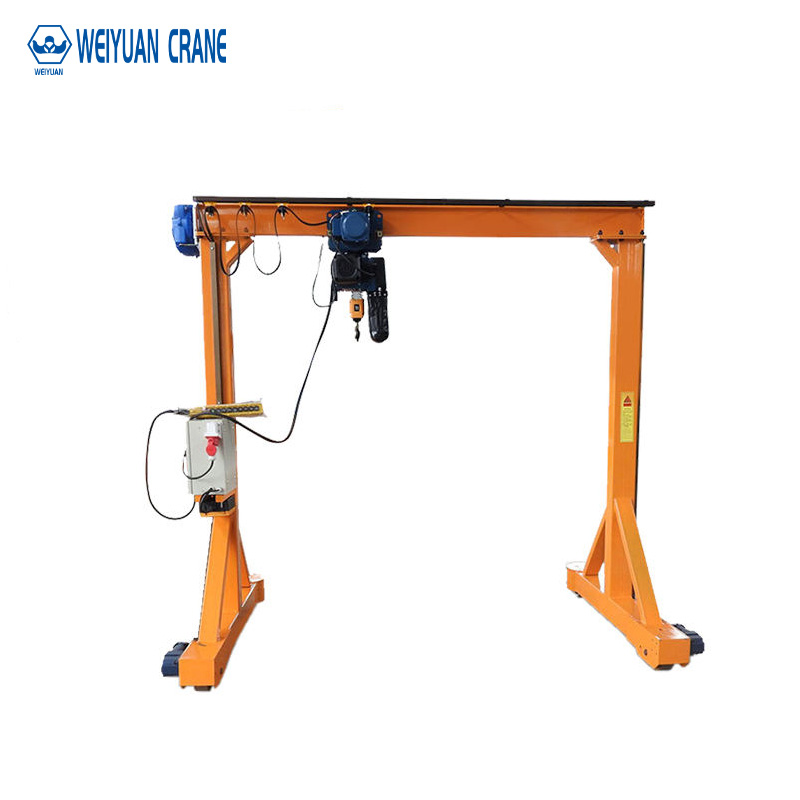
Introduction
For warehouse operations and outdoor yard facilities, the lifting capacity gap between a small shop hoist and a massive port crane is where most real-world work actually happens. The 1-to-10-ton range is, in practical terms, the workhorse segment of the industrial lifting equipment market — capable enough to handle production loads, yet compact enough to operate in the space constraints of typical warehouses, steel yards, fabrication shops, and distribution centers.
This article provides a complete, engineer-reviewed breakdown of gantry crane options in the 1-ton to 10-ton capacity range. We’ll look at what different capacities are actually suited for, how to match crane specifications to warehouse and yard environments, what installation involves, and what safety requirements apply to these systems in commercial and industrial use.
Why the 1–10 Ton Range Is the Industrial Sweet Spot
The 1–10 ton capacity range covers the majority of material handling needs in:
- General manufacturing and assembly
- Steel service centers and metal fabrication
- Precast concrete component handling
- Warehouse receiving, kitting, and outbound logistics
- HVAC and mechanical equipment installation
- Automotive and truck body manufacturing
- Timber and lumber yards
Below 1 ton, you’re typically in shop-crane or manual hoist territory. Above 10 tons, you’re moving into heavy industrial and port-scale applications that require custom engineering and significantly more infrastructure. The 1–10 ton range is where off-the-shelf and semi-custom solutions intersect — broad availability, proven designs, and costs that make financial sense for most operations.
1-Ton to 2-Ton Gantry Cranes: Light Industrial and Warehouse Receiving
Ideal Applications
A 1–2 ton gantry crane is the right tool for:
- Warehouse dock receiving areas (handling machinery, equipment pallets, and packaged goods too heavy for manual handling but not justifying a heavier crane)
- Light fabrication shops assembling medium-weight components
- Maintenance bays for HVAC units, motors, pumps, and similar equipment (typical weight: 500 lbs to 1.5 tons)
- Assembly operations handling subassemblies or tooling fixtures
Typical Specifications
Parameter | Typical Range
Rated Capacity | 1,000 lbs – 4,400 lbs (0.5–2 metric tons)
Span | 8 ft – 20 ft
Hook Height | 10 ft – 16 ft (standard); up to 20 ft on tall-leg configurations
Bridge Type | Single I-beam or box beam
Drive System | Manual trolley and push travel; electric hoist optional
Frame Material | Structural steel (most common); aluminum for portable units
What to Watch For in This Range
Hoist selection matters: At 1–2 tons, you have the widest range of hoist options — from hand chain hoists (lowest cost, no power required) to electric chain hoists (fast cycle times, reduced operator fatigue) to compact wire rope hoists (for longer lift heights or higher cycle rates). Match the hoist to your actual production pace.
Trolley configuration: Manual push trolleys are standard in this range and work well for lower-frequency use. For operations with high lift frequency, a motorized trolley adds productivity and reduces operator fatigue significantly.
Structural qualification: Even at 1 ton, ensure any fixed-rail installation is engineered and the rail anchors are set in adequately reinforced concrete. Unqualified installations are a common source of incidents in lighter crane classes.
Estimated Installed Cost (Fixed Gantry with Electric Hoist)
- 1-ton fixed gantry (20 ft span, 12 ft hook height): $4,000–$9,000
- 2-ton fixed gantry (20 ft span, 14 ft hook height): $7,500–$15,000
3-Ton to 5-Ton Gantry Cranes: Mid-Range Industrial Workhorses
Ideal Applications
This capacity range handles the majority of what most manufacturing and distribution operations encounter day-to-day:
- Steel plate and structural section handling in service centers
- Engine and powertrain assembly in automotive manufacturing
- Precast concrete panel handling (typical wall panel: 1.5–4 tons)
- Tool and die shops moving press tooling and fixtures
- Pipe and tubing yards with bundled stock
- Large equipment installation and maintenance (industrial compressors, generators, gearboxes)
Typical Specifications
Parameter | Typical Range
Rated Capacity | 6,600 lbs – 11,000 lbs (3–5 metric tons)
Span | 15 ft – 50 ft
Hook Height | 12 ft – 30 ft
Bridge Type | Box beam (most common); double girder for longer spans
Drive System | Electric hoist + motorized trolley; motorized bridge travel for longer spans
Rail System | Floor-level crane rails with engineered anchors
Engineering Considerations for 3–5 Ton Installations
Double-girder vs. single-girder bridge:
Single-girder bridges (one main beam) are standard for most 3–5 ton applications and provide excellent headroom below the bridge. Double-girder bridges (two parallel beams with the hoist running between them on a top-running trolley) allow greater hook height for a given bridge elevation and are preferred for longer spans or where maximum lift height is critical.
Rail foundation engineering:
At 3–5 tons with motorized travel, the rail anchoring system is a structural component that must be engineered. Rail loads include not just the vertical static load but dynamic horizontal loads from acceleration and deceleration of the crane. Concrete rail foundations typically require 3,000–4,000 psi minimum compressive strength and proper reinforcing.
Electrical requirements:
Motorized 3–5 ton gantry cranes typically require 3-phase 480V electrical service (in North America) with proper disconnects, runway electrification (festoon cable or conductor bar), and pendant or radio remote control. Involve a licensed electrician with crane experience in the electrical design.
Estimated Installed Cost (Fixed Gantry with Electric Hoist and Motorized Travel)
- 3-ton gantry (30 ft span, 18 ft hook height): $18,000–$40,000
- 5-ton gantry (40 ft span, 20 ft hook height): $35,000–$75,000
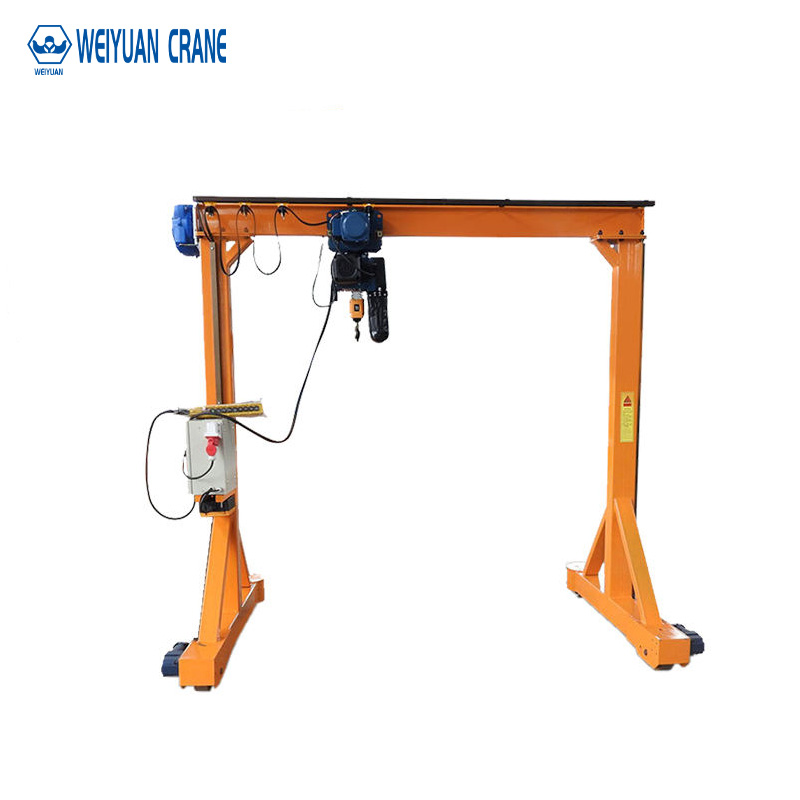
5-Ton to 10-Ton Gantry Cranes: Heavy Industrial and Yard Applications
Ideal Applications
The upper end of our range — 5 to 10 tons — moves into applications where crane downtime has immediate production consequences and where load handling involves genuinely heavy material that demands robust, well-engineered equipment:
- Steel fabrication shops cutting, welding, and assembling structural members
- Precast concrete beam and girder handling (typical T-beam: 4–8 tons)
- Manufacturing of heavy machinery, presses, and industrial equipment
- Outdoor storage yards for structural steel, pipe, or heavy components
- Railroad car and truck body assembly
- Transformer and electrical equipment manufacturing and installation
Typical Specifications
Parameter | Typical Range
Rated Capacity | 11,000 lbs – 22,000 lbs (5–10 metric tons)
Span | 20 ft – 100 ft
Hook Height | 15 ft – 50 ft
Bridge Type | Double girder (required for most applications in this range)
Drive System | Electric hoist + motorized trolley + motorized bridge travel (standard)
Rail System | Heavy crane rails (ASCE 25 to ASCE 85 lb/yd); engineered concrete foundations
Heavy-Duty Design Requirements
CMAA Duty Class:
At 5–10 tons in production environments, the crane should be specified at a minimum of CMAA Class C (moderate service), and often Class D (heavy service) if used in continuous production. Do not accept a Class A or B crane for production applications — it is not engineered for the cycle counts and load percentages involved.
End truck and wheel design:
Crane wheels in this capacity range are engineered components, not commodity items. Wheel diameter, flange profile, hardness, and rail compatibility must be matched. Mismatched wheels and rails cause rapid wear and rail walking — a dangerous condition where the crane migrates off the rail.
Hoist selection:
Wire rope hoists are standard at 5–10 tons. Key specifications:
- Rope reeving: Multiple-part reeving reduces hook speed (fine for production) and reduces wire rope tension per reeving part.
- Drum length and fleet angle: Affects rope life and wear; should be specified per manufacturer guidelines.
- Brake system: All hoists must have a mechanically-held brake that engages automatically on power loss. Secondary braking (regenerative or dynamic braking via VFD) is strongly recommended for loads above 5 tons.
Variable Frequency Drives (VFDs):
At 5–10 tons, VFDs on all drive axes (hoist, trolley, bridge) provide smooth, controlled motion that reduces load swing, decreases structural stress, and extends mechanical life. They also enable precise load positioning. VFDs are considered standard practice for cranes in this capacity range.
Estimated Installed Cost (Fixed Double-Girder Gantry, Full Electric, Motorized Travel)
- 5-ton gantry (40 ft span, 25 ft hook height): $50,000–$110,000
- 10-ton gantry (60 ft span, 30 ft hook height): $90,000–$200,000
Note: Outdoor installations, very long spans, tall hook heights, or remote/difficult site access significantly increase installation costs.

Weiyuan Heavy Duty MG Type Gantry Crane for Outside Lifting
The Weiyuan Heavy Duty MG Type Gantry Crane is a powerful and resilient outdoor lifting solution engineered for demanding outside lifting operations, combining a robust A-frame double-girder structure with weatherproof components for reliable performance in outdoor stockyards, construction and industrial environments. :contentReference
View Product / Get QuoteWarehouse vs. Outdoor Yard: Key Differences in Crane Specification
Warehouse Gantry Crane Considerations
Installing a gantry crane inside an existing warehouse presents specific challenges that don’t apply to outdoor installations:
Overhead clearance: The available height between the floor and the lowest roof obstruction (beams, lighting, sprinklers, HVAC ducts) directly limits hook height. A thorough clearance survey — identifying obstructions at the precise locations where the crane will operate — is essential before finalizing specifications.
Floor loading: Warehouse floors are typically 4–6 inches of concrete on prepared subgrade. A 10-ton crane with rail anchors imposes significant point loads on the floor slab. A structural engineer must review floor loading capacity before rail installation. Adding a crane to a floor not designed for it can cause slab cracking, anchor pull-out, and settlement.
Aisles and workflow: Crane legs must not obstruct forklift aisles, personnel pathways, or production flow. Work out a detailed floor plan showing the crane’s footprint and travel path before purchasing.
Fire protection: Many warehouses have wet-pipe fire suppression systems with sprinkler heads at specific elevations. Verify that the crane’s bridge and hoist assembly won’t obstruct sprinkler coverage patterns — this may require relocating sprinkler heads and consulting with your fire protection engineer and insurer.
Outdoor Yard Gantry Crane Considerations
Rail foundations: Outdoor rail foundations are subject to frost heave in cold climates. Rails must be anchored below the local frost depth (which varies from a few inches in warm climates to several feet in the northern U.S. and Canada). Inadequate foundation depth causes rail settlement and alignment problems.
Corrosion protection: All structural members, fasteners, end trucks, and rails exposed to weather need appropriate corrosion protection. Hot-dip galvanizing plus a topcoat system is common for coastal or high-humidity environments. At minimum, properly applied industrial primer and topcoat are required for all outdoor cranes.
Wind loading: An outdoor gantry crane with a 60-foot span acts as a significant wind sail. The structural design must account for wind loads per ASCE 7 (the U.S. standard for minimum design loads). In seismic zones, seismic loading must also be considered. These calculations require a licensed structural engineer.
Crane anchoring during storms: Many outdoor gantry cranes have storm anchors — mechanical locks that secure the crane to its rails during high-wind events when the crane is not in operation. These are required by OSHA for cranes in areas subject to high winds and should be specified for all outdoor installations.
Installation: What the Process Actually Involves
Understanding what installation requires helps you plan timelines and budget realistically.
Site preparation (2–6 weeks):
- Survey and layout of rail centerlines
- Excavation for rail foundations (if upgrading existing floor or outdoor installation)
- Concrete pouring and curing (minimum 28 days for full strength)
- Rail installation, alignment, and anchoring
Crane assembly and commissioning (1–5 days depending on crane size):
- Delivery and staging of crane components
- Assembly of bridge, legs, and end trucks
- Hoist installation and rigging
- Electrical connection and control testing
- Load testing (typically 125% of rated capacity per ASME B30.2)
- Final alignment check and documentation
Training (0.5–1 day):
- Operator orientation on controls, limits, and emergency procedures
- Documentation handoff (maintenance manual, inspection checklist, load test certificate)
Compliance and Inspection Requirements
Any gantry crane installed in a U.S. commercial or industrial facility is subject to OSHA regulations. Key requirements:
- Pre-use inspection: Operator visual check before each shift (OSHA 1910.179(j)(1))
- Frequent inspection: Operational checks at 1–3 month intervals (OSHA 1910.179(j)(2))
- Periodic inspection: Thorough inspection by a qualified person annually (or more frequently for heavy service) (OSHA 1910.179(j)(3))
- Load test: Required after installation and after any major structural modification
Inspection records must be kept on file. OSHA may request them during an inspection, and they are essential documentation in the event of an incident.
Frequently Asked Questions
Q: Can a 5-ton gantry crane handle occasional 6-ton loads?
A: No. The rated capacity is the maximum — not a starting point for occasional overloads. Overloading a crane is an OSHA violation and voids the manufacturer’s warranty. If you need to lift 6 tons, select a 6-ton-rated crane (ideally with the 25% margin described earlier, so an 8-ton unit).
Q: How much runway space do the legs need in a warehouse?
A: This varies by crane size, but a typical 5-ton gantry with a 30-foot span might have legs with a base footprint of 2–3 feet per side. The total floor area consumed by the crane (span plus leg bases) needs to be factored into your aisle layout.
Q: What’s the lead time for a 10-ton gantry crane?
A: For standard catalog configurations, lead times typically run 8–16 weeks from order to delivery. Custom-engineered cranes (non-standard spans, tall hook heights, special environments) can take 16–30 weeks. Factor this into project timelines.
Q: Is a gantry crane a good option for a loading dock?
A: Yes — a 2–5 ton gantry positioned at a loading dock can handle incoming heavy machinery or equipment that can’t be managed with a pallet jack or forklift. The key constraint is dock door and overhead clearance. A semi-gantry design often works well in dock applications.