


Overhead Crane Cost Guide: Single Girder vs Double Girder Pricing & Installation
Introduction
“How much does an overhead crane cost?” is one of the most searched questions in industrial lifting — and one of the most difficult to answer simply. The honest answer is that overhead crane pricing spans an enormous range, from under $10,000 for a light-duty single girder unit to several million dollars for a custom-engineered double girder system in a heavy industrial application.
This guide cuts through the confusion. We break down overhead crane costs by configuration, capacity, and installation requirements, explain what drives the price differences between single girder and double girder systems, and give you a realistic framework for budgeting a complete crane installation — not just the crane itself.
By the end of this article, you’ll have the knowledge to evaluate quotes intelligently, understand what’s included (and what isn’t), and avoid the most common budgeting mistakes that cost facilities tens of thousands of dollars in surprises.
Why Overhead Crane Pricing Varies So Widely
Before diving into numbers, it’s worth understanding the key variables that make overhead crane pricing so context-dependent:
Capacity: A 1-ton crane and a 20-ton crane are completely different machines. Material costs, structural engineering requirements, motor sizes, hoist specifications, and runway demands all scale dramatically with capacity.
Span: Longer spans require heavier bridge beams, larger end trucks, and more robust runway structures. A 20-foot span single girder crane is a very different cost proposition from a 60-foot span unit at the same capacity.
Duty class: A crane designed for occasional light use (CMAA Class A or B) uses lighter components throughout versus a heavy-service crane (Class D or E) designed for continuous production. Same rated capacity, very different engineering — and very different price.
Hook height: Taller buildings with greater hook height requirements drive up structural costs and, in double girder configurations, require taller and heavier leg/bridge structures.
Runway system: The crane itself is only part of the total system cost. The runway — elevated rails, runway beams, columns or building attachments, end stops, conductor bars — often equals or exceeds the crane cost for fixed installations.
Hoist type and features: Standard electric chain hoists are the most economical. Wire rope hoists with VFD controls, radio remote operation, and load monitoring significantly increase costs.
Single Girder Overhead Crane Pricing
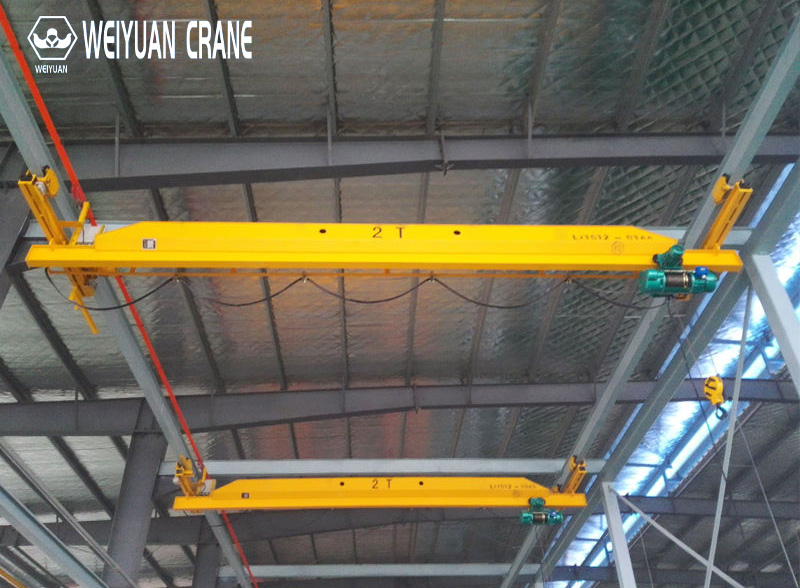
Single girder overhead cranes represent the most cost-effective entry point into the overhead crane market. Here is a realistic breakdown of what you can expect to pay.
Crane only (bridge, end trucks, hoist, pendant control) — no runway, no installation:
1 ton, 10-foot to 20-foot span: $4,500 – $9,000
2 ton, 15-foot to 25-foot span: $7,000 – $14,000
5 ton, 20-foot to 40-foot span: $12,000 – $28,000
10 ton, 30-foot to 50-foot span: $22,000 – $55,000
15 ton, 40-foot to 60-foot span: $40,000 – $85,000
These are crane-only prices for standard catalog configurations from reputable manufacturers. Custom spans, special hook heights, or high-duty-class specifications add 15-40% to these figures.
Complete installed system (crane + runway + electrical + installation):
1 to 2 ton, short span: $18,000 – $45,000
5 ton, mid-span: $45,000 – $100,000
10 ton, longer span: $90,000 – $200,000+
The installed system cost is the number that matters for capital budgeting. Many buyers focus only on the crane price and are surprised when they receive the total project cost — runway structural steel, runway rail and clips, conductor bars, electrical service, installation labor, and commissioning can easily double or triple the crane-only price.
Double Girder Overhead Crane Pricing
Double girder cranes serve higher capacity, longer span, and more demanding duty cycle applications. They cost more at every level, but the performance difference justifies the investment in the right applications.
Crane only (bridge assembly, end trucks, wire rope hoist, controls):
5 ton, 30-foot to 40-foot span: $28,000 – $65,000
10 ton, 40-foot to 60-foot span: $55,000 – $130,000
20 ton, 50-foot to 80-foot span: $110,000 – $280,000
40 ton, 60-foot to 100-foot span: $250,000 – $600,000+
80 ton and above: Custom quote required
Complete installed system (crane + runway + electrical + installation):
5 to 10 ton double girder: $80,000 – $250,000
20 ton double girder: $200,000 – $500,000
40 ton and above: $500,000 – several million, depending on span, hook height, duty class, and facility conditions
These ranges assume standard industrial environments. Specialty requirements — explosion-proof electrical components, stainless steel construction for corrosive environments, extreme temperature ratings, nuclear or cleanroom certification — add substantial cost premiums.
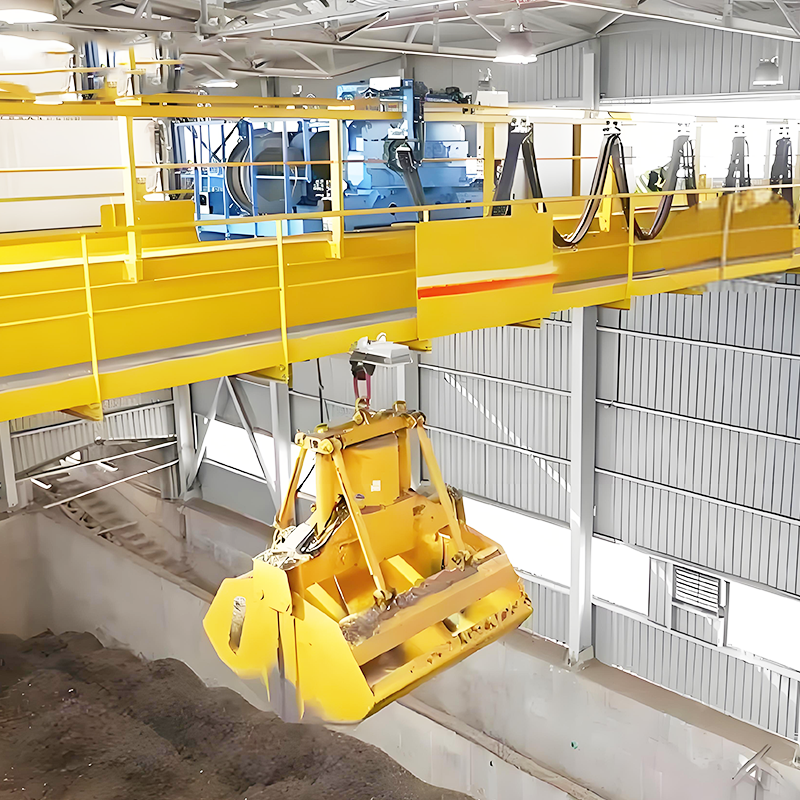
Weiyuan QZ Type Grab Crane for Steel Scrap | 30 Ton, Heavy-Duty, High-Efficiency
The Weiyuan QZ Type 30 Ton Grab Crane is engineered specifically for demanding steel scrap handling operations. Built on a heavy-duty double-girder platform with a high-strength orange peel grab, it delivers reliable performance and high efficiency in continuous scrap yard and foundry material handling environments. :contentReference
View Product / Get QuoteThe Real Cost of Overhead Crane Installation
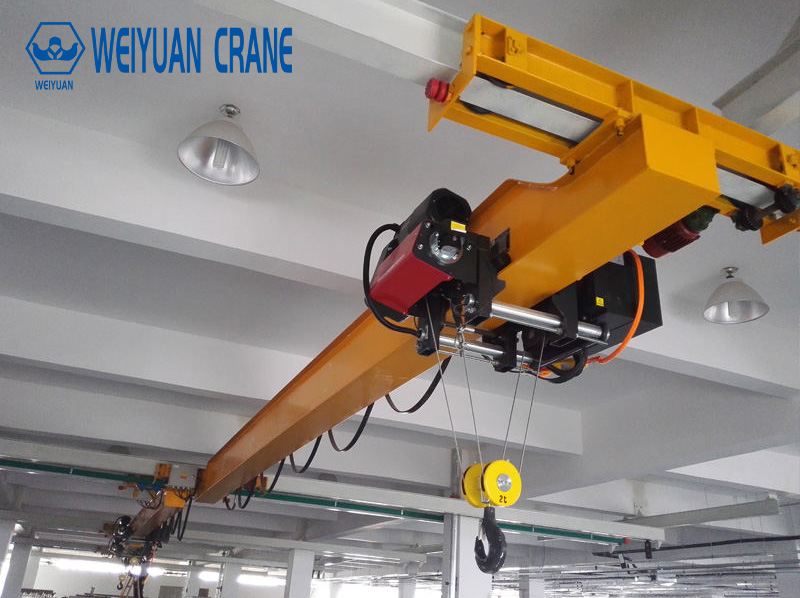
Installation costs are where many buyers are caught off guard. Here is a breakdown of what a complete installation actually involves and what drives the cost at each stage.
Runway structural steel:
The runway beams (the elevated structure on which the crane’s end trucks travel) must be engineered for the crane’s dead weight, the rated load, the dynamic forces from travel, and any seismic or wind requirements that apply to your location. For a 5-ton single girder crane, runway steel alone might run $15,000 to $40,000. For a 20-ton double girder system, $60,000 to $200,000 is a realistic range.
Runway rail and hardware:
Crane rail is a specialized product (not standard structural steel), sized to match the crane’s wheel loads and travel speed. Rail clips, joints, end stops, and buffers add to the material cost. Budget $3,000 to $20,000+ for runway rail and hardware depending on runway length and rail size.
Conductor bars or festoon cable:
The system that delivers electrical power to the moving bridge. Conductor bars (buss bars) are standard for most industrial cranes; festoon cable systems are used in some lower-duty applications. Typical range: $2,000 to $12,000.
Electrical service:
The crane requires a dedicated electrical circuit — typically 3-phase 480V in North America — with a disconnect, panel, and distribution to the runway conductor system. Electrical work typically runs $4,000 to $20,000+ depending on distance from the main panel and existing service capacity.
Installation labor:
Erecting runway steel, aligning and anchoring rails, assembling the crane bridge, installing hoists, rigging the crane into position, and completing electrical connections requires a skilled crew — typically ironworkers, millwrights, and electricians working under the supervision of a qualified crane installation contractor. Labor for a typical 5-ton single girder system might run $8,000 to $25,000; a 20-ton double girder system could easily require $40,000 to $100,000 in installation labor.
Load testing and commissioning:
ASME B30.2 requires a load test at 125% of rated capacity before the crane is placed in service. Load test weights must be arranged (rented or supplied), and a qualified person must witness and document the test. Budget $1,500 to $5,000 for load testing and commissioning documentation.
Single Girder vs Double Girder: Which Gives Better Value?
This is not purely a cost question — it is a performance and application question. Here is how to think about it:
Choose single girder when:
- Your capacity requirement is 15 tons or less
- Your span is 50 feet or less
- Hook height is not your primary constraint
- Your duty cycle is Class C or lower
- You want the lowest total installed cost for the performance required
Choose double girder when:
- Your capacity is above 15 tons, or your span exceeds 50 feet
- Maximum hook height in your building is critical
- Your duty cycle is Class D, E, or F (production-intensive operations)
- You need maintenance walkway access on the bridge
- Long-term reliability and component life outweigh the higher upfront cost
A useful rule of thumb: if a single girder crane will genuinely meet your application requirements, it is almost always the better value. The 20-35% cost premium of a double girder system is justified when the application truly demands it — not simply when more capacity might be nice.
Overhead Crane vs. Gantry Crane: A Cost Comparison
Buyers often compare overhead cranes to gantry cranes, particularly when the facility’s building structure is a question mark. Here is a straightforward comparison:
A gantry crane at equivalent capacity is typically less expensive in crane-only cost — particularly for medium capacities where catalog gantry designs are widely available. However, a gantry crane requires floor-level rail installation (which has its own foundation and engineering costs for permanent fixed installations) and is inherently limited in hook height compared to an equivalent overhead crane in the same building.
For facilities where the building structure cannot support a runway without significant reinforcement, a gantry crane can be the more cost-effective total solution. For facilities with adequate building structure, the overhead crane typically provides better hook height, higher capacity capability, and a cleaner working environment (no floor-level rails to work around) for comparable or lower total installed cost.
The comparison between an overhead crane and a gantry crane should always be made on a total installed cost basis — not just crane-only price — to reach a sound conclusion.
Ongoing Costs: What to Budget After Purchase
The purchase price is the beginning, not the end, of overhead crane cost. Factor these ongoing costs into your financial planning:
Annual inspection (OSHA-required periodic inspection): $500 – $3,000 per crane per year, depending on crane size and inspector rates in your region.
Hoist maintenance (wire rope replacement, brake adjustment, limit switch inspection): $1,000 – $8,000 per year for production cranes.
Runway rail maintenance (alignment checks, clip tightening, wear measurement): $500 – $3,000 every 2 to 3 years for typical applications.
End truck wheel replacement (wear-dependent): $2,000 – $15,000 when required, typically every 5 to 15 years depending on duty class.
Electrical system maintenance (conductor bar inspection, control pendant replacement, motor servicing): $500 – $4,000 per year.
Total annual operating cost for a well-maintained 5-ton single girder crane in moderate service: approximately $2,500 – $6,000 per year. For a 20-ton double girder crane in heavy service: $8,000 – $25,000 per year.
These numbers underline the importance of specifying the correct duty class from the beginning. A crane that is underspecified for its actual application will incur maintenance costs well above these benchmarks — and will reach end-of-service-life years or decades ahead of a properly specified system.
Frequently Asked Questions
Q: Is it cheaper to buy a used overhead crane?
A: Used cranes can reduce upfront costs by 30-60% compared to new. However, used cranes require thorough inspection by a qualified person before purchase, may require significant refurbishment to meet current safety standards, and come without manufacturer warranty. For high-duty or high-capacity applications, new equipment from a reputable manufacturer is usually the lower-risk choice.
Q: Can I finance an overhead crane purchase?
A: Yes. Most crane suppliers work with equipment financing companies that offer lease or loan programs for crane systems. Terms typically range from 36 to 84 months. For larger systems, some manufacturers offer in-house financing programs.
Q: How do I get an accurate overhead crane quote?
A: Provide prospective suppliers with: the required lifting capacity, the building dimensions (column spacing, available building height), the required hook height, the duty class (or a description of the application so the supplier can recommend a class), the building location (for seismic and wind zone requirements), and any special environmental requirements. Without these details, any quote is an estimate at best.
Q: Does the crane cost include the hoist?
A: It depends on how the quote is structured. Confirm with your supplier whether the quoted price includes the hoist, controls, conductor system, and any below-hook devices, or whether these are quoted separately.