


Overhead Crane for Sale | Single Girder & Double Girder Systems
Introduction
Purchasing an overhead crane is one of the most significant capital investments a manufacturing or warehouse facility will make. The right system dramatically improves throughput, reduces material handling injuries, and pays for itself through decades of reliable operation. The wrong one creates bottlenecks, safety incidents, and spiraling maintenance costs.
This guide is built for facility managers, plant engineers, and procurement professionals who are actively evaluating an overhead crane for sale. We cover the two dominant configurations — single girder and double girder — explain what drives the difference in cost and performance, and walk you through the key decisions to make before you buy.
Whether you’re replacing aging equipment or specifying a crane for a brand-new facility, this is the information you need to make a confident, well-informed purchase.
Single Girder vs. Double Girder Overhead Cranes: The Fundamental Choice
Every overhead crane system for industrial use comes down to one foundational structural choice: single girder or double girder. This decision affects hook height, capacity, span capability, cost, and maintenance access.
Single Girder Overhead Cranes
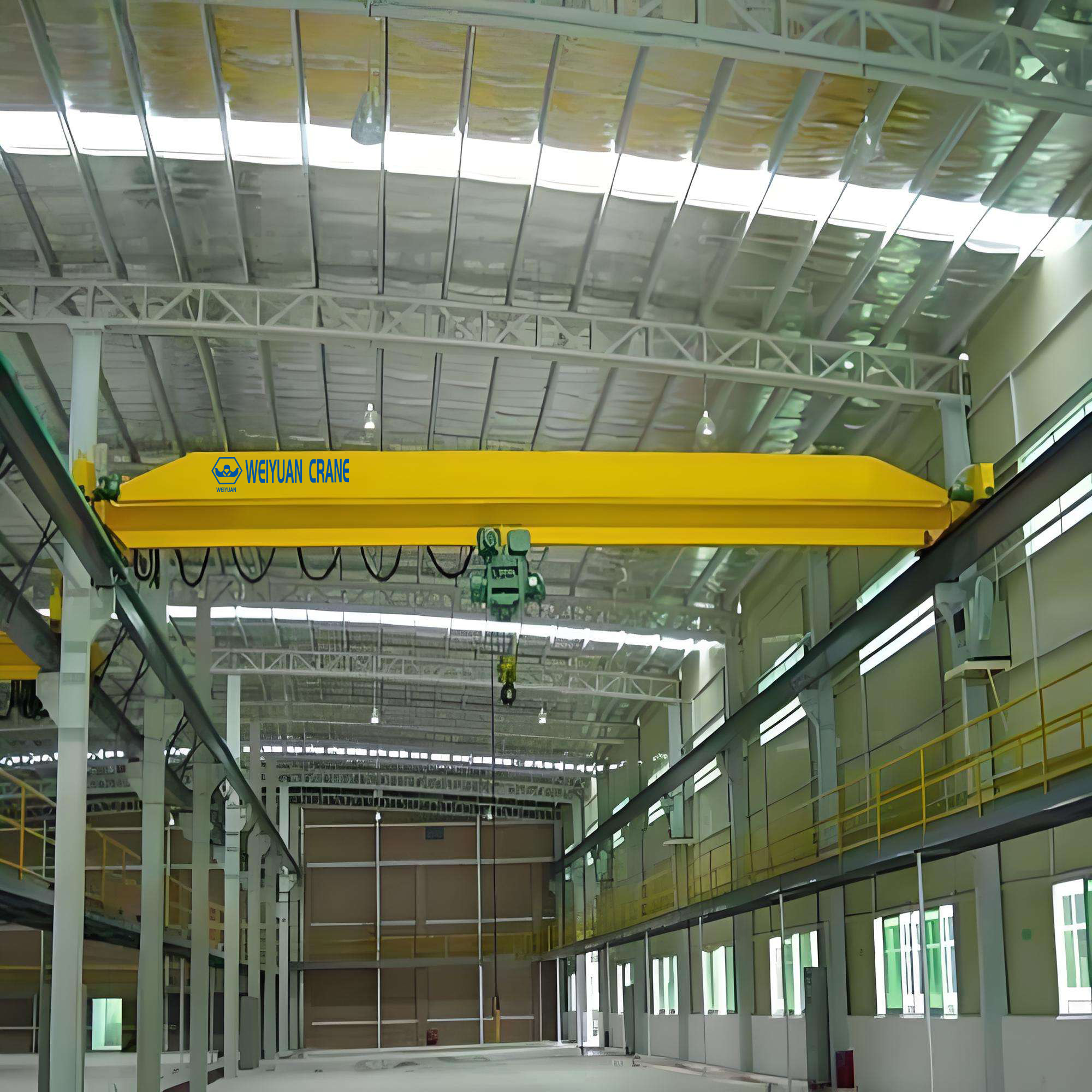
A single girder crane uses one main bridge beam running between two end trucks on the runway rails. The hoist and trolley run underneath the bridge beam on the lower flange of the I-beam.
Best for:
- Capacities from 1 ton to approximately 20 tons
- Spans up to roughly 65 feet (20 meters)
- Facilities where hook height is not the primary constraint
- Lower-frequency production use (CMAA Class A through C)
- Budget-conscious projects where maximizing performance per dollar matters
Key advantages:
- Lower purchase and installation cost (typically 20-35% less than equivalent double girder)
- Lighter dead weight, reducing runway structural requirements
- Faster delivery on standard configurations
- Simpler maintenance due to fewer components
Limitations:
- Hook height is reduced because the hoist hangs below the bridge beam
- Limited to lower capacity and shorter span ranges
- Less suitable for very high duty cycle applications
Double Girder Overhead Cranes
A double girder crane uses two parallel bridge beams with the hoist and trolley running between them on a top-running rail. This configuration allows the hook to rise much closer to the bottom of the bridge structure, maximizing usable hook height.
Best for:
- Capacities from 5 tons to 500+ tons
- Long spans (65 feet / 20 meters and beyond)
- Facilities where maximum hook height is critical
- High duty cycle production environments (CMAA Class D, E, F)
- Applications requiring maintenance walkways on the bridge
Key advantages:
- Significantly greater hook height for a given building clearance
- Capable of handling much heavier loads and longer spans
- Maintenance walkways integrated into the bridge structure
- More robust design for continuous heavy-service applications
Limitations:
- Higher purchase, installation, and runway structural cost
- Greater dead weight requires stronger runway beams and columns
- Longer lead times for custom configurations
Capacity Ranges and What They Mean in Practice
Understanding rated capacity is essential when evaluating any overhead crane for sale. Here is how capacity classes typically map to real-world applications:
1 to 5 tons:
Light assembly, maintenance bays, small fabrication shops, tool rooms. At this range, a single girder crane with an electric chain hoist is almost always the right choice. A gantry crane is also a common alternative at this capacity if runway installation is not practical.
5 to 15 tons:
General manufacturing, steel service centers, automotive component production, HVAC equipment handling. Single girder cranes serve well at the lower end; double girder systems are preferred above 10 tons.
15 to 50 tons:
Heavy fabrication, precast concrete, shipbuilding components, press room service. Double girder cranes are standard. Runway and building structure engineering become significant cost factors.
50 tons and above:
Heavy industry, steel mills, foundries, port facilities. Custom-engineered double girder systems with specialized hoists and controls. Always requires a licensed structural engineer and a full project specification process.
Key Specifications to Evaluate Before Purchase
Span
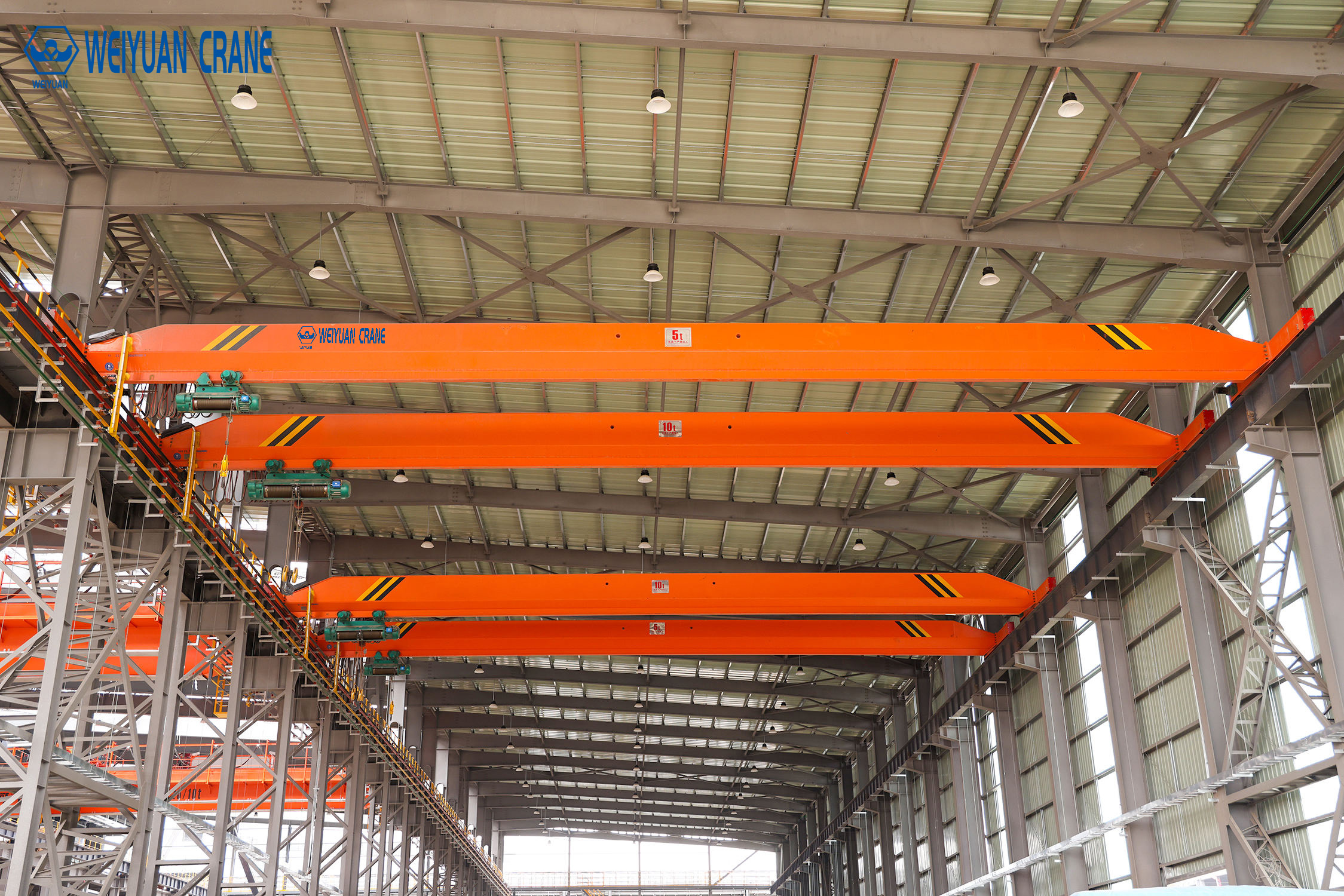
Span is the horizontal distance between the centerlines of the runway rails. This determines the width of area the crane can cover. Available spans for standard catalog cranes range from roughly 10 feet to 60 feet for single girder systems, and up to 120 feet or more for engineered double girder cranes.
Never assume a standard catalog span will fit your building without a site measurement. Runway rail centerlines must account for end truck clearances and column positions.
Hook Height (Lift Height)
Hook height is the distance from the floor to the bottom of the hook at its highest position. This is where the single vs. double girder choice has its greatest impact. In a building with a fixed roof height, a double girder crane will consistently achieve 3 to 6 feet more usable hook height than a single girder unit of comparable capacity.
Duty Class
The CMAA (Crane Manufacturers Association of America) defines six duty classes (A through F) based on the number of lifts per day and the percentage of rated load typically carried. Selecting the wrong duty class is one of the most common and costly mistakes in crane purchasing. A crane underspecified for its actual duty will experience premature component failure, voided warranties, and potentially unsafe conditions.
Runway System
The overhead crane itself is only part of the system. The runway — the elevated rail structure on which the crane travels — must be engineered to support the crane’s dead weight, the rated load, and the dynamic forces generated during travel and lifting. Many facilities that purchase a crane without a concurrent runway engineering review later discover that their columns or runway beams require reinforcement before installation can proceed.
Understanding Lead Times and What Affects Them
Standard catalog single girder cranes (common spans, standard capacities, typical hook heights) typically ship in 6 to 12 weeks from order confirmation. Custom configurations — non-standard spans, special hook heights, engineered runway systems, or high-duty-cycle designs — can require 14 to 30 weeks.
Factors that extend lead times:
- Custom span or hook height outside catalog range
- High-capacity or high-duty-cycle specifications requiring engineered components
- Specialty hoists (explosion-proof, stainless steel, cleanroom-rated)
- Integrated runway system fabrication
- Remote or difficult installation sites requiring special rigging
Planning timelines around crane lead times is essential for any construction or renovation project.
What to Look for in an Overhead Crane Supplier
Not all cranes on the market are equal in quality, and not all suppliers are equal in capability. When evaluating suppliers, consider:
Documentation and compliance:
Any overhead crane sold for industrial use in the United States must comply with ASME B30.2 (Overhead and Gantry Cranes) and should be engineered to CMAA Specification 70 (top-running cranes) or Specification 74 (underhung cranes). Reputable suppliers provide load test certificates, material certifications for structural steel, and full documentation packages.
After-sales support:
Crane systems require periodic inspection and maintenance. Before purchasing, verify that the supplier can provide local service support, parts availability, and ongoing technical assistance. A crane supplier that disappears after delivery creates real operational risk.
Engineering capability:
For any crane above 5 tons or with non-standard specifications, confirm that the supplier has in-house or affiliated engineering resources to stamp drawings and support runway design. This is non-negotiable for safe installation.
References and installed base:
Ask for references from facilities with similar applications. A supplier with a proven installed base in your industry segment is a significantly lower-risk choice than one without relevant experience.
Weiyuan QZ Type Grab Crane for Steel Scrap | 30 Ton, Heavy-Duty, High-Efficiency
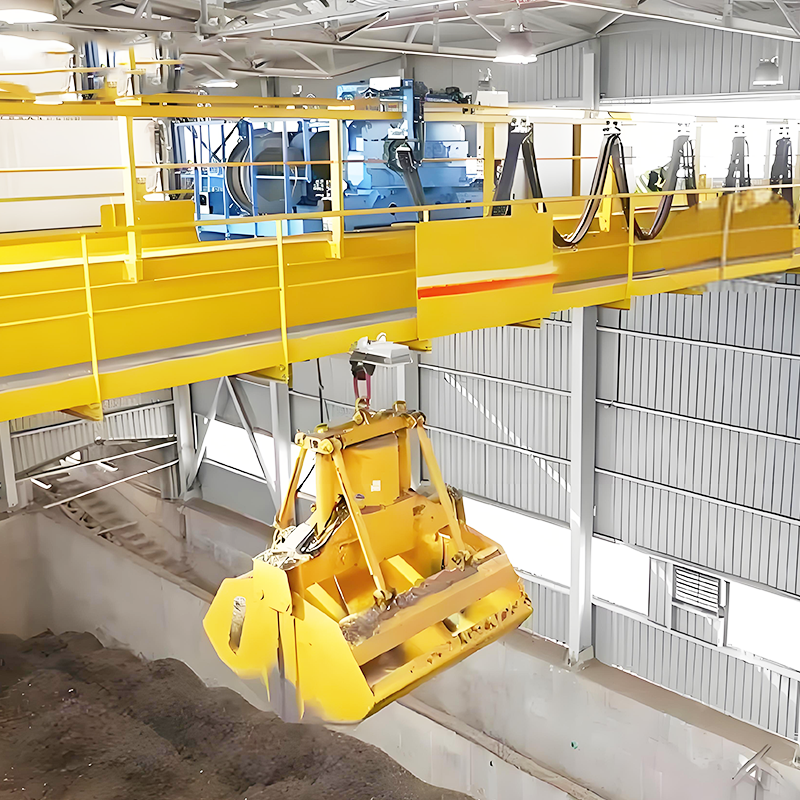
The Weiyuan QZ Type 30 Ton Grab Crane is engineered specifically for demanding steel scrap handling operations. Built on a heavy-duty double-girder platform with a high-strength orange peel grab, it delivers reliable performance and high efficiency in continuous scrap yard and foundry material handling environments. :contentReference
View Product / Get QuoteOverhead Crane vs. Gantry Crane: Which Is Right for Your Facility?
This question comes up frequently in the evaluation process. While an overhead crane requires a permanent runway structure mounted to the building (or to freestanding columns), a gantry crane is self-supporting — its bridge rides on legs that run on floor-level rails or casters.
In facilities where the building structure cannot support a runway system, or where the crane needs to serve multiple areas or be relocated, a gantry crane is often the more practical choice. For permanent, high-frequency production lifting, the overhead crane’s fixed runway provides superior performance, higher capacity capability, and greater hook height.
Many facilities operate both: overhead cranes for primary production lifting and a gantry crane for maintenance, setup, and off-line operations. The two systems are complementary, not competing.
Red Flags When Reviewing Overhead Cranes for Sale
- No CMAA or ASME compliance documentation provided
- Vague or missing duty class ratings
- Capacity ratings that seem unusually high for the price point
- No load test certificate offered with the unit
- Supplier cannot provide local installation or service support
- Missing runway engineering support for fixed systems
Frequently Asked Questions
Q: How long does an overhead crane last?
A: A properly specified and maintained overhead crane has a structural service life of 25 to 30 years or more. Hoist components, wheels, and electrical systems will require periodic replacement, but the bridge and runway structure typically outlast multiple hoist generations.
Q: Do I need a permit to install an overhead crane?
A: In most U.S. jurisdictions, yes. Fixed overhead crane installations typically require a building permit, engineered drawings stamped by a licensed structural engineer, and a final load test inspection before the crane is placed in service.
Q: What is the difference between a top-running and an underhung crane?
A: A top-running crane’s end trucks ride on top of the runway rail. An underhung (or underslung) crane’s end trucks hang below an I-beam runway. Top-running systems are standard for most industrial applications; underhung systems are used where lower headroom is needed or where the building structure supports beam-mounted runways.
Q: Can I add a second crane to my existing runway?
A: Possibly, but it requires engineering review. The existing runway must be evaluated for the additional load. Adding a second crane often reveals that the original runway was not designed with a second unit in mind.