


Revolutionizing Material Handling: The Versatility of Jib Cranes
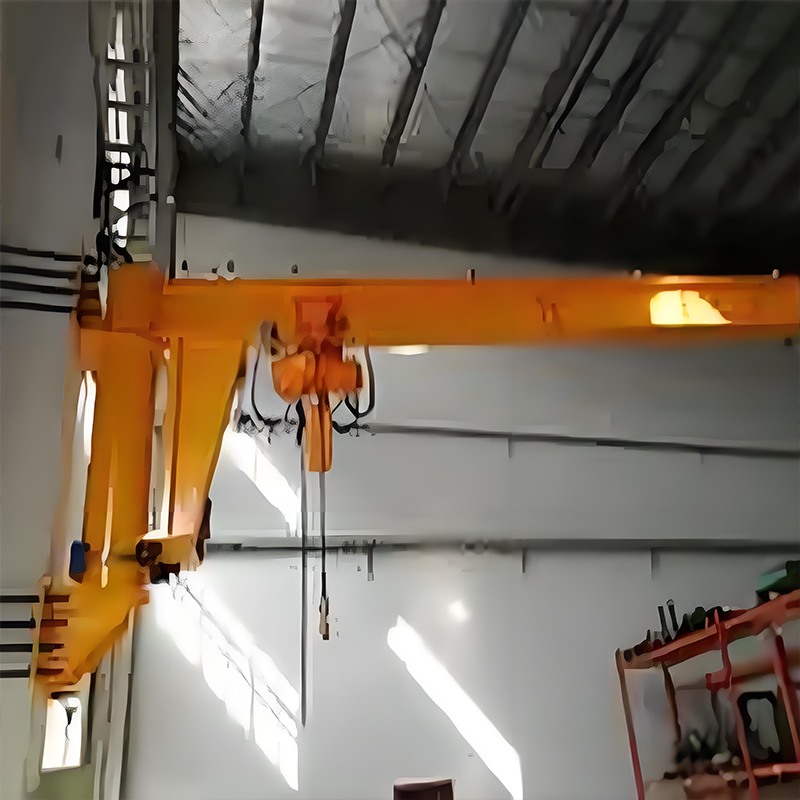
In the complex ecosystem of an industrial facility, not all lifting tasks are created equal. While massive overhead bridge and gantry cranes handle the heavy, facility-wide logistics, a huge portion of daily work involves smaller, repetitive lifts at individual workstations. Using a 20-ton crane to move a 500-pound component is not just inefficient; it creates a bottleneck that halts workflow across multiple departments. This is where localized lifting solutions become essential for maintaining productivity.
For decades, the undisputed champion of workstation material handling has been the jib crane. Its simple design, incredible versatility, and relatively low cost have made it a ubiquitous feature in machine shops, assembly lines, and maintenance bays around the world. These compact powerhouses are designed to supplement larger crane systems, providing dedicated lifting power right where it’s needed most.
This guide explores the revolutionary versatility of jib cranes, diving into the different types available, their specific applications, and how they can drastically improve the safety and efficiency of your daily operations.
What Exactly Is a Jib Crane?
A jib crane is a type of overhead lifting device that consists of a horizontal member, known as the “jib” or “boom,” which supports a movable hoist. The jib is fixed to a vertical support structure, allowing it to rotate over a specific circular or semi-circular area. This design provides localized lifting coverage for a single workstation or a small group of adjacent work cells.
Unlike large overhead cranes that cover an entire rectangular bay, a jib crane’s primary function is to serve a smaller, targeted zone. This focused approach is its greatest strength, as it frees up larger cranes for heavier tasks and eliminates the “waiting game” for operators at individual workstations.
The Core Components of a Jib Crane System
To appreciate their versatility, it’s important to understand the core components that make up a standard jib system.
- The Mast (or Pillar): This is the vertical column that supports the entire structure. In freestanding and mast-type models, this is a heavy-duty steel pipe or wide-flange beam that anchors directly to the floor.
- The Jib (or Boom): This is the horizontal beam that the trolley travels along. The length of the boom determines the crane’s maximum reach.
- The Hoist and Trolley: The hoist is the device that performs the lifting, typically an electric chain hoist or a manual chain fall. The trolley is the wheeled mechanism that allows the hoist to move back and forth along the length of the jib.
- The Rotation Mechanism: This allows the jib to pivot around the mast. The rotation can be manual (pushed by the operator) or powered by an electric motor for heavier capacities or more precise control.
The Many Faces of Jib Cranes: Types and Configurations
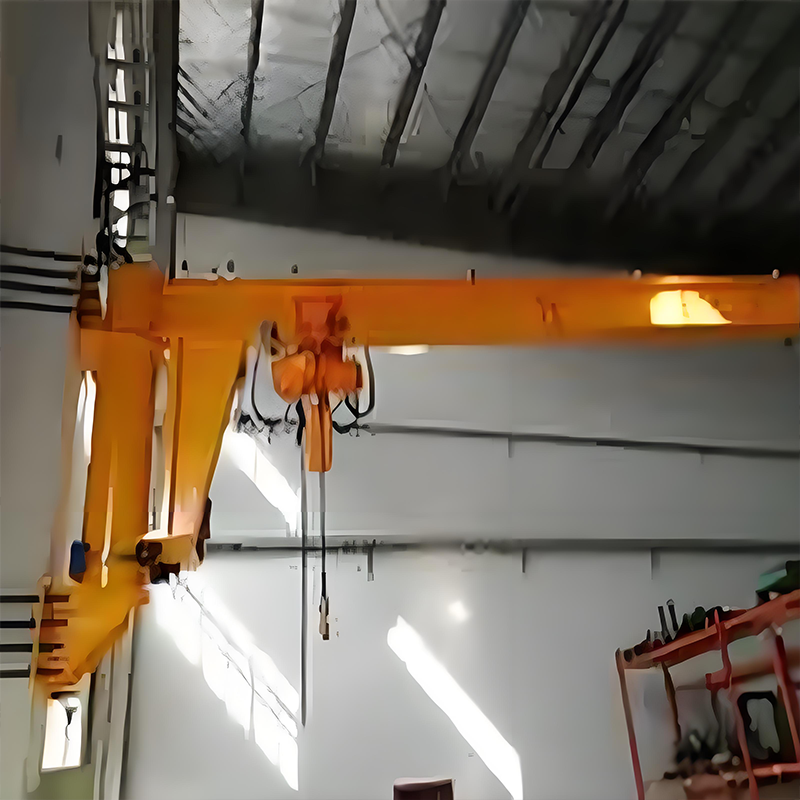
The true versatility of jib cranes comes from their wide range of configurations. Each type is designed to solve a specific set of material handling challenges.
1. Freestanding Jib Cranes
This is the most common and versatile type. A freestanding jib features a heavy-duty mast that is anchor-bolted to a large, reinforced concrete foundation.
- Key Advantage: They are completely self-supporting and do not rely on any part of the building for structural support. This allows them to be installed anywhere, indoors or outdoors, as long as a proper foundation can be poured. They typically offer 360-degree rotation and the highest lifting capacities, often up to 15 tons.
- Best For: Serving multiple workstations, loading machinery, and acting as a primary lifting device in an open-area machine shop.
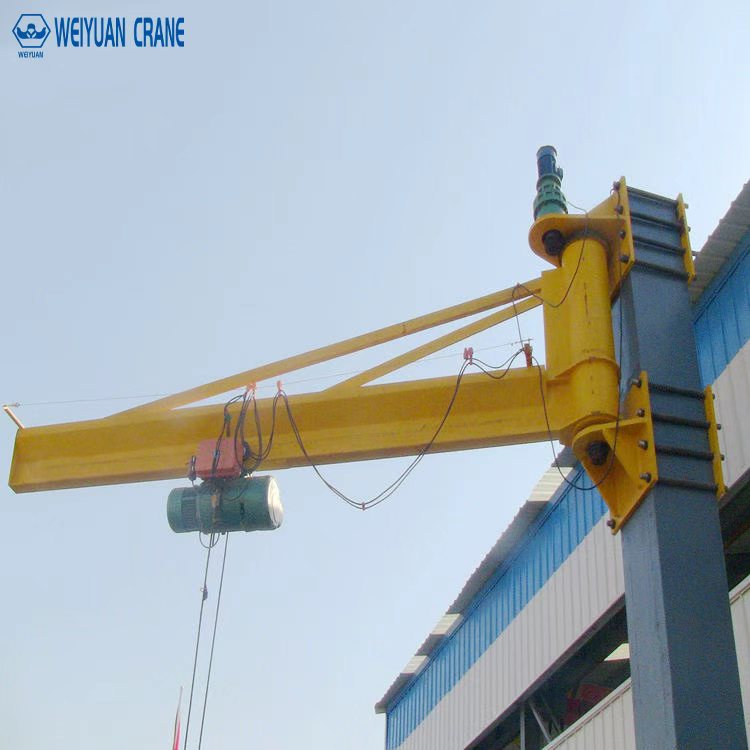
Weiyuan 500kg Wall Mounted Jib Crane
The Weiyuan 500kg Wall Mounted Jib Crane is a compact and efficient lifting solution designed for workshops, assembly lines, and warehouse operations. Mounted directly to a structural wall or column, it saves valuable floor space while providing smooth 180° slewing coverage for precise material handling up to 500 kg.
View Product / Get Quote2. Foundationless Jib Cranes
A modern and highly popular variation of the freestanding type, these cranes use a large, portable steel slab as their base instead of a poured concrete foundation.
- Key Advantage: Installation is incredibly fast and requires no excavation or concrete curing time. The crane can be unbolted and moved to a new location within the facility if production needs change, offering unmatched flexibility.
- Best For: Facilities with leased space where permanent foundations are not allowed, or for businesses that anticipate reconfiguring their layouts in the future. Capacities are generally lower, typically up to 1,000 pounds.
3. Mast-Type Jib Cranes
This design is a cost-effective compromise between a freestanding and a building-supported model. The mast is stabilized by anchor bolts at the bottom and an additional support connection at the top, which ties into the building’s overhead steel structure.
- Key Advantage: Because the top of the mast is supported, the concrete foundation does not need to be as large or deep as a freestanding model, reducing installation costs. They still provide 360-degree rotation.
- Best For: Indoor applications where there is a suitable overhead beam or truss available for stabilization, but a full wall-mounted solution is not practical.
4. Wall-Mounted Jib Cranes
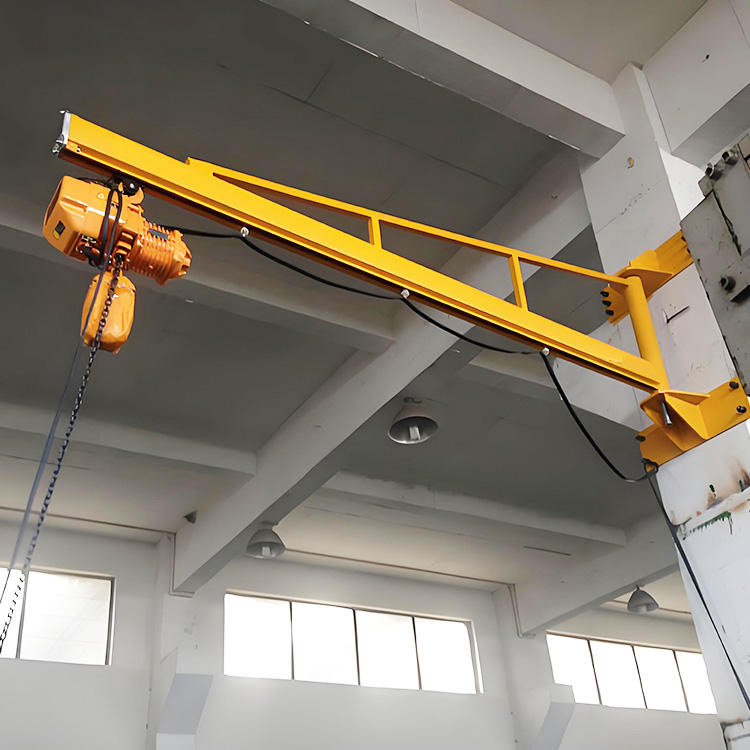
These cranes eliminate the need for any floor-mounted mast, freeing up valuable floor space. The entire jib assembly is mounted directly to a sufficiently strong building wall or column.
- Key Advantage: They require no floor space whatsoever, making them ideal for individual workstations along an assembly line or in a narrow bay. They are a very economical way to provide localized lifting.
- Best For: Servicing individual work cells, especially for repetitive tasks. They typically provide 180 to 200 degrees of rotation. The building column or wall must be analyzed by a structural engineer to ensure it can support the loads.
5. Articulating Jib Cranes
This innovative design features a boom with two arms that can pivot independently, similar to a human arm.
- Key Advantage: The articulating arms allow the operator to easily maneuver the hoist around corners and reach into confined spaces, such as inside a machine’s enclosure. They provide exceptional precision and control for complex positioning tasks.
- Best For: Reaching under or around obstacles, serving crowded work cells, and applications requiring pinpoint load placement.
How Jib Cranes Revolutionize Facility Workflow
Integrating jib cranes into your material handling strategy provides several powerful benefits that directly boost productivity and safety.
1. Reducing Wait Times and Increasing Throughput
The most significant impact is the elimination of operator downtime. When each workstation has its own dedicated lifting device, workers no longer have to wait for the single facility-wide overhead crane to become available. This simple change can dramatically increase the number of units a single work cell can process per hour.
2. Improving Workplace Ergonomics and Safety
Manual lifting of even moderately heavy objects is a leading cause of workplace injuries, such as back strain and sprains. By providing a mechanical means to lift loads as small as 100 pounds, you protect your employees from injury. This reduces workers’ compensation claims and creates a safer, more ergonomic work environment. A safer team is a more productive team.
3. Freeing Up Larger Cranes for Heavier Lifts
Jib cranes are not meant to replace your large overhead cranes; they are meant to supplement them. By handling all the smaller, localized lifts, they ensure that your high-capacity bridge or gantry cranes are reserved for the heavy-duty tasks they were designed for. This creates a highly efficient, tiered material handling system.
4. Cost-Effective Lifting Solutions
Compared to a full overhead bridge crane system, a jib crane is a far more economical investment. The purchase price, installation cost, and maintenance requirements are all significantly lower. This allows facilities to deploy multiple lifting solutions across their plant for a fraction of the cost of a single, larger system.
Adhering to E-A-T: Safety, Compliance, and Trust
To ensure your material handling is efficient and trustworthy, it is critical to adhere to the principles of Expertise, Authoritativeness, and Trustworthiness (E-A-T).
- Expertise in Installation and Operation: Installation should only be performed by qualified technicians. For wall-mounted and mast-type jib cranes, a licensed structural engineer must analyze the building’s support structure to verify its adequacy. Operator training is equally crucial to ensure safe and efficient use.
- Authoritative Compliance: All jib cranes must comply with industry safety standards, such as OSHA 1910.179 and ASME B30.11. This includes requirements for regular inspections, documented load testing (typically at 125% of rated capacity), and clear labeling of the crane’s working load limit.
- Trustworthy Maintenance: A regular, documented maintenance program is non-negotiable. This includes inspecting the welds, checking the torque on anchor bolts, lubricating moving parts, and testing the functionality of the hoist and trolley. A well-maintained crane is a trustworthy and reliable asset.