


The Ultimate Buyer’s Guide to Electric Hoists: Types, Capacities & Safety Standards (2025)
Whether you manage a busy manufacturing floor, run a construction crew, or oversee a commercial warehouse, selecting the right lifting equipment is one of the most consequential purchasing decisions you will make. Electric hoists have become the workhorse of modern material handling, combining mechanical power with precise electronic controls to move loads that would otherwise require large teams of workers or costly cranes. This comprehensive buyer’s guide walks you through every key consideration — from the fundamental differences between product categories to the international safety standards that should govern your purchasing decision in 2025.
What Is an Electric Hoist?
An electric hoist is a powered mechanical device that uses an electric motor to raise, lower, and horizontally traverse heavy loads. The motor drives either a chain or a wire rope drum, which in turn moves a hook assembly. Most modern units also integrate overload protection sensors, limit switches that stop travel at preset points, and variable-speed controllers that allow operators to adjust lifting speed with precision.
Compared with manual chain blocks or lever hoists, electric hoists dramatically reduce operator fatigue, improve throughput, and deliver far more consistent, repeatable lifts. They are available in capacities ranging from 125 kg for light workshop use all the way to 100 tonnes for heavy industrial applications.
The Main Types of Electric Hoists
The market broadly divides into three families, each optimised for a different set of operating conditions:
1. Electric Chain Hoists
Electric chain hoists use a precision-machined link chain as the load medium. The chain passes through a pocket wheel (sprocket) driven by the motor, and the load is suspended from a bottom hook attached to the chain’s lower end. Because chain is compact and can fold back on itself inside a chain container, electric chain hoists are especially well suited to applications with limited headroom or where the hoist must travel along an overhead monorail or bridge crane.
Typical load capacities for electric chain hoists run from 125 kg up to 20 tonnes, though specialised multi-fall configurations can exceed that. Their robust construction makes them the preferred choice in foundries, automotive assembly plants, and steel fabrication shops where sparks, heat, and abrasive dust are everyday realities.
2. Wire Rope Hoists
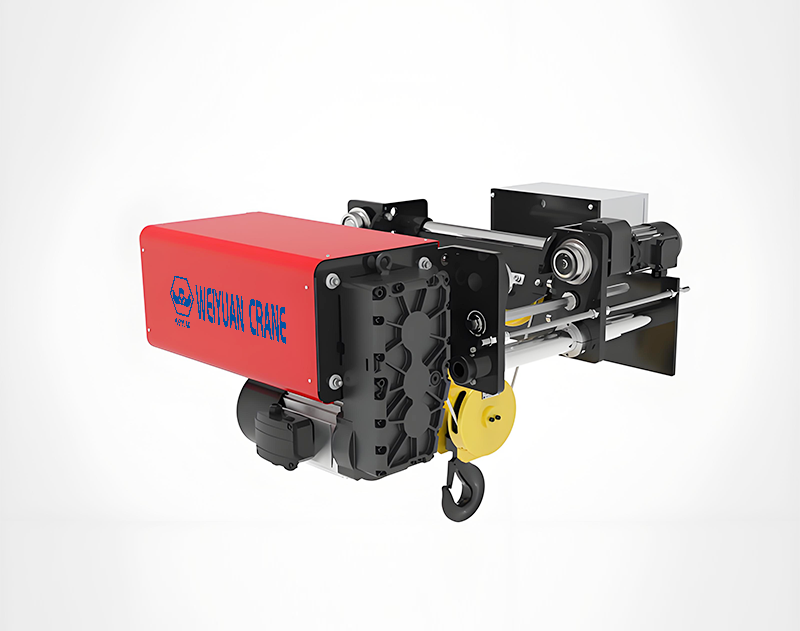
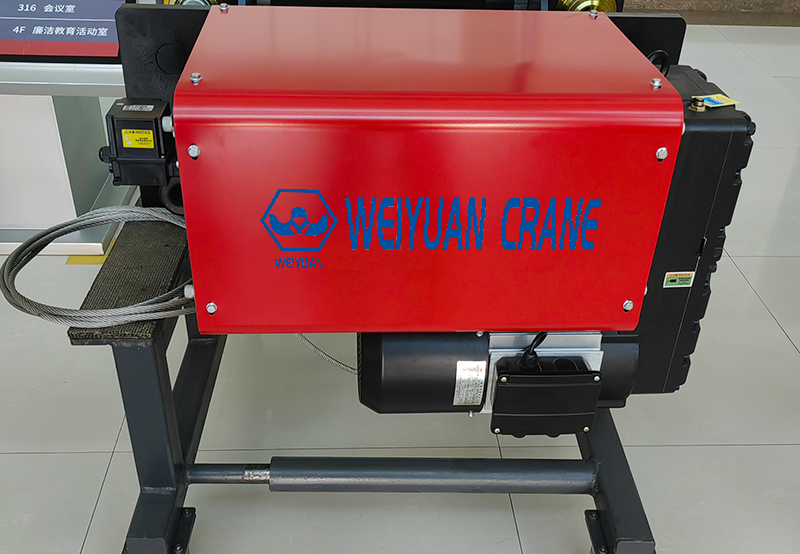
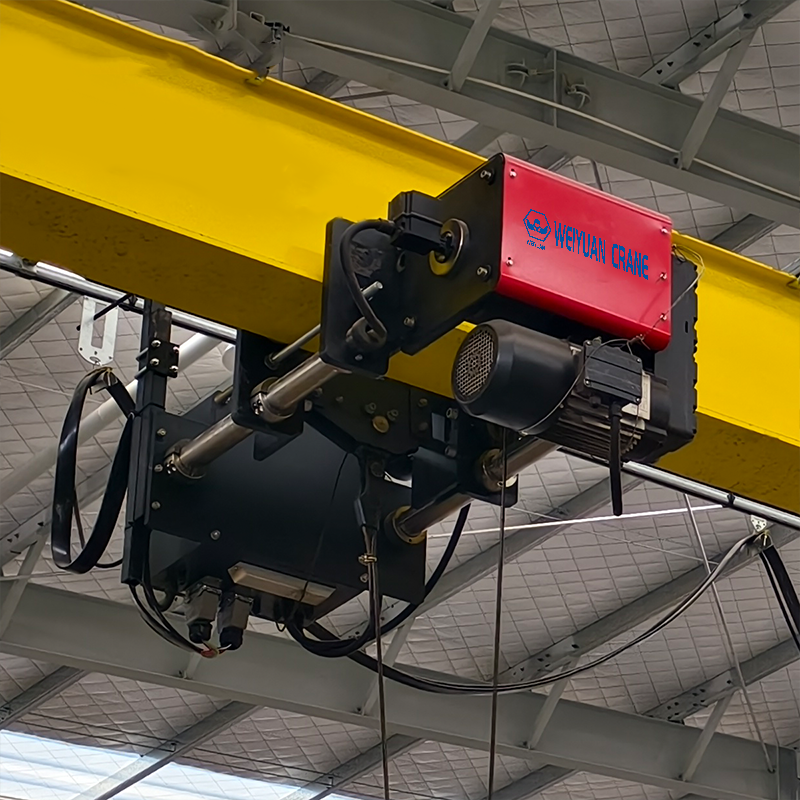
Wire rope hoists use multi-strand steel cable wound onto a grooved drum. Because wire rope can be manufactured in very long lengths without adding significant weight, wire rope hoists dominate applications requiring long lifts — port cranes, paper mills, and mining headframes, for example. They typically deliver higher speeds than chain models and are available in capacities from around 500 kg up to several hundred tonnes.
3. Lever and Specialty Hoists
Some niche applications call for explosion-proof hoists (certified for use in ATEX zones), stainless-steel models for food-grade or pharmaceutical environments, or low-headroom designs for installations in confined spaces. These are manufactured to specific compliance standards and should always be sourced from certified suppliers.
Understanding Load Capacity Ratings
Load capacity — sometimes called Working Load Limit (WLL) or Safe Working Load (SWL) — is the maximum load the hoist is rated to lift under normal operating conditions. It is critical to understand that this figure assumes a single, vertically suspended load with no side-pull and no shock loading.
When specifying a hoist, engineers typically apply a safety factor of at least 4:1, meaning a hoist with a 1-tonne WLL has been tested to at least 4 tonnes. However, you should also account for dynamic forces: if your process involves picking loads off the floor quickly (shock loading), de-rating the hoist by 25–30 percent below its nominal WLL is considered best practice in many engineering guidelines.
Key Safety Standards You Must Know in 2025
Compliance with recognised safety standards is non-negotiable, both for worker protection and for regulatory reasons. The following standards are the most widely referenced globally:
- ASME B30.16 (USA): Covers overhead underhung and stationary hoists, specifying design, installation, operation, and maintenance requirements.
- EN 14492-2 (Europe): The harmonised European standard for power-driven hoists; products bearing CE marking must demonstrate conformity to this standard.
- FEM 1.001 (Europe): Provides classification guidance for crane components including hoists, defining duty classes from M1 (occasional use) to M8 (continuous heavy-duty service).
- ISO 4301: International classification standard for crane and hoist mechanisms; widely used outside North America and Europe.
- ATEX / IECEx: Required for hoists deployed in potentially explosive atmospheres — chemical plants, grain silos, paint booths, etc.
When requesting quotes from suppliers, always ask for the specific certificate numbers and verify them with the issuing certification body. Counterfeit or misrepresented certifications are a genuine problem in the global market.
How to Choose the Right Electric Hoist: A Step-by-Step Framework
Rather than leading with a brand preference, professional procurement teams follow a structured selection process:
- Step 1: Define the application. Document the maximum load weight, lift height, frequency of lifts per hour, shift pattern, and any environmental hazards such as heat, moisture, or explosive gases.
- Step 2: Select the load medium. Use electric chain hoists for capacities up to 10 tonnes, frequent short lifts, or confined headroom. Choose wire rope for capacities above 5 tonnes, long lifts, or high-speed operation.
- Step 3: Determine the duty class. Match the hoist’s FEM/ISO duty class to your cycle count. Underspecifying the duty class is one of the most common and costly procurement mistakes.
- Step 4: Verify compliance. Ensure the hoist carries the certifications required by your local regulations and industry sector — CE, ASME, ATEX, or food-grade as applicable.
- Step 5: Evaluate after-sales support. Spare parts availability, local service technicians, and warranty terms often matter more than the purchase price over a 10-year ownership period.
Frequently Asked Questions
Q: What is the typical service life of an electric hoist?
A: A well-maintained hoist operating within its duty class can last 15–20 years. Regular inspections and timely replacement of wear parts — chain, brake linings, contactor contacts — are the single biggest determinants of longevity.
Q: Can electric chain hoists be used outdoors?
A: Yes, but you must specify a hoist with an IP rating appropriate for outdoor use (typically IP55 or higher) and ensure the chain is galvanised or otherwise protected against corrosion.
Q: How often should a hoist be inspected?
A: Most standards require a daily visual check by the operator, a monthly inspection by a competent person, and a thorough annual inspection by a qualified engineer. After any incident or near-miss, the hoist must be taken out of service until inspected.