


The Ultimate Guide to Electric Hoists: Types, Benefits, and Applications
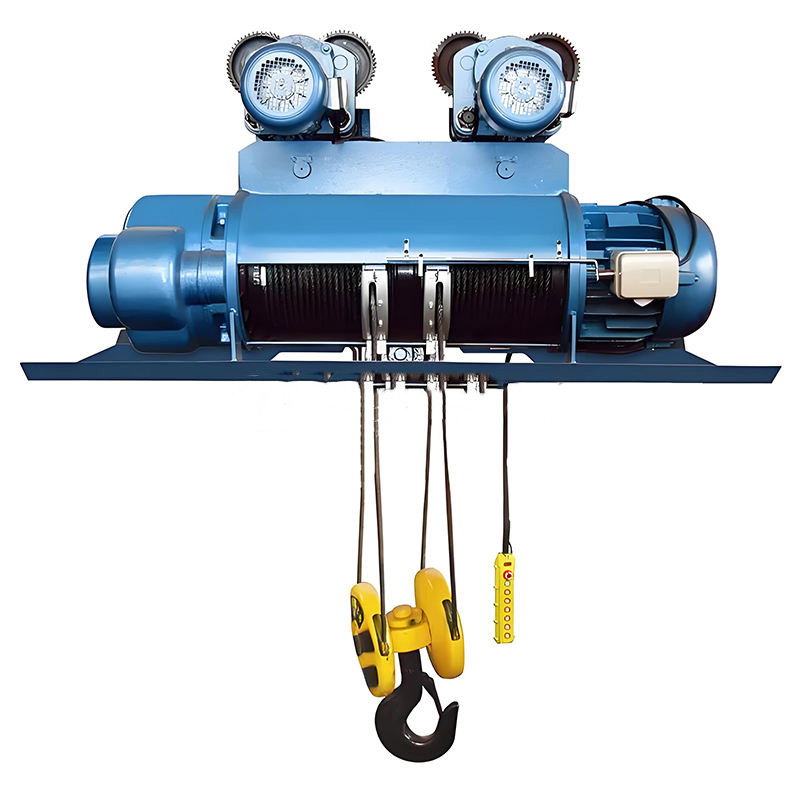
Heavy industrial operations require more than just raw power to move materials safely. They require incredible precision, speed, and reliability. While massive structural beams and runways provide the necessary framework for a facility, the true heavy lifting falls on a single, highly engineered component: the electric hoist.
Think of the electric hoist as the mechanical muscle of your material handling system. Whether you mount it to a small workstation jib or a massive bridge system, the hoist dictates how safely and efficiently your materials move.
This guide breaks down the core technology behind electric hoists, explores the different types available, and provides actionable insights on how to specify the right equipment for your facility.
What Exactly is an Electric Hoist?
An electric hoist is a motorized lifting device that uses a drum or a lift-wheel to wrap a pulling medium—either a steel chain or a wire rope. Powered by an industrial-grade electric motor, these devices lift and lower heavy loads with consistent speed and minimal operator effort.
Unlike manual chain blocks or air-powered pneumatic hoists, electric models handle extreme weight capacities while offering features like variable speed control. You will find them integrated into almost every type of lifting infrastructure, serving as the primary lifting mechanism for overhead bridge systems, monorails, and large-scale Gantry Cranes.
The Core Components
To understand how these machines safely suspend tons of steel in the air, you need to look at their anatomy:
- The Electric Motor: A high-torque powerhouse engineered for intermittent, heavy-duty use.
- The Gearbox: This component translates the high-speed rotation of the motor into the slow, immense pulling force required to lift the load.
- The Braking System: A fail-safe mechanical brake that automatically engages the moment power is cut, preventing the load from dropping.
- The Lifting Medium: The actual material that holds the load, typically a high-tensile steel chain or a multi-strand galvanized wire rope.
- The Control Pendant: A wired or wireless remote that allows the operator to control the lifting speed and direction from a safe distance.
The Great Debate: Chain vs. Wire Rope Hoists

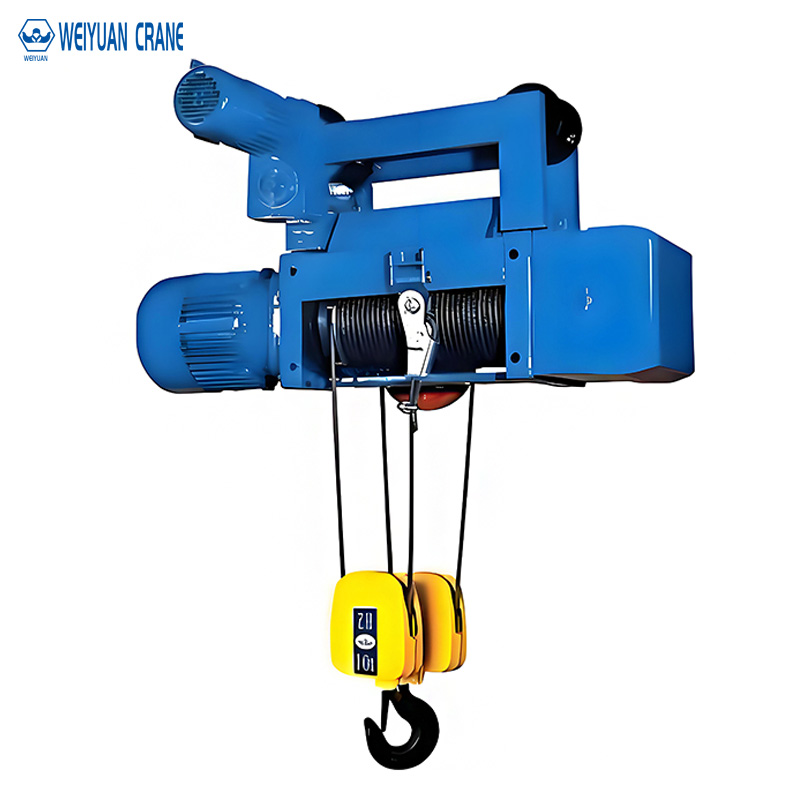
Weiyuan 1 Ton Remote Control Monorail Electric Hoist
The Weiyuan 1 Ton Remote Control Monorail Electric Hoist is designed for efficient material handling in workshops, warehouses, and light industrial environments. Equipped with wireless remote control and a monorail trolley system, it ensures precise load positioning, smooth travel, and safe lifting operations up to 1 ton.
View Product / Get QuoteWhen purchasing a hoist, your first major decision is choosing between a chain or a wire rope lifting medium. Your choice depends heavily on your required weight capacity and production duty cycle.
Electric Chain Hoists
Chain hoists use a motorized sprocket to pull a hardened steel link chain. They are generally more compact, highly durable, and cost-effective for lower-capacity lifts.
- Best For: Workstation cranes, jib cranes, and light manufacturing assembly lines.
- Capacity Range: Typically 1/8 ton up to 5 tons.
- The Main Advantage: They provide a “true vertical lift.” Because the chain pulls straight up into the hoist body, the hook does not drift laterally as it raises. They also tolerate dusty and dirty environments exceptionally well.
Electric Wire Rope Hoists
Wire rope hoists use a grooved steel drum to smoothly spool a thick metal cable. Engineers design these units for high-speed, heavy-duty applications that would quickly wear out a standard chain hoist.
- Best For: Heavy-duty process cranes, steel mills, and massive outdoor Gantry Cranes.
- Capacity Range: 5 tons up to 100 tons or more.
- The Main Advantage: They offer significantly faster lifting speeds and feature larger frames that dissipate motor heat much more effectively during continuous, high-volume production shifts.
Strategic Benefits of Upgrading to Electric Lifting
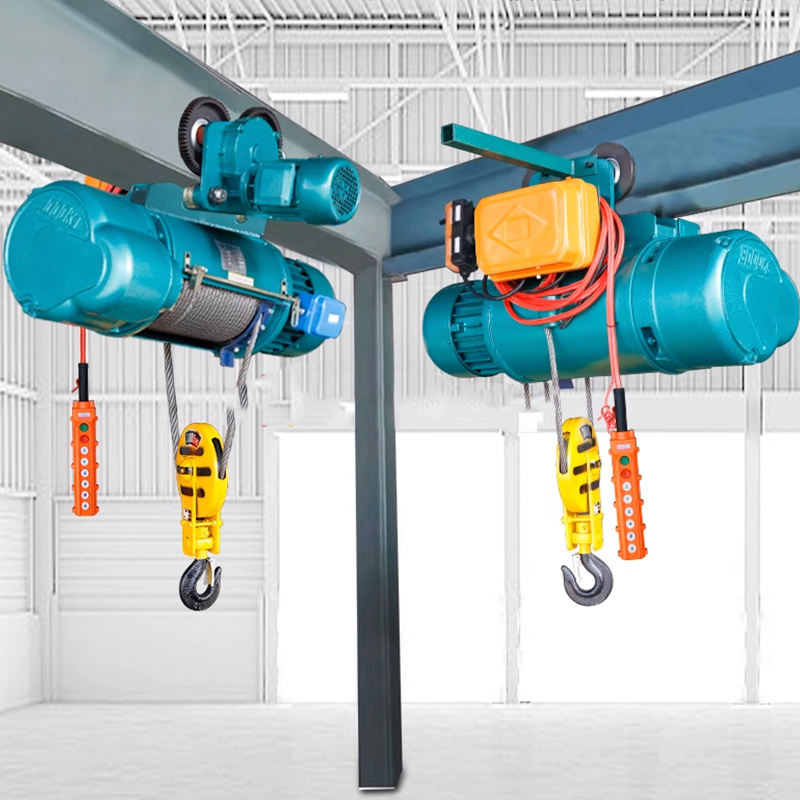
Replacing manual lifting practices with electric hoists creates immediate, measurable improvements across your entire operation.
Drastic Reduction in Workplace Injuries
Manual material handling is a leading cause of severe back injuries and musculoskeletal disorders. An electric hoist takes 100% of the physical lifting burden off your workforce. Operators who do not experience physical fatigue make fewer mistakes and maintain a higher level of productivity throughout their entire shift.
Millimeter-Precision Positioning
Modern electric hoists often utilize Variable Frequency Drives (VFDs). A VFD allows the operator to control the lifting speed infinitely, rather than relying on a single, jerky speed setting. This enables “micro-positioning.” Whether you are lowering a heavy die into a stamping press or aligning a massive concrete pillar, you can move the load in millimeter increments without dangerous swinging.
Scalable Production Efficiency
Electric hoists operate much faster than manual alternatives. When your material handling equipment moves faster, your assembly line speeds up. This improved cycle time directly increases your facility’s daily output and profitability.
Sizing and Specifying Your Hoist
You cannot buy an electric hoist based on weight capacity alone. To ensure safety and longevity, you must evaluate several technical metrics.
Understanding Duty Cycles
The Crane Manufacturers Association of America (CMAA) classifies hoists based on how hard they work. If you install a light-duty hoist on a 24/7 production line, the motor will quickly burn out.
- Light Duty (H2): Ideal for maintenance shops with infrequent lifting needs.
- Standard Duty (H3): Perfect for general machine shops and standard fabrication.
- Heavy Duty (H4): Required for high-volume manufacturing, steel warehouses, and active assembly lines.
Calculating Lift Height and Headroom
Always measure the distance from your floor to the highest point the hook needs to reach. Then, factor in the hoist’s “headroom”—the physical space the hoist body occupies below the crane beam. You must ensure you have enough vertical clearance to lift your loads over existing machinery and obstacles.
Applications Across Global Industries
Because they scale from small 250-pound units to massive 100-ton behemoths, electric hoists serve nearly every industrial sector.
- Automotive Manufacturing: Assembly line workers use chain hoists to precisely position engines and chassis components.
- Energy Sector: Mechanics rely on high-capacity wire rope hoists to lift and maintain heavy turbines inside power plants.
- Logistics and Shipping: Intermodal rail yards use heavy-duty wire rope hoists mounted on wide-span Gantry Cranes to quickly load and unload shipping containers from flatbed train cars.
- Construction: Contractors use portable electric hoists to lift structural steel and heavy tools to upper floors on active building sites.
Safety, Inspection, and Maintenance
Owning heavy lifting equipment requires a strict commitment to safety protocols. A hoist is a structural asset that you must maintain rigorously.
Operators must perform a quick visual inspection before every shift. They need to check the chain or wire rope for fraying, test the emergency stop button, and ensure the limit switches function correctly. Beyond daily checks, OSHA and ASME regulations require a certified crane technician to perform a comprehensive tear-down audit annually.
If you plan to use your equipment outdoors—such as on heavy-duty Gantry Cranes in a lumber yard—you must specify a weatherization package. This includes NEMA 4 electrical enclosures, anti-corrosive epoxy paint, and physical covers to protect the hoist motor from rain and snow.
Conclusion: Empower Your Production Line
An electric hoist is a foundational investment in the speed, safety, and independence of your workforce. By carefully analyzing your capacity needs, required lift heights, and duty cycles, you can select a lifting solution that eliminates production bottlenecks entirely.
Take the time to consult with a qualified material handling engineer. When you specify the right electric hoist for your specific environment, it will serve as a reliable, profit-driving asset for decades.
Frequently Asked Questions (FAQ)
Q1: How long does an industrial electric hoist typically last?
With proper routine maintenance and a duty cycle that matches the actual workload, a high-quality electric hoist will reliably serve a facility for 10 to 15 years. You will need to replace the chain or wire rope periodically as it wears down, but the core motor and gearbox are built for long-term endurance.
Q2: What happens if the power goes out while I am lifting a heavy load?
Electric hoists feature fail-safe mechanical braking systems. If the facility loses electrical power, the brake automatically and instantly engages, locking the load securely in mid-air until power is restored or a technician manually lowers it.
Q3: Can I use an electric chain hoist outdoors?
Yes, but you cannot use a standard indoor model. You must order the hoist with a specialized weather package. This includes upgraded seals to keep out moisture, stainless steel hardware to prevent rust, and specialized motor covers.
Q4: What is the difference between a single-speed and a two-speed hoist?
A single-speed hoist moves at one constant velocity, which is fine for simple, open-area lifting. A two-speed hoist features a fast speed for general transport and a very slow “creeping” speed. The creeping speed allows the operator to gently set a delicate load down without jarring it.
Q5: Are overload limiters required on all hoists?
While older hoists may not have them, overload limiters are a standard, critical safety feature on modern equipment. They use mechanical slip clutches or electronic sensors to prevent the hoist from attempting to lift a load that exceeds its maximum certified weight capacity, preventing catastrophic structural failure.