


Title: 5 Ways Durable Electric Hoists Maximize Your ROI
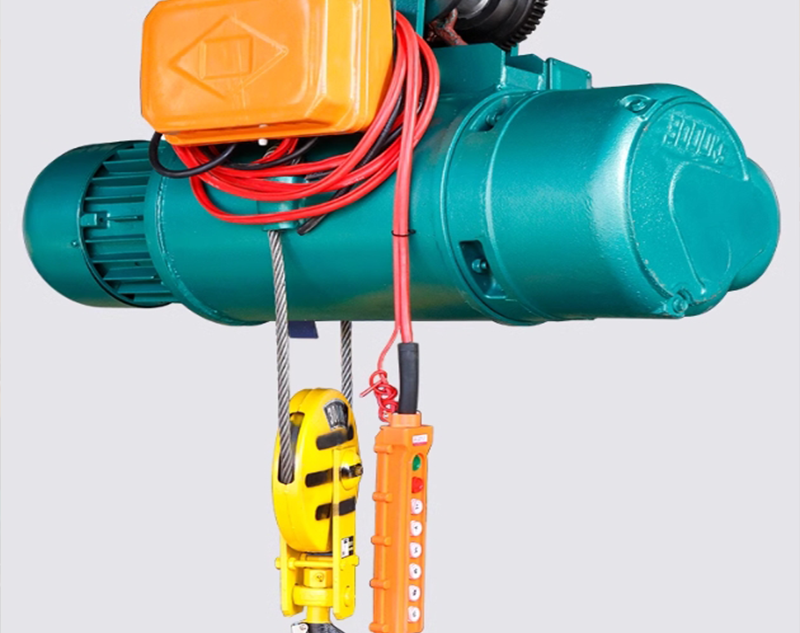
5 Ways Durable Electric Hoists Maximize Your ROI
Whether you run a busy manufacturing plant, a bustling fabrication shop, or a logistics warehouse, every minute of downtime costs real money. The right material-handling equipment — especially a high-quality electric hoist — can spell the difference between an operation that hemorrhages overhead costs and one that compounds savings year after year. In this guide, we break down five concrete, data-backed ways that durable electric hoists deliver a measurable return on investment (ROI), and why pairing them with a well-designed Gantry Crane system amplifies every one of those gains.
If you’ve been on the fence about upgrading your lifting solution, read on — the numbers tell a compelling story.
1. Dramatically Lower Labor Costs Through Automation
One of the most immediate and measurable ROI drivers is the reduction in manual labor required to move heavy loads. Traditional chain-fall hoists demand significant physical effort and, more importantly, more operators. An electric hoist automates the lifting cycle entirely, allowing a single worker to handle loads that previously required two or three people.
Real-World Numbers
Industry benchmarks suggest that switching from manual to electric lifting equipment reduces direct labor hours tied to material handling by 30–50% in medium-to-heavy manufacturing environments. Over a standard 250-day working year, even a modest $25/hour labor cost savings adds up to tens of thousands of dollars annually per hoist station.
When integrated with a Gantry Crane system — where the hoist travels along an overhead beam structure — operators can move loads across an entire work cell or bay without any manual repositioning, compounding the labor savings further.
2. Slashing Downtime With Industrial-Grade Durability
Equipment failure is one of the hidden killers of operational ROI. Every hour a hoist is out of commission is an hour your production line may be idle. This is where “durable” stops being a marketing adjective and becomes a financial variable.
What Makes an Electric Hoist Truly Durable?
- Heavy-duty steel housing that resists impact, dust, and moisture (IP54 or higher rated units)
- Sealed, maintenance-free gear transmissions that extend service intervals
- Thermal overload protection that prevents motor burnout under continuous duty cycles
- Grade-80 or Grade-100 lifting chains with a rated working load (RWL) designed for sustained use
- CE/ASME-compliant load limiters that prevent overloading — the #1 cause of hoist failure
High-quality commercial hoists typically offer a design service life of 10–20 years versus 3–5 years for budget alternatives. Spread the capital cost over that lifespan and the per-year cost drops dramatically — a core principle of total cost of ownership (TCO) analysis.
3. Boosting Throughput and Operational Speed
Speed and precision are ROI multipliers that many buyers overlook when evaluating electric hoists. A variable-speed electric hoist doesn’t just lift fast — it lifts safely fast, which means operators can run more cycles per hour without increasing accident risk.
Speed = Capacity Without Extra Headcount
Consider a production cell that currently completes 20 lift cycles per shift. Upgrading to a dual-speed or inverter-controlled electric hoist can push that to 28–32 cycles — a 40–60% throughput increase using the same floor space and workforce. At scale, this is equivalent to adding production capacity without hiring additional staff or expanding your facility.
When your electric hoist runs on a Gantry Crane with a long-travel trolley, you eliminate the dead time operators spend walking loads manually from station to station. That saved time flows directly into productive work, tightening cycle times and improving on-time delivery rates — metrics that customers and procurement teams track closely.
| �� Key Metric: Each 10% improvement in lift-cycle throughput typically translates to a 6–8% reduction in per-unit handling cost in discrete manufacturing, according to material-handling efficiency benchmarks. |
4. Reducing Workplace Injuries and Their True Financial Cost
Workplace injury costs are frequently underestimated. Direct costs — medical bills, workers’ compensation premiums, and OSHA fines — are only part of the picture. Indirect costs such as retraining replacement workers, lost productivity, legal fees, and reputational damage can multiply the direct cost by a factor of 4–10x, according to the National Safety Council.
How Electric Hoists Reduce Musculoskeletal Risk
- Eliminate manual lifting of loads above NIOSH recommended weight limits (typically >50 lbs)
- Reduce repetitive-strain incidents tied to frequent overhead reaching and awkward postures
- Built-in load brakes provide controlled lowering, preventing sudden drops and the reactive injuries they cause
- Ergonomic pendant controls reduce hand-arm vibration exposure versus manual chain pulling
A company that prevents even one lost-time injury per year saves an average of $38,000–$150,000 in direct and indirect costs (OSHA estimates). An electric hoist installation that costs $8,000–$15,000 all-in can pay for itself from injury prevention alone within a single fiscal year.
5. Unlocking Flexibility and Future-Proofing Your Operation
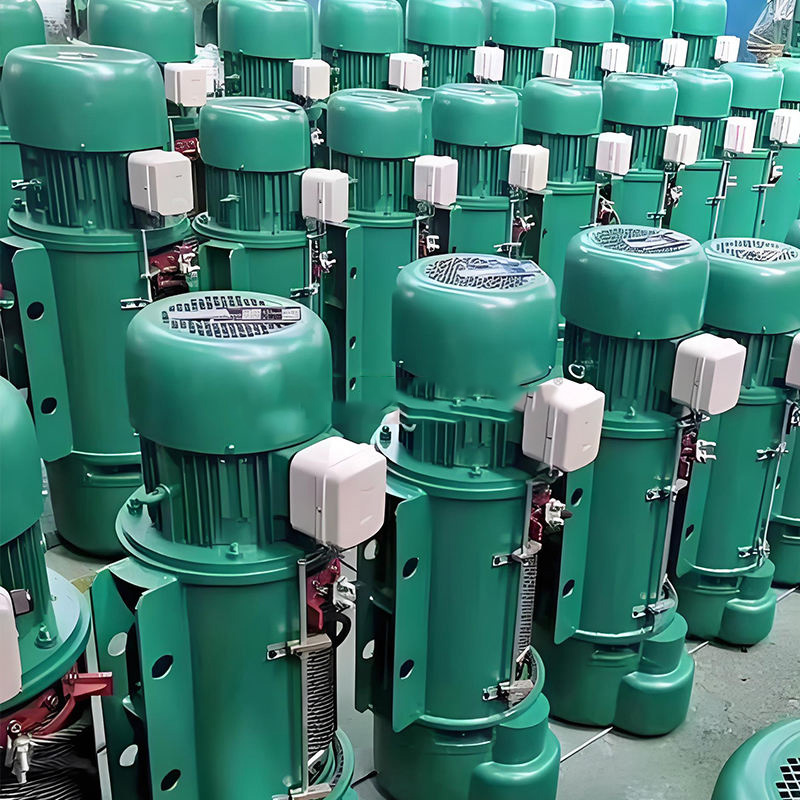

Weiyuan 1 Ton Remote Control Monorail Electric Hoist
The Weiyuan 1 Ton Remote Control Monorail Electric Hoist is designed for efficient material handling in workshops, warehouses, and light industrial environments. Equipped with wireless remote control and a monorail trolley system, it ensures precise load positioning, smooth travel, and safe lifting operations up to 1 ton.
View Product / Get QuoteThe fifth ROI lever is often the most overlooked: adaptability. Durable electric hoists — especially those mounted on portable or adjustable Gantry Crane systems — give your operation the flexibility to reconfigure work cells, serve multiple bays, and scale with changing production demands without major capital expenditure.
Modular Systems = Lower Future Capex
A freestanding, adjustable-height Gantry Crane with an electric hoist can be disassembled and relocated within hours. Compare this to a fixed overhead bridge crane that requires structural modifications to your building — often costing $50,000–$200,000 to install — and cannot be moved at all.
For businesses in leased facilities or those that expect their floor layouts to evolve, a portable Gantry Crane + electric hoist combination delivers permanent-crane functionality with the CAPEX profile of portable equipment. That capital efficiency translates directly to stronger ROI ratios on your equipment investment.
Future-Proofing With Smart Controls
Modern electric hoists increasingly support IoT-enabled load monitoring, predictive maintenance alerts, and integration with warehouse management systems (WMS). Investing in a hoist with these capabilities today insulates you against technology obsolescence and positions your operation to leverage Industry 4.0 efficiency gains as they mature.
ROI Summary: Electric Hoist Benefits at a Glance
| ROI Factor | Key Metric | Impact Level |
| Labor Savings | 30–50% reduction in handling labor | High |
| Durability / TCO | 10–20 yr lifespan vs 3–5 yr budget | High |
| Throughput | 40–60% more lift cycles per shift | Medium–High |
| Injury Prevention | $38k–$150k avoided per injury | High |
| Flexibility / Capex | Relocatable; no structural build-out | Medium |
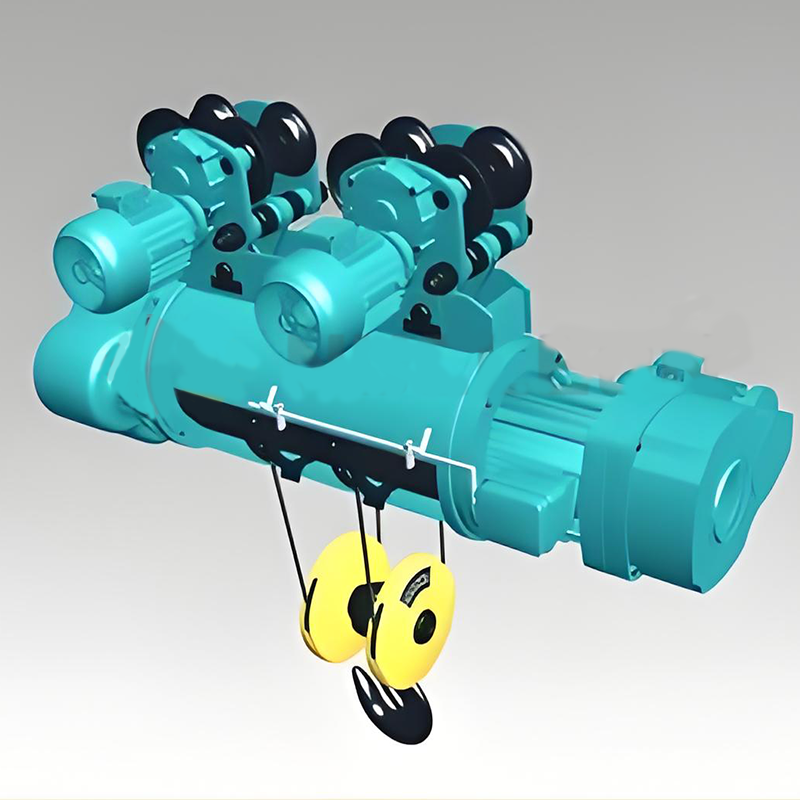
How to Choose the Right Electric Hoist for Maximum ROI
Not all electric hoists are created equal. Keep these selection criteria top of mind when evaluating options:
- Duty Cycle Rating — Look for H3 or H4 duty classification for industrial environments; H2 is suitable for lighter-duty workshop use
- Lift Capacity and Height — Always size 20–25% above your heaviest expected load; never run a hoist at 100% rated capacity continuously
- Speed Options — Dual-speed or inverter-controlled units offer the best balance of precision and throughput
- Safety Certifications — CE marking, FEM/ISO 4301 compliance, and ASME B30.16 conformance should be non-negotiable
- Compatibility With Your Crane — Confirm the hoist trolley width matches your Gantry Crane beam flange before purchasing
- After-Sale Support — Access to spare parts, local service networks, and warranty terms directly affects TCO