


Top Benefits of Jib Cranes: Boosting Efficiency
Industrial productivity relies heavily on the smooth, uninterrupted flow of materials. Every time a worker pauses to wait for a shared overhead lift or struggles to manually position a heavy steel component, your facility bleeds money. While massive facility-wide lifting systems handle the heavy, cross-bay transport, the real friction often occurs right at the individual workstation.
This is exactly where jib cranes step in to solve the problem. These localized, highly agile lifting systems act as the dedicated workhorses for specific machine cells, assembly stations, and loading docks. By giving operators immediate access to ergonomic lifting power, you eliminate bottlenecks and protect your team from severe physical strain.
In this comprehensive guide, we will break down the top benefits of jib cranes, explore how they integrate with larger equipment, and provide actionable insights to help you optimize your material handling strategy.
What Makes Jib Cranes Essential?
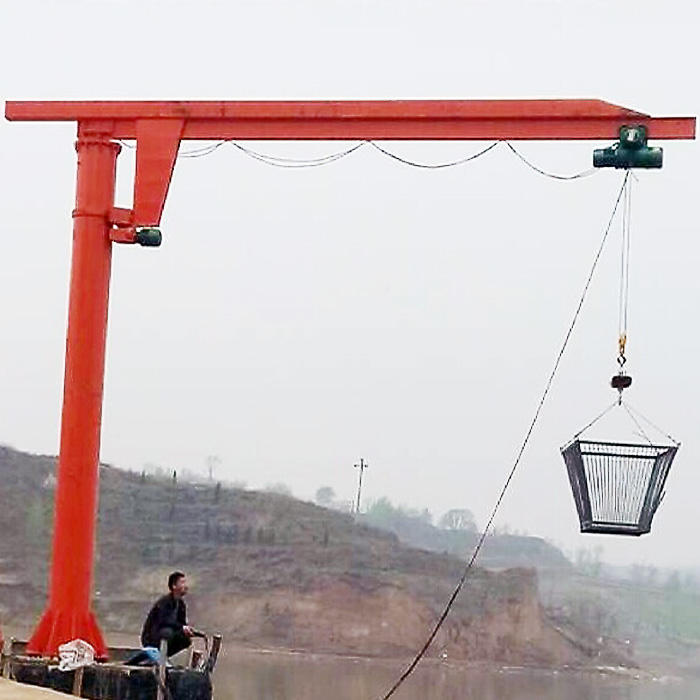
A jib crane is a localized material handling device featuring a horizontal boom (the jib) that supports a movable hoist. The boom attaches to a vertical mast or a structural building column, allowing it to pivot and provide lifting coverage over a specific circular or semi-circular area.
Unlike sprawling bridge systems that cover an entire factory floor, jib cranes are purpose-built for repetitive, localized tasks. They handle the “micro” logistics of your operation. When an operator needs to load a heavy casting into a CNC lathe, a jib crane provides the immediate, precise lifting capability required to execute the task safely and efficiently.
Unpacking the Top Benefits of Jib Cranes
Integrating these agile lifting systems into your production line offers a massive return on investment. The advantages extend far beyond simply making heavy items easier to lift.
1. Drastic Reduction in Operator Wait Times
In many traditional manufacturing setups, several workstations share a single large overhead bridge crane. When two or three operators need to lift a part simultaneously, a queue forms. One worker uses the crane while the others stand idle. This waiting game destroys your production schedule.
By installing dedicated jib cranes at high-traffic workstations, you completely eliminate this bottleneck. Every operator has immediate, on-demand lifting power. The workflow never stops. The large overhead systems are then freed up to perform their intended function: moving heavy loads across the entire span of the facility.
2. Maximizing Premium Floor Space
Industrial real estate is expensive. Every square foot of your factory floor must generate value. Jib cranes offer an incredibly space-efficient lifting solution.
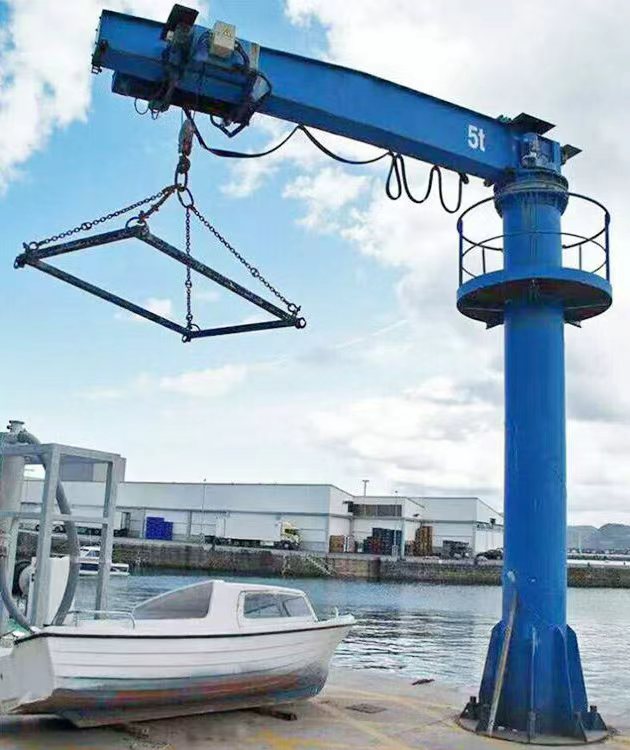
Wall-mounted jib cranes, for example, require absolutely zero floor space. They bolt directly to your building’s structural columns, allowing forklifts and personnel to move freely underneath. Even freestanding models require only a very small footprint for their concrete foundation. This compact design allows you to place machinery closer together, optimize your floor plan, and maintain clear, safe traffic aisles.
3. Superior Ergonomics and Worker Safety
Manual material handling is one of the leading causes of workplace injuries. Asking an employee to repeatedly lift, twist, and position heavy metal components leads to severe musculoskeletal disorders (MSDs). These injuries result in chronic pain, lost workdays, and expensive workers’ compensation claims.
A jib crane removes 100% of the heavy lifting from the operator. The electric hoist takes the physical weight, allowing the worker to focus entirely on safe handling and precise positioning. An operator who is not physically exhausted by the middle of their shift will maintain a higher level of accuracy and output throughout the entire day.
4. Seamless Integration with Existing Systems

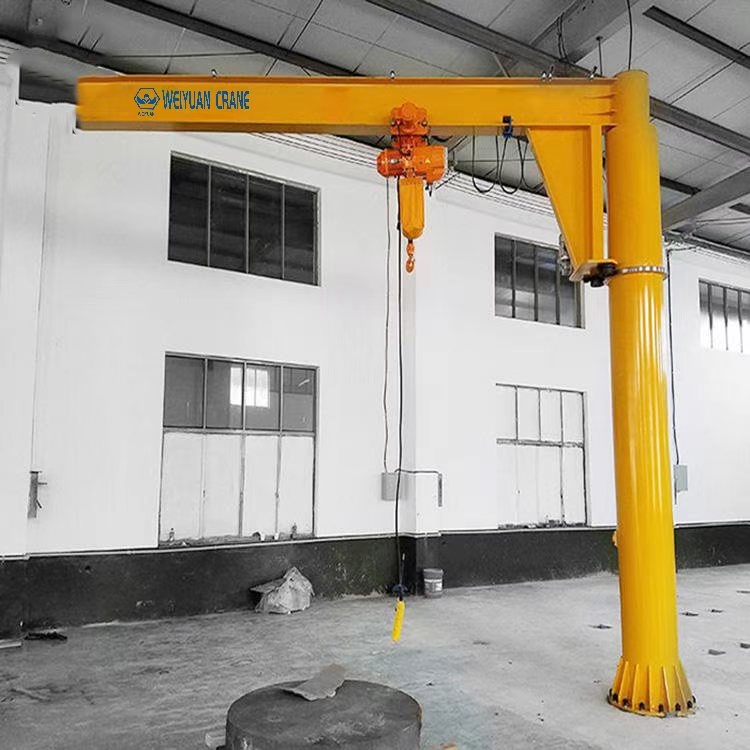
Weiyuan Column Jib Crane
The Weiyuan Column Jib Crane is a versatile and cost-effective freestanding lifting solution designed for precise material handling in workshops, assembly lines, and maintenance areas. With a full 360-degree slewing range and robust steel structure, this crane delivers smooth rotation, dependable performance and enhanced operational flexibility in confined workspaces. :contentReference
View Product / Get QuoteThe best material handling setups utilize a layered approach. Jib cranes do not replace your existing heavy-duty equipment; they complement it perfectly.
For instance, massive Gantry Cranes might move 20-ton steel coils from a railcar into your main storage yard. A heavy-duty bridge crane then moves a single coil into the fabrication bay. Finally, a dedicated jib crane takes over, moving smaller, cut sections of that steel into a specific welding cell. By layering these systems, you ensure that your high-capacity equipment isn’t bogged down by small, repetitive tasks.
5. High Return on Investment (ROI)
Compared to engineering and installing a secondary overhead runway system, jib cranes are highly cost-effective. They require less structural steel, less complex engineering, and a fraction of the installation time.
If you only need to maneuver materials within a specific 15-foot radius, paying for a system that spans the entire building makes poor financial sense. A jib crane provides targeted lifting power exactly where you need it, delivering a rapid ROI through increased output and reduced injury claims.
Choosing the Right Setup for Your Operations
To harness these benefits, you must select the correct crane configuration for your facility’s specific architecture and workflow.
Freestanding Jib Cranes
This is the most versatile configuration found in heavy industry. It consists of a vertical tubular steel mast securely bolted to a reinforced concrete foundation.
Freestanding models offer a full 360 degrees of boom rotation. Because they do not rely on your building’s walls for support, you can place them anywhere on the factory floor. They handle the highest capacities, making them the ideal choice for heavy machining centers and outdoor loading docks. However, you must pour a proper, engineered concrete foundation to safely counteract the overturning forces.
Wall-Mounted Jib Cranes
When floor space is an absolute premium, a wall-mounted configuration provides the perfect solution. The horizontal boom attaches directly to a heavy-duty wall or structural column inside your facility.
This setup keeps the floor completely clear. The rotation is typically limited to a 200-degree arc because the wall restricts a full circular swing. Before installation, a structural engineer must verify that your building’s columns can handle the immense pulling forces generated by the loaded boom.
Articulating Booms for Complex Tasks
Standard straight booms can make it difficult to reach around corners or into enclosed machinery. An articulating system solves this by featuring a boom with a pivot point in the middle, functioning much like a human arm.
This dual-axis design allows the operator to fold the boom and position a load precisely inside a confined CNC machine enclosure or navigate around support columns. They provide unmatched ergonomic flexibility for complex assembly stations.
Jib Cranes vs. Gantry Cranes: Understanding the Synergy
It is common to view different crane types as competing solutions, but optimized facilities use them in synergy. Understanding when to use which system is key to maximizing efficiency.
Gantry Cranes are essentially overhead bridge cranes built on freestanding legs that run on ground-level rails. They are ideal for lifting massive loads over large areas, particularly outdoors where there is no existing building structure to support a runway. You will frequently see large Gantry Cranes operating in shipyards, precast concrete plants, and steel distribution yards.
While a heavy-duty outdoor jib crane can manage localized loading tasks, it cannot match the sheer capacity and wide-area coverage of a gantry system. Conversely, using a 50-ton gantry system to move a 500-pound engine block across a 10-foot workbench is incredibly inefficient.
The ideal setup uses large Gantry Cranes for the “macro” logistics—moving massive raw materials across the yard—and jib cranes for the “micro” logistics—handling the intricate, localized assembly work. This strategic pairing ensures you always use the right tool for the job.
Real-World Applications Accelerating Production
The incredible versatility of jib cranes makes them a staple across a wide variety of demanding industrial sectors.
Machining and CNC Loading
Operators loading heavy raw materials into lathes, mills, or plasma cutting tables rely heavily on this equipment. The localized boom allows them to precisely lower a steel billet into a tight machine enclosure without scraping the sides or endangering their hands. The true vertical lift provided by a chain hoist ensures the part seats perfectly into the machine chuck.
Assembly Line Transfers
During the production of heavy equipment, such as automotive engines or industrial pumps, workers must constantly attach heavy sub-assemblies. A dedicated articulating jib allows the technician to maneuver an engine block into the exact position required to insert mounting bolts smoothly, without fighting the weight of the component.
Maintenance and Repair Bays
Mechanics working on heavy transit vehicles or industrial machinery need reliable ways to pull motors, lift chassis, and suspend components for inspection. A 360-degree rotating boom allows a single mechanic to safely extract a 2,000-pound diesel engine and swing it over to a nearby workbench for a complete teardown.
Shipping and Receiving
Shipping yards frequently use heavy-duty freestanding models to transfer materials between flatbed trucks and ground-level staging areas. They provide a quick, efficient way to unload heavy pallets, crates, or steel coils without constantly waiting for a yard forklift to become available.
Maximizing Crane Lifespan Through Maintenance
To ensure your lifting equipment continues to deliver these benefits year after year, you must implement a strict maintenance program.
- Daily Visual Inspections: Operators should check the hoist chain or wire rope for wear, test the emergency stop buttons, and ensure the boom swings smoothly before every shift.
- Lubrication: Regularly grease the pivot bearings on the mast and the trolley wheels to prevent premature wear and ensure effortless manual operation.
- Professional Audits: Hire certified crane technicians to conduct comprehensive annual inspections. They will check structural welds for micro-fractures, measure brake pad wear, and verify the integrity of the anchor bolts.