


Top Reasons to Invest in Gantry Cranes for Your Facility
Moving massive loads efficiently is the backbone of heavy industry. When you need to transport heavy materials across an expansive outdoor yard, load shipping containers, or handle oversized precast concrete, standard indoor lifting systems fall short. You cannot rely on a building’s roof to support a multi-ton lift if the building does not exist, or if the structural columns simply cannot handle the sheer force.
This is where specialized freestanding lifting solutions step in to bridge the gap. If you are evaluating how to scale your heavy material handling capabilities without undertaking massive facility reconstruction, this guide will show you exactly why investing in Gantry Cranes is a highly strategic and cost-effective decision.
We will explore the unique mechanical advantages of these systems, their exceptional mobility, and how they deliver a massive return on investment for high-demand industrial operations.
What Sets a Gantry System Apart?
Before diving into the specific benefits, it helps to understand the foundational mechanics. Unlike an overhead bridge crane that relies on elevated runways attached to a building’s walls or ceilings, a gantry system is entirely self-supporting.
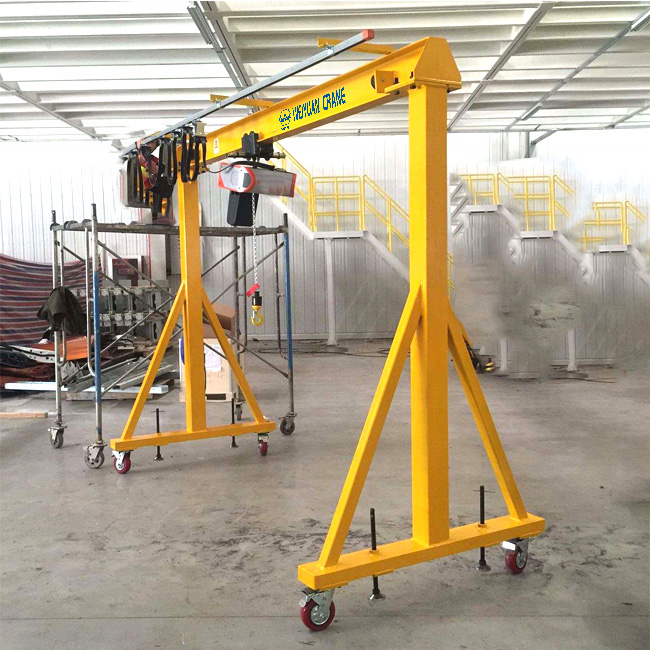
It consists of a horizontal bridge beam supported by two or more upright legs. These legs travel along the ground. Depending on the capacity and application, the legs might run on embedded steel rails, or they might utilize heavy-duty polyurethane wheels to move freely across a flat concrete slab.
Because they carry their own weight and the weight of the load directly down to the ground, they fundamentally change how you plan your operational footprint.
1. Absolute Independence from Building Structures
The single biggest reason facility managers choose a gantry system is structural independence. Upgrading an existing building to support a heavy-duty overhead crane is a massive undertaking.
Avoiding Costly Structural Retrofits
If you want to install a traditional bridge crane inside an older facility, you usually have to hire structural engineers, reinforce the existing steel columns, pour deeper concrete footings, and essentially rebuild your factory from the inside out. This causes immense production downtime and drains your capital budget.
Because a gantry system stands on its own legs, it completely bypasses your building’s structural limitations. As long as your concrete floor can handle the rolling wheel load, you can deploy a massive lifting system inside a lightweight metal building, a leased warehouse, or a fabric tension structure. You get heavy-duty lifting capacity without paying for a heavy-duty building.
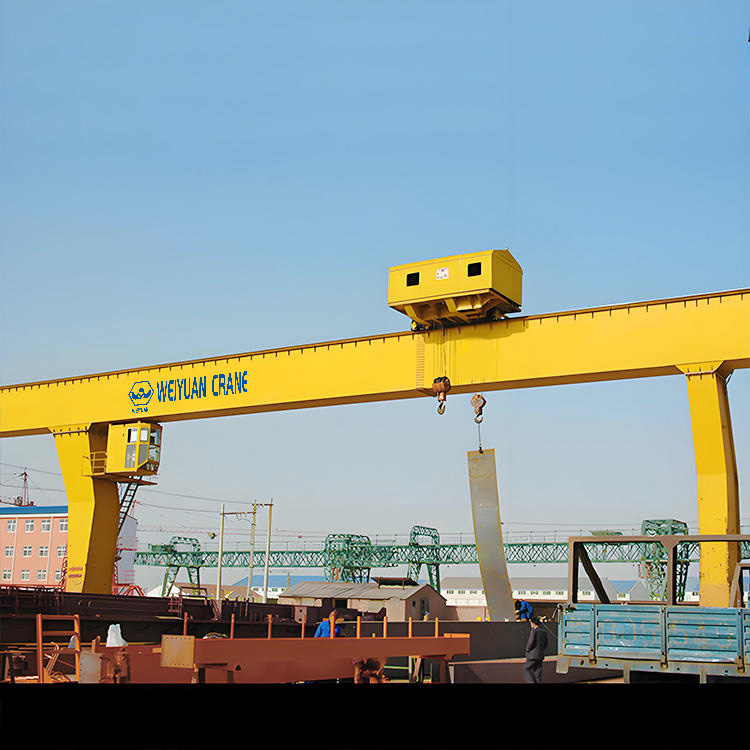
Weiyuan L-Shape Leg Walk Gantry Crane | Manufacturer Direct, Enhanced Mobility
The Weiyuan L-Shape Leg Walk Gantry Crane is a high-performance single-girder gantry crane with a distinctive L-shaped leg design that offers superior clearance for long and oversized loads, and smooth “walk” travel on ground rails — direct from the manufacturer for competitive pricing and reliable quality. :contentReference
View Product / Get Quote2. Unmatched Mobility and Flexibility
Industrial workflows change. A production line that makes sense today might need to be completely reconfigured next year to accommodate a new product contract. Fixed overhead systems lock you into a rigid layout.
Trackless vs. Track-Mounted Systems
- Track-Mounted Systems: For the highest capacities (often exceeding 50 tons), the crane’s legs run on steel rails embedded in the ground. This provides a fixed, highly stable travel path for repetitive, heavy-duty logistics, such as moving steel coils or shipping containers.
- Trackless Systems: For moderate loads, trackless rubber-tired or polyurethane-wheeled models offer incredible versatility. You can drive the crane to different bays in your facility, move it outside to unload a flatbed truck, and then bring it back inside to feed a machining center.
This mobility means your lifting equipment adapts to your workflow, rather than forcing your workflow to adapt to your lifting equipment.
3. Superior Outdoor Performance
Certain industries operate entirely under the open sky. Shipyards, rail yards, steel service centers, and precast concrete yards require massive lifting power over vast areas.
Engineered for the Elements
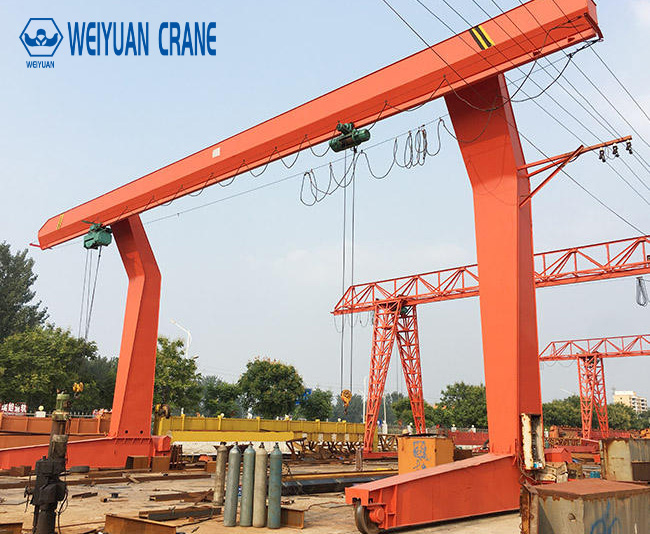
You cannot easily build an overhead runway structure over a five-acre shipping yard. Even if you could, the cost would be astronomical. Gantry Cranes are the undisputed champions of outdoor material handling.
When specifying a unit for outdoor use, manufacturers engineer the system to withstand severe environmental factors:
- Wind Loading: The steel structure is designed to remain stable under high wind conditions, often featuring specialized tie-down systems and rail clamps to secure the crane during storms.
- Weatherization: Motors, gearboxes, and electrical panels are housed in highly rated NEMA enclosures to prevent water and dust ingress. The steel structure receives specialized anti-corrosion marine-grade epoxy coatings.
- Operator Comfort: For large outdoor units, the operator sits in a fully enclosed, climate-controlled cabin that travels with the hoist, ensuring clear visibility and safety regardless of the weather.
4. Scalable Lifting Capacities
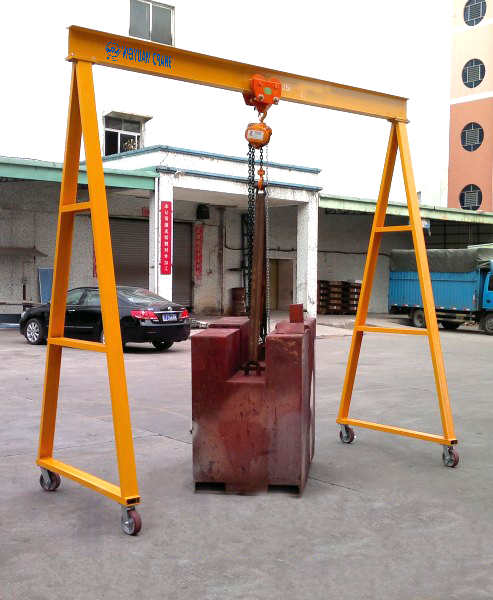
No matter the size of your operation, there is a gantry system scaled to fit your exact needs. They range from small, portable units you can push by hand to massive industrial behemoths.
Portable Workstation Models
Small fabrication shops and auto repair facilities rely heavily on portable, adjustable-height models. Usually rated between one and five tons, these units can be easily rolled over a workpiece. Two workers can assemble them quickly, making them perfect for lifting engines, swapping out heavy tooling on a CNC machine, or moving materials between localized work cells.
Heavy Industrial Models
On the other end of the spectrum are the massive double-girder rail-mounted units used in global logistics and heavy manufacturing. These units can span hundreds of feet and lift well over 200 tons. They handle the heaviest, most awkward loads on the planet, from locomotive engines to sections of commercial aircraft.
5. Cost-Effective Heavy Material Handling
When you look at the total cost of ownership, a gantry system frequently offers the best return on investment for heavy lifting.
While the initial purchase price of a high-capacity unit is significant, you must compare it against the alternatives. Renting mobile hydraulic cranes to handle your yard logistics is incredibly expensive. Mobile cranes require specialized operators, burn expensive diesel fuel, and charge by the hour.
By purchasing your own gantry system, you bring that logistical capability in-house. You eliminate rental fees, reduce your reliance on third-party contractors, and gain total control over your production schedule. Furthermore, because these cranes use electric power rather than diesel engines, your daily operating costs and carbon footprint drop dramatically.
6. Seamless Integration with Existing Lifting Systems
A highly efficient facility rarely relies on just one type of crane. The most profitable operations use a layered approach to material handling.
You might use a gantry system outside to unload heavy raw materials from incoming freight trains. Those materials are then moved inside, where localized jib cranes handle the micro-movements at individual workstations. By keeping your heavy outdoor lifting separate from your indoor assembly processes, you prevent severe bottlenecks.
These cranes integrate perfectly into a broader material handling strategy, acting as the heavy-duty gateway that feeds your internal production lines.
Technical Features to Specify
To maximize your investment, you must ensure your new crane is equipped with modern, high-performance technology. Do not settle for outdated control systems.
Variable Frequency Drives (VFD)
This is a non-negotiable feature for modern lifting. A VFD controls the electrical power sent to the hoist, trolley, and bridge motors. Instead of a jarring “on/off” movement, a VFD provides infinitely variable speed control. This allows the operator to slowly accelerate a heavy load, move it swiftly across the yard, and then gently decelerate it into position. This eliminates dangerous load swing and drastically reduces wear and tear on the crane’s brakes and gears.
Advanced Safety Sensors
When moving a multi-ton load across an active yard, safety is paramount. Specify systems equipped with laser collision avoidance technology. If the crane detects an obstacle on the track or another crane on the same runway, it automatically slows down and stops. You should also demand digital load readouts and overload limit switches to prevent the operator from accidentally attempting to lift a load that exceeds the crane’s rated capacity.
Compliance and Safety Standards (E-A-T)
Authoritative material handling requires a strict adherence to safety protocols. A gantry system is a serious piece of industrial machinery, and its operation must comply with international safety standards to protect your workforce and your business.
In the United States, your crane must meet the rigorous design and operational standards set by the Occupational Safety and Health Administration (OSHA) and the American Society of Mechanical Engineers (ASME), specifically ASME B30.2 and B30.17. Similar stringent standards apply globally, such as the CE mark in Europe.
Mandatory Inspection Protocols
To maintain compliance and ensure maximum uptime, you must implement a strict maintenance schedule.
- Daily Pre-Shift Inspections: Operators must visually inspect the wire rope, check the hook latch, and test the emergency stop mechanisms before making a single lift.
- Periodic Maintenance: Certified technicians must regularly lubricate the gears, adjust the brakes, and inspect the electrical contactors.
- Annual Comprehensive Audits: A third-party inspector must conduct a thorough examination of the structural welds, runway alignment, and perform a documented load test to verify the crane’s ongoing structural integrity.