


What is the Difference Between a Bridge Crane and an Overhead Crane? The Definitive Guide for Industrial Buyers
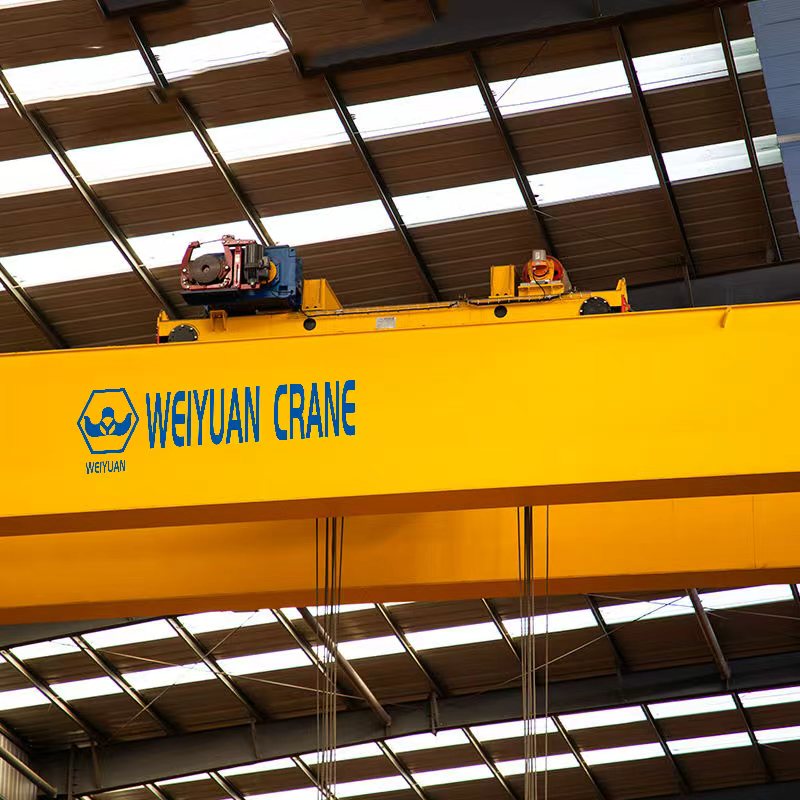
In the world of heavy material handling, clarity is essential, especially when making a significant investment in equipment. One of the most common points of confusion for those new to the field is the difference between a “bridge crane” and an “overhead crane.” The simple, industry-standard answer is: there is no practical difference—they are the same machine, referred to by two different names. Both terms describe the elevated mechanical system designed to move heavy loads along three axes within a defined factory or warehouse bay.
However, a truly savvy buyer understands that beneath this simple linguistic similarity lies a complex system defined by its capacity, configuration, and performance—factors far more important than terminology. This guide will clarify the terms, focus on the engineering that matters, and explain what to look for when evaluating an overhead crane solution.
Understanding the Terminology: Bridge Crane vs. Overhead Crane
The confusion stems from the crane’s physical structure:
- Bridge Crane: This name highlights the core component—the horizontal beam (or beams) that spans the width of the building bay. This structure, known as the “bridge,” carries the hoist and trolley.
- Overhead Crane: This name emphasizes the crane’s position—it operates above the floor level, supported by runway beams attached to the building structure or independent columns.
Whether you are searching for overhead bridge cranes for sale or checking overhead crane price, you are seeking the same piece of vital equipment. For the purposes of this technical discussion, we will primarily use the term overhead crane to maintain consistency with global search standards.
The Value Proposition: Why the Overhead Crane is Indispensable
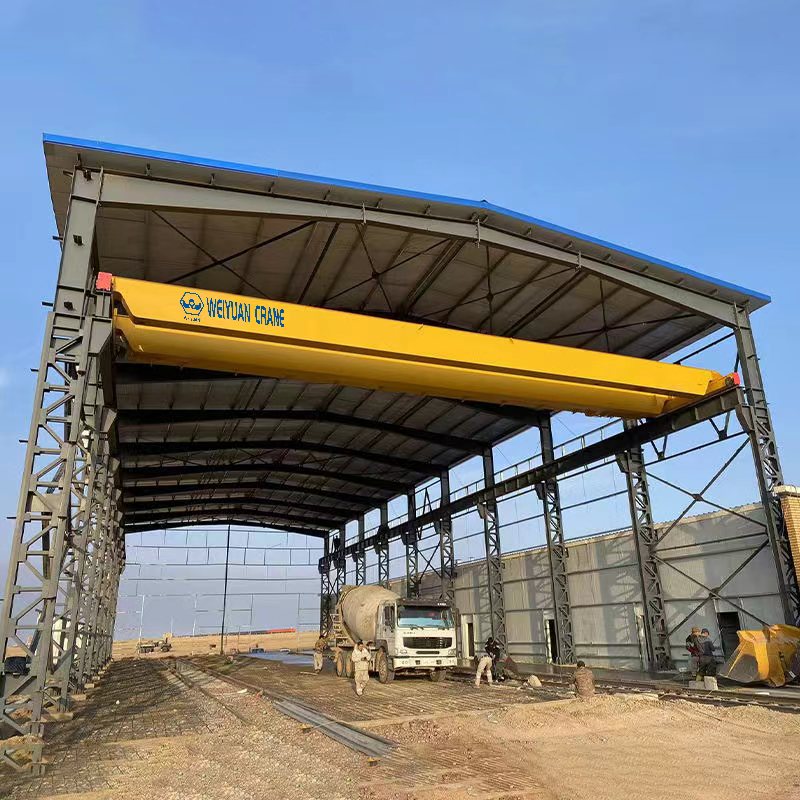
The real difference-maker isn’t the name, but the value the crane brings to industrial operations. An overhead crane is a strategic asset designed to solve critical logistical and safety challenges.
Maximizing Space and Efficiency
The crane’s elevated design is the key to maximizing a facility’s footprint. By utilizing the unused vertical space above the production area, the crane keeps the floor clear for personnel, machinery, and non-critical material flow.
- Key Value: This strategic placement is central to optimizing floor space utilization. The system’s predictable, centralized movement of materials guarantees precise and safe handling of large or heavy loads, improving overall material handling efficiency by 20% or more.
- Structural Advantage: The design relies on optimized box-type or I-beam main girders. This structure results in low dead weight and minimized wheel pressure on the runway, achieving maximum possible space utilization beneath the crane overhead system.
Critical Applications and Safety
The crane’s purpose is to safely manage heavy objects that are impossible or highly dangerous to move via traditional methods.
- Application Examples: In automotive manufacturing, overhead systems are crucial for the precise(loading/unloading) of heavy stamping molds. In steel processing, they are the safest method for continuous heavy steel coil (hoisting). They are equally essential in heavy machinery factories for complex component assembly.
WEIYUAN, a professional manufacturer integrating design, production, sales, and installation, focuses on engineering this value into every unit, ensuring reliability in the toughest working conditions.
The Engineering Details: Features That Drive Performance
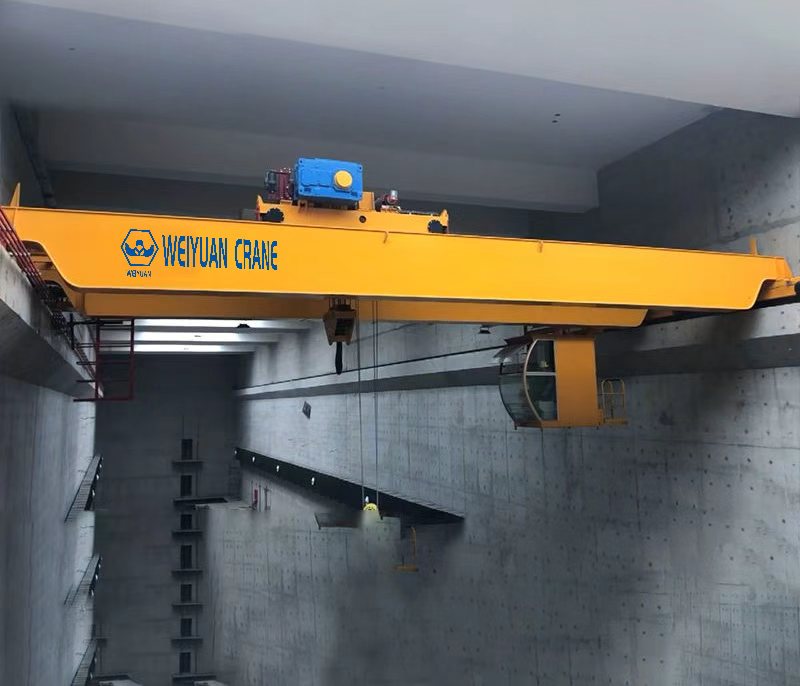
When sourcing a bridge or overhead crane, buyers must scrutinize the technical specifications and advanced features, as these define the machine’s true capacity and longevity.
Advanced Structural and Drive System Features
The modern crane is built on three core mechanical pillars: robust structure, smooth movement, and precise control.
- Drive System: The operational smoothness is achieved through a highly reliable three-in-one reducer system, which includes a hard-toothed gear reducer and a variable frequency brake motor. This integration guarantees exceptionally smooth operation and ensures high-precision load positioning.
- Control Mode (VFD): The standard in high-quality systems is Variable Frequency Drive (VFD) speed regulation. This control mode enables stepless speed changes, which dramatically boosts operating efficiency and significantly reduces mechanical shock and wear on the components.
- Durability and Duty Cycle (Work Class): The work duty rating is a non-negotiable factor. Standard electric overhead crane models typically achieve a Work Duty Class (A-Class) of A4 or A5 (Medium to Heavy duty), indicating they are built for sustained, frequent industrial use.
Technical Specifications and Sizing
Selecting the correct capacity and geometry is the first step in successful crane integration.
| Specification | Standard Range (WEIYUAN) | Notes |
| Standard Capacity | 1 ton to 80 tons | Standard models cover a vast range, but custom units can reach up to 400 tons. Popular models include the 1 ton overhead crane and the 10 ton overhead crane price class. |
| Span Length | 7.5 meters to 34 meters | The length of the bridge beam(s), determining the lateral coverage. |
| Lifting Height | 6 meters to 50 meters | Customized to fit the specific height requirements of the building and application. |
| Rated Voltage | 380V / 400V / 415V, 50-60Hz | Standard three-phase AC requirements for global industrial use. |
| Control Methods | Ground pendant, Wireless remote control, Operator Cabin | Options provide operational flexibility. We recommend advanced overhead crane remote control systems for improved operator safety and visibility. |
Customization: From Garage Overhead Crane to Heavy Industrial Rig
The complexity of modern manufacturing means that off-the-shelf solutions are rarely sufficient. High-quality providers offer deep customization capabilities, moving beyond standard configurations to meet 100% of specialized working conditions.
Tailoring the Lifting Solution
Whether a client needs a small shop overhead crane or a massive industrial system, the process begins with expert consultation.
- Design Service: WEIYUAN offers a free consultation service, including structural analysis of the client’s plant and optimized design for crane layout.
- Customization Scope: Customizations are extensive, covering non-standard capacities, ultra-long spans, unique lifting heights, and specialized designs for hazardous environments (like explosion-proof or anti-corrosion designs). We also integrate features like maintenance platforms or a dual-trolley setup for synchronized lifting.
- Specialized Handling: The crane can be outfitted with purpose-built lifting gear, such as grab buckets or electromagnetic chucks, to handle specific materials.
Diverse Application Fields
The electric overhead crane is found wherever heavy material movement is required:
- Mechanical Manufacturing
- Metallurgy Casting
- Mold Processing
- Steel Industry
- Power Generation
- Railway Freight Yards
- Large Logistics and Warehousing Centers
Safety, Compliance, and Professional Support
Safety is non-negotiable. Whether you are seeking a used overhead crane for sale or a brand-new custom build, compliance with established safety standards is paramount.
Adhering to Global Safety Standards
A reliable supplier provides equipment that is fully compliant with stringent regional and international safety regulations.
- Safety Standards: Equipment must conform to rigorous national and industry standards, such as the TSG Q0002-2008 ‘Safety Technology Supervision Regulations for Lifting Machinery’.
- Critical Safety Devices: Every crane is required to have a Lifting Weight Limiter, a crucial device that automatically cuts off the hoisting power when the load exceeds capacity, preventing structural failure.
- Essential Safety Features: Standard safety features include limit switches, emergency stop buttons, reliable braking systems, and main power cut-off devices. For operator safety, the control voltage for pendant devices is kept below 50V (safety voltage).
Operators should always ensure they look for overhead crane training near me to guarantee compliance and safe operating procedures.
Proven Reliability and Partnership
The longevity and performance of a crane are best measured by real-world data.
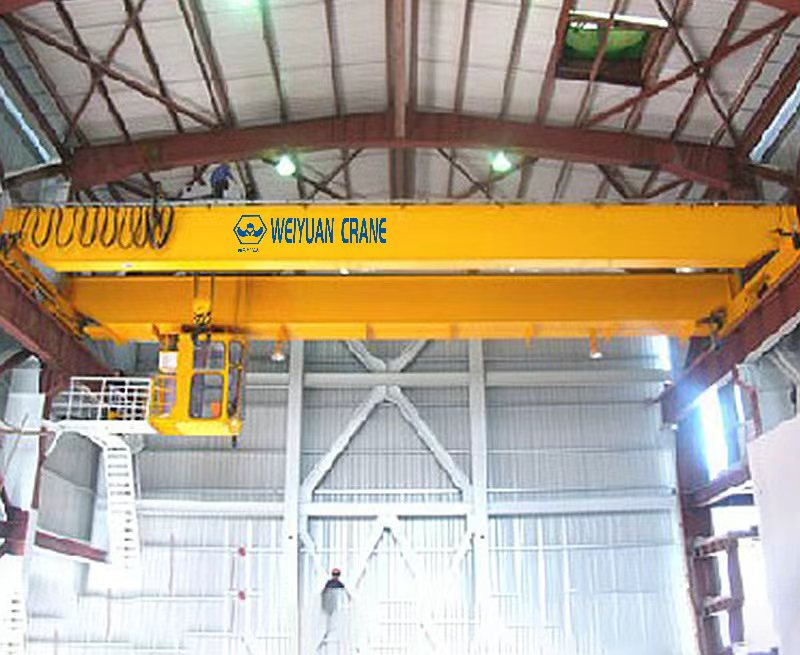
- Case Study: In a major Automotive Component Manufacturing Plant’s final assembly shop, the deployment of 5 sets of 10-ton double-girder bridge cranes resulted in an 8% reduction in production line cycle time. Critically, these cranes have maintained over 8,000 hours of safe operation with zero recorded accidents.
Our commitment at WEIYUAN extends beyond manufacturing. We provide comprehensive after-sales support to protect that investment. This includes detailed online installation guides, remote support, and on-site technical team assistance for complex installations. We offer a one-year warranty with designated parts support, ensuring rapid resolution for overhead crane repairs near me or overhead crane services near me.
Frequently Asked Questions (FAQ) for Overhead Crane Buyers
When deciding on a specialized piece of equipment like a bridge or overhead crane, buyers naturally have detailed questions regarding pricing and logistics.
What information should I provide to get an accurate quotation?
The more detail provided, the better. Key information includes: A: Lifting capacity; B: Crane span (arm length); C: Lifting height/Hook travel; D: Material being lifted; E: Power source or any other special requirements.
How do I receive a price quotation?
Crane pricing, such as the 5 ton overhead crane price or china double beam overhead crane quotes, depends on specific specifications and customization. You can obtain a quote by visiting our website to fill out a requirements form or by contacting our customer hotline for a personalized solution.
What is the typical delivery schedule?
Standard, in-stock models typically ship within 3-5 working days. For customized models, the delivery cycle typically ranges from 2-4 weeks after the design is finalized, depending on the complexity.
Can these cranes operate in hazardous environments?
Yes. We can customize the unit with specific anti-acid or explosion-proof features to ensure safe and compliant operation in challenging environments.
What are the available control options?
Standard options include the handheld pendant controller with buttons or a wireless remote control. Customers can select the best option based on their needs and operational safety requirements.