


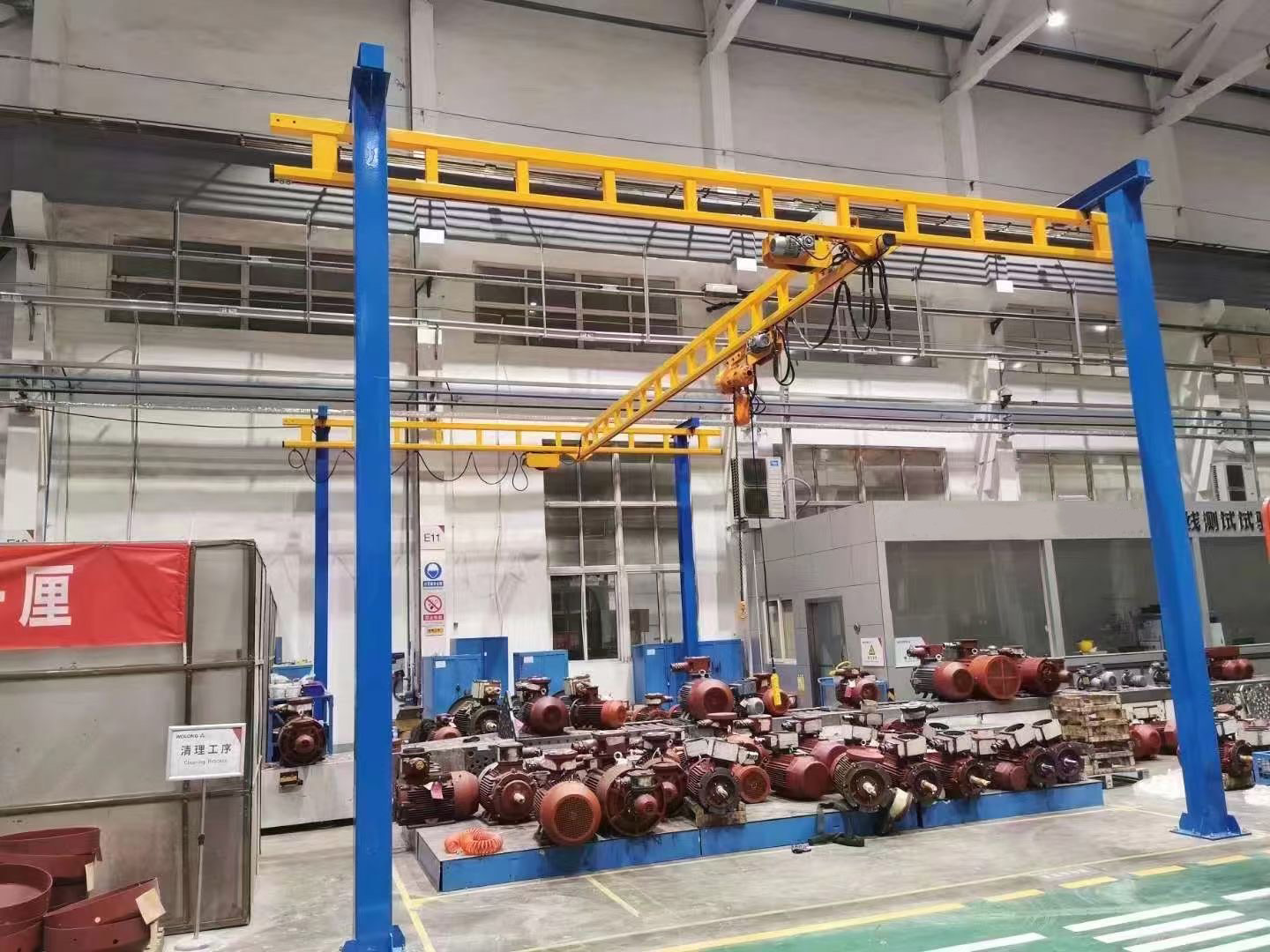
KBK light crane system
KBK Modular Light Crane System for Sale: One Connected Grid Across the Whole Workshop
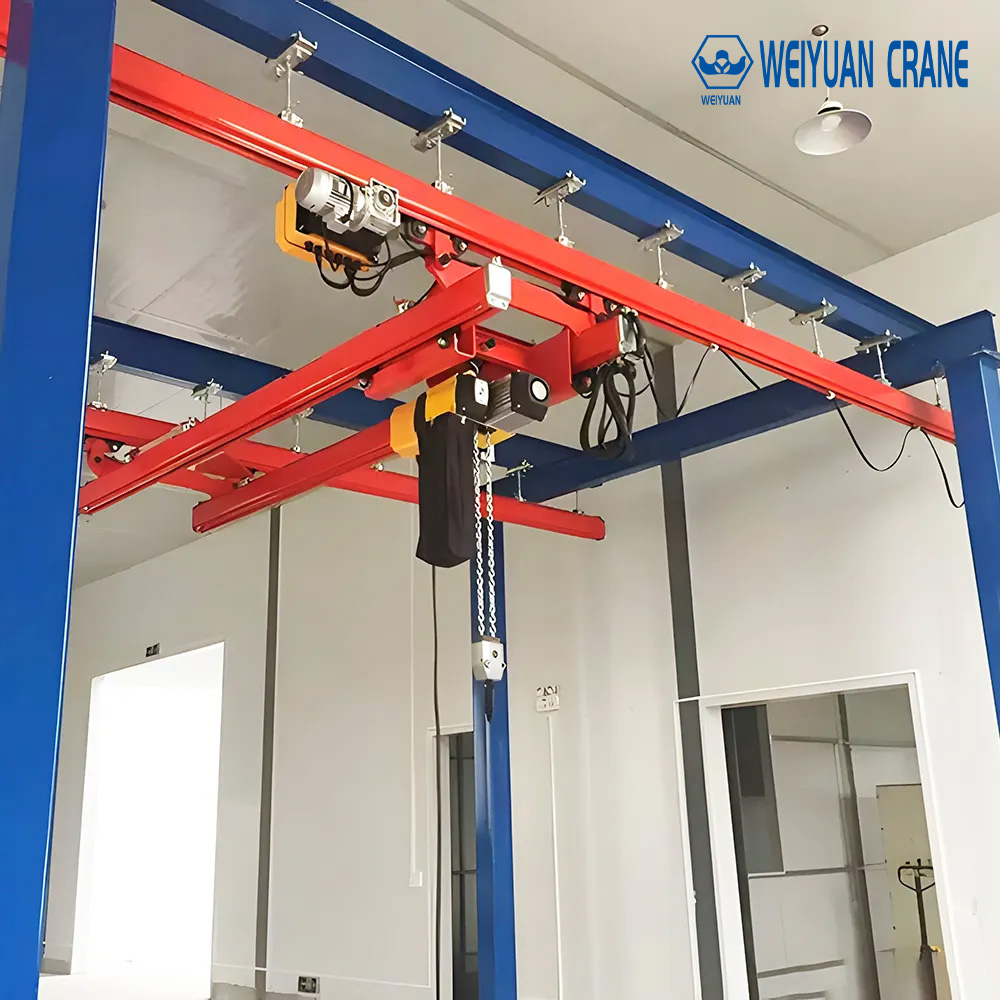
A KBK modular light crane system is the full expression of the KBK profile’s core advantage: rather than choosing a single monorail, suspension, or jib configuration for one area, the same enclosed track profile connects into one continuous grid — switches, curves, and multiple bridge sections linking several workstations, transfer paths, and staging points into a single coordinated material-handling layout.
Weiyuan’s KBK modular light crane system range covers 80 kg to 2 tons per lifting point, engineered around the customer’s full workshop layout rather than one isolated lifting task.
What Makes a KBK Modular Light Crane System Different
Where a standalone KBK monorail, suspension, or workstation jib crane each solve one specific lifting need, a KBK modular light crane system connects multiple such sections — via track switches and shared suspension points — into one integrated grid covering an entire workshop or production line. A load can move from a monorail feed section, across a suspension-crane area for staging, and into a workstation jib for final assembly, all on the same modular track family.
This system-level approach is what most distinguishes the KBK profile from either a single fixed-purpose light crane or a full industrial overhead crane: it’s planned as workshop infrastructure from the start, with lifting points added at each stage of the actual production flow, rather than as separate equipment purchased station by station.
Series and Capacity Range
Series name: WY-KBK-L Series | Category: KBK modular light crane system, multi-section grid with switches and combined configurations
| Model | Capacity (per lifting point) | Grid Configuration | Typical Applications | Control | Hoist Type |
|---|---|---|---|---|---|
| WY-KBK-L08 | 80–250 kg | Multi-branch grid, 2–4 connected sections | Electronics and light-assembly production lines | Pendant | Chain hoist |
| WY-KBK-L50 | 250–500 kg | Combined monorail + suspension grid | General workshop-wide material flow | Pendant/remote | Chain hoist |
| WY-KBK-L10 | 0.5–1 ton | Combined monorail + suspension + jib sections | Multi-station assembly lines with dedicated bench lifting | Pendant/remote | Chain or wire rope |
| WY-KBK-L20 | 1–2 tons | Full workshop grid, multiple bridge sections | Upper limit of modular system range — plant-wide light-duty coverage | Remote | Wire rope |
Technical Parameters (Reference Range)
| Parameter | Typical Range / Description |
|---|---|
| Track profile | KBK enclosed I-beam profile, modular sections and switches |
| Grid layout | Combination of monorail, suspension, and workstation jib sections |
| Duty class | M3–M6 (varies by section and lifting point) |
| Power supply | 380V/50Hz (customizable), mixed manual/powered travel across the grid |
| Load transfer | Track switches allow a load to move between connected sections |
| Structural verification required | Full-grid suspension point loading, engineered as one integrated layout |
Featured Product: Weiyuan WY-KBK-L50 Modular Light Crane System
[Product image placeholder]
The WY-KBK-L50 combines monorail and suspension-crane sections into one connected 250–500 kg grid, Weiyuan’s most common modular system configuration for workshops needing coordinated material flow across multiple points rather than one isolated lifting task.
[View Product / Get Quote →]
How to Choose the Right KBK Modular Light Crane System
- Map your full production flow first — a modular system’s value comes from planning the whole layout, not adding one section and expanding later without a master plan.
- Identify where monorail, suspension, and workstation jib sections each fit along that flow, based on whether each point needs a fixed path, area coverage, or single-operator lifting.
- Size capacity per lifting point to the heaviest actual load at that station, using the series table above as a reference — capacity doesn’t need to be uniform across the whole grid.
- Confirm structural support across the entire grid, not just individual sections, since a modular layout is only as reliable as its weakest suspension point.
- Plan for future expansion at the design stage — the modular profile makes later additions easier when the original layout anticipated them.
Red Flags When Shopping for a KBK Modular Light Crane System
- Sections quoted individually without a full-grid layout plan — a modular system’s main advantage is lost if each section is specified in isolation rather than as one connected design.
- No structural assessment covering the complete grid — every suspension point across every section needs to be verified, not just the areas that seem obviously load-bearing.
- Uniform capacity assumed across the whole system — different lifting points along a real production flow often need different capacities, and a supplier should ask about each one.
- No discussion of future expansion during initial design — retrofitting switches and connections into an already-installed grid is more disruptive than planning for them upfront.
Frequently Asked Questions
Q: What’s the advantage of a KBK modular light crane system over separate individual cranes? A connected modular system lets a load move between monorail, suspension, and workstation jib sections on shared track, coordinating material flow across a whole production line rather than requiring separate handling steps between isolated pieces of equipment at each station.
Q: Can a KBK modular light crane system combine different capacities at different points? Yes — see the WY-KBK-L series table above. Capacity is generally specified per lifting point based on that station’s actual load, not applied uniformly across the entire grid.
Q: How much weight can a KBK modular light crane system lift? Individual lifting points within a KBK modular system typically range from 80 kg up to about 2 tons (see the series table above), with the overall system engineered around the combined layout of monorail, suspension, and jib sections rather than a single capacity figure.
Q: Can a KBK modular light crane system be expanded after installation? Generally yes, since the profile is modular by design — but expansion should be planned for at the original design stage where possible, and any addition needs to be re-verified against the full-grid structural support design.
Q: Is a KBK modular light crane system a substitute for a full industrial overhead crane? No — a KBK modular system is a light-duty solution suited to workshop cells and production lines within roughly the 80 kg to 2 ton range per lifting point. Heavier, larger-span industrial lifting still calls for a conventional single- or double-girder overhead crane.
