


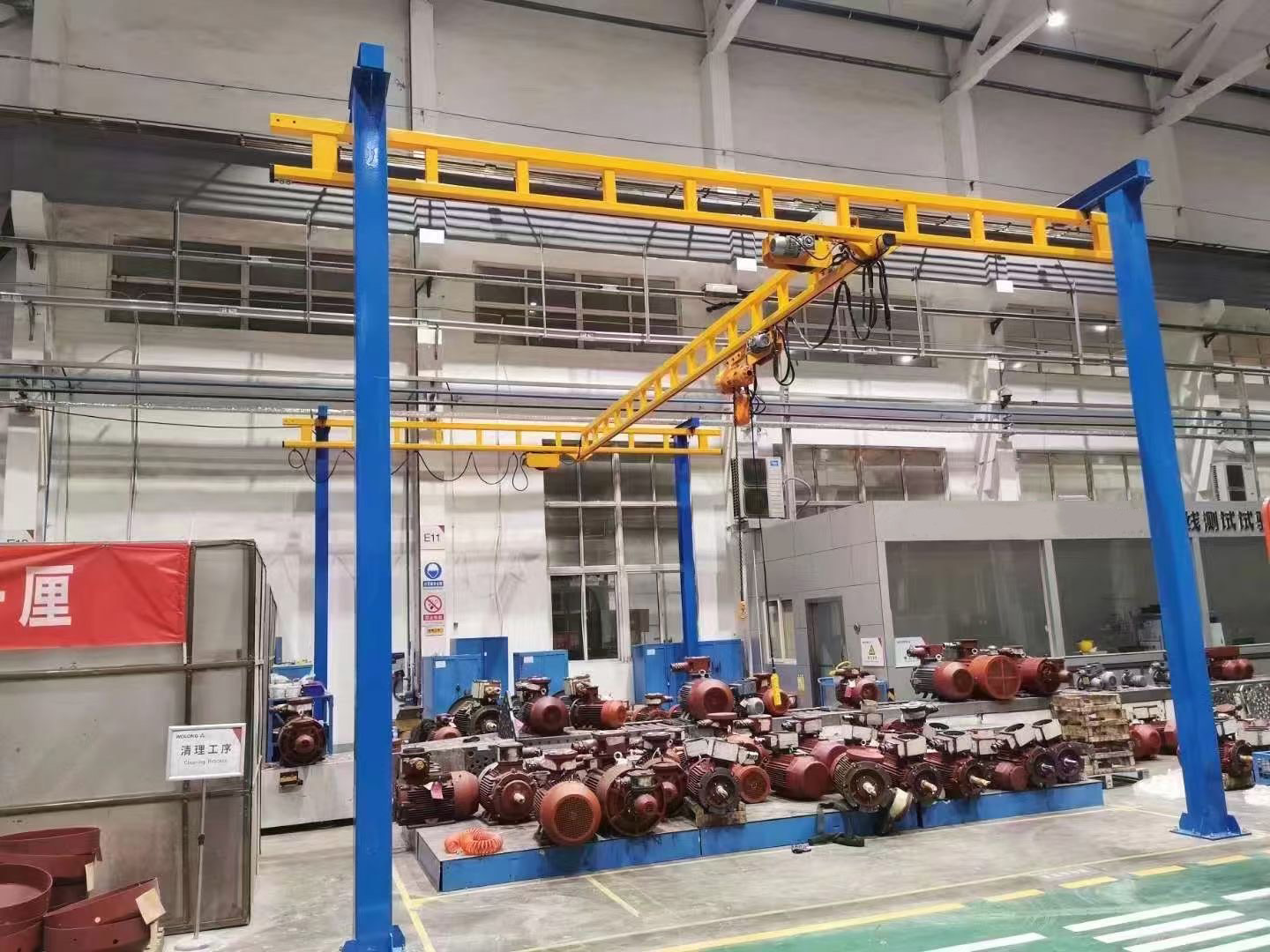
KBK light crane system
KBK Suspension Crane for Sale: Full-Area Coverage on a Lightweight Bridge
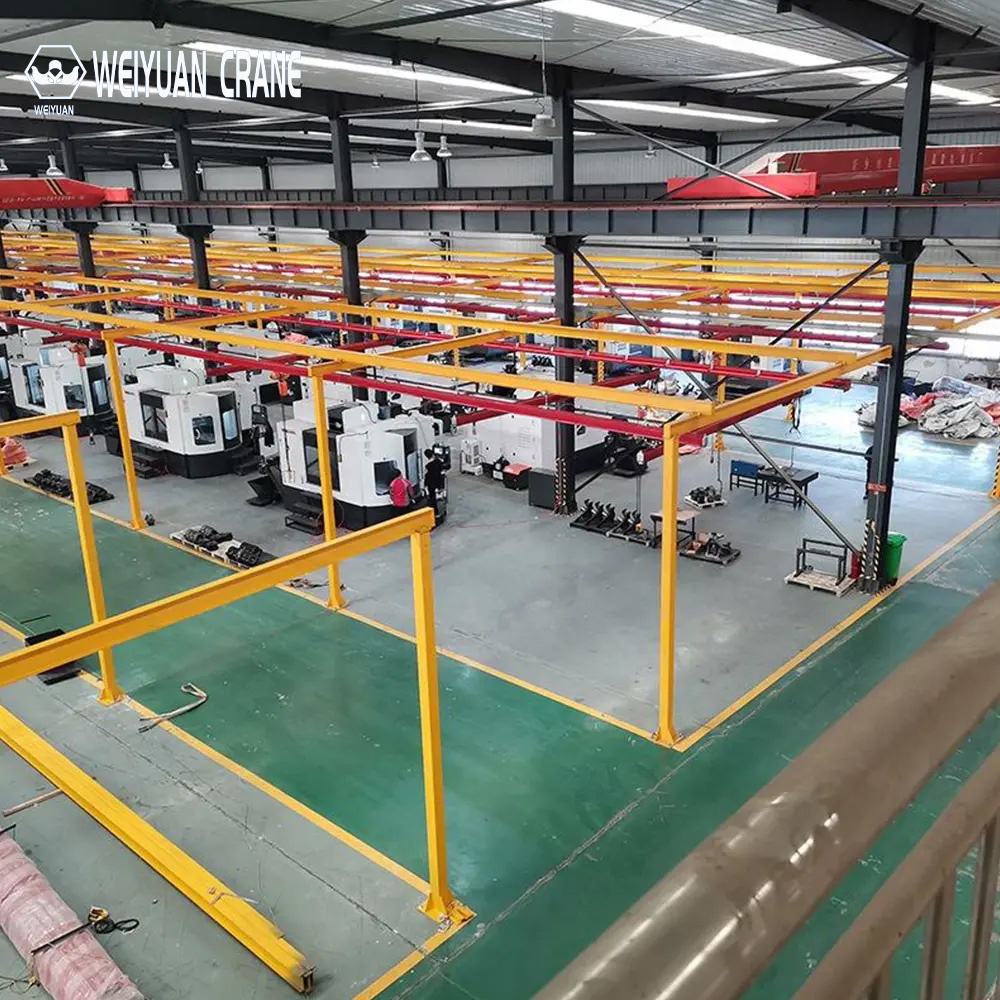
A KBK suspension crane — also called a KBK single-girder suspension crane — covers a full rectangular work area rather than a single fixed path, using a lightweight bridge girder that runs on two parallel enclosed tracks suspended from the building structure. It sits between a monorail system, which only serves one route, and a full industrial overhead crane, which is engineered for far heavier and larger-span duty than a typical KBK workstation needs.
Weiyuan’s KBK suspension crane range covers 125 kg to 2 tons, engineered around the customer’s confirmed span and coverage area.
What Makes a KBK Suspension Crane Different
Unlike a KBK monorail crane, which follows a single fixed track path, a KBK suspension crane uses a bridge girder spanning two parallel enclosed tracks, with the hoist and trolley free to travel both along the bridge and across the full length of the two tracks. This gives the crane coverage of the entire rectangular area beneath the track layout, rather than just the line a monorail track follows.
Compared to a conventional single-girder overhead (bridge) crane, a KBK suspension crane is a lighter-duty system — built from the modular KBK aluminum or steel profile rather than a fabricated box or I-beam girder — making it well suited to workshop cells, assembly lines, and light-manufacturing bays where full crane-runway infrastructure isn’t justified by the load or duty cycle.
Series and Capacity Range
Series name: WY-KBK-S Series | Category: KBK single-girder suspension crane, twin-track bridge system
| Model | Capacity | Span (Bridge Length) | Typical Applications | Control | Hoist Type |
|---|---|---|---|---|---|
| WY-KBK-S12 | 125–250 kg | 3–6 m | Light assembly cells, electronics and precision workstations | Pendant | Chain hoist |
| WY-KBK-S50 | 250–500 kg | 4–8 m | General workshop area coverage, machine-loading cells | Pendant/remote | Chain hoist |
| WY-KBK-S10 | 0.5–1 ton | 4–10 m | Medium-duty fabrication cells needing full-area reach | Pendant/remote | Chain or wire rope |
| WY-KBK-S16 | 1–1.5 tons | 5–10 m | Heavier assembly and material-staging cells | Remote | Wire rope |
| WY-KBK-S20 | 1.5–2 tons | 5–10 m | Upper limit of suspension crane range | Remote | Wire rope |
Technical Parameters (Reference Range)
| Parameter | Typical Range / Description |
|---|---|
| Bridge profile | KBK enclosed I-beam girder, single-girder design |
| Track configuration | Twin parallel enclosed tracks, ceiling-suspended |
| Duty class | M3–M6 |
| Power supply | 380V/50Hz (customizable), or manual travel for lighter units |
| Bridge travel | Powered or manual, model-dependent |
| Structural verification required | Suspension point loading along both parallel tracks |
Featured Product: Weiyuan WY-KBK-S50 Suspension Crane
[Product image placeholder]
The WY-KBK-S50 covers 250–500 kg across a 4–8 m span, Weiyuan’s most common KBK suspension crane configuration for general workshop cells needing full rectangular-area coverage rather than a single fixed path.
[View Product / Get Quote →]
How to Choose the Right KBK Suspension Crane
- Confirm you actually need area coverage, not just a fixed path — if the load only ever travels one route, a KBK monorail crane is usually the more economical choice.
- Measure the required span and bay length the twin tracks need to cover, based on the actual work cell dimensions.
- Size capacity to your heaviest actual lift, including tooling and a safety margin, using the series table above as a reference.
- Verify structural support at every suspension point along both parallel tracks — this is where many layouts go wrong if assessed only at the endpoints.
- Decide powered vs. manual bridge travel based on your cycle rate and the distances the load typically needs to move.
Red Flags When Shopping for a KBK Suspension Crane
- No structural assessment along the full length of both tracks — suspension loading needs to be verified across the entire span, not just at the end supports.
- A quote that doesn’t distinguish suspension crane (area coverage) from monorail (fixed path) — these serve different needs, and a supplier should confirm which one actually fits your application.
- Span specified without reference to actual bay dimensions — the bridge span should match the real work area, not a generic default length.
- No mention of bridge travel speed or control type — this affects cycle time meaningfully and should be part of the initial specification conversation.
Frequently Asked Questions
Q: What’s the difference between a KBK suspension crane and a KBK monorail crane? A KBK suspension crane uses a bridge girder on two parallel tracks to cover a full rectangular area, while a KBK monorail crane runs on a single track following one fixed path. Choose suspension when you need to reach anywhere within a work cell; choose monorail when the load only ever travels one route.
Q: How is a KBK suspension crane different from a standard single-girder overhead crane? A KBK suspension crane is a lighter-duty system built on the modular KBK profile, generally topping out at a lower capacity than a conventional fabricated single-girder overhead crane (see the WY-KBK-S series table above), and is typically more economical to install for lighter workshop-cell applications.
Q: How much weight can a KBK suspension crane lift? KBK suspension cranes typically range from 125 kg up to about 2 tons (see the series table above), suited to light and medium-duty workshop cells rather than heavy industrial lifting.
Q: Can a KBK suspension crane be extended to a larger area later? The modular nature of the KBK profile generally makes extending track length or reconfiguring the layout more straightforward than with a fixed crane runway, though any extension should be re-verified against the original suspension point loading design.
Q: Does a KBK suspension crane need a powered bridge? Not always — lighter-capacity units with light cycle demands are often specified with manual bridge travel, while heavier or higher-cycle applications typically use a powered bridge. This should match your actual usage pattern rather than defaulting to either option.
