


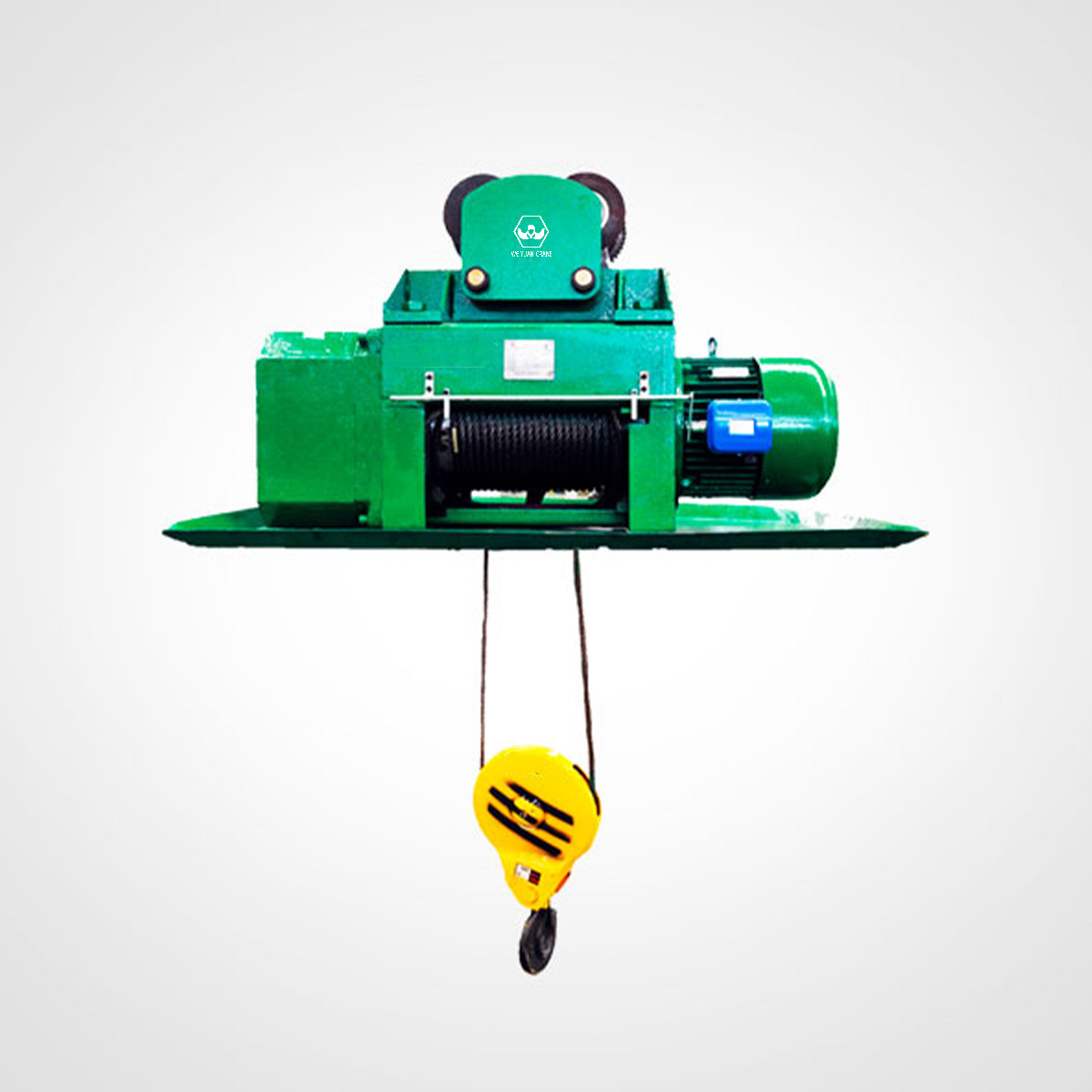
Universal electric hoist
Monorail Electric Hoist for Sale: Trolley-Mounted Lifting Along a Fixed Beam
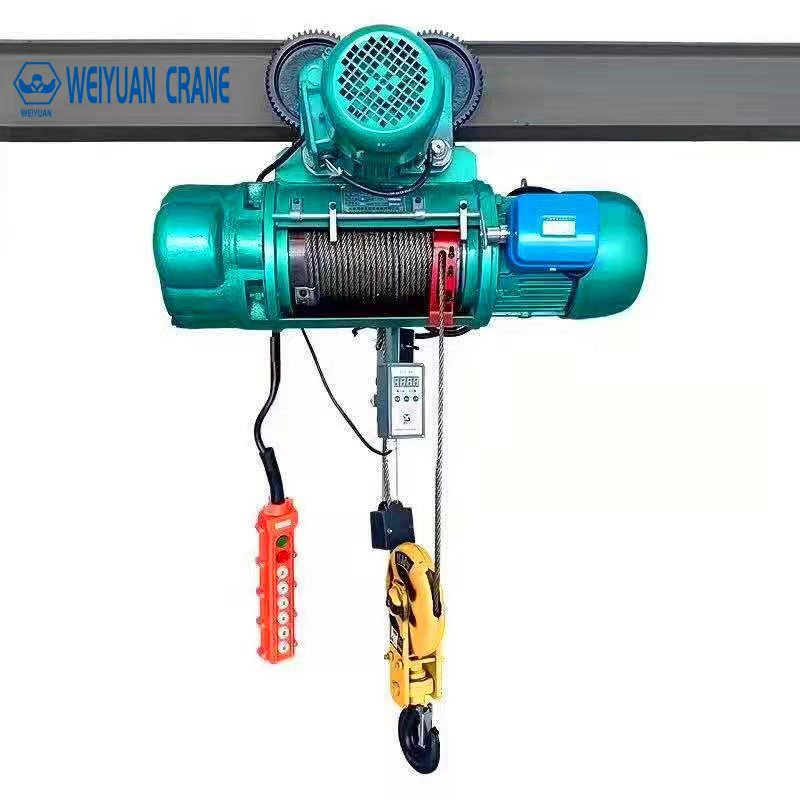
A monorail electric hoist pairs a standard chain or wire rope hoist with an integrated travel trolley, letting the unit move along an I-beam, box girder, or KBK enclosed track rather than lifting from one fixed point. This combination is what turns a simple hoist into a genuine point-to-point material-handling tool — feeding a machine, transferring between stations, or following an assembly line’s flow.
Weiyuan’s monorail electric hoist range covers 250 kg to 10 tons, matched to the beam or track profile the trolley will travel on.
What Makes a Monorail Electric Hoist Different
A fixed-mount electric hoist lifts only at the single point it’s installed. A monorail electric hoist adds a travel trolley — plain (hand-pushed), geared, or electric — that lets the entire hoist assembly move along a beam or track, covering the full length of that path rather than one location.
The trolley type is a meaningful choice in its own right: a plain push trolley suits light, infrequent moves; a geared trolley gives mechanical advantage for heavier hand-guided travel; and an electric trolley motorizes horizontal travel entirely, matched to high-frequency or heavier-load applications where hand-pushing isn’t practical.
Series and Capacity Range
Series name: WY-EH-MT Series | Category: Monorail electric hoist, integrated travel trolley, I-beam/box girder/KBK track compatible
| Model | Capacity | Trolley Type | Typical Applications | Control | Hoist Type |
|---|---|---|---|---|---|
| WY-EH-MT03 | 250–500 kg | Plain (push) or geared | KBK track systems, light point-to-point transfer | Pendant | Chain hoist with travel trolley |
| WY-EH-MT10 | 0.5–1 ton | Geared or electric | I-beam monorail, general workshop material flow | Pendant/remote | Chain hoist with travel trolley |
| WY-EH-MT30 | 1–3 tons | Electric | Assembly-line feed, medium-duty transfer between stations | Remote | Chain or wire rope hoist with electric trolley |
| WY-EH-MT10T | 3–10 tons | Electric | Upper limit of monorail range — heavier point-to-point transfer | Remote | Wire rope hoist with electric trolley |
Technical Parameters (Reference Range)
| Parameter | Typical Range / Description |
|---|---|
| Duty class | M3–M6 |
| Power supply | 380V/50Hz (customizable), manual push-travel for lighter trolley options |
| Trolley type | Plain (push), geared, or electric — capacity and cycle-rate dependent |
| Track compatibility | I-beam, box girder, or KBK enclosed track profile |
| Control options | Pendant or wireless remote |
| Overload and limit protection | Overload protection plus upper/lower limit switches, standard on all models |
Featured Product: Weiyuan WY-EH-MT10 Monorail Electric Hoist
[Product image placeholder]
The WY-EH-MT10 is a 0.5–1 ton unit with a geared or electric trolley for I-beam monorail installation, Weiyuan’s most common monorail hoist configuration for general workshop material flow between fixed stations.
[View Product / Get Quote →]
How to Choose the Right Monorail Electric Hoist
- Confirm your beam or track profile — I-beam, box girder, or KBK enclosed track — since the trolley must match the specific rail geometry it will run on.
- Confirm your heaviest actual lift, including any attachment weight, and match it against the series table above.
- Decide plain, geared, or electric trolley based on your travel distance, cycle rate, and how heavy the hand-guided load feels in practice.
- Measure the full travel path for obstructions before finalizing beam length and trolley type.
- Verify your beam or track structural support is rated for both the hoist and trolley weight and the full rated lifting capacity.
Red Flags When Shopping for a Monorail Electric Hoist
- No confirmation of beam or track profile compatibility — a trolley sized for the wrong rail geometry simply won’t run correctly, and this should be confirmed before ordering, not after delivery.
- A geared or electric trolley recommended without discussing your actual cycle rate — trolley type should match how often and how far the load actually travels, not be defaulted to the most expensive option.
- No structural verification of the beam or track’s load rating — this needs to account for both the hoist and trolley weight together, not the hoist’s capacity figure alone.
- No mention of travel-path obstructions during specification — the whole point of a monorail hoist is covering a path, so a proposal that doesn’t address the actual route is incomplete.
Frequently Asked Questions
Q: What’s the difference between a monorail electric hoist and a standard fixed-mount hoist? A monorail electric hoist adds an integrated travel trolley that lets the hoist move along a beam or track, covering a full path rather than lifting from a single fixed point — the underlying hoist mechanism (chain or wire rope) is otherwise the same as a fixed-mount unit of equivalent capacity.
Q: What trolley type should I choose for a monorail electric hoist? This depends on your cycle rate and load weight — a plain push trolley suits light, infrequent moves; a geared trolley gives mechanical advantage for heavier hand-guided travel; and an electric trolley motorizes horizontal travel for high-frequency or heavier-load applications. See the WY-EH-MT series table above for typical pairings.
Q: Can a monorail electric hoist run on a KBK track system? Yes — this is one of the most common applications for a monorail electric hoist, particularly lighter-capacity chain hoist units on a KBK enclosed track. See our KBK crane guide for more on how these track systems work.
Q: How much weight can a monorail electric hoist lift? Monorail electric hoists typically range from 250 kg up to about 10 tons (see the series table above), with capacity limited by both the hoist itself and the trolley and beam or track’s load rating.
Q: Does a monorail electric hoist need a powered trolley? Not always — lighter units with infrequent moves are often specified with a plain push or geared trolley, while higher-capacity or higher-cycle-rate applications typically use an electric trolley. This should be matched to your actual usage pattern rather than defaulted to either option.