


Can You Use an Electric Hoist in a Warehouse? The Answer is YES, and Here’s Why it’s Essential
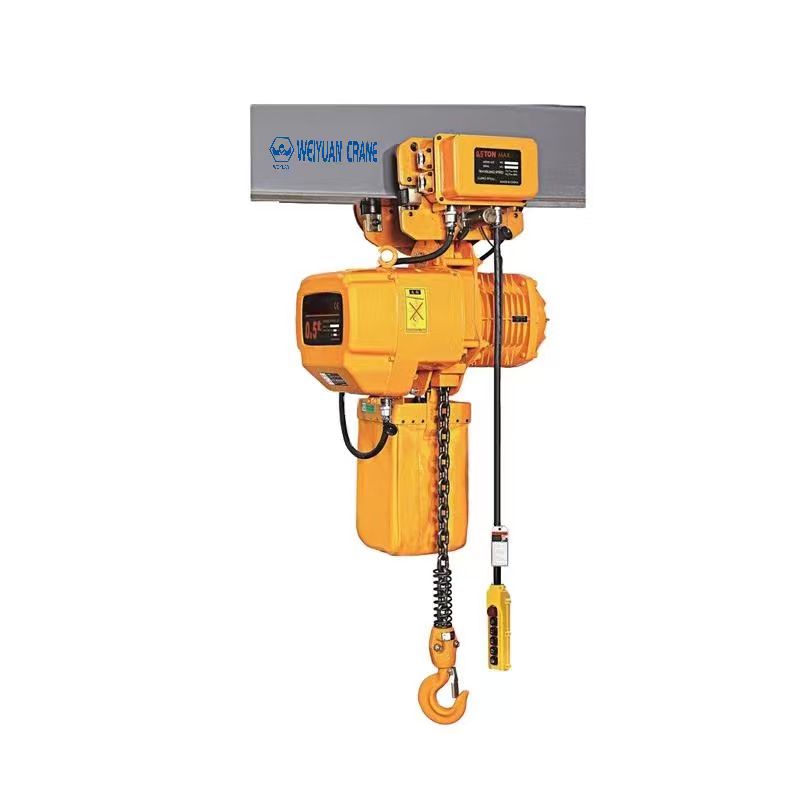
The Role of the Electric Hoist in Modern Warehouse Logistics
The question of whether you can use an electric hoist in a warehouse is not about feasibility, but necessity. The modern warehouse—a bustling hub of logistics, storage, and distribution—demands efficiency, safety, and rapid throughput. Manual lifting or outdated equipment creates bottlenecks and heightens the risk of workplace injury. This is where the electric hoist steps in as an indispensable solution.
An electric hoist is specifically engineered to handle the repetitive, precise vertical movement of goods and components that characterizes warehouse operations. Whether it’s loading heavy dies onto a maintenance bench, moving specialized crates into storage, or preparing cumbersome packages for shipping, a reliable hoist electric system transforms slow, strenuous activity into a fast, single-person task.
The key to its widespread use is versatility. These hoists can be seamlessly integrated into existing structures, such as being mounted on a jib crane, a monorail system, or combined with an electric hoist with trolley to provide full three-dimensional coverage for a specific work cell.
Product Description: WEIYUAN Electric Hoists – Driving Warehouse Efficiency
WEIYUAN electric hoist systems are purpose-built to meet the high demands of modern warehouse environments across Europe, Asia, and Africa. We deliver lifting mechanisms that are safe, durable, and engineered for high-cycle use—ensuring your logistics chain remains fluid and efficient.
Our hoists—including both electric wire rope hoist and electric chain models—are supplied as complete, integrated packages. They feature precision motors, robust gearboxes, and intuitive controls, all designed to deliver consistent, repeatable lifting performance. Their primary purpose in a warehouse is to eliminate worker strain, reduce operational time, and dramatically increase the speed at which materials are moved and positioned.
Operational Advantages in Warehouse Settings
The integration of an electric hoist offers clear economic benefits:
- Accelerated Receiving and Shipping: Using a 1 ton electric hoist at a receiving dock can speed up the unloading of smaller, heavy cargo from trucks.
- Minimized Labor Dependence: One operator can safely handle loads that previously required a team of two or more, reallocating labor to core logistical tasks.
- Improved Safety Profile: By automating heavy lifting, the incidence of musculoskeletal injuries is drastically reduced, lowering insurance and lost-time costs.
- Flexible Deployment: The hoist is not confined to a fixed rail; it can be integrated with a portable gantry crane with electric hoist, allowing it to be used temporarily in any part of the warehouse floor.
WEIYUAN is a professional manufacturing entity integrating production, sales, design, and installation. We understand that in logistics, time is money. Our hoists are designed for maximum uptime, guaranteeing long-term reliability where generic equipment—such as a non-industrial electric hoist small or harbor freight tools electric hoist—would quickly fail under daily warehouse pressures.
Features and Advantages: Engineered for Warehouse Durability
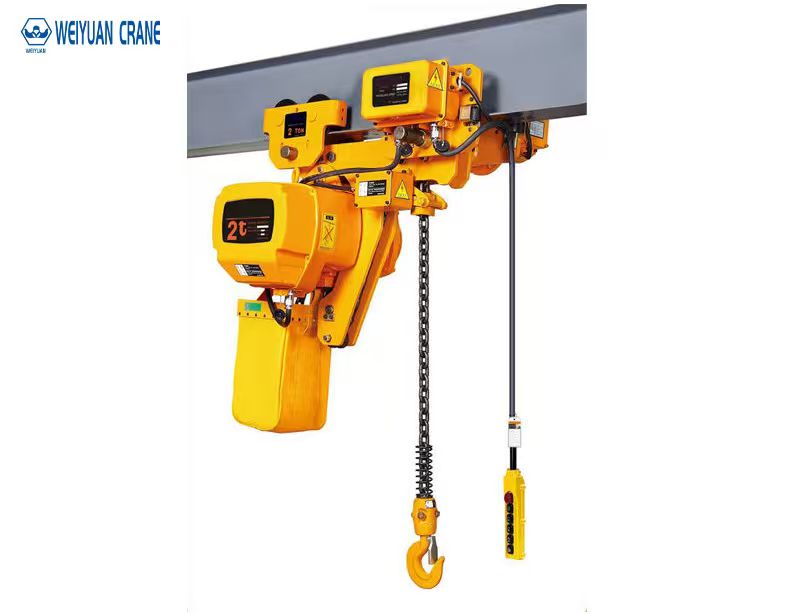
Our electric hoists are equipped with features specifically chosen to address the high usage, varied loads, and space constraints found in logistics environments.
Core Component Highlights
- Robust Housing: Die-cast aluminum or heavy steel housing provides exceptional heat dissipation and protection against dust and accidental impact common in warehouses.
- Precision Lifting: Dual-speed motors or VFD controls allow operators to transition from fast transit speed to slow “creeping” speed, essential for stacking fragile goods precisely.
- Versatile Mounting: Available as fixed-hook, lug-mount, or paired with a motorized electric hoist and trolley for lateral movement along monorails or bridge cranes.
- High Duty Cycle: Engineered with high FEM/ISO duty ratings suitable for the repetitive start-stop demands of daily warehouse operations.
Key Functional Features
- Anti-Snag Design: Chain or wire rope guides minimize tangling, ensuring smooth operation during fast-paced logistics tasks.
- Integrated Overload Protection: Automatically prevents the hoist electric from lifting loads exceeding its rated capacity, protecting both the equipment and the goods.
- Remote Operation: Standard pendant control, often paired with wireless options for safe operation from the best vantage point.
Technical Specifications: Matching the Hoist to Your Stock
Choosing the right electric hoist requires careful attention to the specific weight, height, and power requirements of your facility.
Essential Technical Parameters
| Specification | Detail | Applicability Insight |
| Capacity Range | From 0.5 Ton up to 15 Ton. Popular warehouse models include electric chain hoist 1 ton and electric hoist 2 ton. | Directly impacts the range of items you can safely handle. |
| Lifting Medium | Wire Rope (faster, higher lift) or Chain (better precision, ideal for shorter lifts). | Chain hoists (like a 3 ton electric chain hoist) are often preferred for standard warehouse heights. |
| Power Supply | 3-Phase 380V/50Hz (Standard), fully customizable for local requirements (e.g., 440V, 60Hz). | Ensures electrical compatibility across global warehouse locations. |
| Hoist Lift Height | Standard up to 15 meters; customized for high-rack storage. | Must align with the highest rack level or mezzanine. |
| Incline Suitability | Certain hoists (like a specialized electric ladder hoist variant) can be adapted for movement along inclined rails, common in tiered warehouses. | Addresses non-traditional movement paths in complex storage layouts. |
Free Design and Personalized Customization Options
Generic hoists are rarely a perfect fit for a specialized warehouse flow. WEIYUAN offers FREE design and personalized customization services to integrate the hoist seamlessly into your unique system.
- Custom Tonnage and Reach: Manufacturing hoists for unusual intermediate weights (e.g., 1.5 ton) or specific lift heights.
- Color/Logo Customization: Matching the hoist color to facility safety standards or corporate branding.
- Environmental Protection: Providing IP-rated systems for dusty logistics environments or cold storage.
- Control Integration: Designing specific controls for specialized applications, such as an adapted electric bike hoist for vertically storing bicycles in an urban distribution center.
Application Fields: Strategic Hoist Placement in the Warehouse
The strategic placement of the electric hoist dictates its value within the logistics flow.
- Receiving & Inspection Zones: Used for unloading heavy pallets or repositioning goods for quality control.
- Heavy Component Storage: Employed on light gantry systems or monorails to load and retrieve heavy dies, fixtures, or machinery parts.
- Assembly and Kitting Areas: A small electric hoist 1 ton mounted on a jib crane assists workers in assembling heavy kits or components.
- Outdoor Storage: Weatherized hoists can be utilized in semi-enclosed docks or yard areas.
- Vertical Access: Specialized hoists, similar to electric scaffold hoist systems, can be adapted for maintenance access on high shelving or building structures.
Safety, Compliance, and Installation Support
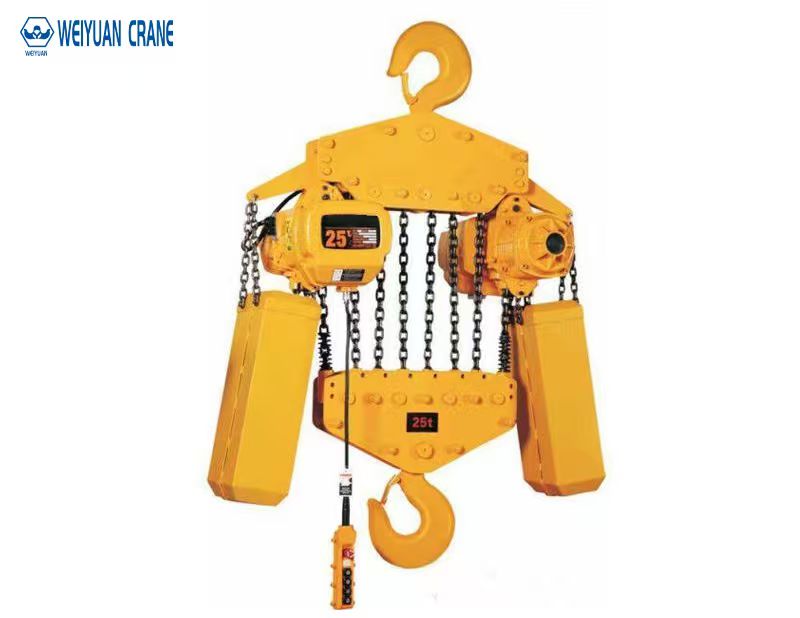
The safety of lifting equipment is paramount, particularly in high-traffic warehouse environments. Our hoists are designed to not only meet but exceed regulatory expectations.
International Compliance and Quality Assurance
All WEIYUAN hoists are engineered and tested to ensure global compliance:
- CE Certification: Ensuring full compliance with stringent European standards, a must for logistics centers operating across Europe.
- Safety Braking: Featuring dual, reliable braking systems (mechanical and electrical) to secure the load immediately upon power loss or button release.
- Load Testing: Every unit undergoes rigorous dynamic and static load testing before shipment.
Installation and Dedicated Support
We ensure a smooth installation process that minimizes disruption to your warehouse operations:
- Detailed Integration Plans: Providing certified drawings for safe attachment to building structures, beams, or gantry systems.
- Online/On-site Technical Assistance: Offering comprehensive manuals and online guided installation support. For complex integrations, our experienced site-technical team is available for on-site commissioning.
Case Study: Efficiency Gains in an Asian Distribution Center
A major distribution center in Southeast Asia struggled with manual handling of 1T electronic components destined for high racks. They installed 8 electric hoist with trolley units on dedicated monorail spur lines leading directly from the packaging zone. The result was immediate: eliminating 4 manual handling points, achieving a 35% reduction in the packaging-to-storage cycle time, and completely freeing workers from the risk associated with handling loads over 500 kg, showcasing the power of a dedicated electric hoist solution.
Pricing, Quotation Process, and Delivery Timelines
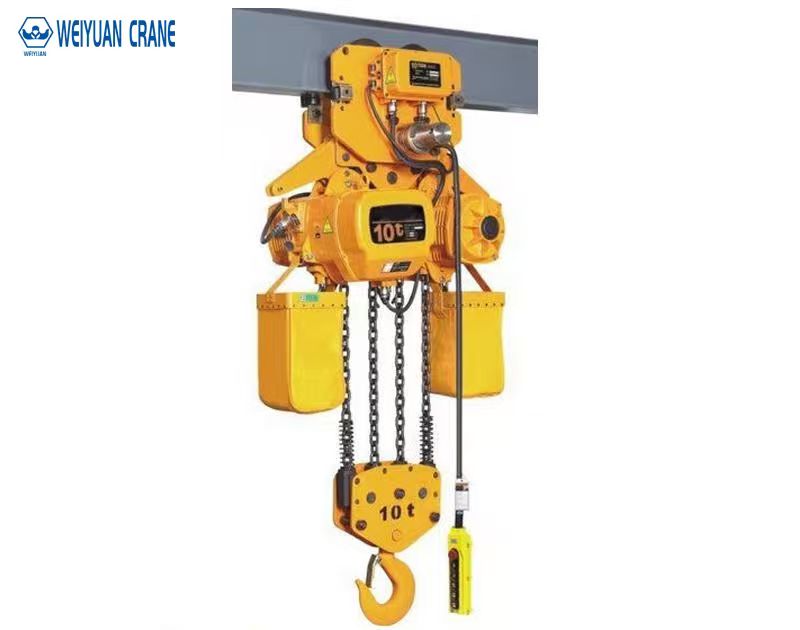
How to Obtain a Personalized Quote
The cost of an electric hoist is determined by its required capacity, lifting speed, lift height, and mounting type (fixed hook vs. motorized trolley). Due to these customization variables, we do not provide a fixed online price.
To receive an accurate and competitive quote, please contact us with the following details:
- Required Capacity (e.g., 2T, 5T).
- Lifting Medium (Chain Hoist or Wire Rope Hoist).
- Lift Height (in meters or feet).
- Trolley Requirement (Manual, Electric, or Fixed).
Our engineering and sales teams will analyze your warehouse needs and provide a fast, personalized, and obligation-free quote. Do not settle for a small electric hoist small when your large-scale logistics depend on reliable industrial equipment.
Estimated Delivery Cycle
We are committed to reliable manufacturing schedule:
- Standard Configurations: For common models (e.g., electric hoist 1 ton or electric hoist 2 ton), the typical lead time from order confirmation to factory shipment is approximately 4 to 6 weeks.
- Customized/High-Specification Units: For bespoke designs (e.g., a portable gantry crane with electric hoist unit designed for extreme heights), the cycle may extend to 8 to 12 weeks to accommodate specialized component procurement and testing.
Frequently Asked Questions (FAQ)
Is a small electric hoist suitable for loading cargo trailers?
A small electric hoist is generally suitable, provided it is mounted to a sturdy structure (like a gantry or jib crane). We recommend models paired with a trolley for easier positioning of the cargo inside the trailer.
Can I adapt an electric wire rope hoist to a portable gantry crane?
Yes. The combination of a portable gantry crane with electric hoist is highly effective in warehouses. We specifically design certain electric wire rope hoist models to be lightweight yet robust enough for mobile gantry systems.
What is the most common hoist electric used in a typical small warehouse?
The most common is the electric chain hoist 1 ton or 2 ton, often mounted on a push/pull or motorized trolley system. They offer excellent precision and are cost-effective for standard warehouse lift heights.
Do you supply electric hoists for non-industrial uses, like garage storage?
While our primary focus is industrial, the core technology from our hoist electric cable systems can be adapted for specialized non-industrial tasks, such as high-capacity storage hoists (similar to an electric bike hoist or specialized lifts), using our lower capacity models.