


What are the Three Types of Chain Hoists? A Guide to Lifting Solutions
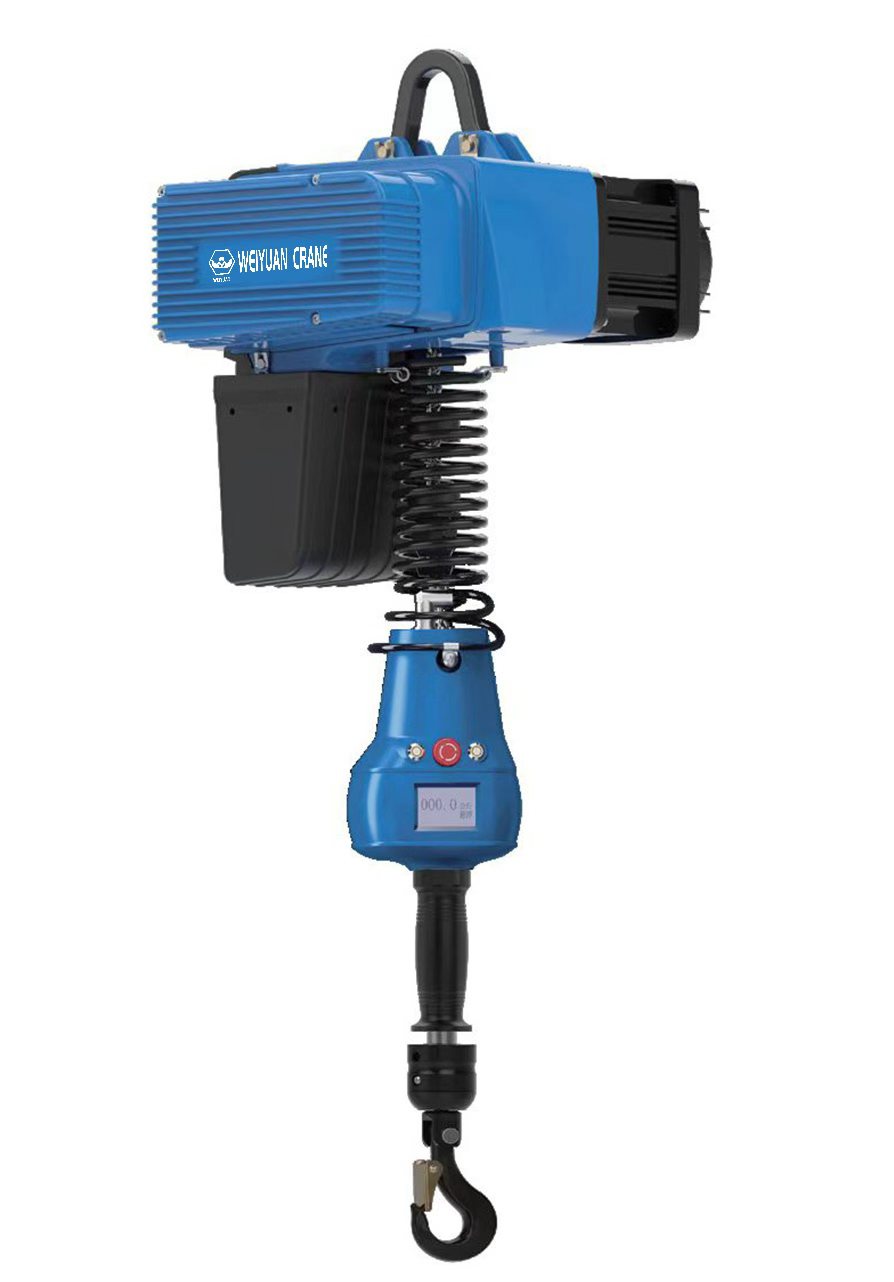
The Chain hoist is a fundamental lifting tool, utilized globally for its durability, simplicity, and effectiveness in managing heavy loads. While all chain hoists share the basic principle of using chain links to lift via a gear system, they are primarily categorized by their driving mechanism. Understanding these three main types is key to selecting the right Chain hoist for your operational needs, whether you are managing inventory in a warehouse or installing components in a tight workshop.
The Three Primary Types of Chain Hoists Defined
The classification of a Chain hoist hinges on how the lifting force is generated: manually, via a lever, or electrically. Each type offers distinct advantages regarding speed, portability, and power source requirements.
1. Manual Hand Chain Hoists (Chain Fall)
The most traditional and widely recognized type, the manual hand chain hoist, operates entirely by human effort. The operator pulls a smaller hand chain, which engages a gear system to slowly lift the load chain.
- Operation: Pulling the hand chain hoist chain rotates a sheave, which turns gears that multiply the mechanical force applied to the load chain.
- Key Advantage: Exceptional portability, low maintenance, and operation independent of any external power source. Ideal for small, intermittent lifts or when precise, slow placement is required in areas without electricity.
- Application Example: Commonly seen in auto repair shops or as a 1 ton chain fall hoist for short, occasional lifts where speed is not the priority.
2. Lever Chain Hoists (Come-Alongs)
Often called lever chain hoists or “come-alongs,” this type uses a ratcheting lever mechanism rather than a continuous loop of chain to lift or tension a load.
- Operation: The operator cranks a short lever back and forth, engaging a ratcheting pawl and gear system to lift or pull the load chain link by link.
- Key Advantage: Excellent for horizontal pulling (tensioning), lifting in confined spaces, or positioning awkward loads. They are generally more compact and offer higher mechanical advantage in tight quarters than a traditional chain fall.
- Application Example: Preferred in construction for tensioning heavy cables or lifting materials in confined areas, often available in lower capacity 1/4 ton chain hoist or 1/2 ton chain hoist models.
3. Electric Chain Hoists
The electric chain hoist is the most modern and efficient version, replacing human labor with a powerful motor.
- Operation: An electric motor drives the chain sprocket via a gearbox. The operator controls the lifting and lowering motions using a pendant control or wireless remote.
- Key Advantage: High-speed lifting, reduced operator fatigue, and capability for high-frequency use (high duty cycle). This is the best option for continuous industrial use.
- Application Example: Essential in assembly lines, distribution centers, and warehouses where systems like the 1 tonne electric chain hoist ensure rapid material flow.
Core Features and Technical Breakdown of a Modern Chain Hoist
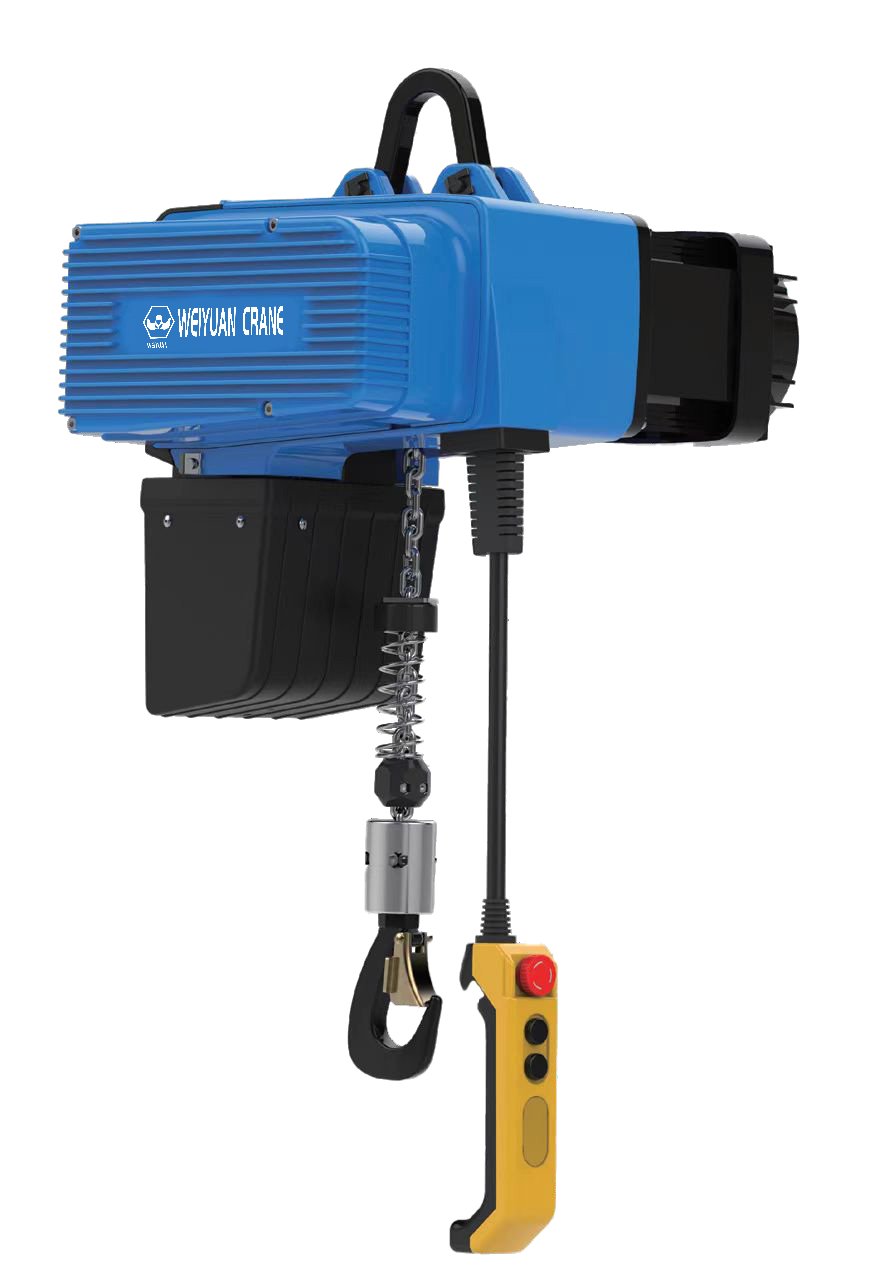
Whether manual or electric, a modern Chain hoist incorporates advanced engineering for safety and durability.
H3 Features That Guarantee Reliability
| Feature | Advantage | Value Proposition |
| Robust Gearing and Components | Uses sealed, permanently lubricated gearboxes and high-strength, heat-treated alloy steel for chains/wire ropes. | Minimizes internal wear and friction, significantly extending the hoist’s operational life. |
| Motor Thermal Protection | The motor includes built-in sensors that shut down the unit if it approaches an overheating threshold. | Prevents irreversible damage to the motor windings, a common cause of premature hoist failure. |
| VVVF/Two-Speed Control | Reduces mechanical shock and wear on the brake and gears by providing smooth, gradual acceleration and deceleration. | Prolongs the life of the braking system and mechanical components. |
| Durable Control System | Options like the electric hoist with wireless remote or robust pendants are rated for high-cycle use and resistance to industrial interference. | Ensures reliable control connection over the long term, reducing downtime. |
Technical Specification Overview (Electric Models)
The performance of an electric chain hoist is dictated by its technical specifications:
| Specification Item | D2B100 (1000Kg) | D2B200 (2000Kg Double Rope) |
| Max Load (Kg) | 1000 | 2000 |
| Lifting Speed (m/min) | 1/8 | 0.5/4 |
| Rated Power (KW) | 2.2 | 2.2 |
| Working Grade (FEM/ISO) | M5 | M5 |
| Chain Specification (mm) | 7.1 | 7.1 |
| Control Method | Wired/Wireless Remote | Wired/Wireless Remote |
Customization, Compliance, and Real-World Application
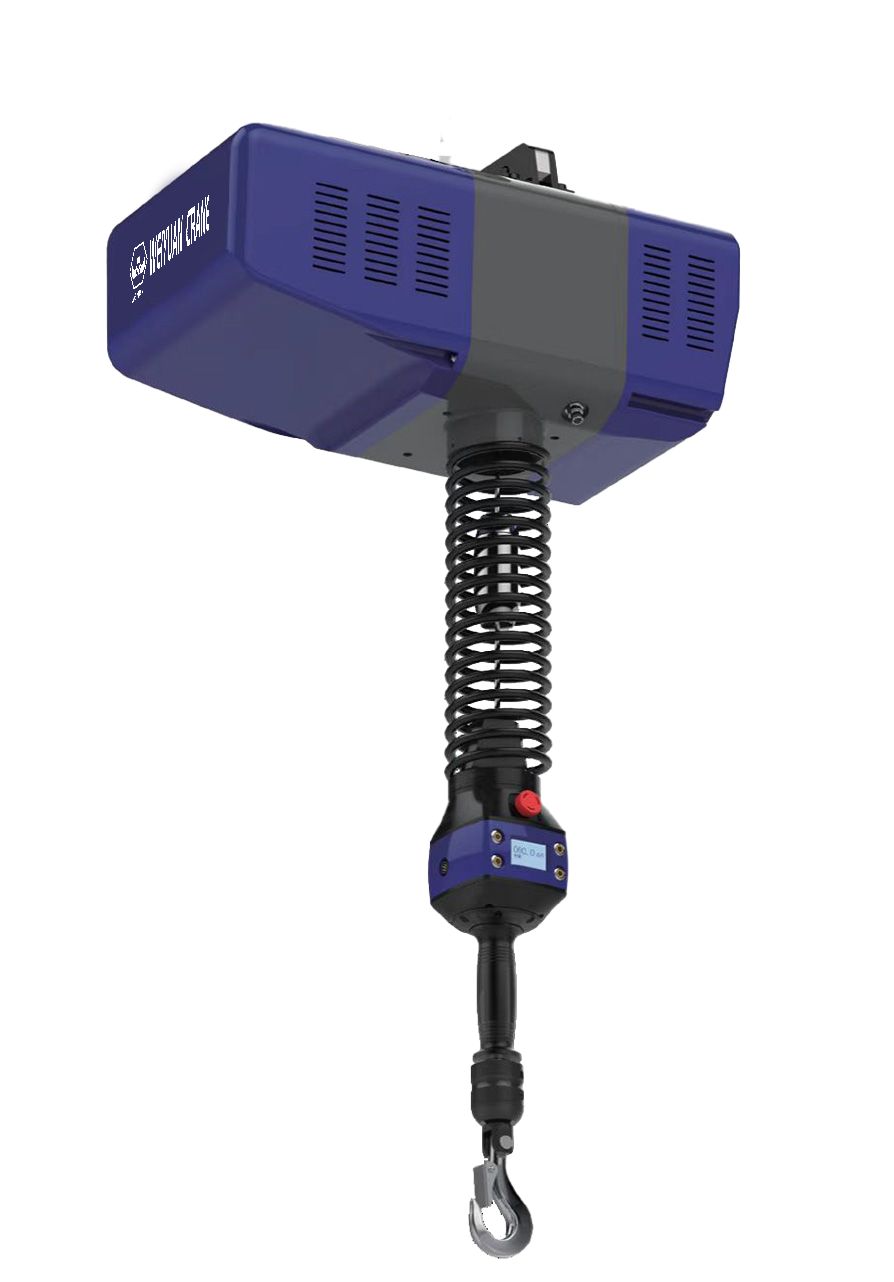
To maximize the value of your chosen Chain hoist type, customization and adherence to safety standards are non-negotiable.
Tailored Solutions for Optimal Performance
We are committed to providing complimentary design and personalized customization services to ensure the product perfectly fits your unique conditions:
- Performance Tuning: Precise adjustment of chain length and lifting height.
- Environmental Adaptation: Adding high-level dust and water protection (IP rating) to guarantee stable operation in special, harsh environments.
Our partner, HOLILITE, is a professional production manufacturer integrating production, sales, design, and installation, ensuring our global clients receive specialized, reliable equipment.
Versatile Application Fields
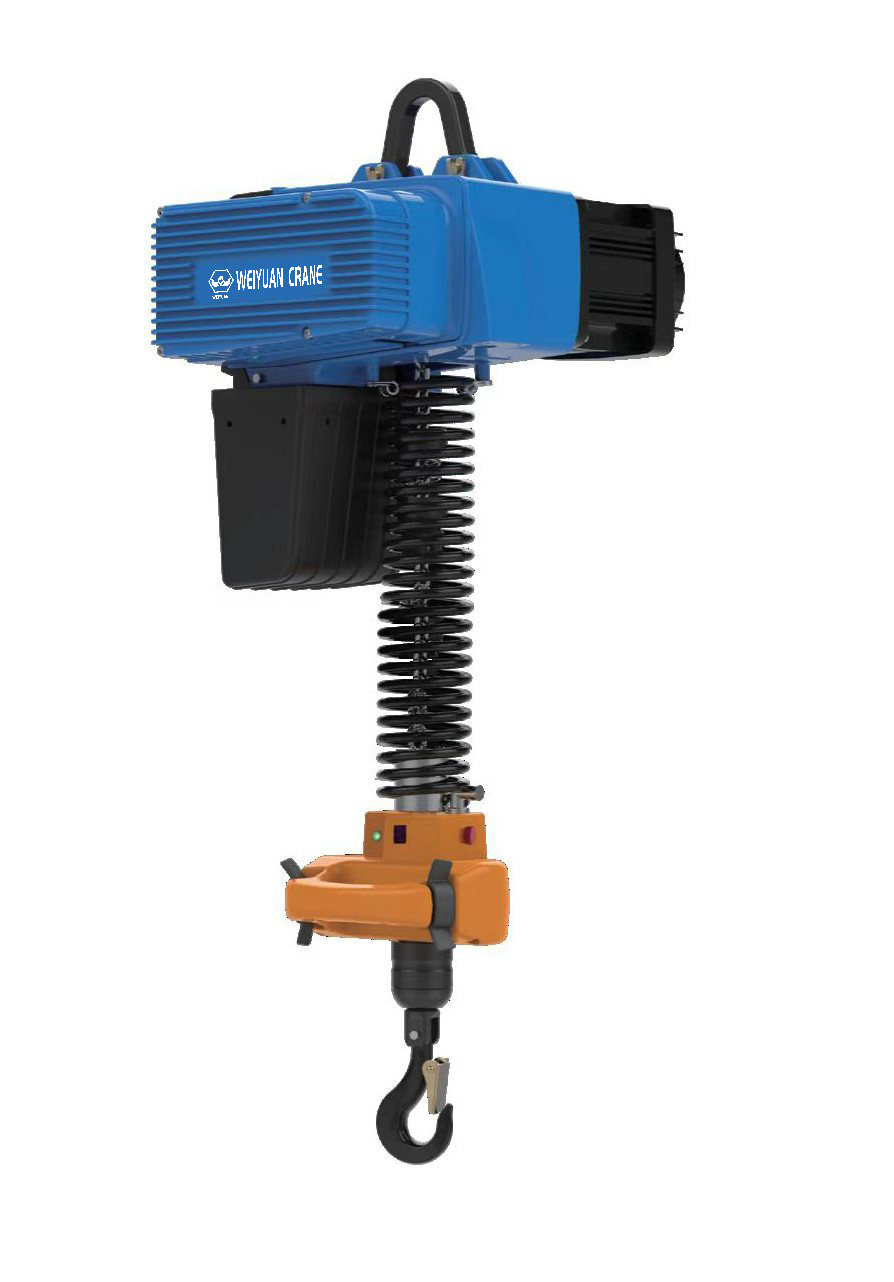
The Chain hoist serves as an efficiency multiplier in several key sectors:
- Industrial Manufacturing/Auto Repair: Precision lifting and maintenance of critical components like engines, often using a specialized small chain hoist.
- Logistics & Warehousing: Improving the efficiency of loading, unloading, and stacking to optimize space management.
- Outdoor Events: Providing stable support for temporary structures like stage trusses and sound/lighting equipment.
Safety and Compliance Assurance
We strictly adhere to the highest international standards, guaranteeing the safety and quality of every Chain hoist:
- CE Certification: Our products comply with strict EU safety, health and environmental requirements, allowing global market access.
- Protection: High-standard dust and water resistance (IP ratings) ensure perfect adaptation to complex indoor and outdoor environments.
Case Study: Upgrading from Manual to Electric Chain Hoist
Case Challenge: A large traditional assembly station heavily relied on old-style manual lifting devices, resulting in chronic efficiency bottlenecks, low operational accuracy, and frequent safety incidents caused by human error.
Solution and Results: The client adopted our Chain Hoist smart lifting solution. The new equipment features multi-layer electronic safety mechanisms, real-time monitoring, and M5/M6 duty cycle ratings, suitable for their high-frequency use.
Key Value Gains:
- Efficiency Increase: Over $30\%$ improvement by transitioning from inefficient manual operation to fast, stable material turnover.
- Safety Improvement: $90\%$ reduction in accidents caused by human operational errors due to built-in overload protection and high working duty classes.
- Precision: Guaranteed millimeter-level accuracy for critical equipment installation and component placement.
Conclusion: Our Chain hoist is more than just a lifting device; it is a core tool that elevates your production efficiency and safety standards.