


What are the Three Basic Types of Overhead Cranes?
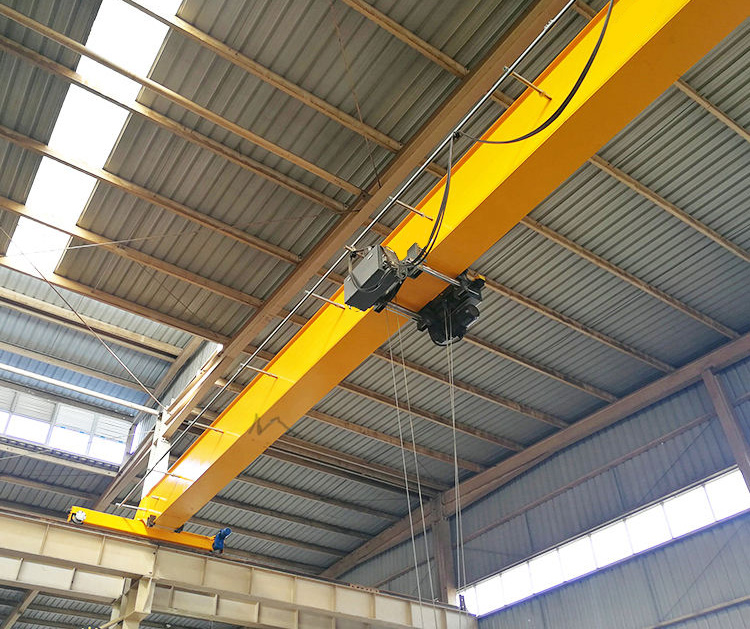
The term overhead crane encompasses a wide family of lifting devices, but understanding the three fundamental structural types—Single Girder, Double Girder, and Gantry (though technically separate, often discussed as a variant)—is essential for optimizing material flow in any industrial setting. The choice between these types impacts everything from your facility’s space utilization to the crane’s maximum lifting capacity and required maintenance.
This article dissects the core differences between the basic types of overhead crane systems, highlighting their ideal applications, technical specifications, and inherent advantages.
The Fundamental Structure: Overhead vs. Gantry
An overhead crane (or overhead bridge crane) is defined by its horizontal girder(s) running along elevated rails or runways fixed to the building structure. This design maximizes floor space utilization and is ideal for lifting materials over the full length and width of a building.
1. The Single Girder Overhead Crane
The single girder overhead crane utilizes one main horizontal beam (girder) that spans the width of the building. The hoist and trolley typically run along the bottom flange of this single beam.
- Structure: Optimized box-shaped or I-beam girder design, contributing to light dead weight and small wheel pressure.
- Key Advantage: Offers the maximum amount of headroom and is the most cost-effective option for light-to-medium duty applications.
- Ideal Capacity: Typically ranges from 1 ton up to 20 tons.
2. The Double Girder Overhead Crane
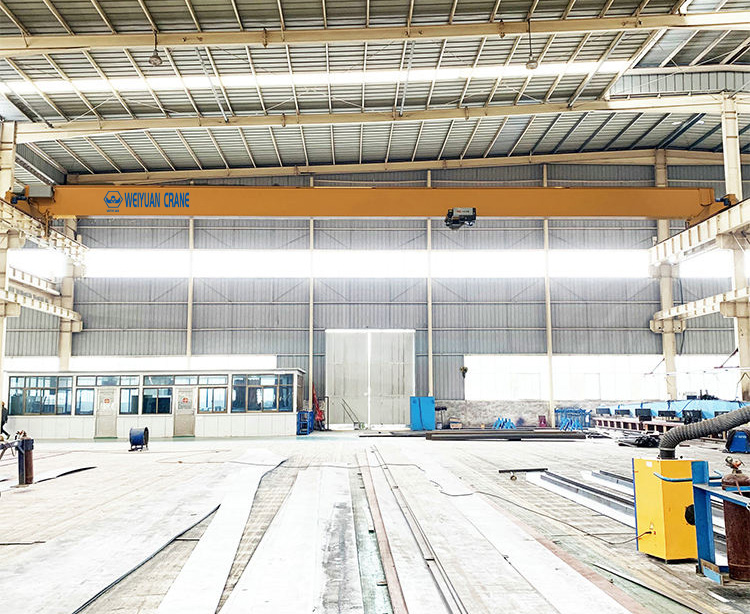
The double girder overhead crane employs two parallel horizontal girders. The hoist and trolley run on rails mounted on top of these two beams.
- Structure: Dual-beam structure.
- Key Advantage: Designed for extreme capacities and longer spans. Since the hoist is mounted on top of the girders, it achieves a higher hook height.
- Ideal Capacity: Standard models range from 1 ton to 80 tons, with customization up to 400 tons.
- Application Focus: Heavy industrial use, such as steel coil handling, metallurgy, and large component assembly.
3. Gantry and Semi-Gantry Cranes (The Overhead Variant)
While not strictly an overhead crane because it stands on the floor, the gantry overhead crane operates overhead and is often classified by manufacturers as a related lifting system.
- Structure: A bridge supported by independent legs that run on floor-level rails.
- Key Advantage: Provides lifting capability where the building structure is inadequate or in outdoor yards.
- Related Models: 5 ton overhead gantry crane models are popular for outdoor storage or light-to-medium workshops.
Core Technology and Specifications Driving Performance
Regardless of the type, the performance of an overhead crane system is driven by advanced engineering components focused on safety and precision.
Technical Specifications Overview
Choosing the correct specifications is crucial for matching the crane to its working environment.
| Specification Item | Standard Range | Customization Scope |
| Capacity | 1 ton to 80 tons (standard). | Up to 400 tons (maximum customized). |
| Span Length | 7.5 meters-34 meters. | Non-standard or longer spans for unique factory layouts. |
| Lifting Height | 6 meters- 50 meters. | Specialized high-lift configurations available. |
| Durability (Duty Cycle) | Typically A4 (Medium) or A5 (Heavy). | Customizable to meet the most demanding operational cycles. |
| Power/Control | 380V/400V/415V, 50-60Hz, AC. | Ground control, wireless remote, or operator cab control. |
Features Ensuring Precision and Longevity
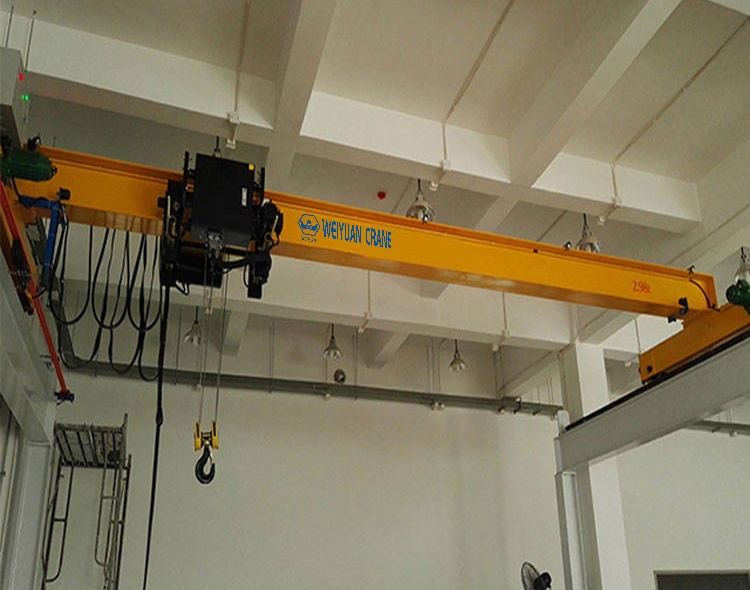
- Drive System: Utilizes a three-in-one reducer (hard-tooth gear reducer, variable frequency braking motor) for stable operation and high positioning accuracy.
- Control Mode: Variable Frequency Drive (VFD) technology provides stepless speed control, enhancing efficiency and reducing mechanical impact during operation.
Customization, Compliance, and Real-World Application
The highest value in an overhead crane system comes from custom engineering and guaranteed safety compliance.
Customization and Design Services
We provide free factory structure analysis and crane layout optimization design. Customization extends to:
- Non-standard capacity and extended spans.
- Special environmental designs (anti-explosion/anti-corrosion).
- Optional specialized attachments like grapples or electromagnetic chucks to meet 100% of operational needs.
WEIYUAN is a professional production manufacturer integrating production, sales, design, and installation, offering specialized expertise from the initial design phase.
Safety and Compliance
Safety is the absolute priority for every overhead crane system.
- Safety Standard: Compliance with national and industry standards (e.g., TSG Q0002-2008) is mandatory.
- Key Device: A weight limiter must be installed to automatically cut off the lifting power if the load exceeds the limit.
- Safety Voltage: The control circuit voltage for suspended control devices does not exceed the 50V safety voltage.
Case Study and Procurement
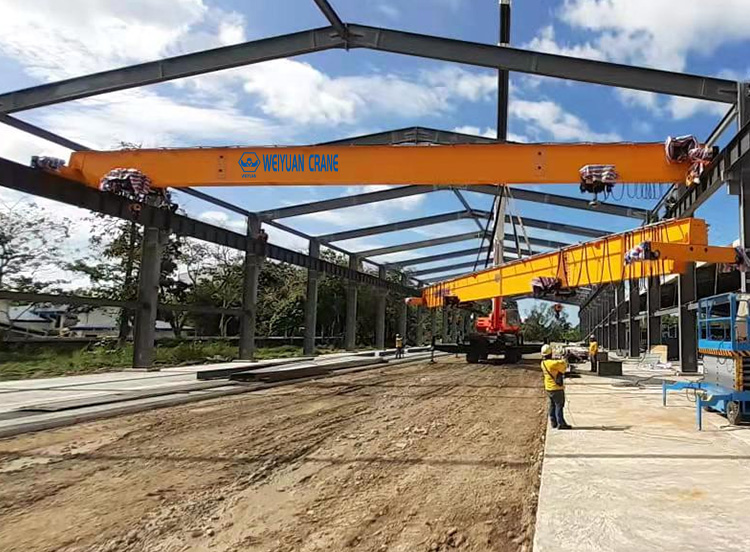
The impact of a correctly specified overhead crane on production efficiency is measurable and significant.
Case Study: Automotive Manufacturing Efficiency
- Project: Deployment of five 10-ton double-girder bridge cranes in a large automotive parts manufacturing plant.
- Result: The cranes achieved a reduction of 8% in production line cycle time. The system has run safely for over 8000 hours with zero recorded accidents.
Installation, Support, and Procurement
We offer comprehensive support services:
- Guidance: Online installation instruction, detailed manuals, and video tutorials.
- On-site Support: Professional teams are available to assist with installation and commissioning.
- Warranty: We provide a one-year warranty and specified parts support.
- Quotation: Pricing is based on specifications and customization; contact us for a personalized quote.