


What Are the Disadvantages of a Jib Crane? A Comprehensive Analysis for Smart Buyers
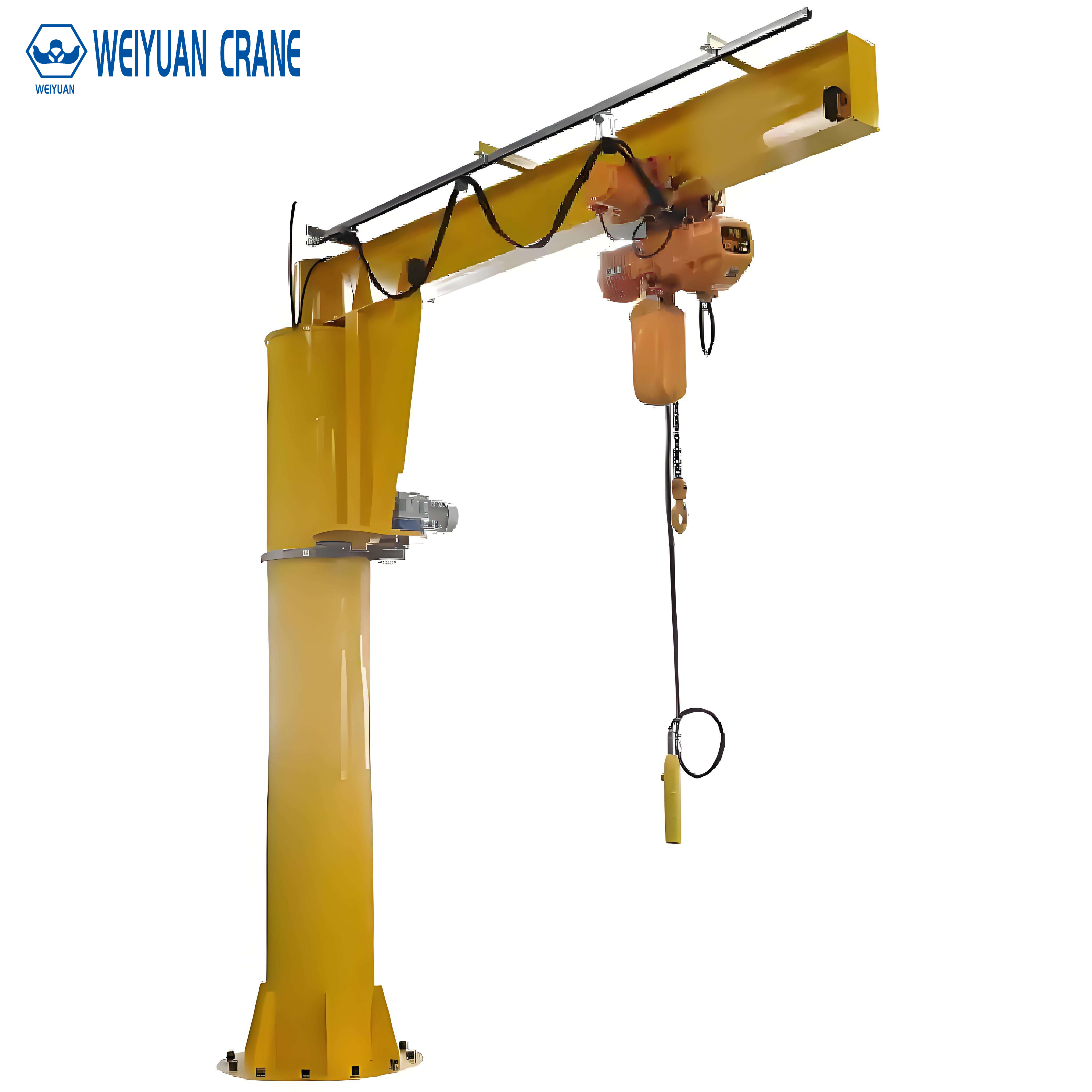
When evaluating lifting solutions for your facility, honesty is the best engineering policy. You might be asking, “What are the disadvantages of a jib crane?” compared to a massive overhead bridge system or a portable gantry. Understanding these limitations is not about discouraging their use; rather, it is about identifying exactly where a jib crane fits best in your workflow.
While they may have limited coverage areas compared to bridge cranes, jib cranes are the undisputed champions of localized, high-speed workstation lifting. As a professional manufacturer integrating design, production, and sales, WEIYUAN helps you navigate these pros and cons to find the perfect lifting solution.
1. Product Description: The Master of Localized Lifting
A jib crane is a type of crane where a horizontal member (the jib or boom), supporting a moveable hoist, is fixed to a wall or to a floor-mounted pillar.
Product Purpose:
Unlike complex overhead systems that span an entire building, the jib crane is designed for agility and speed within a specific radius. It creates a dedicated “lifting cell.” Whether used as a boat jib crane for davit applications at a marina or a heavy-duty workstation crane in a steel foundry, its purpose is to handle high-frequency lifts over short distances.
Advantage & Attraction:
The primary attraction is workflow optimization. By installing a floor jib crane at a specific assembly station, you prevent workers from waiting for the main factory overhead crane. This decentralization of lifting power drastically improves worker efficiency, reducing idle time by allowing individual operators to control their own lifting needs instantly.
2. Addressing the “Disadvantages” & Transforming Them into Strengths
To make an informed decision, we must analyze the perceived downsides of the jib crane and how modern engineering mitigates them.
Limitation 1: Restricted Coverage Area
The Reality: A jib crane can only cover the area of the circle (or arc) created by its rotating arm. It cannot traverse the entire length of a building like a bridge crane.
The Solution: This “limitation” is actually its greatest strength. By limiting the area, we create a high-speed, dedicated zone. For wider coverage, WEIYUAN offers ceiling mounted articulating jib crane systems that can reach around corners and into machines, maximizing the usable area within that radius.
Limitation 2: Floor Obstruction (Column Mounted)
The Reality: A freestanding floor jib crane requires a permanent pillar, which takes up floor space.
The Solution: If floor space is premium, we utilize wall-mounted or column-mounted designs that use existing building structures, eliminating the footprint entirely.
Limitation 3: Lower Capacity Cap
The Reality: Jib cranes generally do not reach the massive 100+ ton capacities of double-girder bridge cranes.
The Solution: For 90% of workstation tasks, you do not need 100 tons. We specialize in the “sweet spot” of industrial lifting—from a light jib crane 2 ton model up to heavy-duty 20-ton units, which covers almost all manufacturing, machining, and logistics needs.
3. Features and Advantages: Why Choose WEIYUAN?
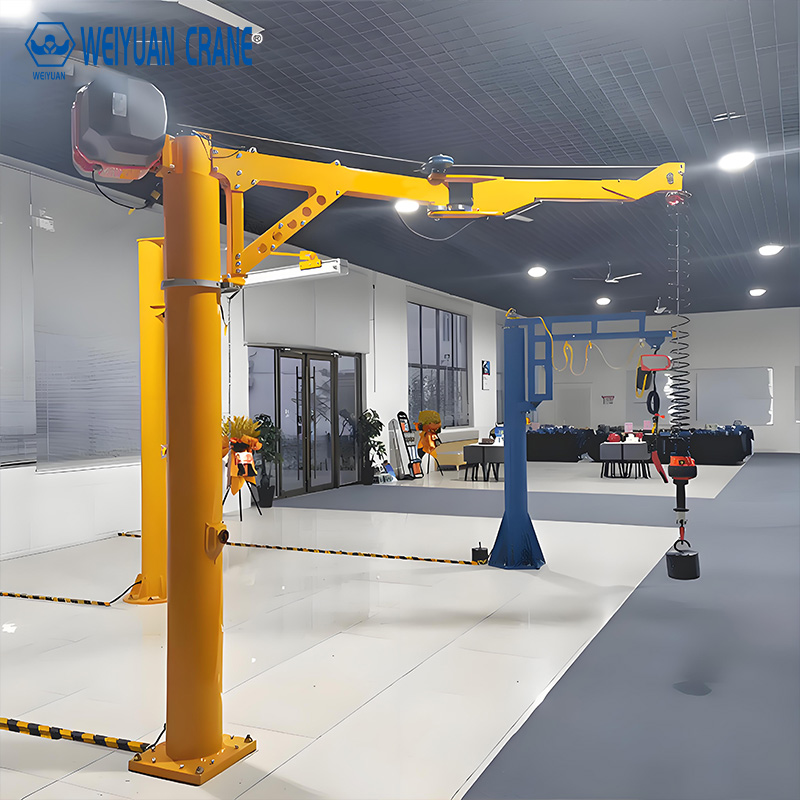
Our manufacturing process focuses on durability and ease of rotation to minimize operator fatigue.
- Rotation Flexibility: Our standard columns offer 360-degree continuous rotation. Wall-mounted units typically offer 180-200 degrees.
- Precision Movement: We offer both manual push-pull rotation for lighter loads and motorized jib crane options for heavier loads, ensuring smooth, drift-free positioning.
- High-Strength Materials: We utilize Q345B/Q235B structural steel, ensuring rigidity and minimal deflection even at the tip of the boom.
- Efficiency Gains: Implementing a jib system typically increases individual worker output by 30-50% by removing the bottleneck of waiting for a shared factory crane.
4. Technical Specifications
Understanding the specs helps you avoid under-specifying your equipment. Do not settle for vague “hobbyist” specs you might see on generic jib crane diy forums; industrial safety requires precision.
| Specification | Standard Range | Customization Scope |
| Capacity (SWL) | 0.25 Ton to 5 Ton | Up to 20 Ton |
| Span (Arm Length) | 2m to 6m | Up to 12m or more |
| Lifting Height | 3m to 6m | Customizable to ceiling height |
| Rotation Angle | 180/270/ 360 | Continuous 360 electric rotation available |
| Operation | Manual / Electric | Remote Control / Cabin / Pendant |
| Power Supply | 220V-480V, 3-Phase | Local voltage adaptation |
| Hoisting Mechanism | Electric Chain / Wire Rope | Jib and crane integrated packages |
5. WEIYUAN Customization Options
We understand that a jib crane must fit your facility, not the other way around. WEIYUAN provides complimentary design services to tailor the crane to your specific environment.
- Custom Dimensions: We do not just sell stock sizes. If you need a jib pole crane to fit between two specific CNC machines, we manufacture the exact arm length required.
- Environmental Adaptation: We offer specialized coatings for outdoor boat jib crane applications to resist saltwater corrosion, or explosion-proof designs for chemical plants.
- Control Customization: From simple pendant controls to advanced wireless remote systems, we configure the crane to your operator’s preference.
- Color & Branding: We can paint the structure in safety yellow, or match your corporate branding colors.
6. Application Fields
The versatility of the jib crane allows it to serve nearly every sector of the economy:
- Manufacturing Plants: Installed next to lathes, mills, and welding stations to lift heavy workpieces (workstation cranes).
- Warehousing & Logistics: Used at loading docks to move palletized goods from trucks to ground level or conveyors.
- Marine & Ports: Boat jib crane systems are essential for lifting tenders, jet skis, and supplies onto yachts or docks.
- Construction & Maintenance: Used in maintenance shops for engine repair and parts replacement.
7. Safety and Compliance
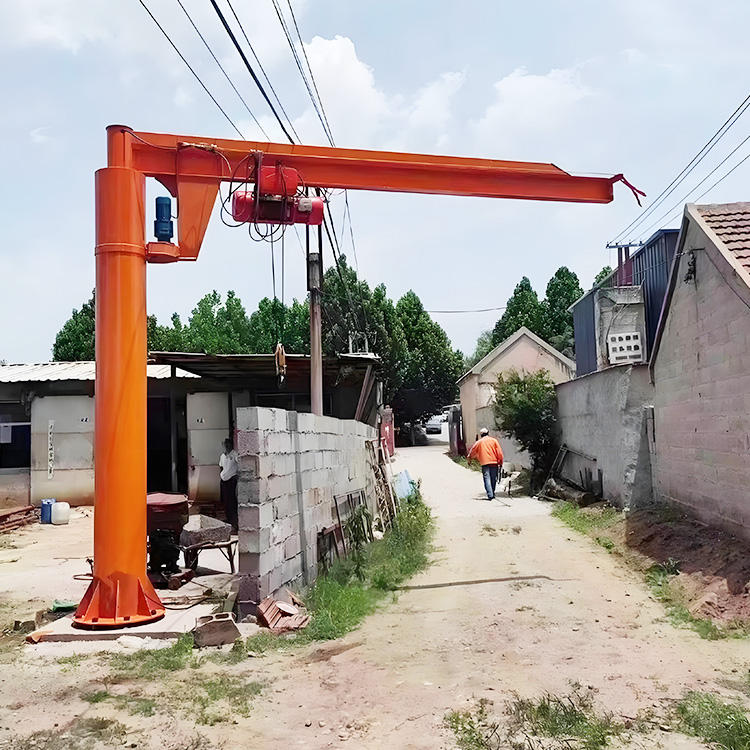
Safety is non-negotiable. While some buyers look for a used jib crane for sale to save money, unknown structural fatigue and missing safety records pose immense risks. WEIYUAN products are manufactured new to strict standards.
- Certifications: Our equipment meets or exceeds ISO, CE, and equivalent international safety standards.
- Safety Devices: Every motorized unit includes overload limiters, emergency stop buttons, and travel limit switches.
- Structural Integrity: We perform rigorous load testing before shipment to ensure the anchor bolts and welding seams can handle the rated moment forces.
- Stability: For floor jib crane installations, we provide detailed foundation drawings to ensure the concrete footing is sufficient to prevent tipping—a critical safety aspect often overlooked in jib crane diy projects.
8. Case Study: Efficiency Transformation in a Machining Workshop
Client: A mid-sized automotive parts manufacturer in Europe.
Challenge: The facility had one large overhead crane. Machinists spent an average of 40 minutes per day waiting for the overhead crane to become available to lift 500kg metal castings into their CNC machines.
Solution: WEIYUAN analyzed the workflow and installed six units of jib crane 2 ton capacities, one for each pair of workstations.
Result:
- Eliminated Wait Time: Machinists had instant access to lifting.
- Increased Output: Daily production volume increased by 18%.
- ROI: The cost of the cranes was recovered in less than 6 months through increased productivity.
9. Installation and Support
We provide comprehensive support to ensure your jib crane types are installed correctly and safely.
- Installation Guidance: We provide detailed manuals, foundation diagrams, and video tutorials. For complex projects, our technical team can provide online guidance or on-site supervision.
- After-Sales Support: We maintain a supply of gorbel jib crane parts equivalents and genuine WEIYUAN spares to ensure long-term maintainability.
- Maintenance: We offer guides on jib crane maintenance to help your team perform routine checks on lubrication and bolt tightness.
10. Pricing and Quotation
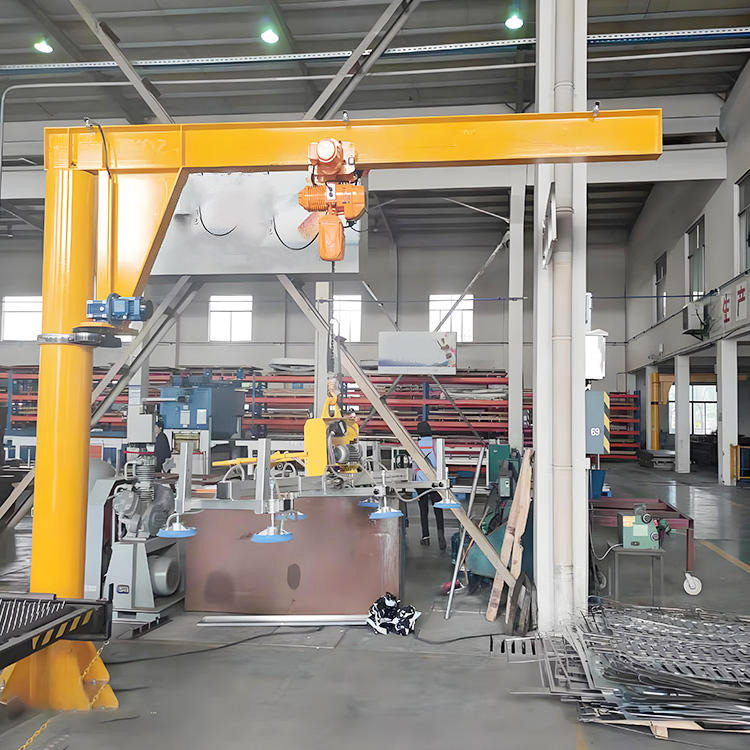
The jib crane cost varies significantly based on capacity, span, and whether it is motorized.
- Get a Quote: Contact us directly for a personalized proposal. We avoid the “middleman” markup found when buying generic units from catalogs.
- Price Factors: A manual 1 ton jib crane will be significantly cheaper than a fully motorized jib crane with a 5-ton capacity and 360-degree rotation.
- Why Contact Us: We provide a breakdown of the steel costs, hoist costs, and shipping, ensuring transparency.
11. Delivery Cycle
- Standard Models: 7-10 working days.
- Customized Models: 15-25 working days, depending on design complexity and testing requirements.
- Logistics: We handle export packaging and can arrange shipping to major ports in Europe, Asia, and Africa.
12. FAQ: Common Questions about Jib Cranes
Q: Can I install a jib crane myself (DIY)?
A: While small wall-mounted units might seem simple, jib crane diy installation is highly discouraged for industrial loads. The foundation and anchoring are critical for stability. Improper installation can lead to catastrophic tipping. Always consult a professional.
Q: Is it safe to buy a used jib crane?
A: Searching for a used jib crane or used jib crane for sale carries risk. You cannot see internal metal fatigue or stress cracks in the pivot points. For the safety of your workers, a new crane with a warranty is the responsible choice.
Q: Do you provide jib crane training?
A: We provide operation manuals and safety guidelines. Proper jib crane training for your operators is essential and often required by local safety regulations (like OSHA in the US or local equivalents).
Q: What is the difference between an articulating jib and a standard jib?
A: A standard jib has one straight arm. A ceiling mounted articulating jib crane (or floor mounted) has a two-part arm that hinges in the middle, allowing it to reach around obstacles and cover “dead spots” that a straight arm cannot reach.
Q: How often does a jib crane need service?
A: Jib crane service should be performed annually by a qualified technician, with daily visual inspections by the operator. We can recommend service providers or guide your internal maintenance team.
Q: Can you supply parts for other brands?
A: While we manufacture WEIYUAN cranes, our high-quality hoists and electrical components are often compatible upgrades for other systems. If you are looking for jib crane repair ny or jib crane service nj parts, contact us to check compatibility specifications.