


What is the Main Difference Between a Crane and a Jib?
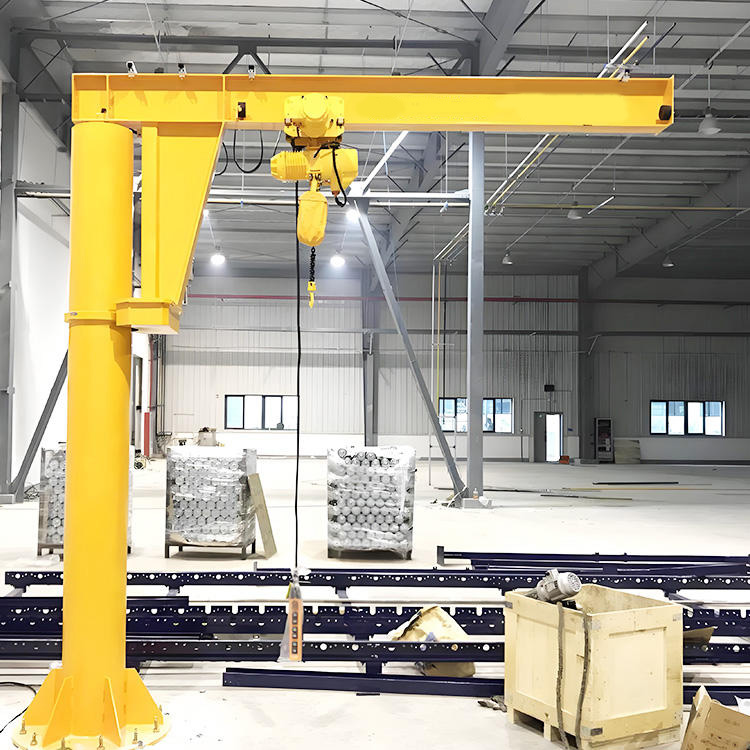
In the world of material handling, terminology can often be confusing. A frequent question we encounter is: What is the main difference between a crane and a jib? To answer this accurately, we must clarify the definitions. A “crane” is the overarching category of machinery equipped with a hoist rope, wire ropes, or chains, and sheaves, that can be used both to lift and lower materials and to move them horizontally. A “jib” is specifically the horizontal operating arm that extends from the crane. Therefore, a jib crane is a specific type of crane that utilizes a mounted arm (jib) to lift, move, and lower loads within a fixed circular or semi-circular arc.
While a massive bridge crane might cover the entire length of a factory, a jib crane is the champion of localized, workstation-specific lifting. It is the tactical unit of industrial lifting, designed to boost individual worker efficiency and streamline production flow.
This comprehensive guide explores the engineering, application, and value of the jib crane, positioning it as a vital asset for industries across Europe, Asia, and Africa.
1. Product Description: The Workstation Workhorse
The jib crane is defined by its structural simplicity and operational effectiveness. It consists of a horizontal beam (the jib) that supports a movable electric hoist or trolley. This beam is fixed to a wall or a floor-mounted pillar. Unlike complex overhead systems, the jib crane provides high-speed, dedicated lifting for a specific area.
- Product Purpose: The primary function is to create an independent lifting cell. Whether used as a workstation jib crane next to a CNC machine or a wall jib crane in a shipping bay, it handles high-frequency lifts within a specific radius. This equipment offloads work from the main plant crane, allowing individual workers to lift heavy components like engines, molds, or pallets independently.
- Core Advantages: The structural design focuses on agility. A jib crane floor mounted system offers 360-degree rotation, while wall-mounted units typically offer 180 degrees.
- Attraction: The core appeal is “decentralized lifting.” By placing a jib crane with hoist directly at the point of need, you eliminate the idle time caused by waiting for a shared overhead crane. It bridges the gap between manual handling and heavy-duty automated systems, significantly reducing worker fatigue and injury risk while boosting throughput.
2. Features and Advantages: Engineering for Performance
Our industrial jib crane systems are engineered for durability and ease of use, distinct from hobbyist equipment. WEIYUAN focuses on industrial-grade performance.
- Robust Materials: We utilize high-grade structural steel (Q235B/Q345B) for the jib crane arm and pillar. This ensures rigidity and minimizes deflection even under maximum loads, which is critical for precision tasks where load drift is unacceptable.
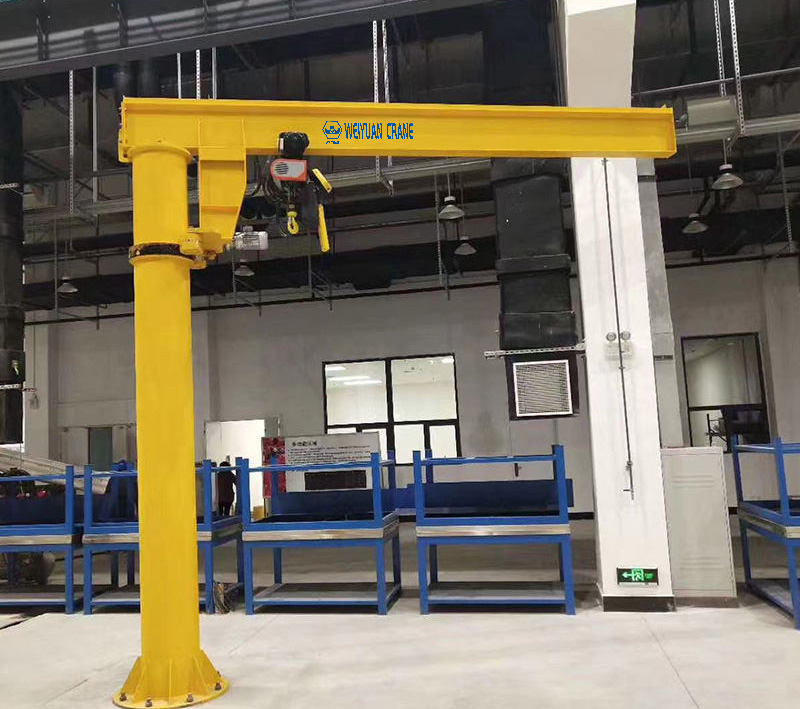
- Versatile Configurations: From a portable jib crane on wheels for flexible workshop use to a heavy-duty 3 ton jib crane, our systems are adaptable. We offer both manual push/pull rotation for lighter loads and motorized rotation for heavier applications.
- Efficiency Gains: Implementing a trolley jib crane tailored to your workflow typically increases individual worker output by 30 to 50 percent. It turns a two-person lifting job into a one-person, safe operation.
- Precision Control: Our systems are compatible with advanced electric jib crane hoists that feature dual-speed or Variable Frequency Drive (VFD) controls, allowing for millimeter-level positioning accuracy.
3. Technical Specifications: Matching the Tool to the Task
Selecting the correct specifications is vital. While a jib crane diy project might seem cost-effective for a home garage, industrial safety requires certified engineering.
- Lifting Capacity (SWL): Standard ranges from 0.25 Ton to 5 Ton. Popular models include the jib crane 2 ton and 3 ton jib crane. Custom heavy-duty models are available up to 20 Tons.
- Span (Arm Length): Standard lengths range from 2 meters to 12 meters. The effective reach depends on the specific jib arm crane design.
- Lifting Height: Standard 3 meters to 6 meters, fully customizable to your facility’s ceiling clearance.
- Rotation:
- Jib crane floor mounted: 360 degrees continuous rotation.
- Wall mount jib cranes: 180 to 200 degrees rotation.
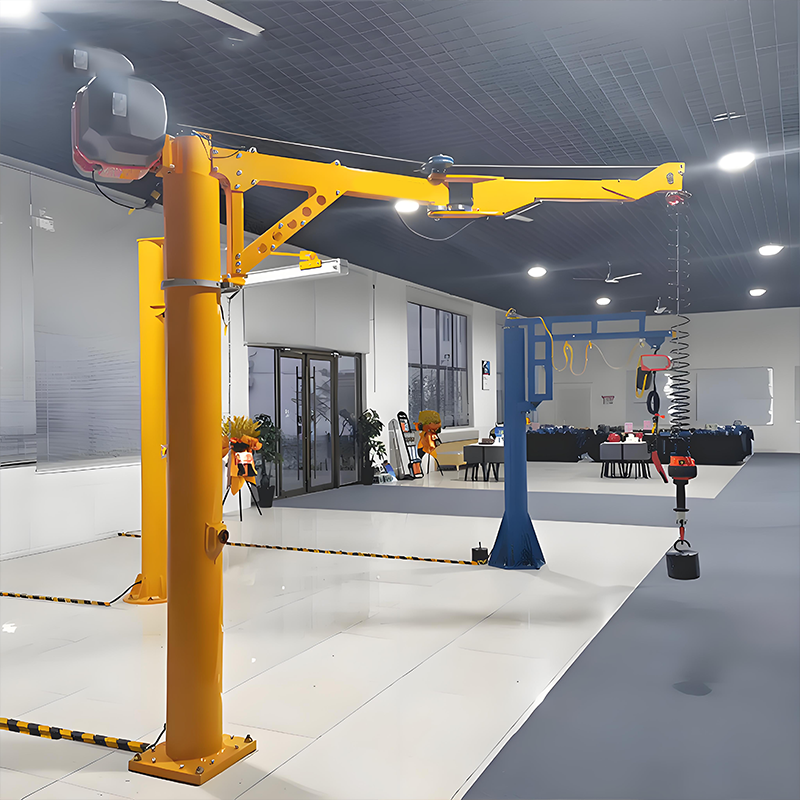
- Wall mounted articulating jib crane: 270 degrees rotation with the ability to reach around obstacles.
- Operation: Manual rotation or electric motorized rotation.
- Power Supply: 220V – 480V, 3-Phase, 50/60Hz (Customized to local grid).
4. Customization Options: WEIYUAN Personalized Solutions
One size does not fit all. WEIYUAN provides complimentary design and personalized customization services to ensure the equipment fits your specific operational constraints.
- Structural Customization: We can adjust the mounting brackets for wall mount jib cranes to fit specific building column widths or design a jib pole crane with a low-headroom boom for facilities with limited vertical space.
- Specialized Reach: For complex environments, a wall mounted articulating jib crane features a two-part arm that can fold and reach around corners or columns, providing coverage in hard-to-reach areas.
- Mobile Solutions: For clients needing flexibility across multiple bays, we can engineer a portable jib crane on wheels. This unit sits on a heavy, counterweighted base and can be moved via forklift, offering a versatile lifting point anywhere in the shop.
- Environment Adaptation: For outdoor or marine environments, we offer specialized anti-corrosion coatings and IP65-rated electrical components to withstand moisture and salt spray.
- Branding: We can apply your company’s color scheme and logo to the finished unit.
5. Application Fields
The versatility of the jib crane makes it essential across various sectors in Europe, Asia, and Africa.
- Manufacturing and Machining: Used for loading heavy workpieces into CNC machines, lathes, and mills. A workstation jib crane is standard in these environments to keep the spindle turning.
- Warehousing and Logistics: Facilitates the loading and unloading of trucks at bay doors.
- Automotive and Heavy Repair: Mechanics use a jib crane for truck engine removal or transmission repairs. Specialized forklift telescoping jib boom crane attachments are also used here for mobile lifting.
- Ports and Marinas: Used for lifting tenders, jet skis, and supplies on docks and vessels.
- Construction Support: While distinct from a tower crane, smaller jib cranes handle materials in precast yards and fabrication shops. Overhead jib crane configurations are often used in assembly bays.
6. Safety and Compliance: The Non-Negotiable Standard
Safety is paramount. Buying from a reputable manufacturer ensures you are getting a certified piece of equipment, avoiding the risks associated with a jib crane diy approach.
- Certifications: Our products comply with CE, ISO, and can be built to meet UL standards. This ensures regulatory compliance in your region.
- Safety Features: Every unit includes overload protection, emergency stop buttons, and travel limit switches. The trolley jib crane is equipped with bumpers to prevent impact damage.
- Structural Integrity: We provide detailed foundation calculations for jib crane floor mounted installations to ensure the concrete footing can withstand the tipping moment (overturning moment), preventing accidents.
- Inspection Standards: WEIYUAN advises regular inspection of the jib crane arm welds and pivot points.
7. Case Study: Optimization in a Heavy Equipment Plant
Client: A large manufacturer of agricultural machinery in Eastern Europe.
Challenge: The assembly line for tractor engines was slowing down because workers had to wait for the main overhead jib crane (bridge crane) to move heavy engine blocks. The existing manual lifting methods were causing worker fatigue.
The WEIYUAN Solution: We installed ten units of jib crane 2 ton systems (pillar mounted) directly at each assembly station.
Result:
- Zero Wait Time: Each technician had immediate access to a lifting device.
- Productivity Increase: Daily engine assembly output increased by 20 percent.
- Safety: The electric jib crane allowed for precise alignment of the engines, reducing the risk of crushed fingers and manual strain injuries. The client noted that the jib cranes prices were recovered within six months due to efficiency gains.
8. Installation and Support
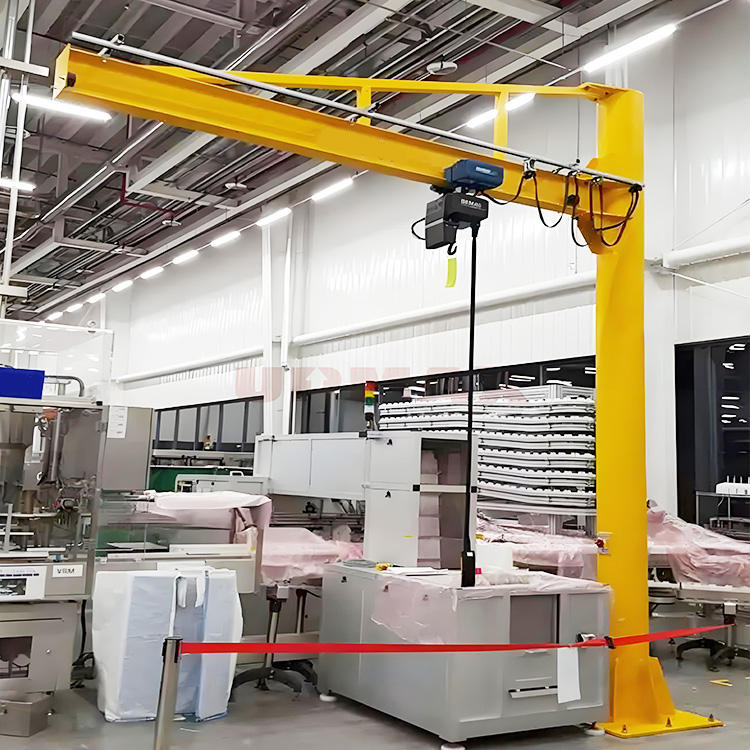
We provide comprehensive support to ensure your equipment is installed correctly and serves you for decades.
- Installation Guidance: We supply detailed foundation drawings, electrical schematics, and video tutorials. For complex systems, our senior engineers are available for remote guidance or on-site supervision.
- Maintenance Support: We advise on lubrication and bolt tightening schedules. We also stock replacement parts for jib crane repair to minimize downtime.
- Local Support: For clients asking about “jib cranes near me,” we have a growing network of service partners and can ship critical components rapidly.
9. Pricing and Quotation
The cost of a jib crane depends on capacity, span, and motorization.
- Pricing Factors: Jib cranes prices vary based on the amount of steel (height/span) and the sophistication of the hoist. A manual push-pull unit will be lower in cost compared to a fully motorized 3 ton jib crane.
- Get a Quote: Contact us for a personalized proposal. WEIYUAN offers factory-direct pricing, eliminating dealer markups. We provide transparent quotes that include the hoist, electrics, and mounting hardware.
10. Delivery Cycle
- Standard Models: 7 to 10 working days for standard specifications (e.g., 1 ton, 3-meter arm).
- Customized Models: 15 to 25 working days, depending on the complexity of the design (e.g., special environmental protection or forklift telescoping jib boom crane attachments).
11. FAQ: Common Questions
Q: What is the main difference between a wall-mounted and floor-mounted jib?
A: A jib crane floor mounted (pillar type) offers 360-degree rotation but requires a dedicated foundation, taking up some floor space. A wall jib crane saves floor space by attaching to an existing building column but typically offers only 180-degree rotation.
Q: Can I use a jib crane for a truck?
A: Yes, we manufacture compact jib crane for truck models. These are small cranes mounted on the bed of a pickup or flatbed, usually powered by the vehicle’s 12V or 24V system, designed to help load heavy equipment onto the truck.
Q: Should I build my own jib crane (DIY)?
A: We strongly advise against a jib crane diy project for industrial loads. The engineering required to calculate stress loads, moment forces, and welding integrity is complex. A failure can be catastrophic. Certified manufactured cranes come with load tests and warranties that DIY projects lack.
Q: What is a portable jib crane?
A: A portable jib crane on wheels is a unit mounted on a heavy concrete or steel base that can be moved around the shop floor, usually by a forklift. It offers flexibility for shops that reconfigure their layout frequently.
Q: How do I determine the price?
A: Jib cranes prices are driven by capacity (tonnage), span (arm length), and height. Contact WEIYUAN for a specific quote tailored to your dimensions.
Q: Do you offer repair services?
A: While we primarily manufacture, we provide parts and technical guidance for jib crane repair. Our components are often compatible with major brands, ensuring you can keep your operations running.
Ready to elevate your operational efficiency? Contact WEIYUAN today for a professional consultation and quote on your industrial jib crane solution. Let us help you choose between a versatile workstation jib crane or a robust 3 ton jib crane to perfect your workflow.