


What are the disadvantages of an electric hoist?
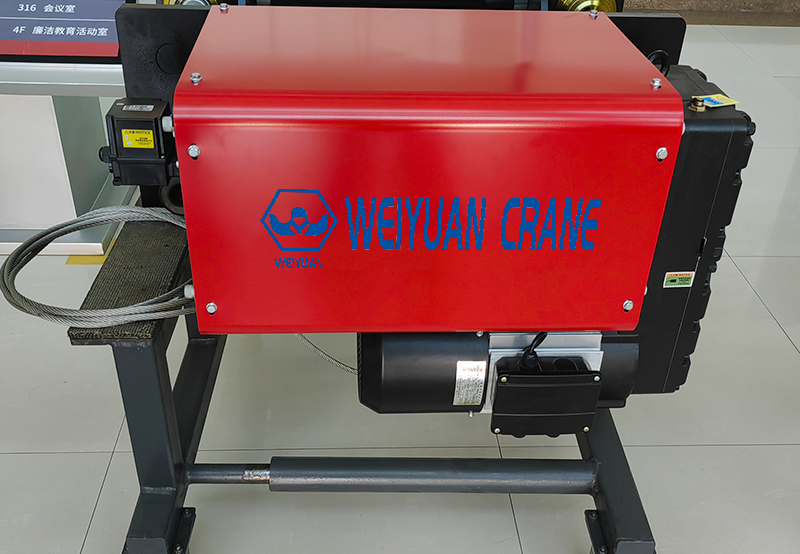
When upgrading from manual labor to automation, smart facility managers ask the hard questions first. While electric lifting systems are the industry standard for efficiency, they are not without their limitations compared to manual options.
As a manufacturer integrating design, production, and sales, WEIYUAN believes in transparency. Understanding the potential downsides of an electric hoist helps you choose the right equipment and avoid operational surprises. This guide analyzes those disadvantages and demonstrates how modern engineering solves them.
The Honest Truth: Disadvantages vs. Solutions
Before investing, you should be aware of these three main challenges:
1. Dependency on Power Source
- The Disadvantage: Unlike a manual chain block, an electric unit stops working if the power goes out. This can be a problem in remote construction sites or regions with unstable grids in parts of Africa or Asia.
- The Solution: We design our motors with high tolerance for voltage fluctuation. For critical safety, our heavy duty electric chain hoist models feature mechanical brakes that hold the load instantly if power fails, preventing accidents.
2. Higher Initial Cost
- The Disadvantage: The electric lifting hoist price is significantly higher than manual alternatives. It involves motors, gearboxes, and electronics.
- The Solution: While the upfront cost is higher, the ROI is faster. One operator with an electric unit can do the work of three people using manual pulleys, paying for itself within months through labor savings.
3. Complexity of Maintenance
- The Disadvantage: With more moving parts (limit switches, wiring, contactors), there is more to maintain.
- The Solution: WEIYUAN uses a modular design. We use standardized electric hoist parts that are easy to replace, and we provide clear maintenance guides to simplify the process.
Product Description: Turning Challenges into Efficiency
Despite the disadvantages mentioned above, the electric hoist remains the backbone of modern heavy industry. It is an electrically powered device designed to lift, lower, and move heavy materials with push-button ease, eliminating the physical strain on your workforce.
At WEIYUAN, we engineer our hoists to mitigate their inherent downsides. Our systems are built for factories, warehouses, and construction sites that cannot afford downtime. Whether you need a compact unit for a garage or a robust system for a steel mill, our equipment transforms dangerous, heavy lifting into a safe, one-man operation.
Features and Advantages
Our latest generation of hoists addresses the common complaints of “complexity” and “durability” with these key features:
- ⚡ High-Efficiency Motor: Incorporates a pure copper winding motor that offers high torque with lower power consumption.
- 🛡️ Safety Braking System: Features a dual-braking system (Side Magnetic Braking + Mechanical) for redundancy.
- ⛓️ Durable Chain/Rope: Uses FEC80 Grade heat-treated alloy chain or high-tensile steel wire rope, resistant to wear and corrosion.
- 🎮 Precise Control: Options for single-speed or dual-speed (inverter control) allow for smooth starts and stops, reducing load swing.
- 🏗️ Versatile Mounting: Easily integrates with electric hoist trolley systems for I-beam travel or fixed hook suspension.
Technical Specifications
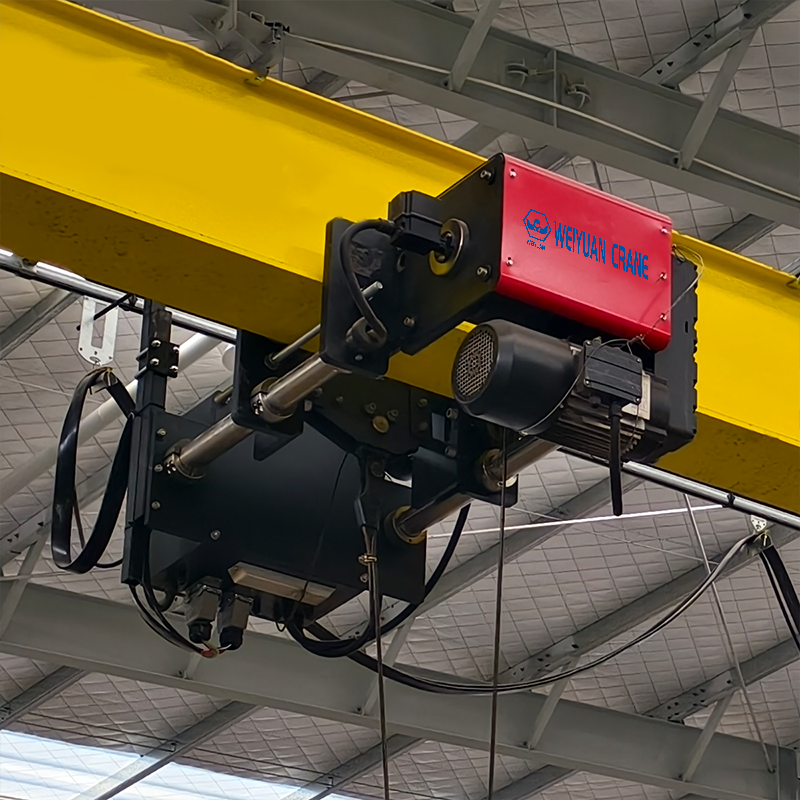
We offer a wide range of specifications to match your power grid and lifting needs:
| Feature | Specification Details |
| Capacity | 0.5 Ton, 1 Ton, 2 Ton, up to 50 Ton |
| Lifting Height | Standard 3m/6m/9m (Customizable up to 100m) |
| Power Supply | 220V – 690V, 50/60Hz, 3-Phase (Single phase available) |
| Hoist Type | Electric Chain Hoist or Electric Wire Rope Hoist |
| Duty Class | ISO M3 / M4 / M5 (FEM 1Am / 2m) |
| Control Voltage | 24V / 36V / 48V (Low voltage for operator safety) |
| Protection | IP54 / IP55 (Dust and Water protection) |
Customization Options by WEIYUAN
One of the “disadvantages” of buying off-the-shelf is the lack of fit. We solve this with free customization services:
- Voltage Adaptation: We customize the voltage for specific regions (e.g., 415V for Southeast Asia, 380V for Europe).
- Structural Fit: Custom headroom designs for low-ceiling buildings.
- Branding: We can apply your company logo and color scheme (OEM service).
- Special Environments: Explosion-proof or corrosion-resistant paint for chemical plants.
Application Fields
Our hoists are versatile tools used across diverse sectors:
- Industrial Manufacturing: Mounted on an electric jib crane hoist for loading CNC machines.
- Construction: utilized as an electric scaffolding hoist for lifting building materials to upper floors.
- Logistics: Speeding up truck loading in warehouses.
- Home & Hobby: Smaller units serve as an electric kayak hoist or for lifting jeep hardtops in private garages.
- Marine: Heavy-duty versions used in shipyards and docks.
Safety and Compliance
Safety concerns are the biggest barrier to adopting electric lifting. WEIYUAN ensures compliance to put your mind at ease:
- Certifications: Our products meet CE (Europe) and ISO standards.
- Limit Switches: Top and bottom limit switches prevent the chain/rope from over-traveling.
- Overload Protection: Optional limiters cut power if the load exceeds rated capacity.
- Electrical Safety: We provide a clear electrical hoist circuit diagram in the manual to ensure safe wiring and troubleshooting.
Case Study: Efficiency Upgrade in Malaysia
Project: A mid-sized steel fabrication workshop.
Challenge: Workers were using manual chain blocks to lift steel plates. It was slow, and fatigue led to safety risks.
Solution: WEIYUAN supplied 3 sets of electric wire rope hoist 2 ton models with motorized trolleys.
Result:
- Lifting time reduced by 70%.
- Worker fatigue complaints dropped to zero.
- The system paid for itself in 6 months due to increased production throughput.
Installation and Support
The complexity of installation is often cited as a disadvantage. We make it simple:
- Guidance: We provide detailed video tutorials and manuals.
- On-Site Support: For large electric hoist system projects, our engineers can fly to your site for supervision.
- After-Sales: We offer a 1-year warranty and lifetime technical consulting.
Pricing and Quotation
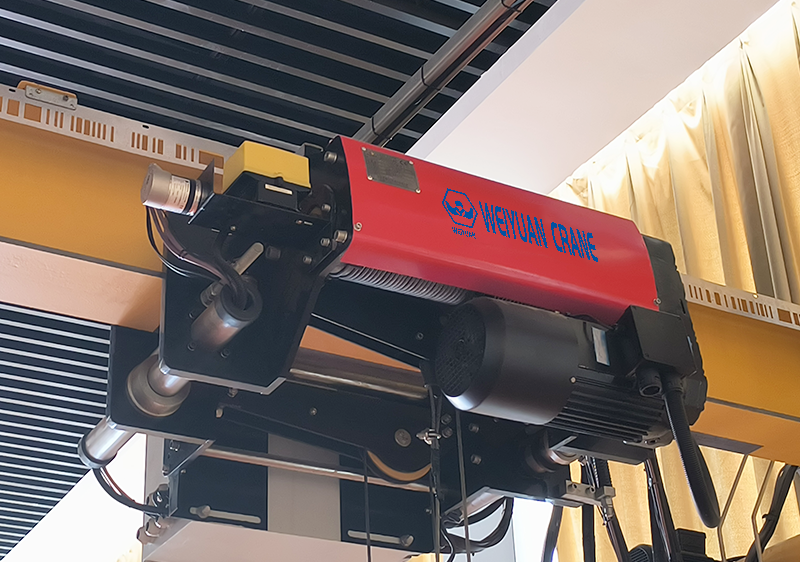
The electric lifting hoist price varies based on capacity (e.g., 1 ton vs. 10 ton) and configuration (fixed vs. trolley).
- How to get a quote: Contact us via our website form or email. Provide your required lifting weight and height.
- Response Time: We provide personalized quotes within 24 hours.
Delivery Cycle
- Standard Models: 5-7 working days.
- Customized Voltage/Design: 15-20 working days.
FAQ (Frequently Asked Questions)
Q: Electric vs manual hoist: Which is better for me?
A: If you lift rarely (once a week) and lack power, choose manual. If you lift daily and value speed, the electric hoist is the superior choice for ROI.
Q: Can I get a fast electric hoist?
A: Yes, we offer dual-speed models with high-speed settings for rapid lifting and low-speed for precision placement.
Q: Do you sell the electric hoist pulley separately?
A: Yes, we are one of the comprehensive electric lifting hoist manufacturers and stock all spare parts, including pulleys, hooks, and chain bags.
Q: How does an electric hoist work?
A: It uses an electric motor to turn a gearbox, which rotates a sprocket or drum to wind the chain or wire rope, lifting the load vertically. It is controlled via a pendant or wireless remote.
Q: Can I use this for my garage ceiling?
A: Absolutely. Many customers use our lighter models as an electric roof hoist for storage or maintenance in residential garages.