


Overhead Crane Selection Guide: Duty Classes, Load Paths & Configuration
Introduction
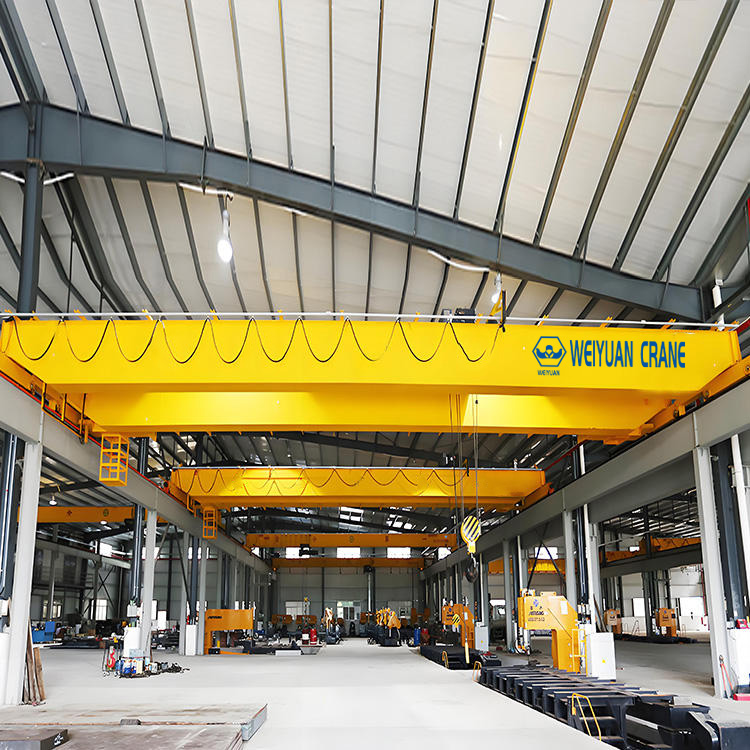
There’s a purchase order I think about often. A manufacturing plant needed a 20-tonne overhead crane for a new fabrication bay. The procurement lead did what looked like due diligence — compared three suppliers, matched the tonnage, checked the span, picked the cheapest quote that hit both numbers. The crane arrived, got installed, and ran fine for about fourteen months.
Then the hoist gearbox failed. Then the wheels started wearing on one side. Within two years the plant was budgeting for a replacement on a crane that was supposed to last fifteen.
What went wrong wasn’t the tonnage. The crane could lift 20 tonnes all day. The problem was that it was asked to lift near-capacity loads twenty times an hour, across two shifts — and it had been specified as a light-duty machine. The one number nobody on the buying team asked about was the duty class. And that single omission turned a capital asset into a recurring line on the maintenance budget.
This is the most expensive mistake in crane procurement, and it’s also the most common. Buyers anchor on capacity because it’s the number that feels concrete — 20 tonnes, 50 tonnes, done. But capacity only tells you how heavy a single lift can be. It says nothing about how hard the crane works over its life, how the forces travel from the hook down into your building’s foundations, or which structural configuration actually fits your bay. Get any of those wrong and you pay for it — in downtime, in premature wear, in a crane that fails years ahead of schedule.
This guide is the first of three on overhead crane procurement. Here we cover the three decisions that shape the crane before you ever compare a price: the duty class that determines whether it lasts, the structural load path that determines what your building has to carry, and the top-running versus under-running choice that determines your hook coverage and headroom. Nail these three and comparing quotes becomes straightforward instead of guesswork.
What you’ll take away:
- How to read CMAA Classes A–F and their FEM/ISO equivalents — and match them to your real usage
- Why load spectrum and cycle frequency matter more than peak tonnage
- How forces travel from the hook to the foundation, and what each stage demands of your structure
- The lateral and longitudinal forces your runway and columns must resist
- When top-running wins and when under-running is the smarter buy
- 2026 pricing so your budget survives the first supplier conversation
Part 1: Duty Class — The Number That Decides Whether Your Crane Lasts
If you take one thing from this entire series, make it this: duty class, not capacity, determines a crane’s service life. Two cranes can carry the identical tonnage and belong to completely different worlds of construction, cost, and longevity — because one is built to work occasionally and the other is built to work constantly.
Duty class is a rating of how hard a crane is engineered to work over its lifetime. It combines two factors that buyers routinely overlook:
- Load spectrum — how heavy the average lift is relative to the crane’s rated capacity. A crane that mostly lifts light loads with the occasional heavy one lives an easier life than one that runs near capacity every cycle.
- Operating frequency — how many lift cycles the crane performs per hour, per shift, per day. Occasional lifts are gentle. Continuous cycling is punishing.
Get honest about both before you specify anything. Not how you’d like to imagine the crane being used — how it will actually be used once the bay is running at full production.
CMAA Classes A Through F, In Plain Terms
The Crane Manufacturers Association of America (CMAA) Specification No. 70 defines six service classes. Here’s what each one means on the floor, not in the standard:
- Class A — Standby or Infrequent Service. Powerhouses, turbine halls, transformer stations. Slow, precise lifts with long idle stretches between them. The crane spends most of its life parked.
- Class B — Light Service. Repair shops, light assembly, service buildings. Light loads, low speeds, roughly 2 to 5 lifts per hour with capacity lifts rare.
- Class C — Moderate Service. General machine shops, fabrication bays, paper mill machine rooms. Average loads around half of rated capacity, 5 to 10 lifts per hour. This is the most common workshop class.
- Class D — Heavy Service. Heavy machine shops, foundries, steel warehouses, lumber mills. Constant heavy loads at high speed, 10 to 20 lifts per hour, with average loads at 65 to 75% of capacity.
- Class E — Severe Service. Scrap yards, cement plants, steel mill coil handling. Continuous heavy lifting at or near full capacity throughout the working day.
- Class F — Continuous Severe Service. Custom process cranes running non-stop critical duty — continuous casters, automated waste-to-energy plants. Around-the-clock cycling with no meaningful idle time.
Mapping CMAA to FEM and ISO
If you buy from European or international manufacturers, you’ll see FEM (FEM 1001 / FEM 9.511) and ISO (ISO 4301) classifications instead. These systems combine total operating hours with the load spectrum to land on a group rating. They align closely enough with CMAA that you can cross-reference them for a like-for-like comparison — which matters when you’re weighing quotes from suppliers working to different standards.
| Application Environment | CMAA Class | FEM 1001 | ISO 4301 Group | Typical Daily Use |
|---|---|---|---|---|
| Turbine hall / standby maintenance | A | 1Am / 1Bm | M3 / M4 | Under 2 hrs/day |
| General fabrication / warehouse | C | 2m | M5 | 4–8 hrs/day |
| Foundry / heavy manufacturing | D | 3m | M6 | 8–16 hrs/day |
| Steel mill / scrap recycling | E / F | 4m / 5m | M7 / M8 | 24 hrs/day continuous |
How to Place Your Own Operation
Three questions settle the duty class for most buyers:
- How many lifts per hour, per shift? A handful of lifts a day points to Class A–B. Steady lifting through the shift is C–D. Near-continuous cycling is E–F.
- How heavy are the lifts relative to capacity? Mostly light with the odd heavy one is easy duty. Consistently lifting near rated capacity pushes the class up regardless of frequency.
- How many shifts? A single-shift workshop and a three-shift mill moving the same tonnage are worlds apart on duty. Running hours compound wear.
Why This Is a Budget Decision, Not Just an Engineering One
Under-specifying duty class is the single most expensive procurement error — and it doesn’t show up on day one. It shows up in year two, as the story in the introduction played out: hoist motors, brakes, wheels, and gearboxes wearing out far ahead of schedule, and the unplanned downtime costing more than the crane itself.
Over-specifying costs you too, just differently. Paying for a Class F crane to do genuine Class C work burns capital you could have deployed elsewhere. The goal isn’t the heaviest-duty crane you can buy — it’s the right one.
Here’s the procurement discipline that catches most bad “bargains”: when you compare quotes, normalize them to the same duty class. A cheaper crane at a lower duty rating is not a like-for-like comparison. It’s a different product that happens to share a tonnage figure. That single check protects you from the exact mistake that turns a fifteen-year asset into a two-year liability.
Part 2: The Structural Load Path — From Hook to Foundation
When an overhead crane lifts a load at mid-span, the force doesn’t just press straight down. It travels — through the bridge, into the end trucks, across the runway beams, down the building columns, and finally into the foundations. Every stage of that journey has to be designed to carry the forces handed to it. Miss one and the weak link fails first.
For a procurement lead, you don’t need to run the calculations yourself. But you do need to understand the path, because it explains why your building structure — not just the crane — is part of the purchase, and why a supplier who ignores the runway and column loads is handing you a hidden cost.
Here’s the path, stage by stage:
              [Trolley + Rated Load]
                       │
                       ▼  Vertical load + dynamic impact
              [Bridge Main Girder]
                       │
        ┌──────────────┴──────────────┐
        ▼  End truck reactions         ▼
   [Runway Beam A]              [Runway Beam B]
        │  Lateral + longitudinal      │
        ▼  thrust                      ▼
   [Building Bracket]           [Building Bracket]
        │                              │
        ▼                              ▼
   [Steel Column]               [Steel Column]
        │                              │
        ▼                              ▼
   [Foundation]                 [Foundation]
Vertical Loads and Dynamic Impact
The obvious load is vertical: the weight of the bridge, the trolley, and the rated load on the hook. But a moving crane doesn’t apply that weight gently. When the hoist snatches a load off the floor, or the load swings, the structure sees a force greater than the static weight. Engineers account for this with a dynamic impact factor added on top of the static load.
Per AISC and CMAA guidance, that addition is:
- Electric hoists: 15 to 25% added to the lifted load
- Hand-operated hoists: 5% added
The practical takeaway for buyers: your building’s runway and columns have to carry more than the nameplate tonnage. A 20-tonne electric crane can hand the structure the equivalent of 24 to 25 tonnes of dynamic load at the moment of lift. Design the structure to the static number alone and you’ve under-built it.
Lateral Side Thrust
As the trolley accelerates, brakes, or travels along the bridge, it generates a sideways force perpendicular to the runway rail. This lateral side thrust is one of the most under-appreciated forces in crane structural design, because it acts against the weak axis of the runway beam — the direction the beam is least able to resist.
The standard figure: side thrust is taken as 20% of the combined weight of the rated hook load plus the hoist trolley, distributed equally among the runway wheels. That horizontal force creates a bending moment the runway beam’s top flange has to resist, which is why heavy-duty runways often need channel caps or purpose-built box sections to prevent lateral-torsional buckling — the beam twisting and buckling sideways under the load it wasn’t shaped to carry.
If your supplier’s runway design doesn’t explicitly account for side thrust, that’s a red flag worth raising before you sign.
Longitudinal Tractive Forces
The third force runs parallel to the rail, generated when the whole crane accelerates or brakes along the runway. These longitudinal tractive forces are sized at 10% of the maximum wheel loads, applied at the top of the rail across the driven wheels, and they’re carried by the runway’s longitudinal bracing system back into the building frame.
Put the three forces together and you have the complete picture: vertical load with impact pressing down, lateral thrust pushing sideways against the weak axis, and longitudinal force driving along the rail. A crane structure — and the building carrying it — has to resist all three at once. This is exactly why the runway and support structure often cost as much engineering attention as the crane itself, and why “just the crane” quotes can badly understate your real project cost.
The Procurement Angle
The load path is where a lot of hidden cost lives. When you scope an overhead crane, confirm early whether the quote covers:
- Runway beam design and supply, or just the crane bridge
- The building structural check — can your existing columns and foundations carry the wheel loads plus impact, side thrust, and longitudinal force?
- Any structural reinforcement the crane demands
Get the maximum and minimum wheel load figures from your supplier during specification, and hand them to your structural engineer before you commit to a layout. A crane the building can’t carry isn’t a bargain at any price.
Part 3: Top-Running vs. Under-Running — Choosing the Configuration
Once duty class and load path are settled, the next decision shapes your hook coverage, your headroom, and a meaningful slice of your structural steel cost: does the crane run on top of its runway beams, or underneath them?
Top-Running Overhead Cranes
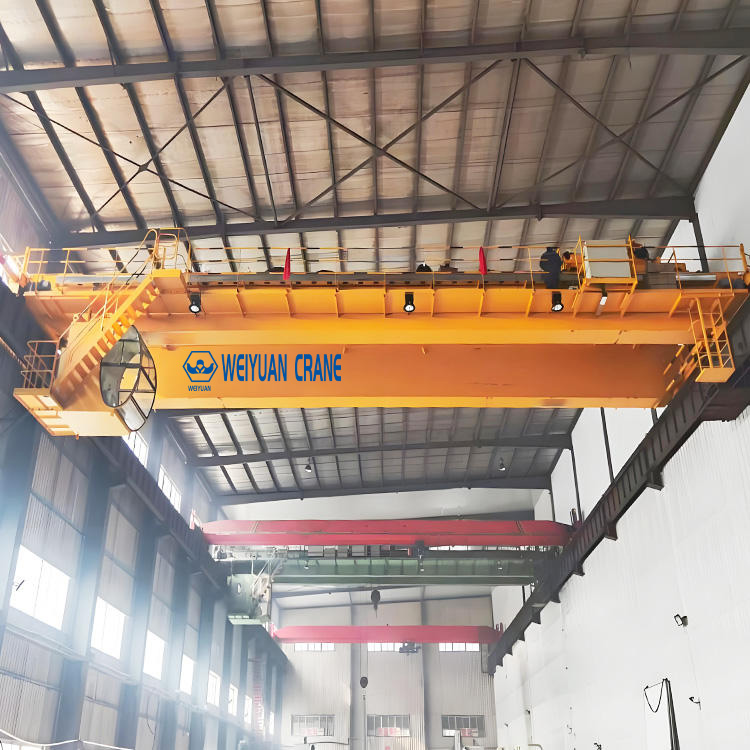
In a top-running system, the bridge girders ride on rails mounted on top of elevated runway beams, which are carried by the building columns or a free-standing structure.
Capacity range: 1 tonne to 500+ tonnes.
Where it wins:
- Heavy capacity. There’s effectively no upper limit — this is the only realistic choice above about 15 tonnes.
- Maximum hook height. Because the bridge sits on top of the runway, the hook can rise higher above the floor, giving you more usable lift.
- Structural rigidity. Top-running bridges are stiffer, which matters at long spans and heavy duty.
- Lower wheel-assembly maintenance. The wheels run on a proper rail surface, which wears more predictably than a beam flange.
Best for: heavy industrial facilities, machine shops handling large forgings, steel service centers, foundries, and any long-span bay above roughly 18 meters — and any operation in the heavier duty classes, D through F.
The trade-off: top-running systems generally need dedicated support columns and a more substantial runway structure, which adds to the civil and structural cost.
Under-Running (Underhung) Overhead Cranes
In an under-running system, the end trucks hang from the bottom flange of the runway beams, and those beams are typically suspended from the building’s roof trusses or rafters — no floor-mounted crane columns required.
Capacity range: typically 1 to 10 tonnes, rarely above 15.
Where it wins:
- No support columns. The runway hangs from the existing roof structure, so you don’t sacrifice floor space to crane columns or pay for their foundations.
- Maximum floor utilization. Nothing on the floor means a cleaner, more flexible layout beneath the crane.
- Inter-bay transfer. Under-running systems can allow the trolley to cross from one bridge onto an adjacent bay’s bridge — useful in facilities that move material between bays.
- Low-headroom friendly. Hanging from the roof suits buildings with limited ceiling clearance.
Best for: light assembly plants, lean manufacturing layouts, low-ceiling buildings, and — importantly for procurement — rented facilities where you can’t install floor column foundations. If you don’t own the building, under-running is often the only configuration you’re permitted to install.
The trade-off: capacity is capped, and the wheels running on the beam’s bottom flange wear less predictably than a top-running rail, so wheel and flange maintenance tends to be higher over the crane’s life.
Making the Call
| Decision factor | Top-Running | Under-Running |
|---|---|---|
| Capacity requirement | Over 10–15 tonnes | Under 10 tonnes |
| Hook height priority | Maximum lift needed | Adequate lift acceptable |
| Building support | Can install columns/foundations | No columns possible (rented / roof only) |
| Floor space | Columns acceptable | Must keep floor clear |
| Ceiling height | Ample headroom | Low headroom |
| Duty class | Heavy (D–F) | Light to moderate (A–C) |
| Long-term wheel maintenance | Lower | Higher |
The quick logic: if you’re lifting heavy, spanning wide, or running heavy duty, top-running is almost always the answer. If you’re under 10 tonnes, tight on headroom, need the floor clear, or can’t touch the building structure, under-running earns its place. Match the configuration to your building and your loads — not to whichever quote landed cheapest — and the rest of the specification falls into line.
Part 4: 2026 Price Reference for Overhead Cranes
Use these as planning figures to build a defensible budget before you approach suppliers. Actual pricing swings with capacity, span, duty class, controls, and — critically — the structural and electrification scope. The turnkey installed ranges below include freight, support column or bracket installation, busbar conductor-bar electrification, field assembly rigging, and 125% load test certification.
| System Configuration | Capacity / Span | Equipment Only (USD) | Turnkey Installed (USD) |
|---|---|---|---|
| Single-girder under-running | 5 t / 12 m | $25,000 – $40,000 | $40,000 – $65,000 |
| Single-girder top-running | 10 t / 18 m | $45,000 – $75,000 | $70,000 – $115,000 |
| Double-girder top-running (Class C) | 25 t / 24 m | $110,000 – $185,000 | $160,000 – $260,000 |
| Heavy process double-girder (Class E) | 50 t / 30 m | $320,000 – $550,000 | $450,000 – $800,000+ |
Cost drivers worth building into the budget:
- Higher duty class (e.g., Class C to Class E) adds substantial cost through heavier structure, higher-rated hoists, and more robust drives — often 20 to 50% depending on capacity.
- Structural runway and column works can rival the crane’s own price, especially for top-running systems in buildings not originally designed for a crane.
- Electrification (busbar or festoon) and controls (variable-frequency drives for smooth, precise motion) are frequently quoted separately — confirm what’s in and what’s out.
Procurement tip: the gap between an “equipment only” quote and a “turnkey installed” quote is where budgets get ambushed. When you compare suppliers, normalize every quote to the same scope — same capacity, span, duty class, control package, and the same structural and installation inclusions. A headline price that looks 20% cheaper often reflects a lower duty class or an excluded runway, not a genuine saving. That one check separates a real comparison from a costly one.
Frequently Asked Questions
Q: Why is duty class more important than lifting capacity?
A: Capacity tells you how heavy a single lift can be; duty class tells you how hard the crane can work over its whole life. A crane can be rated for 20 tonnes and still fail within two years if it’s a light-duty machine forced into heavy-duty service — running near-capacity lifts, many times per hour, across multiple shifts. Under-rating the duty class is the most common and most expensive crane procurement mistake, because the failure shows up in year two as premature wear and unplanned downtime, not on day one. Match the class to your real usage — lifts per hour, load spectrum, and number of shifts — and if usage is uncertain, round up rather than down.
Q: How do CMAA classes relate to FEM and ISO ratings?
A: They’re parallel systems that measure the same thing — how hard a crane works — using different frameworks. CMAA (US) uses Classes A through F. FEM and ISO (European and international) combine total operating hours with the load spectrum to land on group ratings like M3 through M8. They cross-reference closely: Class C aligns roughly with FEM 2m / ISO M5, Class D with 3m / M6, and Class E/F with 4m–5m / M7–M8. This matters when you’re comparing quotes from suppliers working to different standards — convert them to a common reference so you’re comparing like for like.
Q: What forces does my building structure need to resist, beyond the load weight?
A: Three, and all at once. First, the vertical load plus a dynamic impact factor — 15 to 25% added for electric hoists — so a 20-tonne crane can hand the structure around 24 to 25 tonnes at the moment of lift. Second, lateral side thrust, taken as 20% of the combined hook load and trolley weight, pushing sideways against the runway beam’s weak axis. Third, longitudinal tractive force, sized at 10% of the maximum wheel loads, driving along the rail during acceleration and braking. Get your supplier’s wheel load figures early and have your structural engineer confirm the building can carry all three before you commit to a layout.
Q: Should I choose a top-running or under-running overhead crane?
A: Let capacity, headroom, and your building decide. Choose under-running if your capacity need is under 10 tonnes, you want to keep the floor clear, you’re tight on ceiling height, or you can’t install floor columns — common in rented buildings where the runway must hang from the roof. Choose top-running if you need heavy capacity (above 10–15 tonnes), maximum hook height, wide spans, or you’re running heavy duty (Class D–F). Top-running handles far more weight and offers more usable lift; under-running saves floor space and columns but caps capacity and tends to cost more in wheel maintenance over time.
Q: What’s the difference between an “equipment only” and a “turnkey installed” quote?
A: Equipment-only covers the crane itself — bridge, hoist, trolley, and controls. Turnkey installed adds everything needed to get it working: freight, runway and support column or bracket installation, busbar or festoon electrification, field assembly and rigging, and the 125% load test certification. The difference can be 40 to 60% of the equipment price, so a cheap equipment-only quote sitting next to a complete turnkey quote isn’t a fair comparison. Always confirm the scope of each quote and normalize them before you decide — this is one of the most common places crane budgets get blown.