


Metallurgy & Foundry Jib Crane Guide: High-Temperature Industrial Specifications
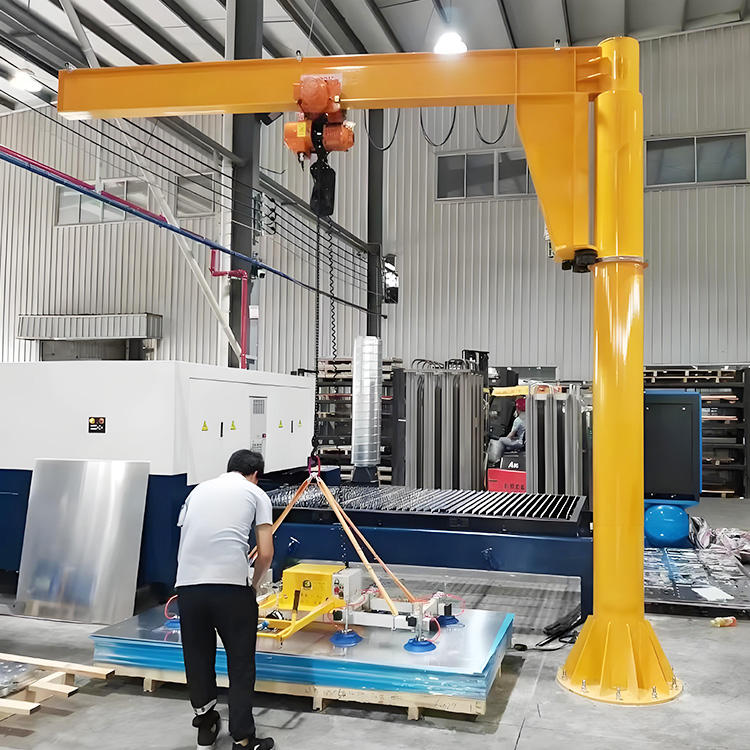
Introduction
In steel mills, iron foundries, aluminum smelters, and forging shops, localized lifting equipment operates near extreme heat sources—such as induction furnaces, ladle pouring stations, casting molds, and heat-treatment ovens. Radiant thermal temperatures at the jib boom level routinely reach 300°C to 500°C, while ambient air temperatures around the workstation remain elevated above 60°C.
Deploying a standard workstation jib crane in a foundry environment leads to rapid equipment failure. Unprotected electric hoist cables melt, standard wire ropes dry out and snap from core lubrication loss, and standard motor insulation burns out within weeks. Prolonged thermal exposure can also cause structural deflection in the cantilever boom beam.
Foundry-grade metallurgical jib cranes are custom-engineered for extreme thermal resistance, heat radiation shielding, high-temperature lubrication, and continuous mechanical reliability under severe heat cycles.
This guide provides complete engineering specifications for specifying jib cranes used in high-temperature metalworking and foundry environments.
Part 1: Thermal Exposure & Heat Shield Specifications
Operating Temperature Categories in Foundries
Metallurgical jib cranes are categorized by thermal proximity to molten metal and heat-treatment equipment:
- Direct Furnace & Ladle Pouring Workstations: Direct exposure to molten steel/iron at 1,400°C to 1,600°C. Radiant heat hitting the underside of the jib boom can reach 250°C to 500°C.
- Heat Treatment & Forging Bay Workstations: Continuous ambient operating temperatures ranging from 50°C to 80°C with severe thermal cycling.
Heat Shielding & Boom Protection Specifications
- Underside Thermal Heat Shields: The underside of the jib cantilever boom beam must be fitted with multi-layer heat radiation shields. Construction consists of a 6 mm to 10 mm stainless steel reflector plate separated from the I-beam flange by a 50 mm layer of high-density ceramic fiber insulation (rated up to 1,260°C).
- Steel-Cored Wire Ropes with High-Temp Grease: Synthetic or fiber-core wire ropes are strictly prohibited. Wire ropes must feature Independent Wire Rope Core (IWRC) construction, lubricated with high-temperature graphite or silicone-based grease rated for operating temperatures up to 250°C.
- High-Temperature Electric Cables: All electrification cables along the jib boom must feature silicone-rubber insulation wrapped in heavy braided fiberglass or ceramic sleeving to withstand direct heat radiation and hot metal sparks.
Part 2: Structural Integrity & Mechanical Redundancy
Boom Beam Thermal Deflection Management
Overheating structural steel reduces its yield strength, causing permanent sagging or warping of the cantilever boom beam.
- High-Temperature Structural Steel Selection: Boom beams exposed to severe radiant heat are fabricated from heat-resistant structural steel (such as Q355GNH weather-resistant/heat-resistant steel or alloy steel) designed to maintain structural rigidity at elevated temperatures.
- Redundant Hoisting Brakes: Hoists handling ladles or hot castings must feature double-brake protection:
- Primary Service Brake: Electro-hydraulic thruster brake mounted on the motor drive shaft.
- Secondary Safety Brake: Mechanical ratchet brake or disc brake acting on the hoist drum to prevent immediate load drop in the event of drive shaft failure.
- Heavy-Duty Slewing Bearing Assembly: The pivot bearing on freestanding pillars or wall brackets must feature bronze alloy bushings with high-temperature synthetic calcium-complex grease to prevent bearing seizing under high heat.
Part 3: Operational Duty Classification & Control Systems
Heavy Duty Cycle Ratings (CMAA Class E/F / FEM 3m, 4m)
Foundries operate continuously under demanding production schedules.
- Duty Classification: Must meet CMAA Class E or F (FEM 3m/4m) structural design standards to withstand continuous full-capacity lifting and thermal stress cycles.
- Motor Thermal De-Rating: Hoist and trolley motors must feature Class H insulation (180°C maximum limit) equipped with forced cooling fans operating on an independent electrical supply.
- Thermal Shielded Remote Controls: To keep operators at a safe distance from molten metal, jib cranes should be operated via heat-shielded wireless radio remote controls or heat-insulated push-button pendants.
Part 4: Technical Specification Comparison Matrix
| Specification Metric | Standard Workstation Jib Crane | Foundry / Metallurgical High-Temp Jib Crane |
|---|---|---|
| Ambient Temp Limits | -10°C to +40°C | +40°C to +80°C Ambient (+500°C Radiant) |
| Duty Classification | CMAA Class C / FEM 1Am, 2m | CMAA Class E, F / FEM 3m, 4m |
| Hoisting Medium | Standard Fiber Core Wire Rope / Chain | Heat-Treated Steel Core Wire Rope (IWRC) |
| Under-Boom Protection | None (Standard Paint Coating) | Stainless Steel & Ceramic Fiber Heat Shield |
| Hoist Braking | Single Electro-Magnetic Brake | Dual Service & Safety Emergency Brakes |
| Motor Insulation | Class F (155°C Limit) | Class H (180°C Limit) + Forced Cooling Fan |
Part 5: 2026 Price Reference
Foundry-grade jib cranes carry a price premium due to heat insulation materials, specialized motor insulation, and high-duty mechanical construction:
- 1-Tonne High-Temp Manual Slewing Jib Crane (4m reach, Heat Shielded): $6,500 to $12,500
- 3-Tonne Foundry Pillar Jib Crane (5m reach, Class H Motors, Dual Brakes): $16,000 to $32,000
- 5-Tonne Heavy Metallurgical Jib Crane (6m reach, Motorized Slewing, Full Shielding): $35,000 to $75,000
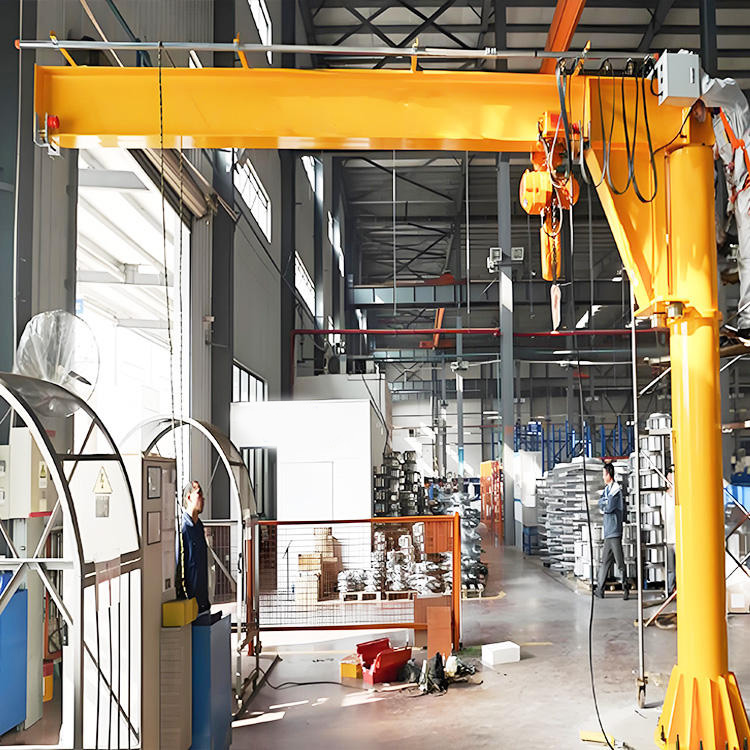
Frequently Asked Questions
Q: Can an electric chain hoist be used on a metallurgical jib crane?
A: Electric chain hoists can be used for ambient foundry areas (such as forging or casting prep). However, directly above open molten metal vessels, wire rope hoists with heat shields and IWRC steel ropes are preferred because load chains retain extreme heat and can suffer thermal annealing over time.
Q: How does heat shielding protect the jib boom from warping?
A: Stainless steel ceramic fiber heat shields reflect up to 85% of radiant heat back toward the source, preventing the steel I-beam bottom flange from exceeding 150°C, thus preserving structural yield strength.
Q: What routine maintenance is required for foundry jib crane bearings?
A: Slewing pivot bearings and trolley wheel bearings should be greased weekly with high-temperature synthetic grease rated to 280°C. Visual inspections of under-boom heat shields should be conducted monthly to verify insulation integrity.