


Flexible vs. Rigid KBK Cranes: Engineering Selection for Workstation Automation
Introduction
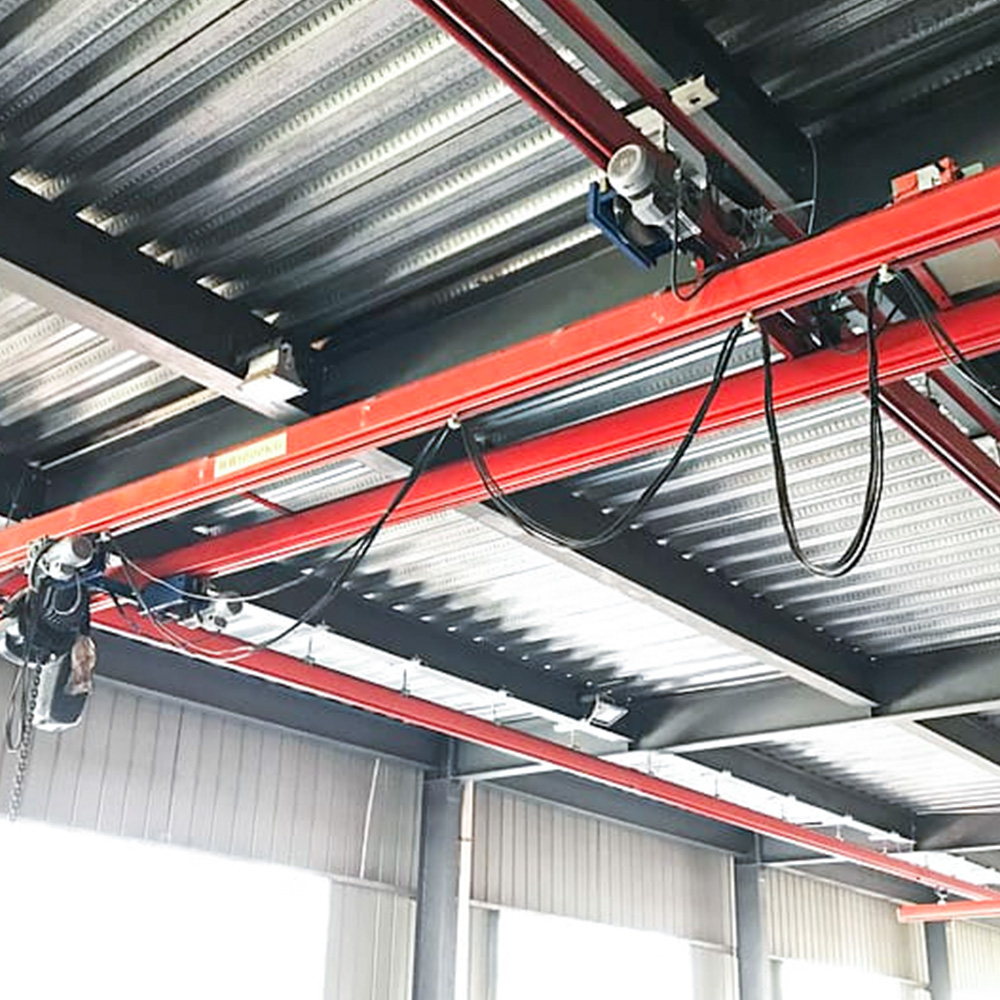
The term “KBK” is widely used as a generic description for light modular crane systems. However, in industrial engineering, KBK cranes are strictly divided into two categories: Flexible KBK Systems and Rigid KBK Systems.
Failing to distinguish between flexible and rigid systems regarding mechanical behavior, rolling resistance, and compatibility with automation tools (such as pneumatic manipulators or zero-gravity lifters) often leads to binding, excessive sway, or positioning errors.
This guide provides a structural and operational comparison between flexible and rigid KBK systems to assist in specifying the correct workstation setup.
Part 1: Structural Connections and Mechanical Behavior
1. Flexible KBK Systems
- Connection Design: The connection between track and suspension hangers, as well as bridge-to-runway trolleys, uses articulated ball-and-socket pin joints.
- Mechanical Behavior: The articulated joint allows slight lateral sway. When loads are pushed off-center, the joint self-aligns and absorbs torsional stress, preventing trolley binding.
- Installation Tolerance: Highly forgiving of minor installation misalignments or building steel tolerances (within a few millimeters).
2. Rigid KBK Systems
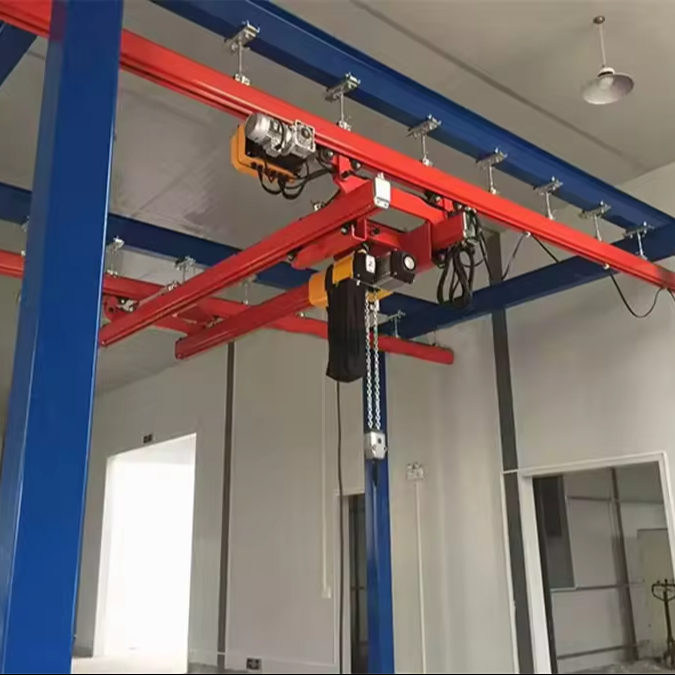
- Connection Design: Tracks are constructed using steel trusses or enclosed rigid steel profiles, with bridge-to-runway hangers anchored in a fixed, non-articulating orientation.
- Mechanical Behavior: Offers high structural rigidity. The main bridge exhibits virtually zero sway or deflection during lifting or acceleration.
- Installation Tolerance: Demands high installation precision; runway parallelism and leveling tolerances must be strictly controlled within millimeter limits.
Part 2: Comprehensive Performance Comparison
| Feature / Metric | Flexible KBK Crane | Rigid KBK Crane |
|---|---|---|
| Bridge Sway & Deflection | Slight sway during acceleration / stopping | Minimal sway; rigid anti-torsion structure |
| Manual Travel Smoothness | Excellent (self-aligning, resists jamming) | Very good (requires precise rail alignment) |
| Automation & Manipulator Use | Not Recommended (sway causes positioning errors) | Ideal (supports pneumatic manipulators & arms) |
| Long-Span Capabilities | Limited span; requires frequent hanger points | High truss capacity; achieves spans over 9 meters |
| Installation Complexity | Simple & adaptable to existing roof steel | Requires high-precision laser leveling |
Part 3: Application & Tooling Selection Matrix
Rule 1: Match with the Lifting Mechanism
- Standard Electric Chain Hoist / Manual Block $\rightarrow$ Specify Flexible KBK
Flexible KBK systems offer light deadweight and low push-pull resistance, making manual payload positioning effortless and cost-effective. - Pneumatic Manipulators / Rigid Lifting Arms / Auto-Positioning Tools $\rightarrow$ Must Specify Rigid KBK
Pneumatic manipulators generate significant overturning moment forces ($\mathbf{M} = \mathbf{F} \times \mathbf{d}$) during offset picking. The ball-joints on flexible KBK systems cannot counteract torsional moments, leading to structural binding or derailment risk. Rigid KBK systems absorb these forces effectively.
Rule 2: Evaluate Bridge Span Requirements
- When a workstation must span over 8 to 10 meters without intermediate roof suspension points, Rigid Truss-Style KBK provides the necessary bending moment resistance without excessive structural sag.
Part 4: 2026 Budget & Cost Reference
For a standard setup with a 1,000 kg capacity, 6-meter Bridge Span, and 12-meter Runway:
- Flexible KBK Crane Package (with Chain Hoist): $3,100 to $5,300
- Rigid KBK Crane Package (with Chain Hoist & Truss Bridge): $4,500 to $7,700
(Note: Rigid systems require additional steel trussing and precision machining, resulting in a 30% to 50% cost premium over flexible designs.)
Frequently Asked Questions (FAQ)
Q: Can we mount an articulated pneumatic manipulator onto an existing flexible KBK rail?
A: No. Offset loads from a manipulator create strong lateral overturning moments. Flexible ball-and-socket suspensions tilt under moment loads, causing trolley binding, excessive rail wear, and potential safety hazards. A rigid KBK track or auxiliary rigid guide frame is required.
Q: Will a flexible KBK track break if loads are pulled at an angle (side pulling)?
A: While flexible joints tolerate minor side angles better than rigid frames, side pulling violates crane safety standards. Continuous side-pulling accelerates pin wear and reduces overall component service life.