


Gantry Crane Maintenance Guide
Introduction
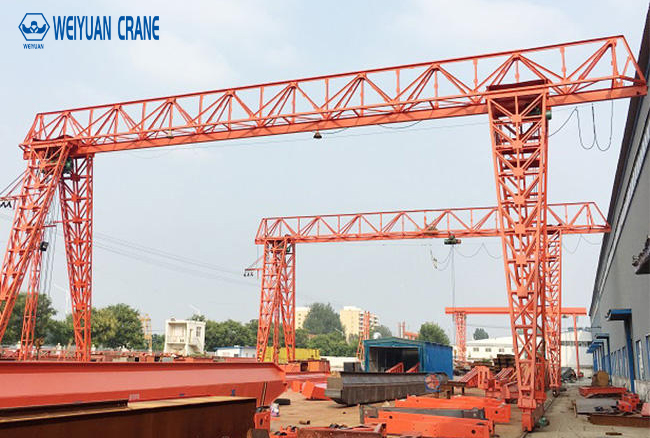
A gantry crane is one of the hardest-working assets on any industrial site. It moves heavy loads day after day, often across multiple shifts, in conditions that range from clean indoor workshops to weather-exposed yards. And yet maintenance is frequently the first thing that slips when schedules get tight.
That is a costly gamble. A single unplanned crane failure can halt an entire production line, strand loads mid-lift, and create serious safety hazards. Worse, most major crane failures do not happen without warning — they build slowly from small, ignored problems: a worn wheel flange, a frayed wire rope strand, a hairline crack in a structural weld.
This guide lays out a practical maintenance and inspection framework for gantry cranes. You will find a step-by-step checklist broken down by daily, monthly, and annual intervals, a breakdown of the most common failure points, an overview of the safety standards that govern crane operation, and proven tips for extending service life. Whether you manage one crane or a fleet, this is the framework that keeps your equipment safe, compliant, and productive.
Why Gantry Crane Maintenance Matters
Maintenance is not an expense to minimize. It is an investment that protects three things that matter to every facility owner: safety, uptime, and capital.
Safety comes first. Gantry cranes lift loads weighing tens or hundreds of tonnes, often over people and equipment. A failed brake, a snapped rope, or a cracked weld can turn a routine lift into a fatal incident. Regular inspection catches these risks before they cause harm.
Uptime protects your production schedule. Every hour a crane sits idle for emergency repair is an hour of lost throughput. Preventive maintenance shifts repairs from unpredictable breakdowns to planned service windows, keeping your operation flowing and your delivery commitments intact.
Capital preservation extends the payback. A gantry crane is a major investment with an expected service life of 15 to 25 years or more. Neglected maintenance shortens that life dramatically, forcing early and expensive replacement. Consistent care protects the return on that capital.
There is also a compliance dimension. Regulatory bodies require documented inspection and maintenance. Failing an audit can trigger fines, shutdowns, and liability exposure that far exceed the cost of a proper maintenance program.
The Gantry Crane Inspection Checklist
Effective inspection follows a tiered schedule. Frequent, quick checks catch obvious problems early, while deeper periodic inspections uncover wear that develops slowly. Here is how to structure each level.
Daily (Pre-Shift) Inspections
These are visual and functional checks performed by the operator before each shift. They take minutes and prevent the most common causes of sudden failure.
- Controls and functions: Test all movements — hoist up and down, trolley traverse, bridge travel — for smooth, correct response.
- Emergency stop: Confirm the e-stop halts all motion instantly.
- Wire rope or chain: Look for kinks, broken wires, corrosion, or flattening. Check that the rope seats properly in sheave grooves.
- Hook and latch: Inspect for deformation, cracks, or a damaged safety latch.
- Brakes: Verify the load holds without drift when suspended.
- Limit switches: Confirm upper and lower travel limits stop motion as designed.
- Warning devices: Test horns, lights, and motion alarms.
- General condition: Scan for leaks, loose fasteners, or unusual noise and vibration.
Log every daily check. A simple pre-shift log creates a paper trail and flags recurring issues before they escalate.
Monthly (Periodic) Inspections
Monthly checks go deeper and should be performed by trained maintenance staff. They target components that wear over weeks rather than hours.
- Wire rope detailed check: Measure diameter for reduction, count broken wires per lay length, and inspect end connections and terminations.
- Hook measurements: Check throat opening against the manufacturer’s specification for stretch.
- Brake wear: Inspect brake pads or shoes for thickness and check adjustment.
- Hoist and gearbox: Check oil levels, look for leaks, and listen for abnormal gear noise.
- Wheels and drive: Inspect wheel tread and flanges for wear; check coupling and drive components.
- Electrical systems: Examine festoon cables, conductor bars, contactors, and control panels for wear, heat, or loose connections.
- Fasteners and connections: Spot-check bolted joints for tightness, especially at high-stress points.
Annual (Comprehensive) Inspections
The annual inspection is a thorough, documented examination — often carried out or verified by a qualified third-party crane inspector. It combines everything above with in-depth structural and mechanical assessment.
- Structural inspection: Examine the main girder, legs, and end trucks for cracks, corrosion, and deformation. Pay close attention to welds and connection points.
- Non-destructive testing (NDT): Use magnetic particle or dye-penetrant testing on critical welds and highly stressed members to detect surface cracks invisible to the eye.
- Load testing: Where required, perform a rated or proof load test to verify capacity and brake holding.
- Rail and runway survey: Check rail alignment, level, gauge, and wear along the full travel path.
- Full electrical audit: Test insulation resistance, grounding, and the integrity of all control and safety circuits.
- Documentation review: Confirm all daily and monthly logs are complete and that prior corrective actions were closed out.
Keep every annual report on file. This record is your primary evidence of compliance and a valuable history for planning future maintenance.
Common Gantry Crane Failure Points
Knowing where cranes typically fail lets you focus inspection effort where it matters most. These five areas account for the majority of serious problems.
Wheels
Crane wheels endure constant rolling loads and steering forces. Flange wear, tread flattening, and skewing are common. Worn wheels cause poor tracking, increased rail wear, and higher drive stress. Uneven wear often signals misalignment somewhere in the travel system, so treat it as a symptom, not just a part to replace.
Rails and Runways
Rails take a beating over years of travel. Watch for wear, corrosion, misalignment, and loose or damaged fastening clips. Poor rail level or gauge forces the crane to fight its own path, accelerating wheel wear and straining the structure. A periodic runway survey catches drift before it damages other components.
Hoists and Wire Ropes
The hoist and its rope carry the load directly, making them among the most safety-critical components. Wire ropes degrade through broken wires, corrosion, diameter reduction, and crushing. Replace rope the moment it reaches the discard criteria in the standard — there is no margin for delay here. Inside the hoist, watch bearings, gears, and the drum for wear.
Brakes
Brakes hold the load and control motion. Worn linings, poor adjustment, contamination from oil or moisture, and weak springs all reduce braking force. A brake that lets the load drift is an immediate red flag that demands the crane be taken out of service until repaired.
Structural Welds and Members
The girder, legs, and connections carry every load the crane lifts. Fatigue cracking at welds, corrosion in exposed steel, and deformation from overloading are serious threats. Because these cracks can be invisible early on, NDT during annual inspections is essential for high-duty or aging cranes. A structural failure is the most catastrophic outcome of all, so this area warrants the closest attention.
Safety Compliance Standards
Gantry crane maintenance is not just good practice — it is a legal requirement. Two frameworks dominate in the United States, and understanding both is essential for procurement and facility managers.
OSHA Regulations
The Occupational Safety and Health Administration (OSHA) sets the legal baseline for workplace crane safety. OSHA 29 CFR 1910.179 covers overhead and gantry cranes in general industry, specifying requirements for inspection frequency, maintenance, testing, and operator practices. OSHA divides inspections into “frequent” (daily to monthly) and “periodic” (one to twelve month intervals), mirroring the tiered checklist above. Non-compliance carries the risk of citations, financial penalties, and forced shutdowns.
ASME B30.2
ASME B30.2 is the industry consensus standard for top-running bridge and gantry cranes with top-running trolley hoists. It provides detailed technical guidance on construction, installation, inspection, testing, maintenance, and operation. While OSHA sets the legal floor, ASME B30.2 defines the accepted engineering practice — and OSHA frequently references it. Following B30.2, including its inspection classifications and rope discard criteria, is the clearest way to demonstrate due diligence.
For facilities operating internationally, additional standards such as ISO and CMAA specifications may also apply. When in doubt, align your program with the strictest applicable standard.
Tips for Extending Gantry Crane Service Life
Beyond meeting the minimum inspection requirements, these practices help you squeeze maximum value and longevity out of your crane investment.
- Shift from reactive to preventive maintenance. Schedule service based on time and duty cycle, not on failure. Planned maintenance is cheaper and far less disruptive than emergency repair.
- Train your operators well. Smooth operation — avoiding sudden stops, side-pulling, and overloading — dramatically reduces mechanical stress. A skilled operator is a maintenance asset.
- Never exceed rated capacity. Overloading is a leading cause of accelerated wear and structural fatigue. Load limiters and clear capacity markings help enforce discipline.
- Keep it clean and lubricated. Follow the manufacturer’s lubrication schedule for ropes, gears, bearings, and wheels. In corrosive or dusty environments, cleaning matters even more.
- Address small issues immediately. A minor problem caught early is cheap to fix. Left alone, it compounds into a major failure. Close out every flagged item promptly.
- Consider condition monitoring. Sensors that track load cycles, motor temperature, and vibration can predict wear before it becomes failure — especially valuable for high-utilization cranes.
- Keep thorough records. A complete maintenance history supports compliance, informs replacement planning, and preserves resale value.
Frequently Asked Questions
Q: How often should a gantry crane be inspected?
Gantry cranes require a tiered inspection schedule: daily pre-shift checks by the operator, monthly periodic inspections by trained maintenance staff, and a comprehensive annual inspection, often verified by a qualified third-party inspector. High-utilization or heavy-duty cranes may need more frequent periodic checks. This structure aligns with both OSHA and ASME B30.2 requirements.
Q: What are the most common causes of gantry crane failure?
The most frequent failure points are worn wheels, misaligned or damaged rails, degraded wire ropes and hoist components, worn or contaminated brakes, and structural fatigue at welds and connections. Most of these develop gradually, which is exactly why regular inspection catches them before they cause a breakdown or safety incident.
Q: What safety standards apply to gantry crane maintenance in the US?
OSHA 29 CFR 1910.179 sets the legal requirements for overhead and gantry cranes in general industry, covering inspection, maintenance, and testing. ASME B30.2 provides the detailed engineering consensus standard for bridge and gantry cranes. OSHA sets the legal floor while ASME B30.2 defines accepted best practice, and the two are commonly used together.
Q: When should a wire rope be replaced?
Replace wire rope as soon as it reaches the discard criteria defined in the applicable standard — such as a specific number of broken wires per lay length, measurable diameter reduction, corrosion, kinking, or crushing. Because the rope carries the load directly, there is no safe margin for postponing replacement once these thresholds are reached.
Q: How long does a well-maintained gantry crane last?
With a consistent preventive maintenance program, a quality gantry crane can serve 15 to 25 years or more, depending on duty cycle and operating environment. Neglected maintenance can cut that lifespan in half. Proper care, disciplined operation, and prompt repairs are the biggest factors in maximizing service life.
Q: Can we perform inspections in-house or do we need a third party?
Daily and monthly inspections are typically performed in-house by trained operators and maintenance staff. The comprehensive annual inspection — especially structural assessment, non-destructive testing, and load testing — is usually best carried out or verified by a qualified third-party inspector to ensure objectivity and compliance.