


Electric Hoist Safety and OSHA Compliance: A Complete Guide for Facility Managers
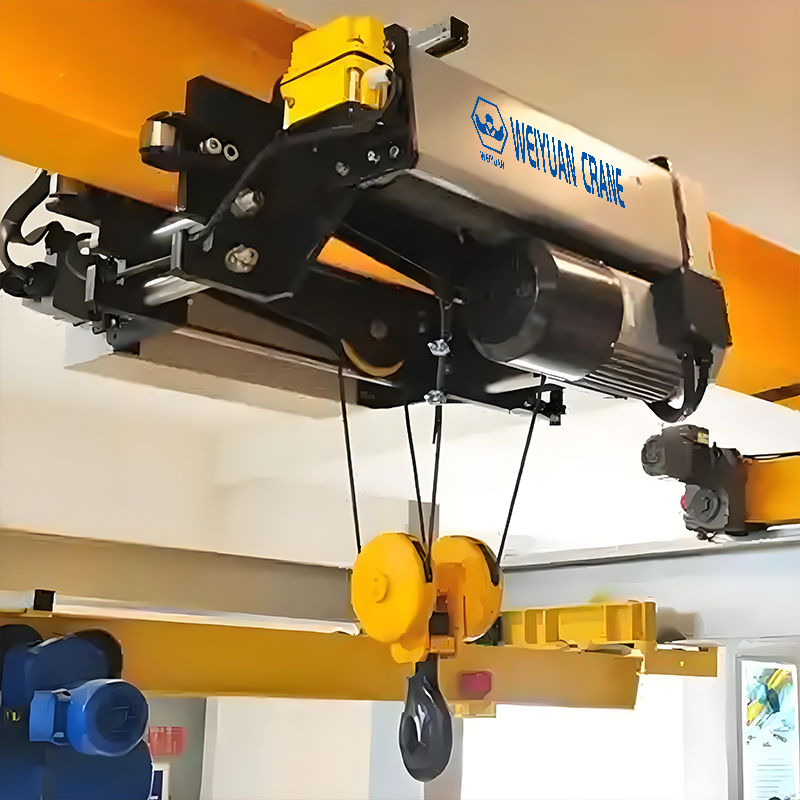
Introduction
An electric hoist failure rarely starts with a bang. It starts with a chain nobody inspected, a brake nobody tested, or a capacity plate nobody could read. Weeks or months later, that small gap becomes a dropped load, an injured worker standing right beneath it, and an OSHA citation that costs far more than the fix ever would have.
The electric hoist is the part of your lifting system that does the actual lifting — and it is also the part closest to the load and, often, the operator. When it slips, snaps, or overloads, it fails within arm’s reach of a person. That makes hoist safety more than a paperwork exercise. It is a legal obligation, a duty to your crew, and a direct driver of uptime.
This guide walks you through the compliance framework that governs electric hoists in the United States. You will learn what OSHA 29 CFR 1910.179 requires and how ASME B30.16 applies to hoists specifically, the tiered inspection program the law demands, operator qualification and training rules, load testing and certification intervals, rated capacity marking requirements, and the five OSHA violations that most often trigger citations on electric hoists. By the end, you will have a clear, actionable framework for keeping your hoist program safe, compliant, and audit-ready.
This is article 1 of 3 in the Weiyuan Crane electric hoist series.
Why Electric Hoist Safety Matters
Compliance protects three things every facility manager answers for: people, production, and capital.
People first. An electric hoist lifts loads over — and sometimes directly beside — your workers. A worn hook, a stretched chain, a failed limit switch, or a slipping brake can drop a load in an instant. The regulations exist because these failures have injured and killed people, and following them is the single most effective way to prevent the next incident.
Production second. A hoist that is pulled out of service by an inspector, or crippled by a preventable failure, stops the work that depends on it. Because a hoist often serves one critical station or crane, its downtime backs up everything behind it. Planned compliance keeps repairs in scheduled windows instead of surprise breakdowns mid-shift.
Capital third. OSHA penalties are substantial, and a single serious violation can run into tens of thousands of dollars per instance. Willful or repeat violations climb far higher. Add litigation, workers’ compensation, and reputational damage, and the math is clear: compliance is always cheaper than a citation — and far cheaper than an injury.
Takeaway: Treat electric hoist compliance as core operational discipline, not administrative overhead. On the component closest to the load, the safety stakes are unusually direct.
OSHA 29 CFR 1910.179 and ASME B30.16: The Governing Framework
An electric hoist rarely stands alone. It mounts to an overhead crane bridge, a monorail trolley, a jib crane boom, or a fixed lifting point — so the regulations that govern the crane also reach the hoist, and one consensus standard speaks to the hoist directly.
What Governs an Electric Hoist
The regulatory picture draws on a few sources that work together:
- OSHA 29 CFR 1910.179 sets the legal baseline for overhead and gantry cranes in general industry, and its inspection, testing, maintenance, and operating principles apply to the hoisting mechanism mounted on them.
- OSHA 29 CFR 1910.184 covers the slings and rigging used with the hoist.
- ASME B30.16 is the safety standard written specifically for overhead underhung and stationary hoists — the detailed engineering practice for the electric hoist itself.
- ASME B30.2 and the broader B30 series cover the cranes and monorails the hoist runs on.
OSHA sets the legal floor. The ASME B30 standards define the accepted engineering practice that fills in the detail, and OSHA frequently references them. When a regulation and a consensus standard overlap, align your program with the stricter requirement.
What the Framework Covers
Grouped into practical areas, the requirements come down to:
- Design and construction: the hoist must meet defined structural and mechanical standards, including rated load markings, controls, brakes, and safety devices.
- Inspection: a tiered program split into pre-shift, frequent, and periodic categories, scaled to service severity.
- Testing: load testing before first use and after any significant modification or repair to a load-bearing part.
- Maintenance: a preventive maintenance program with safe procedures for taking the hoist out of service.
- Operation: only designated, qualified personnel may operate the hoist.
Takeaway: OSHA 1910.179 and 1910.184 set the law; ASME B30.16 is the engineering playbook written for the hoist itself. Follow both and you stay comfortably above the legal floor.
Required Inspection Tiers and Checklists
Inspection is the backbone of hoist compliance, and the framework requires a tiered program. Each tier targets a different rate of wear — from faults that appear overnight to wear that builds over months.
Daily (Pre-Shift) Inspections
Before each shift or first use, the operator performs a functional and visual check. These take minutes and catch the most common causes of sudden failure. For an electric hoist, check:
- Hoist brake: confirm the brake holds the load without drift when the motor stops.
- Hook and latch: inspect for deformation, cracks, wear at the throat, or a damaged or missing safety latch.
- Load chain or wire rope: look for kinks, twisting, broken wires, corrosion, gouging, stretch, or improper seating on the drum or lift wheel.
- Upper limit switch: verify the hoist stops the hook before two-blocking.
- Controls and warning devices: confirm the pendant or remote responds correctly and any warning device works.
- General condition: listen for unusual noise and scan for oil leaks, loose fasteners, or damage to the hoist body and trolley.
Log every pre-shift check. A simple daily log builds the paper trail an inspector will ask for and flags recurring issues before they escalate.
Frequent Inspections
Frequent inspections run at daily to monthly intervals, depending on service severity, and go slightly deeper than the pre-shift check. Trained personnel examine the same critical systems — brake, hook, chain or rope, and controls — with closer attention to wear that builds over weeks rather than hours. Chain stretch and wire rope condition are measured against the manufacturer’s discard criteria here.
Periodic Inspections
Periodic inspections run at one- to twelve-month intervals, scaled to how hard the hoist works, and are comprehensive documented examinations by a qualified person. For an electric hoist, these cover:
- Deformed, cracked, or worn load-bearing parts — hook, load block, suspension, and trolley.
- Worn, cracked, or distorted parts such as pins, bearings, shafts, gears, sheaves, sprockets, and the lift wheel.
- Excessive wear on brake system parts and linings.
- Load chain measured for stretch, or wire rope inspected against discard criteria, plus drum or lift-wheel wear.
- The upper and lower limit devices and the overload device for correct function.
- Deterioration of the motor, electrical controls, and wiring.
- Loose or missing bolts, nuts, and fasteners throughout.
Keep dated periodic inspection reports on file, signed by the qualified person, with the condition of critical parts recorded. These records are your primary evidence of compliance in an audit.
Takeaway: Match inspection depth to failure speed — check the brake, hook, and chain daily, and document the slow-developing wear on a periodic schedule.
Operator Qualification and Training Requirements
An electric hoist is only as safe as the person operating it. OSHA is explicit: only designated personnel may operate the equipment — meaning workers the employer has selected and confirmed as competent for the task.
What Qualification Requires
Building a defensible operator qualification program means addressing several elements:
- Physical fitness: adequate vision, hearing, reaction time, and coordination, with no condition that could interfere with safe operation.
- Knowledge of the equipment: the operator must understand the specific hoist’s controls, rated capacity, limit devices, and brake behavior.
- Operating practices: safe rigging, load handling, and how to respond to a malfunction.
- Understanding of the hazards: the operator must grasp hoist-specific risks — two-blocking, side-pulling the load, shock-loading from a sudden lift, and the danger of walking a load over people.
Training and Documentation
Effective training combines classroom instruction with hands-on, supervised operation on the actual hoist the operator will use. Cover the rated capacity, safe rigging, smooth lifting and lowering, limit-device awareness, and emergency procedures. Then verify competency through both a written assessment and a practical evaluation before the operator works unsupervised.
Document everything. Keep dated training records, evaluation results, and any refresher training on file. Retrain whenever an operator shows unsafe performance, a new hoist or process is introduced, or an incident reveals a gap.
Rigging and Signal Personnel
Operators are not the only people who need training. Anyone who rigs loads or gives signals must also be qualified for that role, working to OSHA 1910.184 for slings. A skilled operator following a bad signal from an untrained spotter is still an accident waiting to happen.
Takeaway: Qualification is competency you can prove. Combine training, hands-on evaluation, and documentation so every operator and rigger is demonstrably fit for the task — with specific attention to two-blocking and side-pulling hazards.
Load Testing and Certification Intervals
Testing confirms the hoist can actually do what its markings claim — safely. The governing standards set specific requirements for when and how load testing happens.
Initial and Post-Modification Testing
Before a new or reinstalled electric hoist goes into service, it must be tested to confirm it operates correctly. Per ASME B30.16, a hoist is tested before first use, and the test load is typically no less than 100% and no more than 125% of rated capacity unless the manufacturer specifies otherwise. The test verifies the hoisting and lowering mechanism, the brake, the upper limit device, and the trolley travel under load.
The same rule applies after any modification or repair affecting a load-bearing component or safety device. Replacing the load chain or rope, rebuilding the brake, altering the suspension, or repairing the hook all trigger a load test before the hoist returns to service, with the results recorded.
Ongoing Verification and Records
Between formal load tests, the periodic inspection program does the ongoing verification, examining the load-bearing parts, brake, chain or rope, and limit devices at the required intervals to confirm the hoist remains fit for its rated capacity.
Retain a certified, dated, signed record of the most recent load test with the hoist’s inspection and maintenance history. This documentation proves the hoist was verified at capacity and is central to demonstrating compliance.
Practical guidance: Coordinate load testing with the periodic inspection and any major maintenance so the hoist comes out of service once, not repeatedly. And never assume a hoist is fit for a load it has never been tested to carry after a repair.
Takeaway: Test before first use and after any significant repair or modification, keep the test load within the 100–125% range, and keep dated, signed records as proof.
Rated Capacity Markings and Load Chart Rules
Every electric hoist has a rated capacity — the maximum load it is designed and tested to lift. Making that limit visible and understood is both a legal requirement and a frontline defense against overload.
Legible, Visible Markings
The rated load must be marked plainly and legibly on the hoist, readable from the operating position or the floor. Where a crane carries more than one hoisting unit, each hoist must show its own rated load. These markings are not decoration — they are the operator’s constant reminder of the limit that must never be crossed, and they must never be painted over or left to fade.
Understanding Rated Capacity
The rated capacity is the safe working load under normal conditions, and it already accounts for the hoist’s design factors. Several points every operator must understand:
- Rigging counts against capacity. The weight of the spreader beam, lifting frame, slings, and shackles all reduce the load the hook can safely carry. Subtract the rigging weight from the rated capacity to find the true available load.
- Never exceed the marking. Even a brief overload overstresses the chain or rope, the brake, and the suspension, seeding a failure that appears later.
- Never side-pull the load. An electric hoist is designed to lift vertically at the hook. Dragging a load at an angle applies forces the hoist and its chain were never rated for and is a leading cause of chain damage and hook failure.
- Avoid shock-loading. Snapping a slack chain tight or jerking a load applies far more force than the load’s static weight. Lift smoothly.
Overload Protection
Modern electric hoists should include an overload device that prevents lifting beyond a set threshold, typically 100 to 110% of rated capacity. This device is a critical backstop, but not a substitute for operator awareness. The marking and the training behind it remain the primary defense.
Takeaway: Keep the rated-load marking legible on every hoist, and train operators to subtract rigging weight, never side-pull or shock-load, and respect the limit on every single lift.
The Top 5 OSHA Electric Hoist Violations
Knowing where facilities most often fall short lets you aim your compliance effort where it matters. These five areas account for the majority of electric hoist citations.
1. Inadequate or Missing Inspections
The most common violation is failing to perform and document the required inspections. Facilities skip pre-shift checks, run hoists past their periodic inspection dates, or keep no records to prove inspections happened at all.
Prevention: Build a written inspection schedule tied to service severity, use standardized checklists, and log every inspection with a date and a signature. If it is not documented, an inspector treats it as not done.
2. Untrained or Undesignated Operators
Facilities let workers operate a hoist without formal designation, training, or a competency evaluation — often because a pendant looks simple to use. When an incident occurs, there is no record the operator was ever qualified.
Prevention: Formally designate operators, deliver documented training with hands-on evaluation covering two-blocking and side-pulling hazards, and retain the records. Extend the same discipline to riggers and signalers.
3. Defective Components Left in Service
Worn hooks, stretched load chain, damaged wire rope, slipping brakes, and failed limit switches are found in service because a defect was noted but never corrected — or never looked for. A hoist with a known defect that keeps running is a serious violation and a direct hazard.
Prevention: Establish clear discard and repair criteria for the chain, rope, and hook, tag out any hoist with a safety-critical defect, and close out every flagged item before the hoist returns to service.
4. Missing or Illegible Load Markings
Hoists run with faded, painted-over, or absent rated-load markings, leaving operators to guess the limit. This is an easy citation for an inspector to write and an easy overload for an operator to cause.
Prevention: Confirm a legible rated-load marking on every hoist, readable from the operating position. Restore any marking that has faded or been obscured.
5. No Load Test After Repair or Modification
A hoist has its chain, rope, brake, or hook replaced and returns to service without the required load test. If it fails under load later, both the incident and the missing test become the finding.
Prevention: Treat any repair or modification to a load-bearing component or safety device as a trigger for a load test before return to service, and record the result.
Takeaway: Nearly every common citation traces back to a missing document, an unqualified person, an ignored defect, or a skipped test. Close those four gaps and you close most of your citation risk.
Frequently Asked Questions
Q: What OSHA regulation covers electric hoists?
Electric hoists fall under the general framework of OSHA 29 CFR 1910.179 for the overhead and gantry cranes they mount to, with OSHA 29 CFR 1910.184 governing the slings and rigging used with them. The hoist itself is addressed directly by ASME B30.16, the safety standard for overhead underhung and stationary hoists. OSHA sets the legal floor for inspection, testing, and operation, and the ASME B30 standards provide the detailed engineering practice that keeps a facility above it.
Q: How often does an electric hoist need to be inspected?
An electric hoist needs a tiered program: a functional and visual check by the operator before each shift, frequent inspections at daily to monthly intervals by trained staff, and comprehensive periodic inspections at one- to twelve-month intervals by a qualified person, scaled to service severity. Heavier, high-cycle hoists need more frequent checks than light, occasional-use units. Periodic inspections should pay special attention to the load chain or wire rope, the brake, the hook, and the limit devices.
Q: Who is allowed to operate an electric hoist under OSHA?
Only designated personnel — workers the employer has selected and confirmed as competent for the task. Competency requires adequate physical fitness, knowledge of the specific hoist’s controls, rated capacity, and limit devices, and an understanding of hoist-specific hazards such as two-blocking, side-pulling, and shock-loading. Operators should be trained, evaluated through both written and practical assessment, and documented. Riggers and signalers must be qualified for their roles too.
Q: What is the load test requirement for a new or repaired electric hoist?
A new or reinstalled hoist must be tested before first use, and any hoist must be retested after a modification or repair affecting a load-bearing component or safety device. Per ASME B30.16, the test load is typically no less than 100% and no more than 125% of rated capacity unless the manufacturer specifies otherwise. The test verifies the hoisting mechanism, brake, upper limit device, and trolley travel under load. Keep a dated, signed record of the test as proof of compliance.
Q: Where must the rated capacity be marked on an electric hoist?
The rated load must be marked plainly and legibly on the hoist, readable from the operating position or the floor. Where a crane carries more than one hoisting unit, each hoist must display its own rated load. These markings are the operator’s constant reference for the maximum safe load. Remember that the weight of any rigging — spreader beams, slings, shackles — must be subtracted from the rated capacity to find the true available load.
Q: Why is side-pulling an electric hoist so dangerous?
An electric hoist is engineered to lift vertically straight beneath the hook, not to drag loads sideways. Pulling a load at an angle applies lateral forces the hoist, its chain or rope, and its suspension were never rated to carry. It can cause the chain to jump the lift wheel, damage the load chain or rope, bend the hook, and overstress the mounting. Operators must be trained to position the hoist directly over the load and lift straight up, never to use the hoist to pull a load horizontally.
Q: What are the most common OSHA violations for electric hoists?
The five most frequent are inadequate or missing inspections and records, untrained or undesignated operators, defective components left in service (such as worn hooks, stretched chain, or slipping brakes), missing or illegible load markings, and returning a hoist to service after repair or modification without the required load test. Most trace back to a missing document, an unqualified person, an ignored defect, or a skipped test — all preventable with a disciplined, documented compliance program.
Q: What penalties can result from an OSHA electric hoist violation?
OSHA penalties vary by severity. Serious violations carry substantial per-instance fines, and willful or repeat violations climb significantly higher. Beyond the direct penalty, a violation can bring forced shutdowns, litigation, workers’ compensation costs, and reputational damage. Because an electric hoist works so close to the load and the operator, the human cost of a failure is unusually direct — and in nearly every case, the cost of a citation or incident far exceeds the cost of the inspection, training, or repair that would have prevented it.