


Electric Hoist Types and Applications Guide: Choosing the Right Electric Hoist for Your Facility
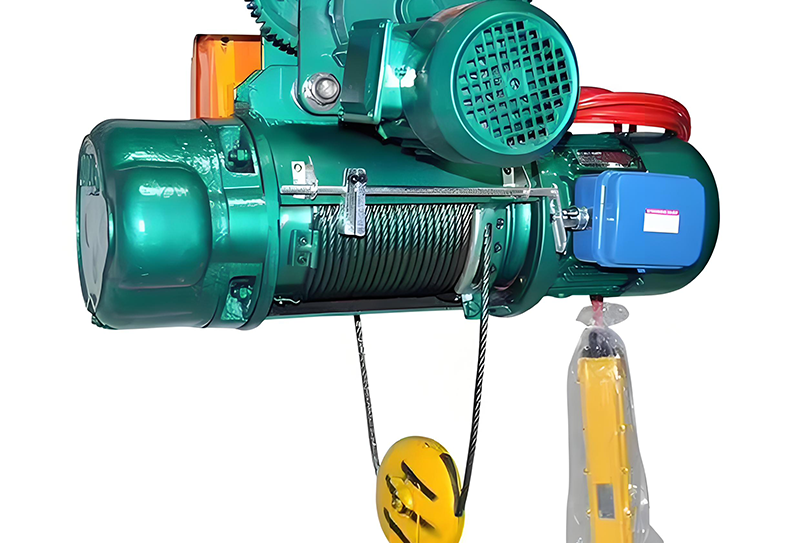
Introduction
An electric hoist looks like a small part of the lifting picture — one motor, one drum or sprocket, one hook. But it is the component that actually does the lifting. The crane structure carries and positions it; the hoist raises and lowers the load. Choose the wrong one and you inherit a hoist that overheats on a busy line, a chain unit stretched past its lift height, or an explosion risk in a room full of flammable dust. Choose the right one and it lifts quietly, reliably, and cheaply for years.
For procurement managers, plant engineers, and facility managers, the choice comes down to a few clear questions: how heavy is the load, how high is the lift, how hard will the hoist work, and what kind of environment will it live in. Get those right and the rest of the specification follows.
This guide maps the main electric hoist types side by side — wire rope, electric chain, explosion-proof, and mini/portable — with their capacity ranges, lift heights, duty classes, and ideal applications. This is article 1 of 3 in the Weiyuan Crane electric hoist series. Here is what you will learn:
- What an electric hoist is and how it differs from a manual hoist
- The main hoist types and where each one fits
- A practical framework to match a hoist to your load, lift, duty, and environment
What an Electric Hoist Is
An electric hoist is a powered lifting device that raises and lowers a load using an electric motor. The motor drives a drum that winds wire rope, or a sprocket that moves a load chain, and a brake holds the load in place whenever the motor stops. A control — usually a pendant or a wireless remote — lets the operator lift, lower, and often traverse the load.
An electric hoist rarely works alone. It is the lifting unit mounted on the trolley of an overhead crane, a gantry crane, a jib crane, or a monorail — or fixed to a beam for straight vertical lifting. Whatever the structure, the hoist is the part that carries the rated load, so its capacity, lift height, duty class, and environmental rating decide what the whole system can safely do.
Every electric hoist answers four questions: how heavy is the load, how high must it lift, how often will it run, and where will it work? The rest of this guide sorts the types by how they answer those four questions.
Takeaway: The electric hoist is the powered heart of a lifting system. Match its capacity, lift height, duty class, and environmental rating to the job before anything else.
Electric Hoist vs Manual Hoist
Before comparing electric types, it helps to see why a powered hoist is worth the investment over a manual one. Both lift loads, but they suit very different operations.
Speed and Productivity
A manual hoist — a hand chain block or a lever hoist — is moved entirely by operator effort. Every centimetre of lift is a pull on a hand chain, which is slow and tiring. An electric hoist lifts at a steady powered speed, so a lift that takes a minute by hand happens in seconds. Across a shift of repeated lifts, that difference is measured in real throughput and lower labor cost.
Effort and Ergonomics
Manual lifting strains the operator, and the strain grows with the load and the number of cycles. An electric hoist removes the physical effort entirely — the operator guides the load with a button rather than hauling it by hand. On any station with frequent or heavy lifts, that protects your people and keeps them productive across the whole shift.
Duty and Capacity
Manual hoists suit light, occasional lifting — a maintenance lift a few times a week, or a low-capacity job where power is unavailable. Electric hoists cover the whole working range, from light repetitive station work to heavy, high-cycle production lifting that a manual hoist could never sustain.
When a Manual Hoist Still Makes Sense
A manual hoist remains the right tool for genuinely occasional, light lifting, for locations with no power supply, and for a low-cost backup. Beyond that, once lifts become frequent, heavy, or part of a production cycle, an electric hoist pays for itself in speed, reduced labor, and reduced injury risk.
Takeaway: Choose an electric hoist for frequent, heavy, or production lifting where speed, ergonomics, and uptime matter; keep manual hoists for light, occasional, or power-free work.
Type 1: Wire Rope Electric Hoists
A wire rope electric hoist lifts with steel wire rope wound onto a grooved drum. It is the heavy-duty workhorse of the electric hoist family, built for higher capacities, longer lifts, and harder duty than a chain hoist can handle.
Key Specifications
- Capacity range: commonly 1 to 80 tonnes, with larger custom units well beyond that.
- Lift height: long lifts are a core strength — the drum accommodates significant rope length, so lifts of tens of metres are routine.
- Duty class: available in higher duty classes (FEM 2m, 3m and above) for frequent, heavy cycling.
- Configurations: fixed mount for straight lifting, or a trolley-mounted unit that traverses a beam or crane bridge.
Why It Matters
The wire rope drum is what gives this hoist its edge on heavy, high, and high-cycle work. A large drum handles long lift heights with ease and tolerates continuous duty better than chain, so the wire rope hoist is the natural fit wherever loads are substantial or the lifting is relentless. It is the standard lifting unit on double girder overhead cranes and heavy gantry cranes.
Ideal applications: steel fabrication, heavy machining, foundries, power plants, warehousing with heavy loads, and any operation lifting several tonnes on a demanding daily cycle.
Takeaway: Wire rope electric hoists carry the heavy, high, and high-cycle work — the default choice above a few tonnes or wherever lifts are long and duty is hard.
Type 2: Electric Chain Hoists
An electric chain hoist lifts with a load chain that runs over a pocketed sprocket (the lift wheel), with the slack chain gathering in a container below. It is the compact, economical unit that dominates the light-to-moderate range.
Key Specifications
- Capacity range: commonly 0.125 to 5 tonnes, with some models to around 10 tonnes.
- Lift height: best suited to shorter lifts, since chain is heavier per metre than rope and the chain container limits practical length.
- Duty class: covers light to moderate duty comfortably, with heavy-duty models for frequent cycling in the lower capacity range.
- Configurations: fixed hook mount, or a plain, geared, or motorized trolley for traversing a beam.
Why It Matters
For the loads most facilities handle day to day, the electric chain hoist is the practical answer. It is lighter, cheaper, and simpler to maintain than a wire rope unit, and its compact body fits tight, low-headroom spaces. It is the standard lifting unit on single girder overhead cranes, jib cranes, and KBK systems, and the workhorse of workshop and assembly-line lifting.
Ideal applications: general manufacturing, assembly lines, workshops, maintenance bays, warehousing, and any station lifting light-to-moderate loads over a modest height.
Takeaway: Electric chain hoists own the light-to-moderate range — compact, economical, and ideal for shorter lifts on single girder cranes, jibs, and workstations.
Type 3: Explosion-Proof Electric Hoists
An explosion-proof electric hoist is a wire rope or chain hoist engineered to operate safely in atmospheres where flammable gases, vapors, or dust may be present. It is not a separate lifting technology — it is a hoist built so that it cannot become the source of ignition.
Key Specifications
- Capacity range: available across the chain and wire rope ranges to suit the application.
- Protection features: spark-resistant components, sealed and flameproof motor and electrical enclosures, low-spark chain or rope contact materials, and controlled surface temperatures.
- Classification: matched to the hazardous-area zone and gas or dust group of the site, per the applicable explosion-protection standard (such as ATEX or IECEx).
Why It Matters
In a classified hazardous area, a standard electric hoist is a serious ignition risk — a single spark from a contactor or motor can trigger an explosion. An explosion-proof hoist removes that risk through spark-resistant design and sealed enclosures, making powered lifting possible where it would otherwise be unsafe or illegal. The critical point for procurement is that the hoist must be matched to the specific zone classification of the area, which a competent supplier will confirm from your site’s hazardous-area assessment.
Ideal applications: chemical and petrochemical plants, paint and coating lines, oil and gas facilities, grain and flour handling, and mining operations where flammable dust or gas is present.
Takeaway: Explosion-proof electric hoists make powered lifting safe in flammable atmospheres. Confirm the area’s zone classification early, because it dictates the entire specification.
Type 4: Mini / Portable Electric Hoists
A mini or portable electric hoist is a compact, lightweight unit for light lifting where a full-size hoist is unnecessary or impractical. It clamps or hooks to a beam, a scaffold, or a portable stand and lifts modest loads with minimal setup.
Key Specifications
- Capacity range: commonly 100 to 1,000 kg (0.1 to 1 tonne), often with a doubling pulley to extend the range.
- Lift height: modest, suited to short lifts.
- Power supply: frequently single-phase, so it runs from a standard supply where three-phase is unavailable.
- Configurations: fixed bracket mount, or paired with a portable support stand for relocatable lifting.
Why It Matters
The mini hoist trades capacity and duty for portability and simplicity. Where a job needs occasional light lifting — a maintenance task, a small workshop, a temporary site, or a spot with only single-phase power — a mini hoist delivers powered lifting without the cost or installation of a full system. It is not built for heavy, continuous production work, but for its niche it is the most practical, lowest-cost powered option.
Ideal applications: small workshops, maintenance and repair tasks, light warehousing, temporary or mobile lifting points, and installations limited to single-phase power.
Takeaway: Mini and portable electric hoists deliver low-cost powered lifting for light, occasional jobs — including single-phase and temporary sites — where a full hoist would be overkill.
Comparing the Electric Hoist Types at a Glance
Use this quick comparison to narrow your options, then confirm the detail against your real loads, lift height, and environment.
| Type | Typical capacity | Lift height | Duty | Best for |
|---|---|---|---|---|
| Wire rope electric hoist | 1–80 t | Long | Moderate to heavy | Heavy, high, high-cycle lifting |
| Electric chain hoist | 0.125–10 t | Short to moderate | Light to moderate | Workshops, assembly, single girder cranes, jibs |
| Explosion-proof hoist | Full range | Per application | Per application | Flammable gas or dust atmospheres |
| Mini / portable hoist | 0.1–1 t | Short | Light, occasional | Small, temporary, or single-phase sites |
How to Read the Table
Start with capacity to eliminate any type that cannot carry your load. Then use lift height and duty to sort the rest: long lifts and heavy cycling point to wire rope, shorter lifts at moderate duty point to chain, and light occasional work points to a mini hoist. Finally, let the environment override everything — a flammable atmosphere requires an explosion-proof hoist regardless of the other factors.
Takeaway: Capacity narrows the field, lift height and duty sort the survivors, and a hazardous environment overrides the choice toward an explosion-proof unit.
A Practical Selection Framework
Here is a step-by-step way to reach the right electric hoist without guesswork. Work through these five factors in order, and every quote you request becomes accurate and comparable.
Step 1: Weigh the Load (Including Rigging)
Your required capacity is not your heaviest load alone. It is that load plus everything hanging below the hook — the spreader beam, lifting frame, slings, and shackles — plus a safety margin. A hoist sized to the bare load is quietly overloaded the moment you attach a lifting frame. Add it all up, and leave headroom if your loads may grow.
Step 2: Confirm the Lift Height
Measure the true vertical distance the hook must travel, from its lowest to its highest point. This is where wire rope and chain diverge: long lifts favor a wire rope hoist, while a chain hoist suits shorter heights. Confirm the height against your real working range, not a rough guess, because a hoist short on lift is an expensive mistake to correct.
Step 3: Match the Duty Class
This is the most under-appreciated factor in a hoist specification. Capacity tells you how heavy a single lift can be; duty class tells you how many lifts the hoist survives over its life. Duty is expressed in FEM or ISO groups (such as FEM 1Am, 2m, 3m, or ISO M4, M5, M6) that reflect lifts per hour, typical load, and running hours. Under-classify and the hoist overheats and fails early; over-classify and you pay for durability you never use. Specify the class from your real cycle count.
Step 4: Assess the Environment
The environment can override every other factor:
- Clean, dry indoor: a standard hoist with an IP54 rating is fine.
- Dusty, humid, or washdown: step up to IP55 or IP65 and add corrosion protection.
- Outdoor: higher IP rating, corrosion-resistant finishes, and weather protection.
- Flammable gas or dust present: an explosion-proof hoist matched to the zone classification, without exception.
Step 5: Confirm the Power Supply and Mounting
Check whether your site offers three-phase or only single-phase power — mini hoists often run single-phase, while larger units need three-phase. Then confirm how the hoist mounts: fixed for straight lifting, or on a plain, geared, or motorized trolley to traverse a beam or crane. Turning this into a full, comparable specification is covered in our electric hoist buying guide.
Takeaway: Load with rigging, lift height, duty class, environment, then power and mounting — work through them in order and the right hoist emerges from your real needs.
Common Mistakes When Choosing an Electric Hoist
Even experienced buyers repeat a handful of costly errors. Knowing them upfront is the cheapest insurance in this process.
- Sizing on load alone. Forgetting the spreader beam, slings, and shackles quietly overloads the hoist on every lift. Fix: size to the load plus all rigging plus a margin.
- Ignoring the duty class. A hoist correct for capacity but under-classified for its cycle rate overheats and fails years early. Fix: specify the FEM or ISO class from your real duty cycle.
- Underestimating the lift height. Choosing a chain hoist for a long lift, or a drum too small for the height needed. Fix: measure the true lift height and match the hoist type to it.
- Overlooking the environment. Fitting a standard hoist in a dusty, wet, or flammable area, inviting corrosion or an ignition risk. Fix: match the IP rating, and specify explosion-proof where the area is classified.
- Missing the power supply. Specifying a three-phase hoist for a single-phase site, or the reverse. Fix: confirm the available supply before ordering.
- Buying on price alone. The cheapest hoist often hides a lighter duty class and hard-to-source spares that surface as downtime. Fix: weigh reliability and total cost, not just the sticker price.
For getting the chosen hoist installed and commissioned correctly, see our electric hoist installation guide.
Takeaway: Most selection mistakes trace back to forgotten rigging, an ignored duty class, a mismatched lift height, or an overlooked environment. Close those gaps and you avoid the errors that cost the most.
Frequently Asked Questions
Q: What is an electric hoist and how does it work?
An electric hoist is a powered lifting device that raises and lowers a load using an electric motor. The motor drives either a drum that winds steel wire rope or a sprocket that moves a load chain, and a brake holds the load whenever the motor stops. An operator controls it with a pendant or wireless remote. The hoist is usually mounted on the trolley of an overhead, gantry, or jib crane, or fixed to a beam for straight vertical lifting, and it is the component that actually carries the rated load.
Q: What is the difference between a wire rope and an electric chain hoist?
A wire rope hoist lifts with steel rope on a grooved drum and handles heavier loads (commonly 1 to 80 tonnes), longer lifts, and harder duty — the workhorse for heavy, high, high-cycle work. An electric chain hoist lifts with a load chain over a sprocket and suits lighter loads (commonly 0.125 to 5 tonnes), shorter lifts, and light-to-moderate duty, while being more compact and economical. Choose wire rope for heavy or long lifts and chain for lighter loads over modest heights in tighter spaces.
Q: How do I choose the right electric hoist capacity?
Start with your heaviest single load, then add the weight of everything below the hook — the spreader beam or lifting frame, slings, and shackles — plus a safety margin. That total, not the bare load, is your required rated capacity. If your loads may grow, size up now, because a hoist selected at the very top of its range leaves no headroom. Forgotten rigging weight is the most common reason a hoist ends up quietly overloaded on every lift.
Q: Why does duty class matter more than capacity?
Capacity tells you how heavy a single lift can be, but duty class tells you how many lifts the hoist survives over its life. Two hoists with the same capacity but different duty classes are built to completely different internal standards. Under-classifying causes the motor and brake to overheat and fail early, often within a year or two of heavy use, while over-classifying means paying for durability you never use. Specify the FEM or ISO duty class from a real estimate of your lifts per hour, typical load, and daily running hours.
Q: When do I need an explosion-proof electric hoist?
You need an explosion-proof hoist whenever the hoist will operate in an area where flammable gases, vapors, or combustible dust may be present — such as chemical plants, paint lines, oil and gas facilities, grain handling, and certain mining operations. In these classified hazardous areas, a standard hoist is a serious ignition risk, because a single spark can trigger an explosion. An explosion-proof hoist uses spark-resistant components and sealed enclosures, and it must be matched to the specific zone classification and gas or dust group of your site.
Q: What is a mini or portable electric hoist used for?
A mini or portable electric hoist is a compact, lightweight unit for light, occasional lifting, commonly rated 100 to 1,000 kg. It clamps or hooks to a beam, scaffold, or portable stand and often runs from a single-phase supply, making it ideal where three-phase power is unavailable. It suits small workshops, maintenance and repair tasks, light warehousing, and temporary or mobile lifting points. It is not built for heavy, continuous production work, but for light and relocatable jobs it delivers powered lifting at the lowest cost.
Q: Can an electric hoist run on single-phase power?
Yes — many mini and lower-capacity electric hoists are designed to run on a standard single-phase supply, which is why they suit small workshops and sites without three-phase power. Larger wire rope and higher-capacity chain hoists generally require a three-phase supply to run their more powerful motors efficiently. Always confirm the available power supply at your site before ordering, and match the hoist’s electrical rating — voltage, phase, and frequency — to it, so the motor runs correctly and safely.
Q: Which electric hoist is best for an overhead crane?
It depends on the crane and the load. A single girder overhead crane typically uses an electric chain hoist or a compact wire rope hoist for light-to-moderate loads, while a double girder crane uses a top-mounted wire rope hoist for heavy loads and long lifts. The hoist’s capacity, lift height, and duty class must match both the crane and the work it does. Because the crane and hoist are a single system, specify them together rather than choosing the hoist in isolation.