


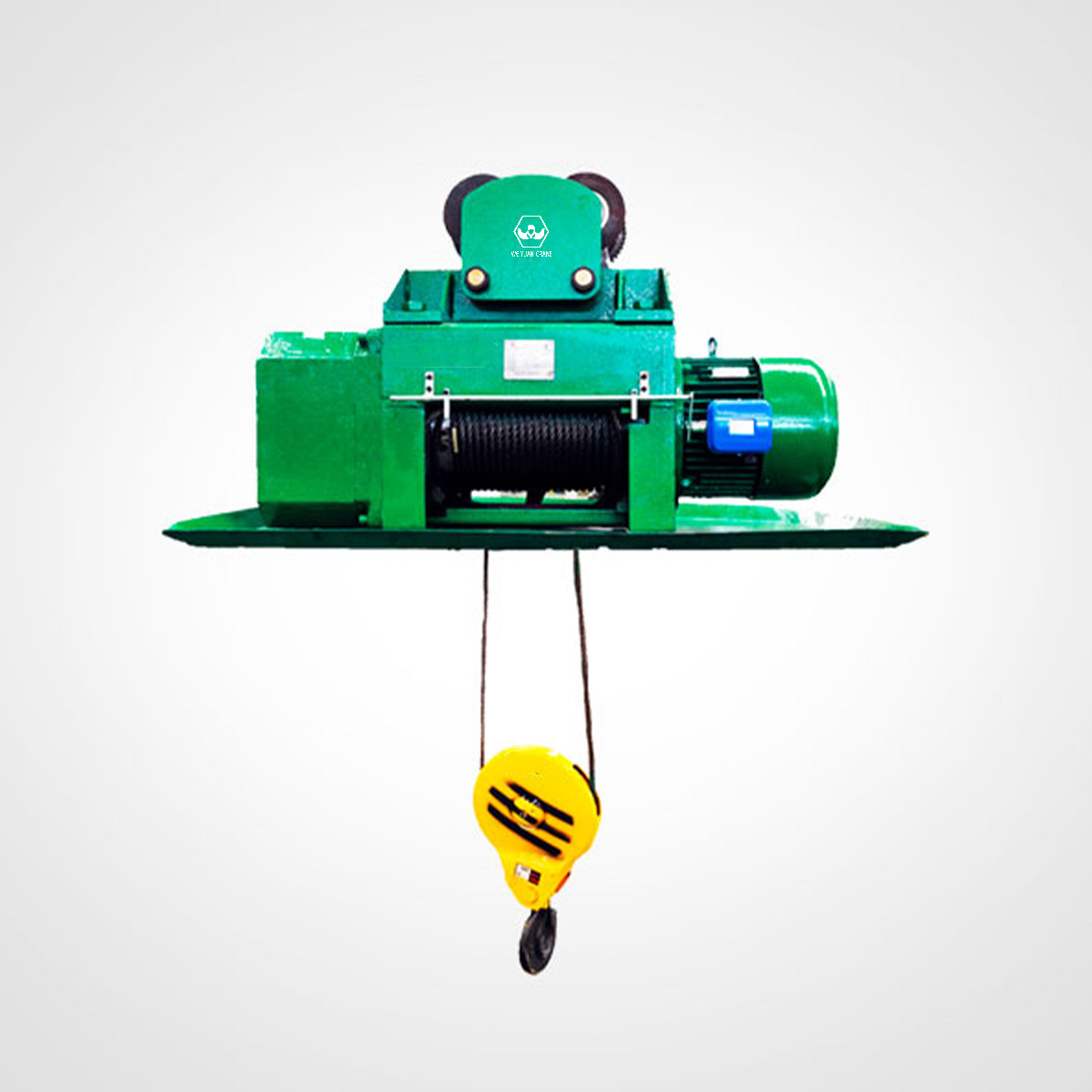
Universal electric hoist
Electric Hoists | Boost Your Lifting Efficiency & Safety Standards
Structure replicated in every article below: Intro → Product Description → Key Features & Advantages → Technical Specifications (table) → Customization Options → Applications → Safety & Compliance → Case Study → Installation & Support → Pricing & Quotation → Delivery Cycle → FAQ → Closing/CTA
Spokesperson quotes, exact figures in the case studies, and pricing are placeholders — replace [ ] items with real numbers/contacts before publishing. Product images and the embedded product-card links should point to the matching product pages on chengduweiyuan.com.
Single-Girder Gantry Crane — Compact Lifting Power for Space-Constrained Yards
Outdoor material handling doesn’t always come with the luxury of an existing building to hang a crane from. For open yards, small workshops, and sites without overhead steel to support a bridge crane, a single-girder gantry crane is often the only practical way to add mechanized lifting — without the cost and lead time of new building structure.
Product Description
A single-girder gantry crane is a self-supporting lifting structure: a single main girder runs between two A-frame or box-column legs, which travel on rails (or, for portable versions, wheels) at ground level. Unlike a bridge crane, it needs no supporting runway beams built into a building — the crane brings its own structure with it. This makes it the standard choice for outdoor stockyards, precast concrete production, small fabrication shops, and any site where a permanent building isn’t available or cost-justified.
Key Features and Advantages
- No building dependency — legs and rails carry the full load, so the crane can be installed on open ground or a simple concrete strip foundation.
- Lower installation cost than an equivalent-capacity bridge crane, since no structural steel building upgrade is required.
- Flexible travel — rail-mounted versions cover long yard runs; rubber-tyred versions can reposition across a site without fixed rail infrastructure.
- Weatherproof design — motors, control panels, and electrical components rated for continuous outdoor duty.
- Modular capacity range — from light-duty 3–5 tonne units for small workshops up to 32-tonne+ units for steel yards and precast production.
Technical Specifications
| Parameter | Range |
|---|---|
| Lifting capacity | 3–32 tonnes (standard); higher on request |
| Span | 9–35 metres |
| Lifting height | Up to 18 metres |
| Duty class | A3–A6 (light to heavy duty) |
| Power supply | 380V/50Hz (customizable for other voltages) |
| Travel speed | 20–40 m/min |
| Operating temperature | -20°C to +40°C standard; extended range available |
Customization Options
Every gantry crane leaving Weiyuan’s Chengdu plant is engineered to the buyer’s site, not pulled from a fixed catalogue. Customization typically covers: span and lifting height matched to the actual yard or building layout; rail-mounted or rubber-tyred travel depending on site flexibility needs; single or double cantilever ends for extended coverage beyond the leg footprint; explosion-proof electrical packages for hazardous-area sites; and corrosion-resistant coatings for coastal or high-humidity environments.
Applications
Single-girder gantry cranes are widely used across shipyard component yards, steel and metals stockyards, precast concrete production, general-cargo port terminals, railway component manufacturing, and outdoor maintenance workshops — anywhere heavy items need mechanized handling without a dedicated building.
Safety & Compliance
Every crane includes overload limiters, anti-collision end stops, wind-speed alarms for outdoor rail-mounted units, and emergency stop systems on both the pendant/radio control and the electrical cabinet. Units are designed to meet international structural and electrical safety standards, with documentation provided for import certification in the buyer’s country.
Case Study: Equipping a New Precast Yard in Six Months
A precast concrete producer expanding into infrastructure segment production needed six cranes of varying capacity across mould handling, curing storage, and truck loading — with the entire yard operational within six months to meet a contracted delivery date. Weiyuan’s engineering team worked directly from the customer’s yard layout to specify each crane individually rather than proposing a single generic design, and phased fabrication so the first cranes arrived while later units were still in production. All six cranes were delivered and commissioned within the required window, and the yard reached full production capacity on schedule.
Installation and Support
Weiyuan provides installation supervision, commissioning, and load testing either through a dispatched engineer or remote-guided support for customers with local installation contractors. Operator and maintenance training is included, along with a standard spare-parts package sized to the crane’s duty class.
Pricing and Quotation
Pricing depends on capacity, span, travel configuration, and site-specific customization. Weiyuan provides itemized quotations rather than flat catalogue pricing, so buyers can see exactly what drives the cost of their specific configuration. [Get a Quote →]
Delivery Cycle
Standard-configuration cranes: approximately 30–45 days from order confirmation. Custom or larger-span units: approximately 60–90 days, depending on capacity and quantity.
FAQ
Can a gantry crane be relocated later if our yard layout changes? Rail-mounted units can be relocated with new rail installation; rubber-tyred versions are designed for repositioning without rail infrastructure at all.
Do you supply cranes for hazardous or explosive-atmosphere sites? Yes — explosion-proof motor, enclosure, and control-panel packages are available as a customization option, certified to the buyer’s required hazard-zone classification.
What’s included in the standard warranty? Structural components and drive systems are covered under Weiyuan’s standard warranty terms; specific duration and coverage should be confirmed at quotation stage.