


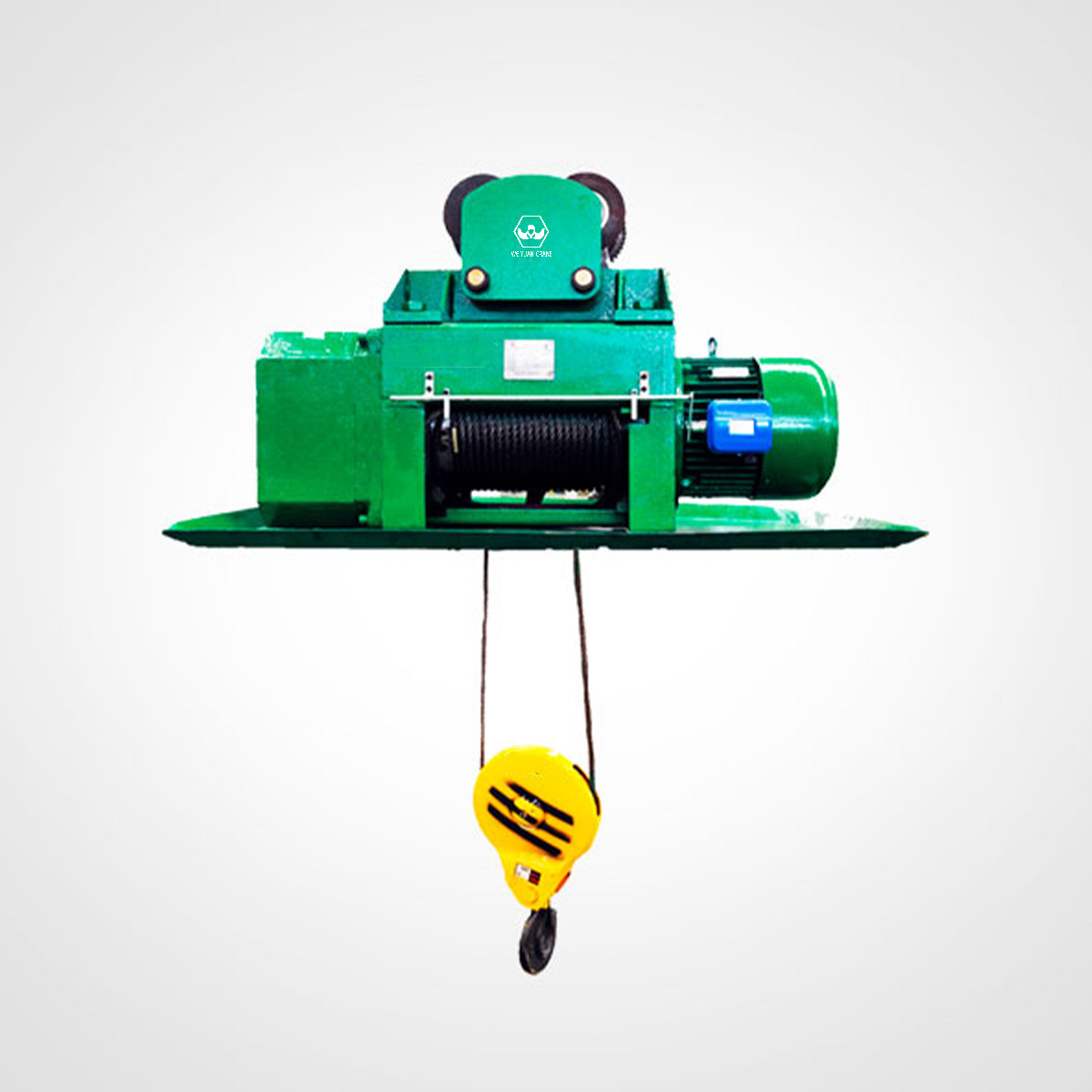
Universal electric hoist
Heavy-Duty Electric Hoists | Boost Your Lifting Efficiency & Safety Standards
All five articles below are about electric hoists — but each targets a different product/keyword angle so they don’t compete with each other or with the existing reference article for the same search terms:
| # | Article | Primary SEO target |
|---|---|---|
| 1 | Steel Wire Rope Electric Hoist | “wire rope electric hoist”, heavy-duty industrial lifting |
| 2 | European-Style Electric Chain Hoist | “European style electric chain hoist”, compact/precision lifting |
| 3 | Chinese-Standard Electric Chain Hoist | “Chinese standard electric hoist”, budget/small workshop segment |
| 4 | Explosion-Proof Electric Hoist | “explosion proof hoist”, hazardous-area/petrochemical segment |
| 5 | Low-Headroom Monorail Electric Hoist | “low headroom hoist”, height-constrained building segment |
Structure replicated in every article (matching the reference page): Intro → Product Description → Key Features & Advantages → Technical Specifications (table) → Customization Options → Applications → Safety & Compliance → Case Study → Installation & Support → Pricing & Quotation → Delivery Cycle → FAQ → Closing/CTA.
Figures, case-study outcomes, and pricing language are placeholders — replace with real specs and verified results before publishing.
Article 1: Steel Wire Rope Electric Hoist — Durable Lifting Power for Continuous Industrial Duty
For facilities running heavy loads on a near-continuous cycle, a steel wire rope electric hoist offers a level of durability and load capacity that chain hoists aren’t designed to match.
Product Description
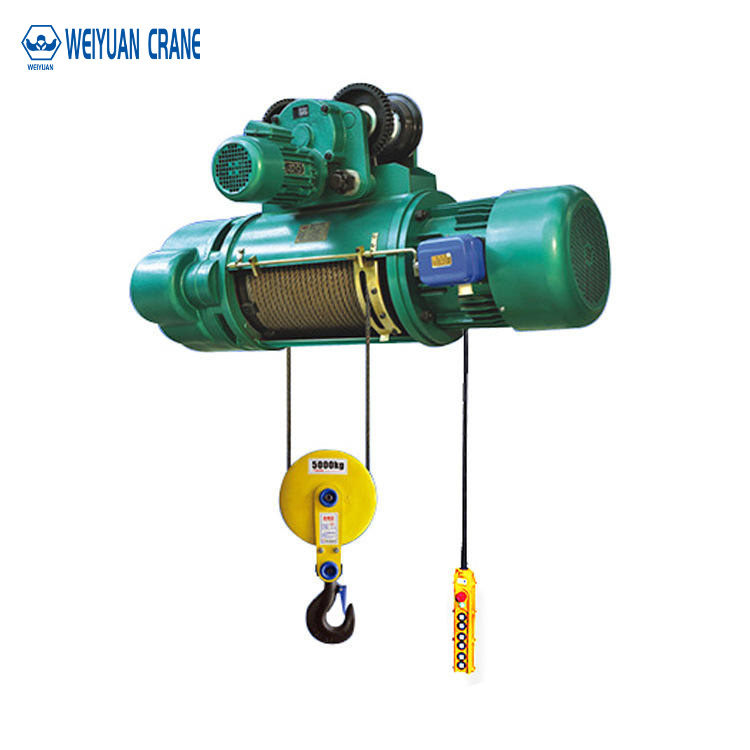
A steel wire rope electric hoist uses a motor-driven drum to wind steel wire rope, providing lifting capacity typically ranging from 1 to 50+ tonnes. Compared to chain hoists, wire rope units generally offer higher capacity, faster lifting speeds, and better suitability for continuous, high-cycle industrial operation — making them the standard hoist choice for bridge and gantry cranes in heavy-duty applications.
Key Features and Advantages
- High capacity range, from light-industrial 1-tonne units up to 50+ tonnes for heavy fabrication and metallurgy use.
- Fast hoisting speeds relative to chain hoists, reducing cycle time on repetitive lifts.
- Dual-brake systems on higher-capacity models for redundant load-holding safety.
- Compact drum-and-motor design, minimizing headroom loss compared to older hoist designs.
- Variable-speed control options for precision positioning on sensitive or high-value loads.
Technical Specifications
| Parameter | Range |
|---|---|
| Lifting capacity | 1–50+ tonnes |
| Lifting height | Up to 30 metres (standard); greater on request |
| Hoisting speed | 0.8–8 m/min (variable-speed options) |
| Power supply | 380V/50Hz (customizable) |
| Duty class | A3–A8 depending on model |
| Wire rope | Galvanized, multi-strand, safety-factor rated |
Customization Options
Wire rope hoists can be specified with low-headroom trolley configurations for height-constrained buildings, explosion-proof motor and control packages for hazardous environments, dual-hoist (main and auxiliary) configurations for combined heavy and precision lifting, and corrosion-resistant finishes for coastal or high-humidity sites.
Applications
Steel wire rope electric hoists are the standard hoisting mechanism for bridge and gantry cranes across steel mills, shipyards, power plants, heavy-equipment manufacturing, and general industrial facilities running continuous or high-cycle lifting operations.
Safety & Compliance
Standard features include dual-brake systems on higher-capacity models, overload limiters, upper and lower travel limit switches, and wire-rope tension monitoring on select models. Units are designed to meet international mechanical and electrical safety standards, with certification documentation available for cross-border project use.
Case Study: Upgrading Hoist Reliability at a Rolling Mill
A steel rolling mill operating multiple overhead cranes on a near-continuous three-shift cycle was experiencing increasing downtime from an ageing hoist fleet nearing the end of its service life. Weiyuan supplied replacement wire rope hoists rated to match the mill’s existing crane girders, with dual-brake systems specified for the coil-handling units given their continuous duty cycle. The mill reported improved crane availability following the hoist replacement, without requiring a broader crane-structure overhaul.
Installation and Support
Hoists can be supplied as standalone replacement units for existing cranes or integrated into new bridge or gantry crane orders. Weiyuan provides installation guidance, load testing, and a spare-parts package matched to the hoist’s duty class.
Pricing and Quotation
Pricing scales primarily with capacity, lifting height, and duty class, with additional cost for explosion-proof or dual-hoist configurations. Weiyuan provides itemized quotations for both standalone hoist orders and hoists supplied as part of a new crane. [Get a Quote →]
Delivery Cycle
Standard capacity hoists (up to 20 tonnes): approximately 15–25 days. Heavy-capacity or custom configurations: approximately 30–45 days.
FAQ
Can a wire rope hoist replace a chain hoist on an existing crane? In many cases yes, provided the existing girder and headroom can accommodate the wire rope hoist’s dimensions and duty rating — Weiyuan’s team can confirm compatibility from your crane’s specifications.
What duty class is needed for three-shift continuous operation? Continuous multi-shift operation typically calls for A7–A8 duty class hoists, built for sustained high-cycle use.
Do you offer hoists rated for hazardous-area operation? Yes, explosion-proof motor and control packages are available, certified to the required hazardous-area classification.