


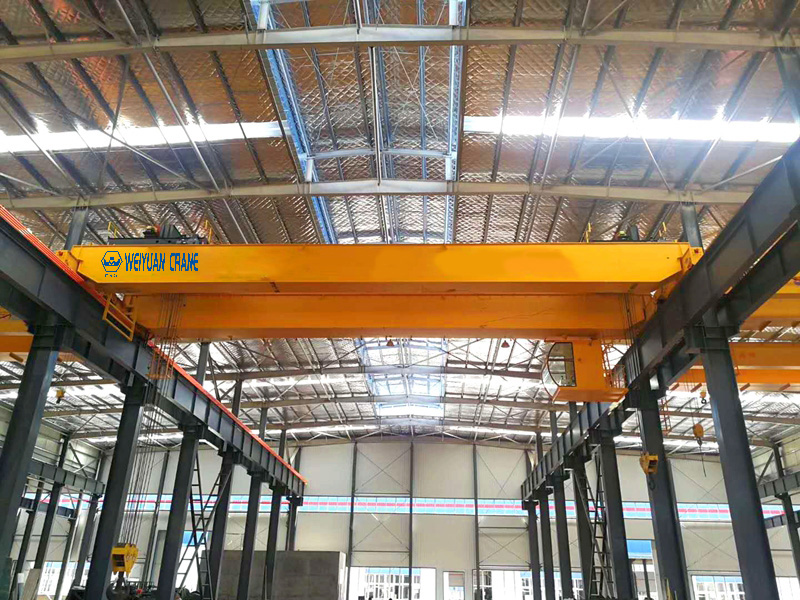
General purpose overhead crane
Underhung Overhead Crane for Sale: Retrofit-Friendly Lifting Using Existing Building Steel
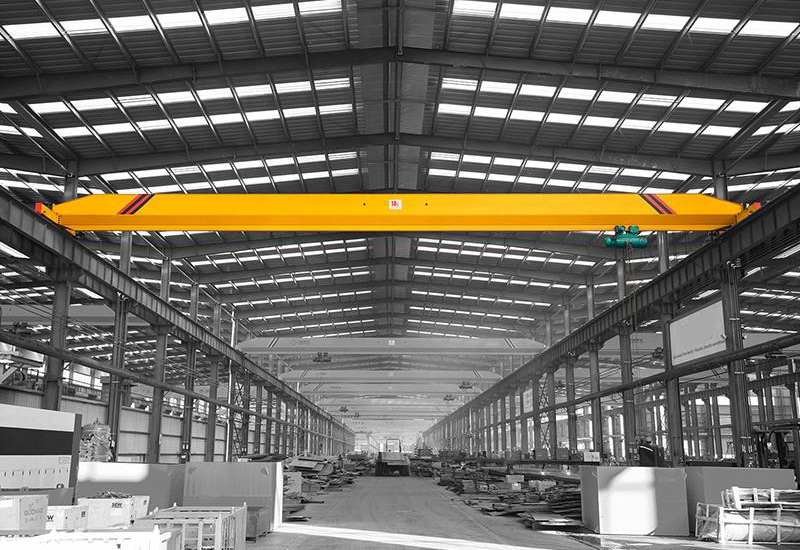
An underhung overhead crane solves a specific problem that a top-running crane can’t: a building with usable existing steel that wasn’t designed for a top-running runway. Rather than requiring new, runway-rated beams engineered for the crane to ride on top of, an underhung crane’s end trucks hang from and travel along the bottom flange of existing structural steel — often the difference between a straightforward retrofit and a major structural project.
Weiyuan’s underhung overhead crane range covers 0.5 to 10 tons, engineered to hang from the customer’s existing building steel wherever that steel has adequate load capacity.
What Makes an Underhung Overhead Crane Different
Most overhead cranes — also called bridge cranes or EOT cranes — run top-running, with end trucks riding on top of dedicated runway beams. An underhung overhead crane instead hangs its end trucks from the bottom flange of existing structural steel, whether that’s a building’s roof framing or a dedicated support beam not specifically engineered as a runway.
This matters most in retrofit projects: a building with adequate steel in the right locations, but no purpose-built runway, can often support an underhung crane without the cost and disruption of adding new top-running runway beams. The trade-off is capacity — underhung configurations generally top out lower than an equivalent top-running single girder overhead crane, since the connection to the supporting steel is a different, generally lighter-duty structural detail.
Underhung Overhead Crane Configurations
Light-Duty Underhung Crane
The most common underhung configuration, sized for general workshop and light manufacturing use.
- Capacity: 0.5–3 tons
- Span: 6–15 meters
- Best for: small workshops, maintenance bays, light assembly retrofits
Medium-Duty Underhung Crane
For facilities needing more capacity than a light-duty unit while still avoiding a full runway construction project.
- Capacity: 3–10 tons
- Span: 9–20 meters
- Best for: general manufacturing retrofits with adequately rated existing steel
Monorail vs. Bridge-Style Underhung Systems
An underhung system can be a simple monorail — a single track along one beam, covering a line — or a full underhung bridge crane spanning two parallel support beams, covering a rectangular area, similar in coverage shape to a top-running crane but using the underhung connection method throughout.
Featured Product: Weiyuan UH-Series Underhung Overhead Crane
[Product image placeholder]
The Weiyuan UH-Series is available from 0.5 to 10 tons, in both monorail and full bridge-style underhung configurations, engineered around the customer’s existing building steel and its confirmed load rating.
[View Product / Get Quote →]
How to Choose the Right Underhung Overhead Crane
- Get your existing steel structurally assessed first — underhung crane feasibility depends entirely on whether your existing beams can carry the additional load at the bottom-flange connection points.
- Confirm your capacity needs fall within underhung range — if your load exceeds what underhung construction can support, a top-running single or double girder overhead crane, or new runway construction, may be necessary instead.
- Decide between monorail and full bridge-style coverage, based on whether your work area is a line or a full rectangular zone.
- Measure your actual span and headroom against the underhung system’s specification, since the underhung connection itself consumes some vertical space.
- Confirm your building steel’s condition, not just its rated capacity — older steel may need inspection before being approved for new underhung crane loads.
Red Flags When Shopping for an Underhung Overhead Crane
- No structural assessment of the existing steel before quoting — underhung crane feasibility is entirely dependent on your building’s existing structure, and skipping this step is the most common and costly mistake.
- A capacity quote that ignores the connection detail rating — the bottom-flange connection to existing steel is often the limiting factor, not the crane itself.
- No monorail vs. bridge-style discussion — these serve different coverage needs, and a supplier should ask about your actual work area shape before recommending one.
- Assuming any existing steel is automatically adequate — age, corrosion, and undocumented modifications can all affect whether existing steel is actually suitable.
Frequently Asked Questions
Q: What’s the difference between an underhung overhead crane and a top-running crane? A top-running overhead crane’s end trucks ride on top of dedicated runway beams. An underhung overhead crane’s end trucks hang from and travel along the bottom flange of existing structural steel, which can avoid the cost of new runway construction in retrofit projects, generally at the cost of lower achievable capacity.
Q: Can any existing building steel support an underhung crane? No — this requires a structural engineering assessment specific to your building, confirming both the steel’s overall load capacity and the suitability of its bottom flange for the crane’s connection points. Not all existing steel is suitable, regardless of how substantial it looks.
Q: What capacity can an underhung overhead crane handle? Underhung overhead cranes typically range from 0.5 to 10 tons, generally lower than an equivalent top-running single girder overhead crane, since the connection to existing steel is usually a lighter-duty structural detail than a purpose-built runway.
Q: Is an underhung crane cheaper than building a new runway for a top-running crane? Often yes, in retrofit projects where existing steel is already adequately rated — avoiding new runway beam construction is usually the main cost advantage of choosing an underhung configuration.
Q: Can an underhung crane be upgraded to a top-running system later? Generally not without significant structural work, since the two configurations use fundamentally different runway interfaces. If there’s a realistic chance you’ll need higher capacity later, this is worth evaluating before committing to an underhung system.
