


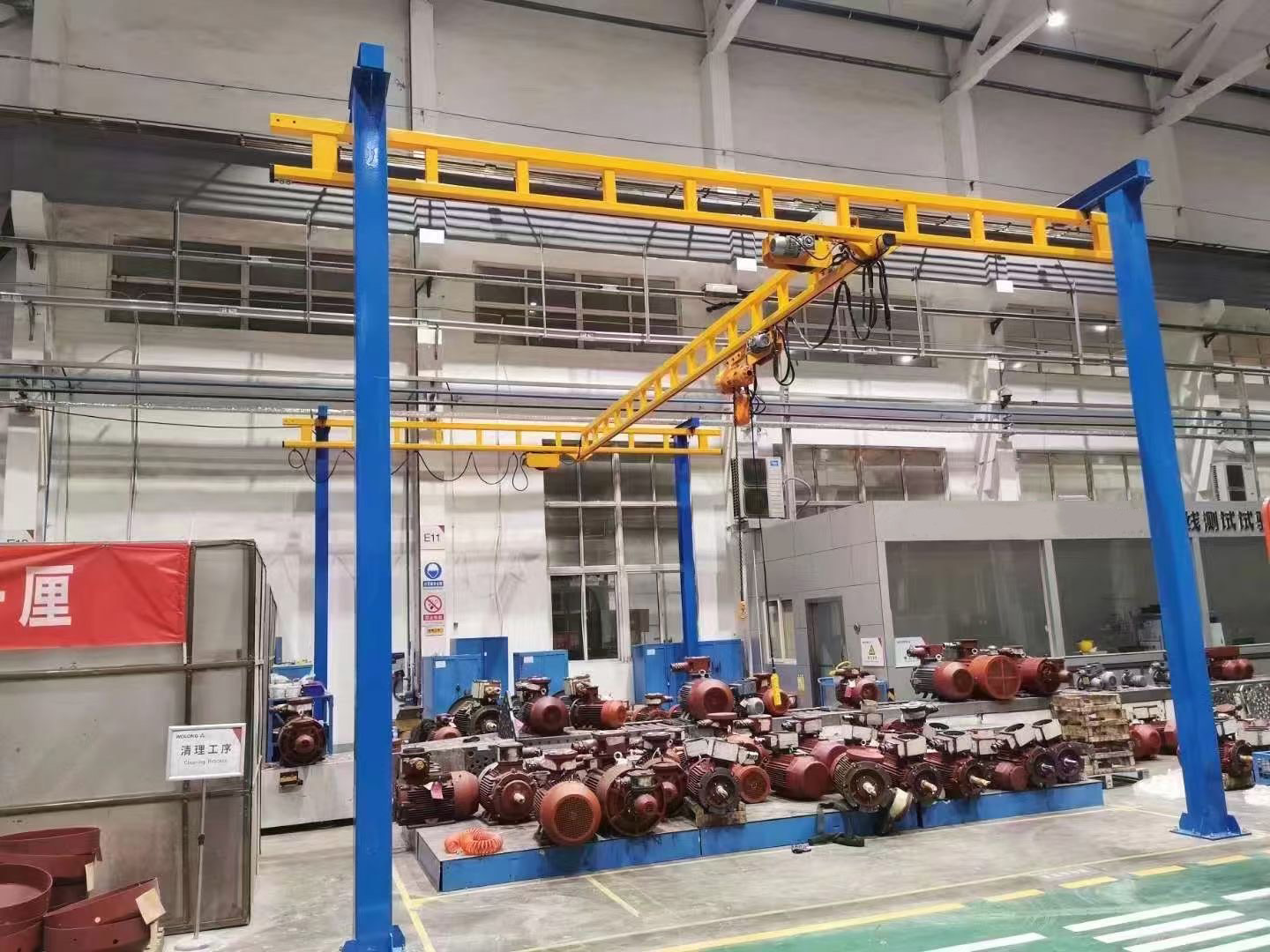
KBK light crane system
KBK Explosion-Proof Crane for Sale: Certified Light-Duty Lifting for Hazardous Areas
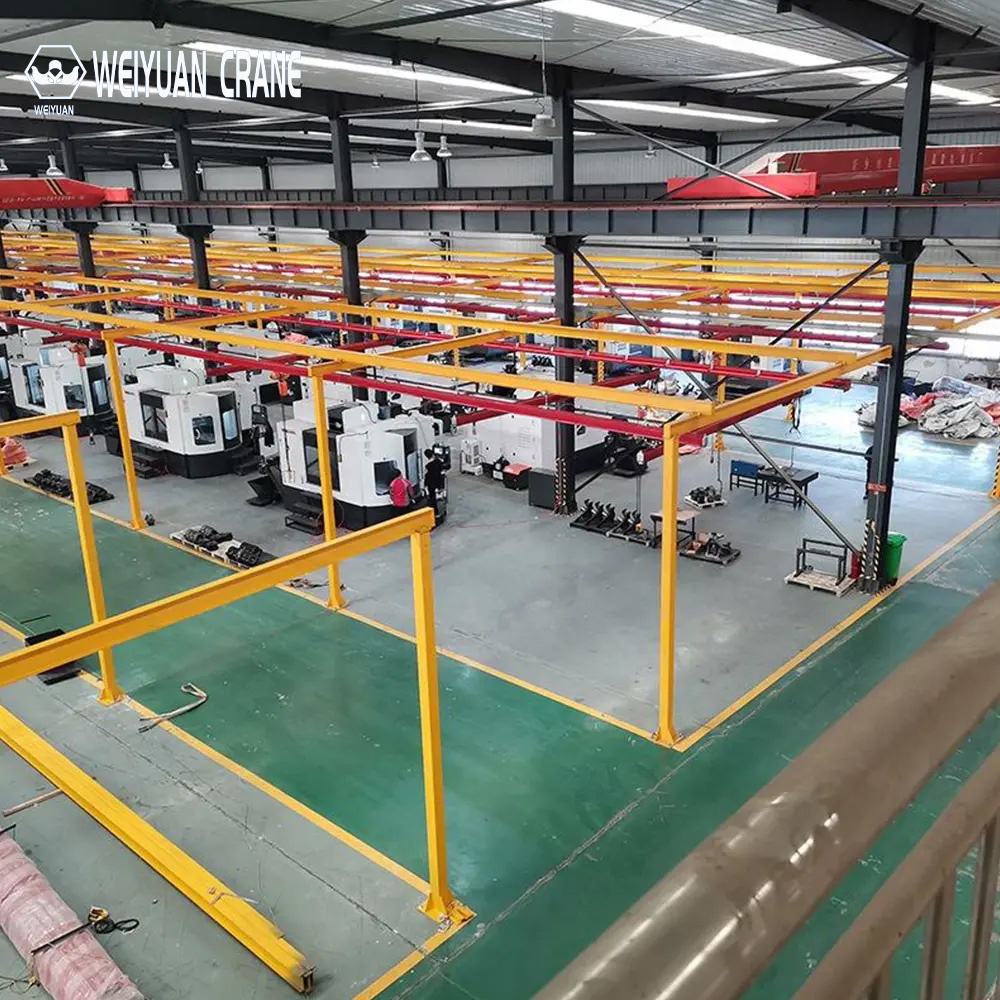
A standard KBK crane system isn’t rated for use anywhere flammable gases, vapors, or combustible dust may be present. For a light-duty workstation inside a chemical, pharmaceutical, or other classified hazardous area, a KBK explosion-proof crane is a compliance requirement, not an optional upgrade — and, as with any explosion-proof lifting equipment, specifying one without first confirming the facility’s exact zone classification is a mistake that typically surfaces during a compliance inspection, not before.
Weiyuan supplies KBK explosion-proof crane systems from 80 kg to 1 ton, in monorail, suspension, and workstation jib configurations, certified to the specific hazardous-area classification of the buyer’s facility.
What Makes a KBK Explosion-Proof Crane Different
A KBK explosion-proof crane is built around the same modular enclosed-track profile as a standard KBK monorail, suspension, or workstation jib system, but with the hoist motor, electrical enclosure, control panel, and wiring specifically designed and certified to prevent ignition of surrounding flammable atmospheres. As with explosion-proof equipment generally, certification is tied to the specific hazardous-area zone classification of the installation site, so specification starts with the facility’s own zoning documentation.
Because a KBK system’s travel and hoist controls are electrical throughout — not just at the hoist motor — every powered component on the track, bridge, or trolley needs to meet the required rating, which is why explosion-proof KBK crane specification benefits from close coordination with a facility’s safety engineering team from the start.
Series and Capacity Range
Series name: WY-KBK-EX Series | Category: KBK explosion-proof crane system, zone/gas-group certified, monorail/suspension/jib configurations
| Model | Capacity | Configuration | Typical Applications | Control | Hoist Type |
|---|---|---|---|---|---|
| WY-KBK-EX08 | 80–250 kg | Monorail or workstation jib | Pharmaceutical and fine-chemical bench lifting | Explosion-proof pendant | Explosion-proof chain hoist |
| WY-KBK-EX50 | 250–500 kg | Monorail or suspension | Chemical facility material transfer between process stages | Explosion-proof pendant/remote | Explosion-proof chain hoist |
| WY-KBK-EX10 | 0.5–1 ton | Suspension or combined modular grid | Process areas requiring full cell coverage within a zoned facility | Explosion-proof remote | Explosion-proof chain or wire rope |
Technical Parameters (Reference Range)
| Parameter | Typical Range / Description |
|---|---|
| Explosion-protection rating | Configurable to required Zone/Class and gas or dust group |
| Track profile | KBK enclosed I-beam profile, explosion-proof certified fittings |
| Duty class | M3–M5 |
| Power supply | 380V/50Hz (customizable) |
| Enclosure protection | IP65 or higher standard |
| Certification documentation | Provided for facility compliance and inspection records |
Featured Product: Weiyuan WY-KBK-EX50 Explosion-Proof Crane
[Product image placeholder]
The WY-KBK-EX50 is a 250–500 kg unit available in monorail or suspension configuration, certified to the customer’s specified zone and gas-group classification — Weiyuan’s most common explosion-proof KBK configuration for chemical facility material transfer between process stages.
[View Product / Get Quote →]
How to Choose the Right KBK Explosion-Proof Crane
- Confirm your exact zone and gas/dust group classification with your facility’s safety engineer before requesting a quote.
- Choose monorail, suspension, or workstation jib configuration using the same logic as a standard KBK system — the explosion-proof rating doesn’t change this decision.
- Size capacity to your actual heaviest lift within the zoned area, using the series table above as a reference.
- Confirm certification documentation requirements for your facility’s compliance and inspection process before the system is fabricated.
- Verify every powered component’s rating, not just the hoist motor — travel and control components need to meet the same certification.
Red Flags When Shopping for a KBK Explosion-Proof Crane
- A generic “explosion-proof” label with no zone or gas-group specification — this rating must match your facility’s actual classification, not be sold as a one-size-fits-all feature.
- Certification documentation not included with the quote — your facility’s compliance inspection will require this, and it should be part of the order, not requested afterward.
- Standard-rated travel or control components anywhere on the system — every electrical component across the track, bridge, or jib needs to meet the required rating, not just the hoist motor.
- No coordination with your safety engineering team during specification — a supplier quoting without asking for your zoning documentation is a sign the classification hasn’t actually been confirmed.
Frequently Asked Questions
Q: How do I know what explosion-protection rating I need for a KBK crane? The required rating is determined by your facility’s own hazardous-area zoning documentation — zone classification and gas or dust group — confirmed with your site’s safety engineer before requesting a quotation, the same requirement that applies to any explosion-proof lifting equipment.
Q: Is a KBK explosion-proof crane available in monorail, suspension, and workstation jib configurations? Yes — see the WY-KBK-EX series table above. Explosion-proof certification applies to the system’s electrical components and doesn’t change the underlying configuration choice, which follows the same logic as a standard KBK system.
Q: Does the explosion-proof rating reduce the KBK crane’s capacity? No — explosion-proof KBK crane systems are engineered to match the mechanical performance of their standard equivalents; the certification applies to ignition-source protection on electrical components, not the system’s capacity.
Q: Can a standard KBK crane system be retrofitted to explosion-proof specification? Generally, this requires replacing the hoist motor, enclosures, and control system rather than modifying existing standard-rated components — in most cases it’s more practical to specify a new explosion-proof system than retrofit an existing standard KBK installation.
Q: What documentation should I expect with a KBK explosion-proof crane order? Certification documentation confirming the motor, enclosure, and control-panel rating against your specified zone and gas-group classification — this should be provided as part of the order and kept as part of your facility’s compliance records.
