


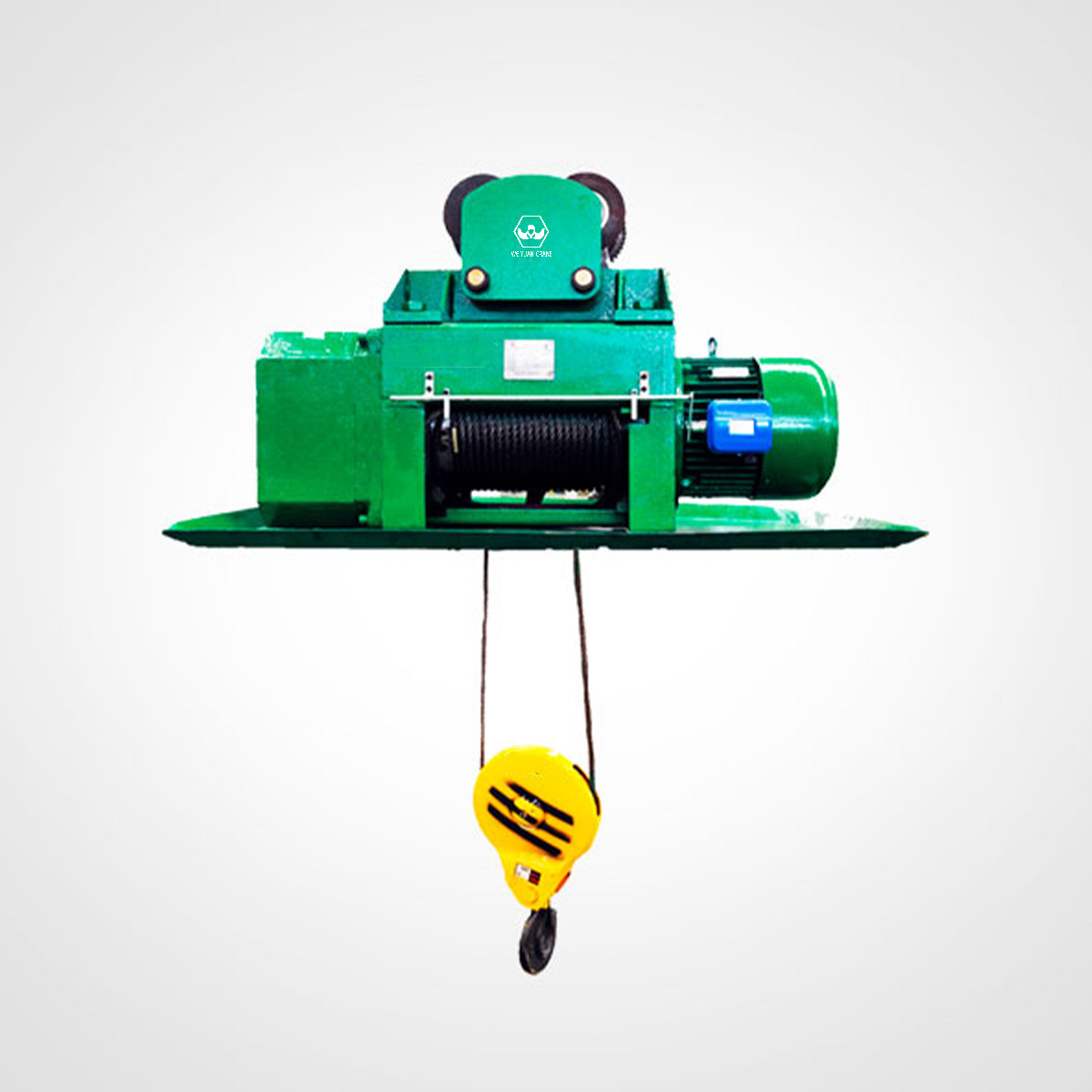
Universal electric hoist
Electric Wire Rope Hoist for Sale: Heavy Lifting for Continuous-Duty Operations
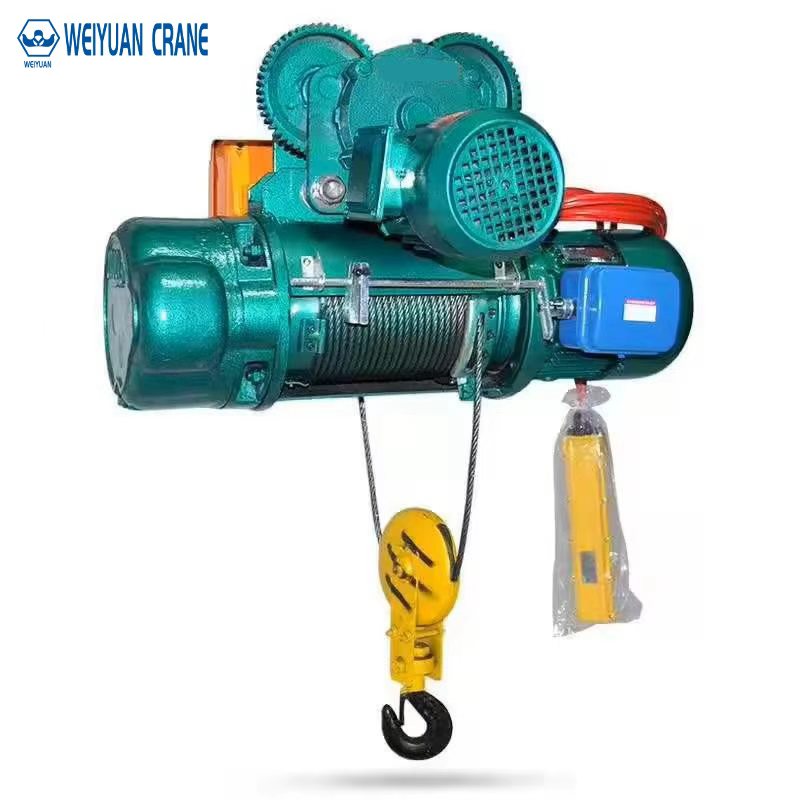
An electric wire rope hoist is the standard choice once a lift climbs beyond what an electric chain hoist can handle — a motor-driven drum winds multi-strand steel wire rope instead of a load chain, giving the mechanical strength and duty-cycle endurance that heavy overhead and gantry crane systems actually need. Choosing between a standard and low-headroom format, and sizing the drum and rope diameter to the real duty cycle rather than just the tonnage, is where many buyers under-specify without realizing it.
Weiyuan’s electric wire rope hoist range covers 1 to 50+ tons, engineered around the customer’s confirmed lift height, duty cycle, and crane system.
What Makes an Electric Wire Rope Hoist Different
Unlike an electric chain hoist, which winds a load chain over a sprocket and tops out in the light-to-mid capacity range, an electric wire rope hoist winds multi-strand steel wire rope onto a grooved drum, giving it both a higher capacity ceiling and better tolerance for continuous or high-duty-cycle operation. This makes it the standard hoist mechanism on single- and double-girder overhead cranes, gantry cranes, and heavy fabrication lines.
The trade-off against a chain hoist is size and headroom: a wire rope hoist’s drum assembly is larger than an equivalent-capacity chain hoist’s sprocket housing, which is why headroom-constrained buildings often need to weigh a standard-headroom unit against a low-headroom variant at the same capacity.
Series and Capacity Range
Series name: WY-EH-WR Series | Category: Electric wire rope hoist, drum-wound steel wire rope, standard headroom
| Model | Capacity | Standard Lift Height | Typical Applications | Control | Hoist Type |
|---|---|---|---|---|---|
| WY-EH-WR05 | 1–5 tons | 6–12 m | Single girder overhead crane systems, general workshop lifting | Pendant/remote | Electric wire rope hoist |
| WY-EH-WR10 | 5–10 tons | 9–15 m | Double girder overhead crane systems, fabrication shops | Remote | Electric wire rope hoist |
| WY-EH-WR25 | 10–25 tons | 9–18 m | Gantry crane systems, heavier fabrication and material handling | Remote | Electric wire rope hoist |
| WY-EH-WR50 | 25–50+ tons | 12–24 m | Steel mills, shipyards, heavy industrial lifting | Remote | Electric wire rope hoist |
Technical Parameters (Reference Range)
| Parameter | Typical Range / Description |
|---|---|
| Duty class | M5–M8 |
| Power supply | 380V/50Hz (customizable) |
| Wire rope construction | Multi-strand steel wire rope, sized to rated capacity |
| Reeving | Single-fall (lighter capacities) or multi-fall via load block (heavier capacities) |
| Control options | Pendant, wireless remote, or variable-frequency control |
| Overload and limit protection | Overload protection plus upper/lower limit switches, standard on all models |
Featured Product: Weiyuan WY-EH-WR10 Electric Wire Rope Hoist
[Product image placeholder]
The WY-EH-WR10, drawn from the table above, is Weiyuan’s most commonly ordered wire rope hoist configuration — a 5–10 ton unit with a 9–15 m lift height, suited to double girder overhead crane systems in general fabrication shops.
[View Product / Get Quote →]
How to Choose the Right Electric Wire Rope Hoist
- Confirm your heaviest actual lift, including load block weight and a safety margin, and match it against the series table above.
- Measure your actual available headroom against the selected model’s dimensions before committing to a standard-headroom unit.
- Confirm your real duty cycle — continuous or high-frequency lifting needs a correspondingly higher duty class than occasional use.
- Decide single-fall or multi-fall reeving based on your capacity tier — heavier loads typically need multi-fall reeving via a load block.
- Verify your crane or runway structure is rated for both the hoist’s own weight and its full rated capacity.
Red Flags When Shopping for an Electric Wire Rope Hoist
- A capacity quote with no duty class specified — tonnage alone doesn’t tell you whether the hoist can sustain your actual lift frequency; this should always be part of the quote.
- No mention of headroom dimensions for the specific model quoted — headroom varies by model within the same capacity tier, and a supplier should provide these dimensions up front.
- Single-fall reeving proposed at a capacity where multi-fall is the norm — this is often a sign of an underspecified drum and motor assembly.
- No wire rope construction or diameter specification — the rope itself should be sized and documented to the rated capacity, not left as a generic line item.
Frequently Asked Questions
Q: How much weight can an electric wire rope hoist lift? Electric wire rope hoists typically range from 1 ton up to 50+ tons (see the series table above), with the exact capacity depending on the drum and motor sizing, wire rope construction, and reeving configuration selected.
Q: What’s the difference between an electric wire rope hoist and an electric chain hoist? An electric wire rope hoist winds steel wire rope onto a drum and covers mid-to-heavy capacities suited to continuous-duty industrial lifting, while an electric chain hoist winds a load chain over a sprocket and generally tops out in the light-to-mid capacity range in a more compact package.
Q: Do I need single-fall or multi-fall reeving? This depends on your capacity tier — lighter units typically use single-fall reeving directly to the hook, while heavier-capacity models generally reeve through a load block with multiple rope falls, which multiplies lifting capacity at some cost to lift speed.
Q: Can an electric wire rope hoist be used for continuous-duty operation? Yes, provided the duty class is specified to match the actual cycle frequency — this is a separate specification question from tonnage alone, and a hoist rated for occasional use should not be substituted into a continuous-duty application.
Q: What headroom does an electric wire rope hoist need? This varies by model and capacity — a standard-headroom unit generally needs more clearance between the supporting beam and the highest hook position than a low-headroom variant of the same capacity. Confirm the specific model’s dimensions against your measured clearance before ordering.