


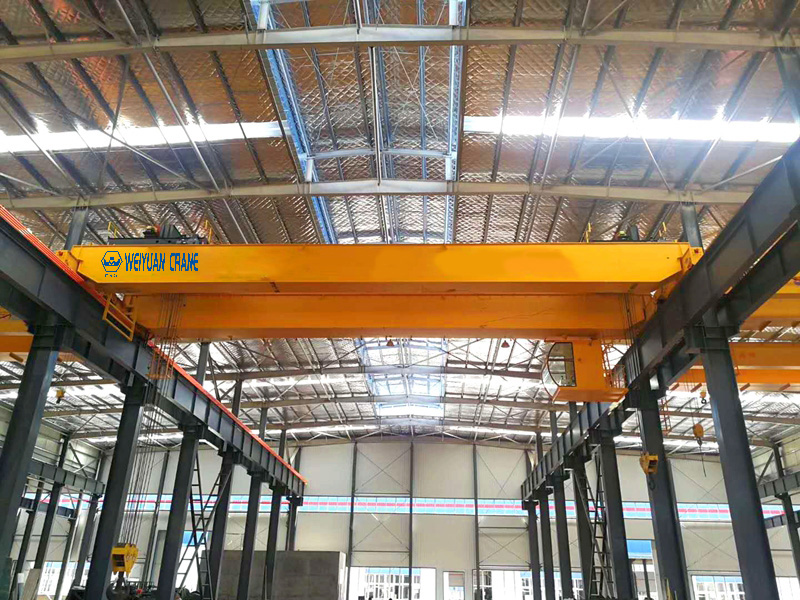
General purpose overhead crane
Single Girder Overhead Crane for Sale: Cost-Effective Lifting for Workshops and Warehouses
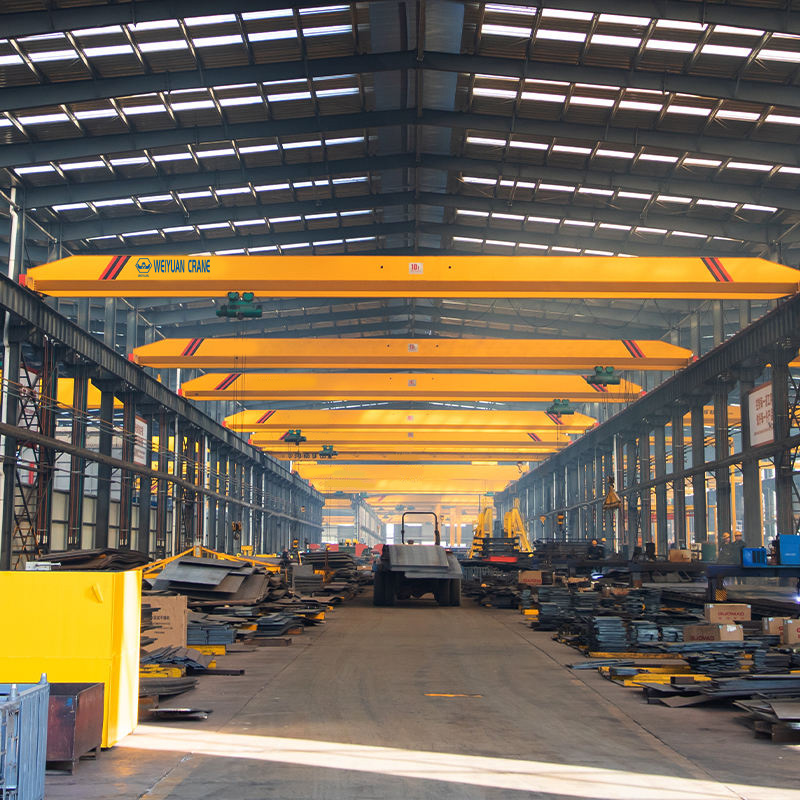
A single girder overhead crane is the option most facilities specify first when floor-based material handling — forklifts, manual hoists, pallet jacks — can no longer keep pace with a production line’s actual lifting needs. It’s the entry point into overhead lifting for a reason: lower structural weight, lower installation cost, and a faster project timeline than a double girder overhead crane, while still covering the capacity range most general manufacturing and warehousing applications actually need.
Weiyuan’s single girder overhead crane range covers 1 to 20 tons across top-running and underhung configurations, sized to the buyer’s actual bay width and building structure rather than a generic catalogue span.
What Makes a Single Girder Overhead Crane Different
A single girder overhead crane — sometimes called a single girder EOT crane or single girder bridge crane — uses one main bridge girder between the runway beams, with the hoist trolley riding along the bottom flange or on top of the girder. Compared to a double girder overhead crane, this means a lighter overall structure, lower fabrication and installation cost, and typically a faster project timeline, since there’s less steel to fabricate and erect.
The trade-off is capacity and hook approach: a single girder design tops out lower than an equivalent double girder overhead crane, and the trolley configuration results in a slightly higher hook position for a given girder height — a difference that matters most in buildings where headroom is already tight.
Single Girder Overhead Crane Configurations
Light-Duty Workshop Crane
Sized for general workshop and maintenance-bay use, typically top-running on standard runway beams.
- Capacity: 1–5 tons
- Span: 7.5–19.5 meters
- Best for: small workshops, maintenance bays, light assembly
Medium-Duty Manufacturing Crane
The most common configuration for general manufacturing floors, assembly lines, and warehouse material handling.
- Capacity: 5–10 tons
- Span: 10.5–25.5 meters
- Best for: general manufacturing, assembly lines, warehousing
Heavy Single Girder Crane
The upper end of single girder capability before a double girder overhead crane becomes the more structurally efficient choice.
- Capacity: 10–20 tons
- Span: up to 31.5 meters
- Best for: larger manufacturing bays and warehouses approaching, but not exceeding, single girder design limits
Top-Running vs. Underhung
A single girder overhead crane can be specified as top-running, riding on top of the runway beam for greater structural efficiency, or underhung, traveling along the bottom flange of existing steel — a common retrofit option where a building’s existing structure isn’t suited to a full top-running runway.
Featured Product: Weiyuan SGB-Series Single Girder Overhead Crane
[Product image placeholder]
The Weiyuan SGB-Series is available from 1 to 20 tons, in top-running or underhung configurations, with span options engineered to the customer’s actual building dimensions rather than fixed catalogue increments.
[View Product / Get Quote →]
How to Choose the Right Single Girder Overhead Crane
- Confirm your capacity sits within single girder range — if your heaviest lift approaches 20 tons, compare the cost of a heavier single girder unit against a double girder overhead crane before committing.
- Measure your actual bay width rather than estimating — span should come from your building dimensions, not a catalogue guess.
- Confirm your runway beam status — existing, adequately rated runway steel, or the cost of new construction.
- Check available headroom, since a single girder design’s higher hook position matters more in headroom-constrained buildings.
- Choose top-running or underhung based on whether you’re building new runway steel or retrofitting existing structure.
Red Flags When Shopping for a Single Girder Overhead Crane
- Span quoted without a building drawing review — an accurate span comes from your actual structure, not a generic estimate.
- No runway beam rating discussion — a crane quote that doesn’t address your existing structure’s load rating is incomplete.
- No duty class specified — duty class materially affects service life and should be part of every quotation, not an afterthought.
- Pushing a double girder design without explaining why — if your load is comfortably within single girder range, a supplier should be able to explain clearly why they’re recommending the more expensive option, if they do.
Frequently Asked Questions
Q: What’s the maximum capacity for a single girder overhead crane? Single girder overhead cranes typically top out around 20 tons before a double girder overhead crane becomes the more structurally efficient and cost-effective choice at higher capacities.
Q: Is a single girder overhead crane cheaper than a double girder crane? Generally yes, at capacities where both are viable — a single girder design uses less structural steel and is typically faster to install, making it the more cost-effective choice whenever your load doesn’t require a double girder’s higher capacity or lower hook approach.
Q: Top-running or underhung — which should I choose? Top-running is generally the more structurally efficient option for new construction with runway-rated steel. Underhung is often the more practical, lower-cost choice in retrofit projects using a building’s existing steel that isn’t suited to a full top-running runway.
Q: Does my building need special runway beams for a single girder overhead crane? Yes — the crane’s full working load, including dynamic loading during operation, must be carried by runway beams rated for that load. This should be confirmed by structural assessment before finalizing your crane order, whether using existing steel or building new runway beams.
Q: What span options are available for a single girder overhead crane? Span is determined by your actual bay width rather than fixed catalogue steps, though most single girder overhead cranes fall in the 7.5 to 31.5 meter range depending on capacity and structural design.
