


Overhead Crane Buying Guide: How to Choose the Right Crane for Your Facility
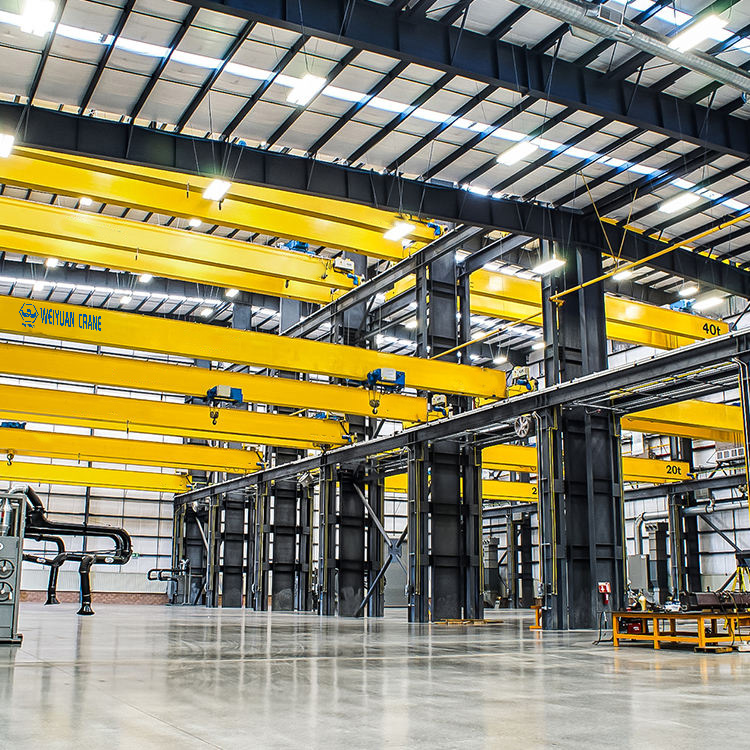
Introduction
Buying an overhead crane looks simple from the outside — pick a tonnage, place an order. In practice, the same capacity number can describe very different machines once you account for span, duty class, girder configuration, and your building’s actual structural capacity. Get one of those wrong and a facility ends up with a crane that’s either underpowered for its heaviest lift, or a costly building-reinforcement project that wasn’t budgeted for.
This guide walks procurement and plant engineering teams through the real buying decision for an overhead crane, step by step — the questions to answer before requesting a quote, not just the tonnage to specify afterward.
This is article 2 of 3 in the Weiyuan Crane overhead crane series. If you haven’t yet, our overhead crane types and components guide (article 1) is worth reading first — it covers the difference between single girder, double girder, top-running, and underhung configurations in more depth than this guide will. Here is what you’ll learn in this one:
- The factors that actually determine the right overhead crane
- How to size capacity and span correctly
- How duty class and building structure change the specification
- A practical checklist to bring to your quotation conversation
Why Tonnage Alone Isn’t a Specification
The most common mistake in overhead crane procurement is treating capacity as the entire spec. A “10-tonne overhead crane” could be a light-duty single girder EOT crane for occasional workshop lifts, or a heavier-duty unit built for near-continuous multi-shift operation — same number, very different machines and price points.
A complete specification for an industrial overhead crane answers several questions beyond tonnage: how wide is the bay it needs to span, how often will it lift and at what percentage of rated capacity, what’s your building’s existing structural capacity, and how much headroom is available. Skip these and you’re relying on the supplier to guess.
Takeaway: Capacity is the starting point for an overhead crane specification, not the whole thing — span, duty cycle, and building structure all shape which crane actually fits.
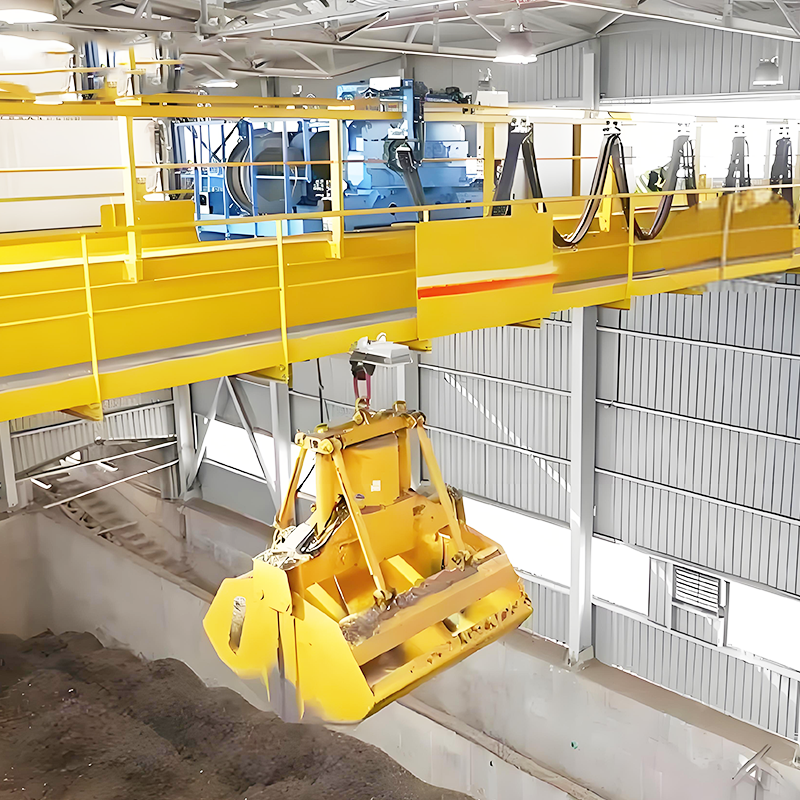
Weiyuan QZ Type Grab Crane for Steel Scrap | 30 Ton, Heavy-Duty, High-Efficiency
The Weiyuan QZ Type 30 Ton Grab Crane is engineered specifically for demanding steel scrap handling operations. Built on a heavy-duty double-girder platform with a high-strength orange peel grab, it delivers reliable performance and high efficiency in continuous scrap yard and foundry material handling environments. :contentReference
View Product / Get QuoteStep 1: Size the Capacity and Span Correctly
Use Your Heaviest Lift, Not Your Average Lift
Add up your heaviest single load, any lifting attachment or rigging weight, and a safety margin — never specify to your typical lift. This rule applies identically whether you’re buying an overhead crane or a gantry crane.
Measure Your Actual Bay Width
Span is the distance between your runway beams, set by the width of the bay the crane needs to cover — measure your actual building dimensions rather than estimating from a catalogue span.
Decide Between Single and Double Girder
As a rough guide, single girder overhead cranes cover light-to-medium loads up to about 20 tonnes economically. Double girder overhead cranes take over from roughly 10 tonnes up through 500 tonnes, and are the standard choice once you need higher capacity or a lower hook approach. If your calculated capacity sits near that crossover point, hook-approach requirements (how close to the floor the load needs to travel) often settle the decision.
Takeaway: Size to your heaviest real lift plus margin, measure your actual bay width, and let hook-approach needs help decide single vs. double girder near the capacity crossover point.
Step 2: Confirm Your Building’s Structural Capacity
This is the step unique to overhead crane buying that a gantry crane purchase doesn’t require in the same way. Before finalizing any specification:
- Confirm whether existing runway beams exist and, if so, whether they’re rated for your new crane’s load — not just whatever crane (if any) previously used them.
- If no runway beams exist, get a structural engineering assessment of what reinforcement or new runway installation would cost — this can be a significant part of total project cost and is easy to underestimate.
- Compare against a gantry crane alternative if structural reinforcement costs are high — for facilities without adequate existing steel, a gantry crane avoiding building dependency entirely may be more cost-effective.
Takeaway: Confirming your building’s structural capacity — or the cost of adding it — should happen before you finalize a capacity and span, not after a quote reveals an expensive surprise.
Step 3: Match the Duty Class to Your Actual Usage
Duty class describes how hard a crane works over its life — how many lifts per hour, at what percentage of rated capacity, for how many hours a day.
Light Duty
Occasional lifting, well below rated capacity most of the time — typical of small workshops and maintenance bays. A standard-duty single girder overhead crane usually fits here.
Medium Duty
Regular lifting through a normal shift, moderate load variation — typical of general manufacturing and assembly lines.
Heavy Duty
Frequent lifting, often at or near rated capacity, across multiple shifts — typical of steel mills and continuous-process plants. This is double girder overhead crane territory, usually specified with more robust hoist and brake systems.
Takeaway: Match duty class to your real lift frequency and load percentage, not just peak tonnage — an under-specified duty class is the fastest way to shorten a crane’s service life.
Step 4: Decide Top-Running vs. Underhung
If you’re building new runway-rated structural steel, top-running is generally the more structurally efficient choice for a given capacity. If you’re retrofitting an existing building and want to avoid major structural modification, an underhung configuration using the bottom flange of existing steel may be the more practical and cost-effective path — typically at lighter capacities.
Takeaway: New construction generally favors top-running; retrofit projects using existing building steel often favor underhung, particularly at lighter capacities.
Step 5: Choose Your Control and Speed Configuration
- Pendant push-button control — standard, cost-effective for most applications.
- Cab-operated control — common on larger, heavy-duty double girder overhead cranes where an operator rides with the crane.
- Radio remote control — adds mobility, a common upgrade across capacities.
- Variable-frequency drives — for fine, low-speed positioning of delicate or high-value loads.
Takeaway: Match control complexity and operator position (pendant, cab, or remote) to your facility’s actual operating pattern and precision needs.
Overhead Crane Buying Checklist
- Heaviest actual lift, plus rigging weight and safety margin
- Measured bay width / span (actual building dimensions)
- Existing runway beam status, or cost of new/reinforced structure
- Duty cycle / duty class (light, medium, or heavy)
- Available headroom / hook-approach requirement
- Single or double girder, based on capacity and hook approach
- Top-running or underhung, based on existing or planned structure
- Control preference (pendant, cab, radio remote, variable-speed)
Frequently Asked Questions
Q: What’s the biggest mistake buyers make when specifying an overhead crane? Sizing capacity and span without first confirming the building’s structural capacity — an overhead crane depends entirely on runway beams rated for its load, and discovering a structural shortfall after the crane is specified is a costly, avoidable surprise.
Q: Is a double girder overhead crane always better than a single girder one? No — it depends on capacity and hook-approach needs, not which is “better.” Double girder designs suit heavier loads and tighter headroom requirements; single girder remains the more cost-effective, lighter-structure choice for light-to-medium capacity applications.
Q: How do I know if my building can support an overhead crane? This requires a structural engineering assessment of your existing steel against the crane manufacturer’s runway load data — don’t assume existing steel is adequate just because it looks substantial; get it confirmed before finalizing your crane specification.
Q: When should I consider a gantry crane instead of an overhead crane? When your building lacks adequate structural steel and reinforcing it would be more expensive than a purpose-built gantry crane foundation — or when part or all of your lifting needs to happen outdoors, where a gantry crane is the standard choice.
Q: What information should I have ready before requesting a quote? The checklist above — heaviest lift, measured span, existing runway status, duty cycle, headroom, girder configuration preference, runway interface, and control preference. Suppliers can quote faster and more accurately with this information up front.
Q: Can an existing overhead crane be upgraded to higher capacity? In many cases, yes — girder reinforcement and hoist-system upgrades can increase capacity on an existing structure, often faster and at lower cost than full replacement, provided the runway beams themselves have adequate margin for the increased load.