


Overhead Crane Types and Selection Guide for Your Facility
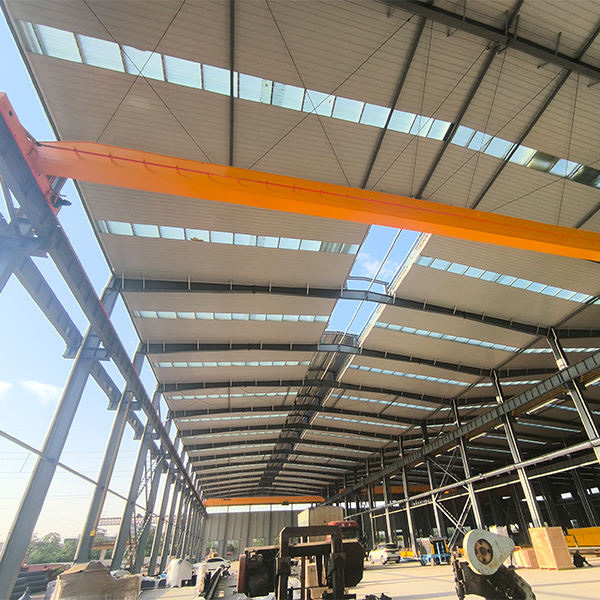
TL;DR: Overhead cranes come in several configurations—single girder and double girder, top running and under running—each suited to different capacities, spans, and duty cycles. Single girder and under running systems fit lighter loads and tighter budgets, while double girder and top running systems handle heavy capacities, longer spans, and future upgrades. Choosing the right type means matching load, span, hook height, duty cycle, and building structure to your real operating needs—before you buy.
Picking the wrong overhead crane is an expensive mistake you live with for decades. An underrated single girder crane on a heavy production line becomes a bottleneck and a safety risk. An oversized double girder system in a light assembly bay wastes capital and hook height you never needed.
For procurement managers and facility owners, this one decision shapes long-term cost, safety, and throughput. Yet it often gets made under time pressure, with incomplete information about the tradeoffs.
This guide fixes that. You will learn the four main overhead crane configurations, how their structures and capacities differ, and the practical selection criteria that should drive your choice. By the end, you will have a clear framework for matching the right crane to your loads, your span, and the way your facility actually works.
What Is an Overhead Crane?
An overhead crane is a lifting system where a bridge girder travels along elevated runway beams mounted to the building structure or supporting columns. A trolley and hoist move along the bridge to lift and position loads, while the bridge itself travels the length of the bay.
This design keeps the lifting equipment overhead, freeing the entire floor for movement and storage. Unlike ground-based equipment, an overhead crane covers a full rectangular work area—the bridge travels one direction, the trolley the other.
Within this category, cranes differ in two key ways: the number of bridge girders (single or double) and how the crane connects to its runway (top running or under running). These two choices define capacity, span, hook height, and cost.
Single Girder vs Double Girder Overhead Cranes
The girder count is often the first specification decision. It sets the practical capacity ceiling and influences almost every downstream choice.
Single Girder Cranes
A single girder crane uses one bridge beam, with the hoist typically suspended below it on an underhung trolley. The design is lighter, simpler, and more economical to build and install.
Practical capacity: typically up to 20 tonnes, though most applications fall in the 1 to 10 tonne range.
Best for: light to medium manufacturing, assembly bays, warehouses, and maintenance workshops where lifts are moderate and cycle rates are not extreme.
Key advantages:
- Lower purchase and installation cost
- Reduced dead weight, which lowers the load on the building structure—valuable in older facilities
- Simpler maintenance with fewer components
Common mistake to avoid: specifying a single girder crane at the very top of its capacity range with no margin. If your loads creep upward or cycle rates increase, you will hit the limit fast. Build in reasonable headroom.
Double Girder Cranes
A double girder crane uses two parallel bridge beams, with the trolley and hoist riding on top between them. This configuration carries heavier loads, spans wider bays, and recovers valuable hook height.
Practical capacity: from around 10 tonnes upward, commonly to 100 tonnes and beyond for mill and foundry duty.
Best for: heavy fabrication, steel service centers, foundries, and any bay where loads are heavy, spans are long, or duty cycles are demanding.
Key advantages:
- Higher capacity and longer span capability
- Greater hook height, because the trolley sits on top of the girders rather than below
- Room to mount walkways, cabins, and heavier-duty hoists for high-cycle service
What this means for you: if you need maximum lift height within a fixed building clear height, a double girder crane almost always wins—the top-mounted trolley recovers headroom a single girder underhung design cannot.
Top Running vs Under Running Overhead Cranes
The second structural choice is how the crane connects to its runway. This decision is often locked in on the building drawings, so getting it right early matters.
Top Running Cranes
The crane’s end truck wheels ride on rails mounted on top of the runway beams, which sit on brackets projecting from the building columns.
Practical range: no meaningful upper capacity limit from the runway’s perspective—top running systems serve cranes from a few tonnes to several hundred tonnes, with spans of 30+ metres as standard.
Best for: medium to heavy capacities, longer spans, high-duty-cycle service, and any application where future capacity growth is a realistic possibility.
Key advantage: upgrade flexibility. Runway beams and brackets designed with reasonable margin can often accommodate a heavier crane later, within the same building.
Under Running Cranes
The crane’s end trucks wrap around and travel along the bottom flange of the runway beams. The runway can sometimes integrate with the roof structure, avoiding separate brackets.
Practical range: generally up to 10 to 15 tonnes, with spans typically under 15 to 20 metres. Beyond this, the beam depth needed to control deflection starts working against the design.
Best for: light-duty, intermittent service where capacity is fixed and budget is constrained.
Key advantages:
- Lower structural steel cost at light capacities—often 15 to 25% less for the crane-served bay
- Modest hook height gain, because it avoids the separate bracket projection
- Flexibility to run cranes close to walls or across multiple bays
Common mistake to avoid: choosing under running purely on upfront cost when future capacity growth is likely. Converting from under running to top running later can cost several times the original difference—because the runway beams usually cannot be reused.
How to Choose the Right Overhead Crane
The right configuration emerges when you resolve a handful of factors in order. Work through these before committing to any design.
1. Load capacity and duty cycle
Start with your heaviest lift, then add the weight of spreader beams, lifting frames, and rigging, plus a safety margin. Next, factor in frequency. A crane lifting near capacity dozens of times per shift needs a higher duty classification than one making occasional lifts.
Quick check: if you lift heavy loads frequently, lean toward double girder and top running. If lifts are light and intermittent, single girder and under running may serve at lower cost.
2. Span and hook height
Measure the bay width the crane must cover and the maximum hook height you need. Wide spans and tight headroom point toward double girder top running designs, which recover lift height. Confirm hook height with the actual beam depths from the structural design—not a rule of thumb.
3. Building structure
Can your columns and foundations carry runway loads and bracket forces? Older or lightly framed buildings may favor lighter single girder or under running systems. New builds give you the freedom to specify top running from the outset.
4. Future flexibility
Ask a hard question: is there any realistic chance your capacity needs will grow? New product lines, heavier equipment, or process changes all push loads upward. If growth is plausible, top running with reasonable margin protects you from an expensive retrofit later.
5. Total cost of ownership
Look past the purchase price. Factor in installation, runway and bracket steel, power supply, maintenance, and expected service life of 20 to 30 years. Under running’s upfront savings are real at light capacities—but they can be erased by a single future upgrade.
Selection framework at a glance:
- Under 10 tonnes, short span, fixed need → single girder under running
- Light to medium, moderate span → single girder top running
- Heavy loads, long span, high duty → double girder top running
- Growth likely → top running, regardless of current capacity
Frequently Asked Questions
Q: What is the difference between a single girder and double girder overhead crane?
A single girder crane uses one bridge beam with an underhung hoist and suits capacities typically up to 20 tonnes. A double girder crane uses two parallel beams with a top-mounted trolley, handling heavier loads—commonly 10 tonnes and above—with longer spans and greater hook height. Double girder systems are preferred for heavy fabrication, foundries, and high-duty service.
Q: When should I choose top running over under running?
Choose top running when capacity exceeds roughly 10 to 15 tonnes, spans exceed 15 to 20 metres, duty cycles are heavy, or future capacity growth is possible. Top running offers a far broader capacity range and the flexibility to upgrade within the same building. Under running suits light, fixed, intermittent applications where budget is the priority.
Q: What capacity range do overhead cranes cover?
Single girder and under running cranes typically handle light to medium loads up to about 20 tonnes. Top running double girder cranes span the full range, from a few tonnes to several hundred tonnes for the heaviest mill and foundry applications. Your heaviest single lift, plus rigging and a safety margin, sets the required capacity.
Q: How do I maximize hook height in a fixed building clear height?
A double girder crane recovers hook height because the trolley sits on top of the girders rather than hanging below. Under running single girder systems also gain modest headroom by avoiding bracket projections. For any project where hook height is critical, calculate available height using the actual beam depths from the structural design.
Q: Can one building have different overhead crane types in different bays?
Yes. There is no requirement for consistency across a facility. A heavy fabrication bay might use a top running double girder crane, while an adjacent light assembly bay runs a single girder under running crane. Each bay can be designed for its specific capacity, span, and duty requirements.
Q: Why does the crane type decision matter so early in building design?
Runway structure—brackets, beams, and column reinforcement—is often set on the building drawings before a crane supplier is chosen. Reversing that decision later, such as converting under running to top running, is one of the more expensive retrofits in industrial construction. Specifying correctly at the design stage avoids that cost entirely.