


Overhead Cranes: Types, Components, and Applications Guide
Introduction
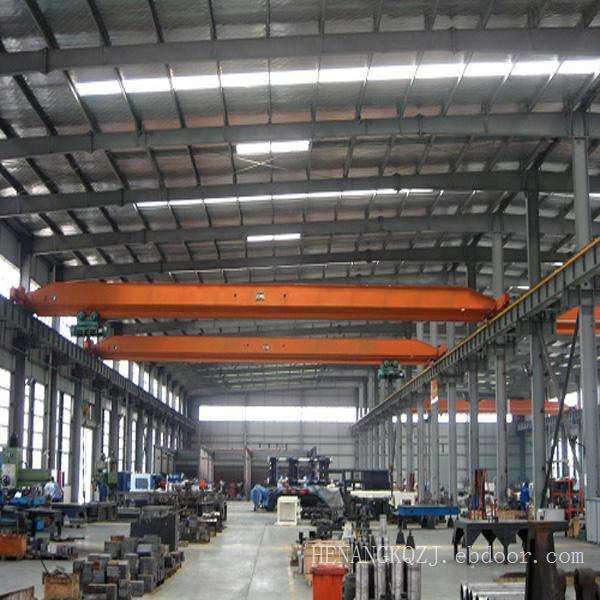
An overhead crane is the equipment a factory reaches for once floor-level material handling — forklifts, manual hoists, hand trucks — stops keeping up with the weight or frequency of the lifts a production line actually needs. Rather than taking up floor space, an overhead crane runs on runway beams fixed to the building’s structural steel, moving loads across the full width and length of a workshop from above.
Our overhead crane systems are engineered for heavy-duty factory use, with lifting capacities from 1 to 500 tons. Whether you need a single girder EOT crane for light workshop tasks or a double girder bridge crane for steelmaking operations, our modular design adapts to your span and headroom requirements.
For plant engineers and procurement teams, the real decision isn’t whether to install an overhead crane — it’s which configuration. Single girder or double girder? Top-running or underhung? What capacity and duty class actually match your production line? This guide breaks down the main overhead crane types, their core components, and how they compare, so you walk into a specification conversation already knowing the right questions to ask.
This is article 1 of 3 in the Weiyuan Crane overhead crane series. Here is what you will learn:
- What an overhead crane is and how it differs from a gantry crane
- The main overhead crane types — single girder, double girder, and underhung configurations
- The key components and how they work together
- Which applications each overhead crane type serves best
What an Overhead Crane Is
An overhead crane — also called a bridge crane, EOT crane (Electric Overhead Traveling Crane), or overhead traveling crane — is a lifting system in which a bridge girder spans between two end trucks that travel along runway beams fixed to a building’s structural steel. A hoist trolley rides along the bridge girder, giving the crane coverage across the full rectangle formed by the runway length and the girder span.
Because the building’s own structure carries the crane’s load, an overhead crane requires no separate legs or ground-level foundation — the trade-off is that it depends entirely on the building being engineered (or reinforced) to carry that load, which is the main reason some facilities choose a gantry crane instead where no suitable structure exists.
Typical capacity range: 1–500 tonnes, depending on girder configuration and duty class. Signature strengths: full-bay coverage, no floor-space consumption, wide capacity range within a single equipment category. Core purpose: heavy, repeatable material handling across a workshop, production line, or warehouse bay.
Takeaway: An overhead crane runs on runway beams built into a structure, giving full-bay coverage without consuming floor space — provided the building can carry the load, which is what separates it from a self-supporting gantry crane.
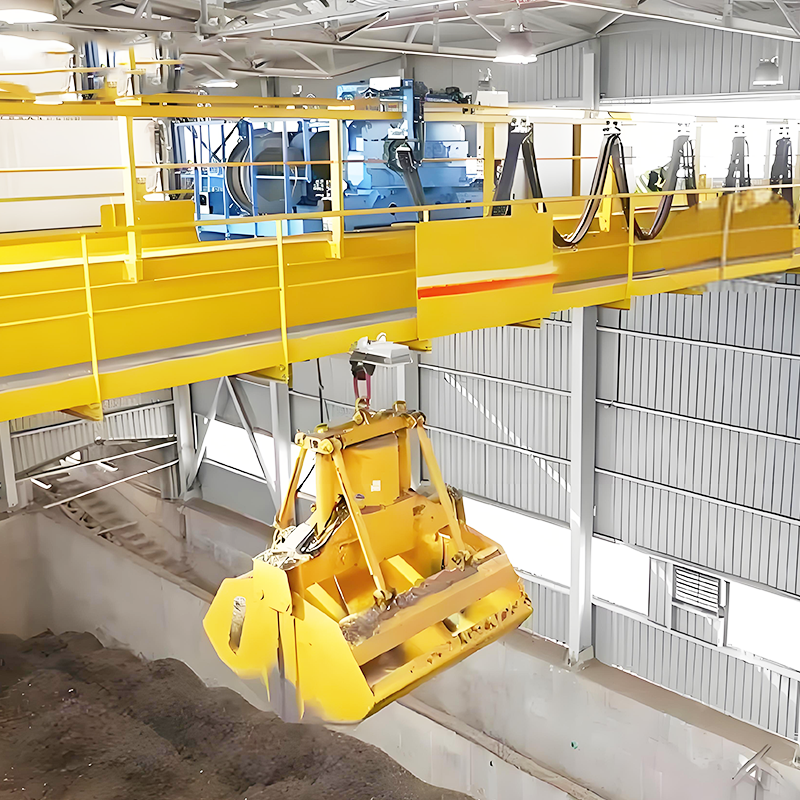
Weiyuan QZ Type Grab Crane for Steel Scrap | 30 Ton, Heavy-Duty, High-Efficiency
The Weiyuan QZ Type 30 Ton Grab Crane is engineered specifically for demanding steel scrap handling operations. Built on a heavy-duty double-girder platform with a high-strength orange peel grab, it delivers reliable performance and high efficiency in continuous scrap yard and foundry material handling environments. :contentReference
View Product / Get QuoteHow an Overhead Crane Differs From a Gantry Crane
Before comparing overhead crane types, it’s worth understanding how the whole overhead category differs from its self-supporting cousin — the gantry crane.
Structure and Building Dependency
An overhead crane depends on a building’s structural steel to carry its load through fixed runway beams. A gantry crane carries its own load through support legs down to rails or wheels at ground level, needing no building at all. This is the defining difference between the two categories, and it’s usually the first question worth answering: does your site have adequately rated building structure, or not?
Installation Cost and Site Requirements
Where a building already has runway-rated structural steel, an overhead crane is typically the more cost-effective option — no separate foundation or leg structure required. Where no such structure exists, reinforcing a building to carry overhead crane loads can be more expensive than a purpose-built gantry crane foundation, which is why outdoor yards and sites without existing structure gravitate toward gantry cranes instead.
Typical Environment
Overhead cranes are almost always indoor, workshop-based equipment, sheltered from weather by the building itself. Gantry cranes are built for outdoor duty as standard, since they’re often installed in open yards without a roof at all.
Coverage Shape
Both categories cover a rectangular area — the runway length by the girder span for an overhead crane, or the rail length by the girder span for a gantry crane. The mechanics of that coverage (trolley riding the girder) are the same; only how the structure reaches the ground differs.
Takeaway: An overhead crane depends on the building to carry its load and suits indoor workshop use; a gantry crane carries its own load to the ground and suits outdoor yards and sites without existing structural steel — the underlying girder and hoist logic is otherwise the same.
The Main Overhead Crane Types
Overhead cranes split first by girder configuration — single girder vs. double girder — and then by how the crane rides the runway: top-running or underhung. The right choice depends on your capacity, span, and building structure.
Single Girder Overhead Crane
A single girder overhead crane uses one main bridge girder, with the hoist trolley riding along the bottom flange or on top of the girder. It’s the standard, cost-effective choice for light-to-medium capacity applications.
- Coverage: full rectangular bay, runway length by girder span
- Typical capacity: 1–20 tonnes
- Strengths: lower cost, lighter structure, faster installation than an equivalent double girder overhead crane
- Best for: general manufacturing, warehousing, maintenance workshops, and light-industrial bays
Double Girder Overhead Crane
A double girder overhead crane uses two parallel bridge girders, with the trolley traveling across the top of both. This raises the achievable capacity ceiling and lowers the hook’s approach compared to a single girder design at the same girder height.
- Coverage: full rectangular bay, same as single girder, at higher capacity
- Typical capacity: 10–500 tonnes
- Strengths: higher capacity, lower hook approach, dual-hoist configurations available
- Best for: steel mills, power plants, heavy manufacturing, and shipyard fabrication shops
Top-Running Overhead Crane
The crane’s end trucks ride on top of the runway beam — the most common configuration, and generally the more structurally efficient option for a given capacity.
- Strengths: higher achievable capacity for a given runway beam size
- Best for: most industrial applications where the building was designed (or reinforced) with top-running runway beams in mind
Underhung Overhead Crane
The crane’s end trucks hang from and travel along the bottom flange of the runway beam, rather than riding on top of it — a configuration often chosen when a building’s existing steel isn’t suited to a top-running runway.
- Strengths: can often be installed using existing building steel without major reinforcement, useful in retrofit projects
- Best for: lighter-capacity applications and buildings where adding a full top-running runway isn’t practical
Takeaway: Single girder vs. double girder decides capacity and hook approach; top-running vs. underhung decides how the crane interacts with your existing building steel — most industrial overhead crane installations combine one choice from each.
Key Components of an Overhead Crane
An overhead crane’s performance comes from how its structural and lifting components work together.
Bridge Girder (Single or Double)
The bridge girder is the horizontal structural member spanning the runway, carrying the hoist trolley across the bay. Single girder designs use one beam; double girder designs use two parallel girders, following the same capacity and hook-approach trade-off used in gantry crane girder selection.
End Trucks
End trucks connect the bridge girder to the runway beams and carry the crane’s travel motors, riding either on top of (top-running) or beneath (underhung) the runway beam.
Runway Beams
Runway beams are the fixed structural steel the crane travels along, engineered into the building specifically to carry the crane’s load — their rating is the single most important structural constraint on any overhead crane specification.
Trolley and Hoist
The trolley rides along the bridge girder, carrying the hoist that performs the actual lift. As with a gantry crane, hoist selection — chain hoist for lighter capacity, wire rope hoist for heavier or higher-cycle duty — is matched to the crane’s rated lifting capacity.
Control System
Overhead cranes are controlled via pendant, cab, or radio remote control, with variable-frequency options common on cranes requiring precision positioning for delicate or high-value loads.
Runway Conductor System
Power reaches a traveling overhead crane via a conductor bar, festoon cable system, or cable reel running the length of the runway — the choice affects both installation cost and long-term maintenance.
Takeaway: Runway beams are the structural foundation of any overhead crane, and everything else — girder configuration, trolley, hoist — follows the same capacity logic used across any bridge or gantry crane.
Comparing Overhead Crane Types at a Glance
| Overhead crane type | Girder configuration | Runway interface | Typical capacity | Best for |
|---|---|---|---|---|
| Single girder overhead crane | Single girder | Top-running or underhung | 1–20 t | General manufacturing, warehousing, workshops |
| Double girder overhead crane | Double girder | Top-running | 10–500 t | Steel mills, power plants, heavy manufacturing |
| Top-running overhead crane | Either | Top-running | Full range | Most industrial applications with runway-rated steel |
| Underhung overhead crane | Typically single | Underhung | 1–10 t | Retrofit buildings, lighter-capacity applications |
How to Read the Table
Start with capacity: light-to-medium loads point to a single girder overhead crane; heavy or continuous industrial loads point to a double girder overhead crane. Then confirm your building’s runway interface — top-running is the default where the structure supports it, and underhung is the fallback for retrofit projects using existing steel.
Takeaway: Capacity and hook-approach requirements decide single vs. double girder; existing building structure decides top-running vs. underhung.
Typical Applications for Overhead Cranes
General Manufacturing and Assembly
Single girder overhead cranes are the standard choice across general manufacturing floors, machine shops, and assembly lines, where capacity requirements stay within light-to-medium range.
Heavy Industry and Metallurgy
Double girder overhead cranes are the standard on steel mill, foundry, and power-plant maintenance-bay floors, where heavier single lifts and continuous multi-shift duty are the norm.
Warehousing and Logistics
Single girder overhead cranes, often paired with monorail or KBK track extensions, handle heavy palletized and oversized cargo in warehouse and logistics facilities that conventional forklifts can’t accommodate.
Shipyard and Marine Fabrication
Double girder overhead cranes serve indoor hull-section and module fabrication shops, frequently working alongside outdoor gantry cranes covering the connected shipyard yard — the same underlying girder and hoist logic applied to both an indoor bridge crane and an outdoor gantry crane on the same site.
Takeaway: Single girder overhead cranes suit general manufacturing and warehousing; double girder overhead cranes suit heavy industry and shipyard fabrication — often deployed on the same site alongside gantry cranes covering the outdoor yard.
Frequently Asked Questions
Q: What is an overhead crane? An overhead crane — also called a bridge crane, EOT crane, or overhead traveling crane — is a lifting system in which a bridge girder spans between two end trucks that travel along runway beams fixed to a building’s structural steel. A hoist trolley rides along the girder, giving the crane full coverage of the rectangular bay formed by the runway length and girder span.
Q: What’s the difference between a single girder overhead crane and a double girder overhead crane? A single girder overhead crane uses one main bridge girder and suits light-to-medium capacity, cost-sensitive applications, typically up to about 20 tonnes. A double girder overhead crane uses two parallel girders, enabling higher capacity — up to 500 tonnes — and a lower hook approach, at the cost of a heavier structure and higher installation cost.
Q: How is an overhead crane different from a gantry crane? An overhead crane depends on a building’s structural steel to carry its load through fixed runway beams, making it primarily indoor, workshop-based equipment. A gantry crane carries its own load through support legs to rails or wheels at ground level, requiring no building at all — which is why gantry cranes serve outdoor yards and sites without existing structural steel.
Q: What’s the difference between top-running and underhung overhead cranes? A top-running overhead crane’s end trucks ride on top of the runway beam, generally the more structurally efficient configuration for a given capacity. An underhung overhead crane’s end trucks hang from and travel along the bottom flange of the runway beam — often chosen in retrofit projects where existing building steel isn’t suited to a full top-running runway.
Q: What capacity range do overhead cranes cover? Overhead cranes typically range from around 1 tonne for light workshop use up to 500 tonnes for heavy industrial applications like steel mills and shipyard fabrication shops. Single girder designs generally cover the lighter end of that range; double girder designs cover the heavier end.
Q: Can an overhead crane be installed in a building without existing runway steel? Yes, but it requires structural reinforcement or new runway beam installation engineered to the crane’s load — a cost and engineering exercise that should be evaluated against a gantry crane alternative if the building’s structure isn’t well suited to the modification.
Q: What determines an overhead crane’s span? Span is the distance between the runway beams, set by the width of the bay the crane needs to cover — the same principle used to determine span on a gantry crane, just measured between fixed building runway beams rather than ground-level rails.