


Jib Crane
Floor Mounted Jib Crane for Sale: Full Rotation Coverage Without Wall Dependency
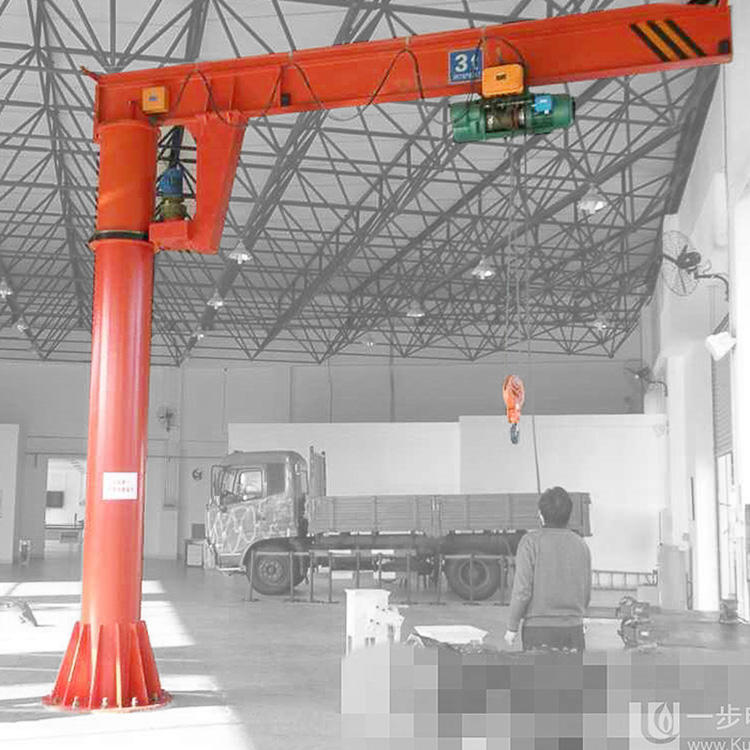
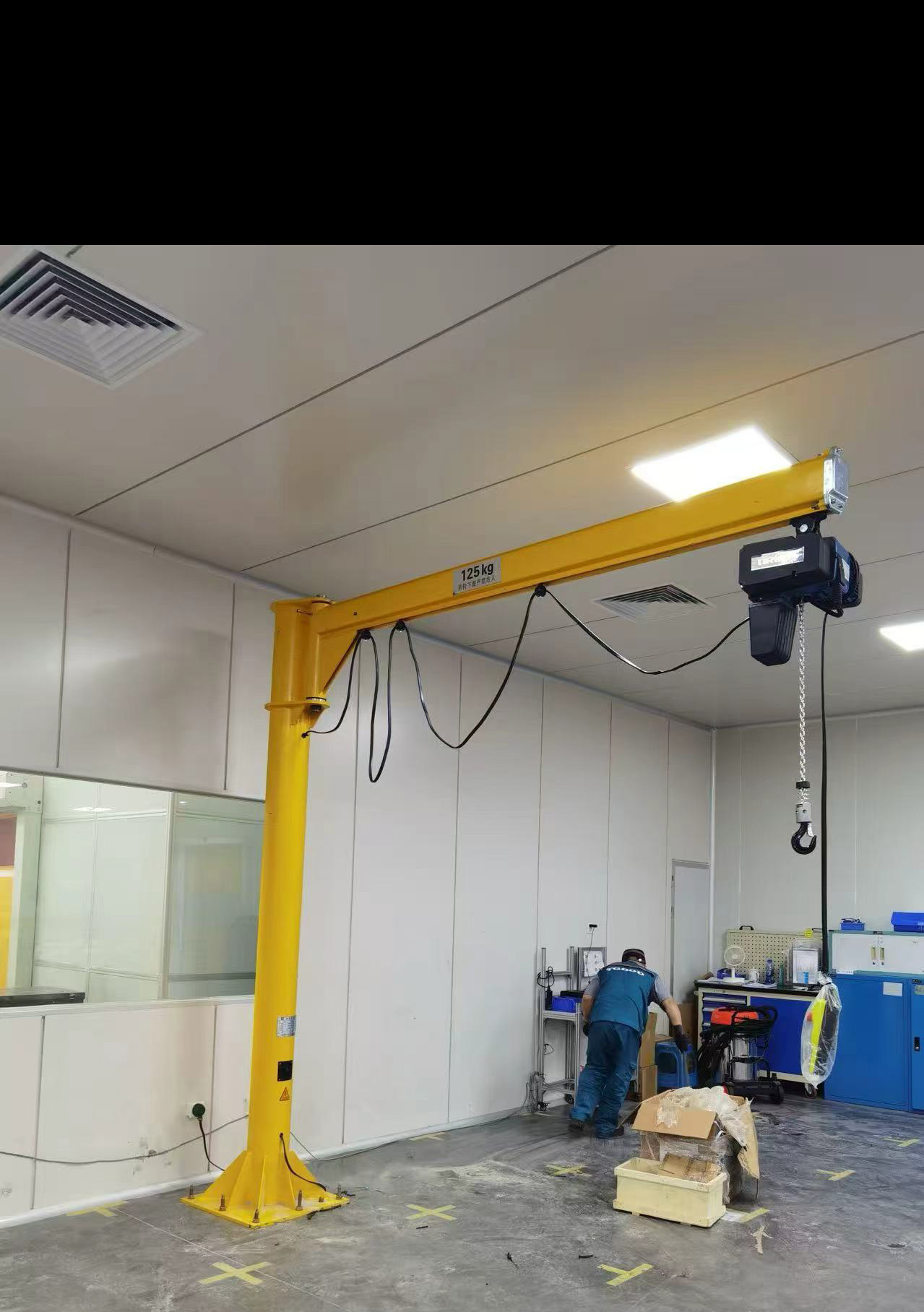
A floor mounted jib crane — also called a pillar jib crane or free-standing jib crane — solves the problem a wall-mounted unit can’t: a workstation in the middle of a floor plan, with no suitably rated wall nearby, or a work cell that genuinely needs full 360° coverage rather than the up-to-180° range a wall-mounted crane provides. Standing on its own independent foundation, a floor mounted jib crane brings dedicated lifting anywhere a foundation pad can fit.
Weiyuan’s floor mounted jib crane range covers 0.5 to 10 tons, engineered around the customer’s actual foundation conditions and required rotation range.
What Makes a Floor Mounted Jib Crane Different
Unlike a wall-mounted or mast-style jib crane, which relies on existing building structure, a floor mounted jib crane stands on its own foundation, completely independent of any wall. This independence is what allows a floor-mounted unit to rotate a full 270°–360° around its mast, and it means positioning isn’t limited to wherever adequately rated wall structure happens to exist — a floor-mounted unit can go anywhere a foundation pad fits.
The trade-off is installation cost and time: a floor-mounted unit requires a purpose-built foundation, engineered to the crane manufacturer’s base-plate loading and moment data, which a wall-mounted installation using existing structure doesn’t need.
Floor Mounted Jib Crane Configurations
Standard Workshop Pillar Crane
The most common floor-mounted configuration, for general machine shop and fabrication use requiring full rotation coverage.
- Capacity: 0.5–3 tons
- Arm length: 3–6 meters
- Best for: machine tool cells, welding stations, general fabrication requiring 360° access
Heavy-Duty Pillar Crane
For heavier lifting needs where a floor-mounted unit’s full capacity range is required.
- Capacity: 3–10 tons
- Arm length: 4–8 meters
- Best for: heavier fabrication cells, larger assembly stations
Foundation-Free Base Plate Configuration
Some lighter-capacity floor-mounted jib cranes use a heavy counterweighted or bolt-down base plate rather than a poured concrete foundation, trading some capacity for faster installation and, in some cases, relocatability.
- Capacity: typically under 1 ton
- Best for: lighter applications where installation speed matters more than maximum capacity
Featured Product: Weiyuan FJ-Series Floor Mounted Jib Crane
[Product image placeholder]
The Weiyuan FJ-Series is available from 0.5 to 10 tons, with full 270°–360° rotation and foundation specifications engineered to the customer’s actual capacity and arm-length requirements.
[View Product / Get Quote →]
How to Choose the Right Floor Mounted Jib Crane
- Confirm no adequately rated wall exists nearby — if one does, a wall-mounted unit may be the more cost-effective choice; floor-mounted is the right call when it doesn’t.
- Size capacity to your heaviest actual lift, including tooling and a safety margin.
- Confirm your required rotation range — full 360° coverage is the main advantage of choosing floor-mounted over wall-mounted.
- Verify foundation feasibility at the intended location — floor loading, buried utilities, and available space all affect foundation design.
- Measure the full swing radius to confirm no obstructions exist at any angle the crane will actually use.
Red Flags When Shopping for a Floor Mounted Jib Crane
- No foundation design data provided with the quote — foundation specification is central to a floor-mounted jib crane’s safety and should never be a downstream afterthought.
- A quote that skips confirming full-rotation swing clearance — this is the main reason to choose floor-mounted over wall-mounted, and it should be verified, not assumed.
- Base-plate configuration proposed for a capacity where a poured foundation is actually required — lighter base-plate options don’t scale to every capacity tier, and a supplier should be clear about that limit.
- No mention of concrete cure time in the project schedule — foundation work adds lead time that’s easy to overlook when planning installation.
Frequently Asked Questions
Q: What’s the difference between a floor mounted jib crane and a wall mounted jib crane? A floor mounted jib crane stands on its own independent foundation and can rotate a full 270°–360°, making it the right choice where no adequately rated wall exists or full rotation coverage is needed. A wall mounted jib crane attaches to existing wall or column structure and typically rotates up to 180°, generally at lower installation cost where suitable wall support already exists.
Q: Does a floor mounted jib crane always need a poured concrete foundation? Most capacities do, engineered to the manufacturer’s base-plate loading and moment data. Some lighter-capacity units (typically under 1 ton) offer a bolt-down or counterweighted base-plate alternative that avoids a poured foundation, trading some capacity for faster installation.
Q: How much weight can a floor mounted jib crane lift? Floor mounted jib cranes typically range from 0.5 to 10 tons, generally covering a higher capacity ceiling than an equivalent wall-mounted unit, since the foundation can be engineered specifically for the required load rather than depending on existing building structure.
Q: Can a floor mounted jib crane be relocated later? In some cases, a base-plate-mounted unit can be relocated with a new foundation or base plate at the new location; a unit on a poured concrete foundation is generally not practical to relocate without significant additional construction.
Q: How long does foundation work add to a floor mounted jib crane project? This varies by capacity and site conditions, but concrete cure time alone typically adds one to several weeks to the project schedule — this should be planned into your installation timeline well ahead of crane delivery.
Need a floor mounted jib crane for full-rotation coverage at your workstation? Contact the Weiyuan Crane engineering team for a quotation matched to your capacity and foundation conditions.