


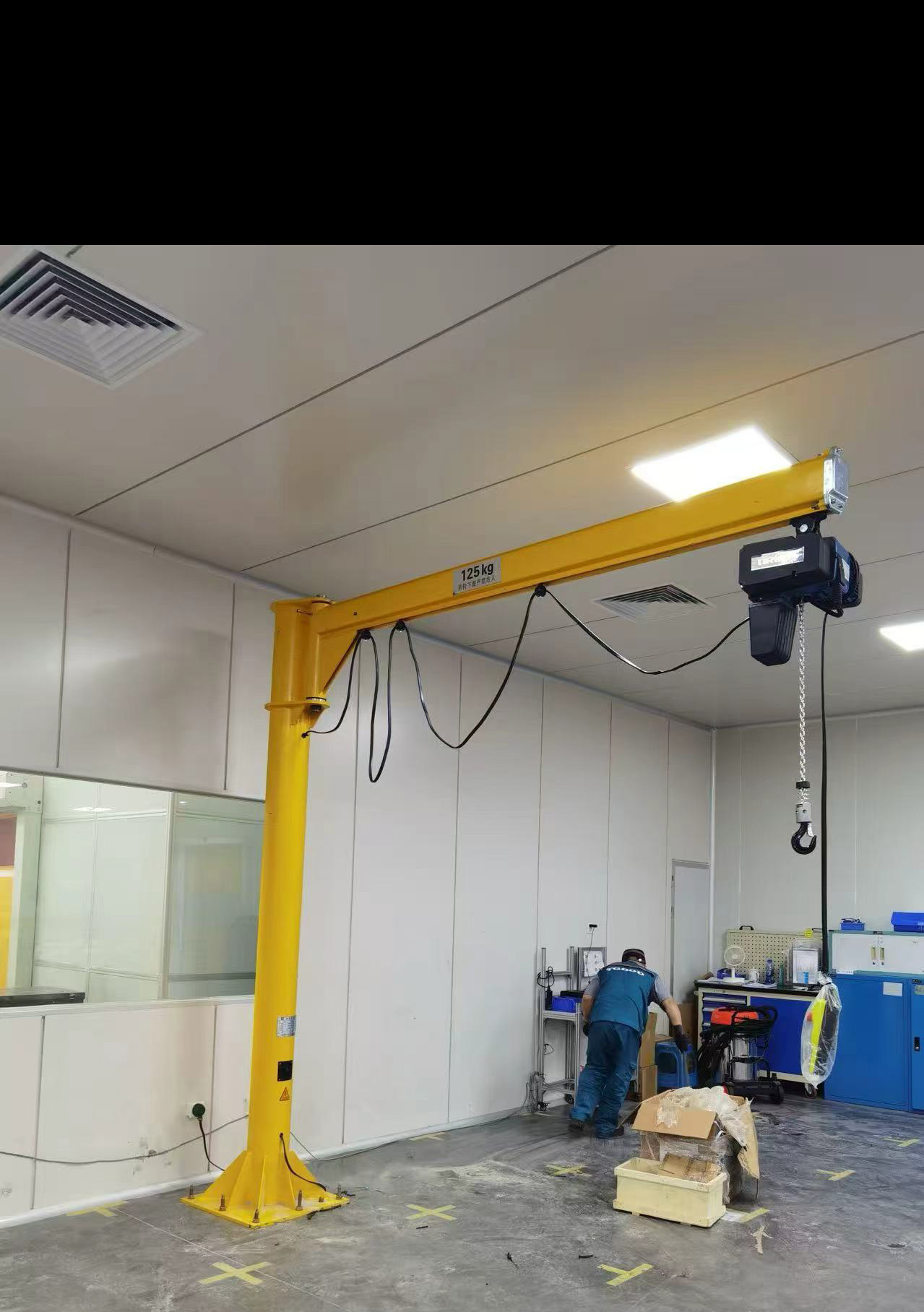
Jib Crane
Portable Jib Crane for Sale: Flexible Lifting Without a Fixed Mounting Point
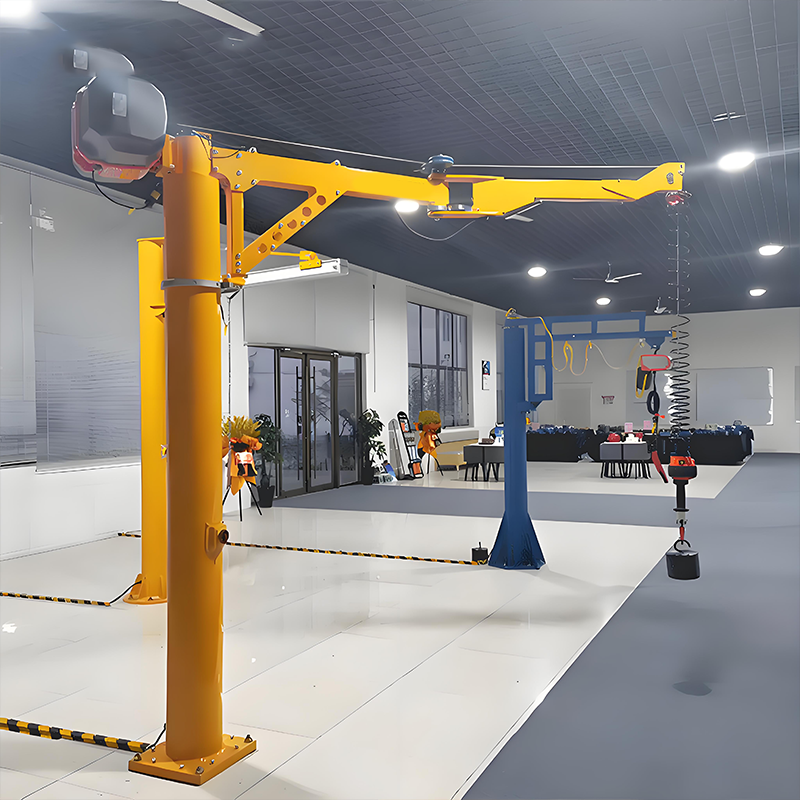
A portable jib crane answers a specific need neither a wall-mounted nor a floor-mounted unit can: dedicated lifting coverage that can move between workstations as production needs change, without a fixed wall connection or a poured foundation tying it to one location permanently. Built on a mobile, often counterweighted base, a portable jib crane trades some capacity for the flexibility to be rolled wherever the work actually is.
Weiyuan’s portable jib crane range covers 125 kg to 1 ton, sized around mobility and quick repositioning rather than maximum capacity.
What Makes a Portable Jib Crane Different
Unlike a wall-mounted or floor-mounted jib crane, both of which are fixed to a specific location once installed, a portable jib crane sits on a mobile base — typically wheeled and often counterweighted rather than bolted down — that can be rolled to wherever the current job requires dedicated lifting coverage.
This mobility comes with a meaningful capacity trade-off: because the base relies on counterweight and footprint rather than a structural foundation or wall connection to resist the moment loading of a rotating arm, portable jib cranes generally top out at a lower capacity than fixed wall-mounted or floor-mounted units of similar arm length.
Portable Jib Crane Configurations
Light-Duty Counterweighted Base
The most common portable configuration, using a counterweighted wheeled base for stability without a fixed foundation.
- Capacity: 125–500 kg
- Arm length: 2–4 meters
- Best for: light assembly, maintenance tasks moving between multiple stations, temporary project work
Medium-Duty Portable Configuration
A more substantial mobile base for slightly heavier portable lifting needs, still avoiding a fixed mounting point.
- Capacity: 500 kg–1 ton
- Arm length: 3–5 meters
- Best for: heavier maintenance work, multi-site facilities needing repositionable coverage
Foldable vs. Fixed-Arm Portable Units
Some portable jib cranes offer a foldable arm for easier transport and storage between uses, similar in concept to a foldable portable gantry crane; others use a fixed arm for faster setup at each new location, trading storage compactness for quicker repositioning.
Featured Product: Weiyuan PJ-Series Portable Jib Crane
[Product image placeholder]
The Weiyuan PJ-Series is available from 125 kg to 1 ton, on a counterweighted wheeled base, with foldable-arm and fixed-arm options depending on how frequently the unit will be relocated.
[View Product / Get Quote →]
How to Choose the Right Portable Jib Crane
- Confirm your heaviest actual lift — portable jib cranes have a meaningfully lower capacity ceiling than fixed wall-mounted or floor-mounted units, so verify your load fits comfortably within range.
- Decide how often you’ll relocate it — frequent repositioning favors a lighter, easily rolled unit; occasional moves may tolerate a slightly heavier-duty configuration.
- Check your floor surface — mobile bases need a reasonably flat, load-rated floor to roll and operate safely.
- Confirm storage needs between uses — a foldable arm may be worth the trade-off if floor space for storage is limited.
- Verify counterweight stability at your required arm length and rated capacity — this should be confirmed by the manufacturer’s stated stability data, not assumed.
Red Flags When Shopping for a Portable Jib Crane
- No stated stability or tip-over rating at maximum arm extension and rated load — this is the critical safety parameter for any counterweighted mobile crane and should never be omitted from a quote.
- Capacity quoted without confirming floor surface requirements — a mobile base’s stability depends on both the crane design and the surface it operates on.
- No distinction between transport wheels and locked operating position — most portable jib cranes need to be stabilized or locked before lifting, and a listing that doesn’t address this is incomplete.
- Unrealistically high capacity for the stated base size — a mobile counterweighted base has real physical limits; be skeptical of high-capacity claims on a compact footprint.
Frequently Asked Questions
Q: How is a portable jib crane different from a wall-mounted or floor-mounted unit? A portable jib crane sits on a mobile, typically counterweighted base rather than being fixed to a wall or foundation, letting it be rolled between workstations as needed. This flexibility comes with a lower capacity ceiling than fixed units, since stability relies on the base’s counterweight and footprint rather than a structural connection.
Q: Does a portable jib crane need to be locked in place before lifting? Most portable jib cranes require the wheels to be locked or the base otherwise stabilized before lifting operations begin — check the specific unit’s operating procedure, since operating while still capable of rolling is a stability hazard.
Q: How much weight can a portable jib crane lift? Portable jib cranes typically range from 125 kg up to about 1 ton, generally lower than fixed wall-mounted or floor-mounted units, since the mobile base’s stability is limited by its counterweight and footprint rather than a fixed structural connection.
Q: Can a portable jib crane be used outdoors? This depends on the specific unit’s construction and the outdoor surface — a mobile base generally needs a hard, level, load-rated surface to operate safely, and extended outdoor exposure may require additional corrosion protection; confirm with the manufacturer for your specific use case.
Q: Is a portable jib crane a good substitute for a permanent wall-mounted or floor-mounted unit? For a workstation with a genuinely fixed, high-frequency lifting need, a permanent wall-mounted or floor-mounted jib crane is usually the better long-term choice, both for higher capacity and lower total cost of ownership. A portable unit is best suited to flexible, multi-location, or temporary lifting needs rather than as a permanent substitute.