


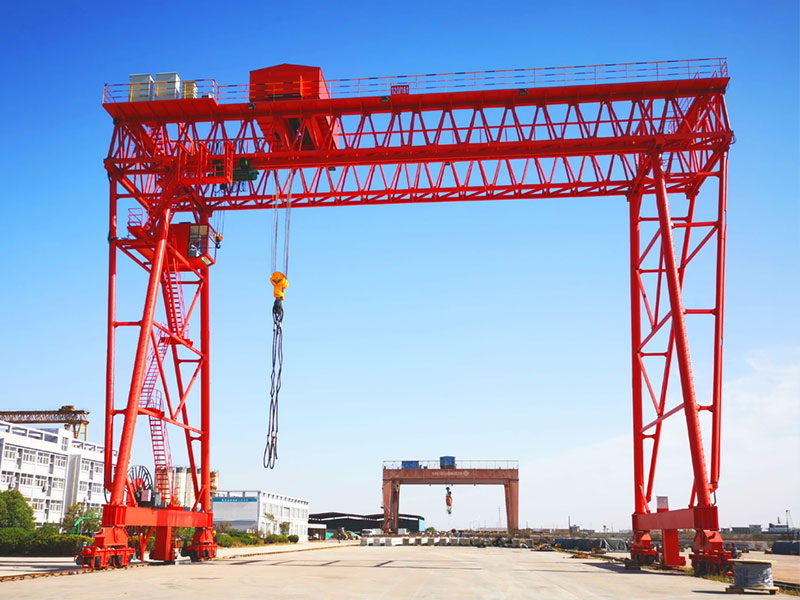
Gantry crane
Portable Gantry Crane for Sale: Adjustable, Foldable & Heavy-Duty Options
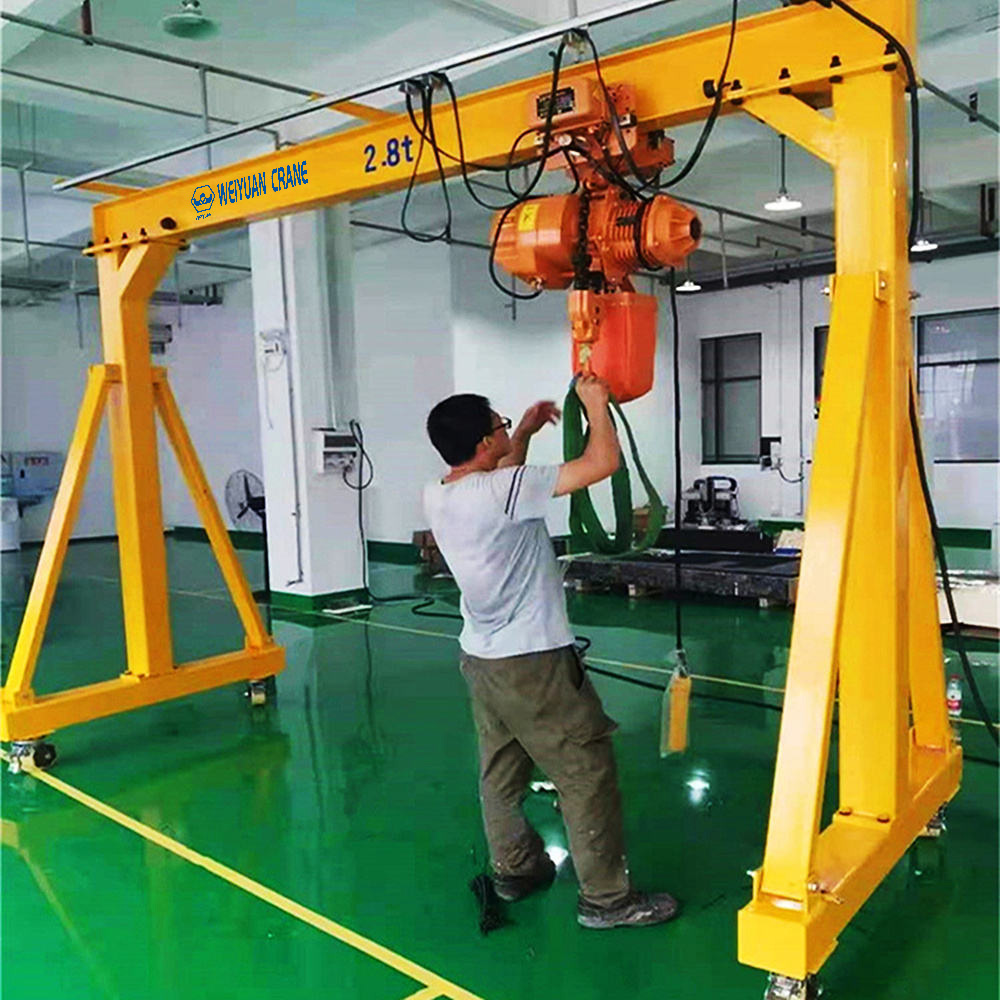
A portable gantry crane solves a problem that a fixed installation can’t: you need a lift today, in a space that doesn’t have a permanent crane, and you probably need it somewhere else next month. Buying the wrong one usually means overpaying for capacity you never use, or worse — bringing home a light-duty A-frame hoist and realizing on day one it can’t do the job your fixed-installation coworkers assumed a “crane” would handle.
Weiyuan’s portable gantry crane lineup ranges from 0.5-ton shop-floor units to 10-ton heavy-duty models, all engineered to move, adjust, and fold down without a forklift or a second crew — but “portable” covers a wide range of actual capability, and picking the right tier matters more than the word on the box.
What Makes a Portable Gantry Crane Different From a Fixed Installation
A fixed gantry crane — rail-mounted or otherwise anchored — is engineered for one location and one job, permanently. A portable gantry crane trades some of that structural permanence for mobility: caster wheels or a foldable frame let it be rolled, disassembled, or adjusted without the foundation work a full gantry crane or single girder gantry crane installation requires.
That trade-off shows up in three places: capacity (portable units typically top out lower than a fixed industrial gantry crane), span flexibility (many portable models have adjustable or telescoping legs to fit different bay widths), and assembly time (portable cranes are designed for a single technician to set up in under an hour, versus a multi-day erection for a rail-mounted RMG or RTG installation).
Portable Gantry Crane Types
Adjustable Height Gantry Crane
Telescoping or pinned-height legs let the crane’s lift height change to match different jobs — a low setting for engine work, a taller setting for larger equipment — without buying multiple cranes.
- Capacity: 0.5–5 tons
- Height range: typically 8–15 ft, adjustable in increments
- Best for: auto and small-engine shops, maintenance bays, workshops with varied lift heights
Foldable Gantry Crane
Frame folds flat for storage or transport — a common choice where floor space or storage room is limited between uses.
- Capacity: 0.5–2 tons
- Best for: small workshops, mobile service operations, occasional-use applications
Heavy-Duty Portable Gantry Crane
Steel-frame construction rated for regular industrial use, still mobile via caster wheels but built for higher, more frequent loads than a folding or aluminum-frame unit.
- Capacity: 3–10 tons
- Frame material: structural steel (vs. aluminum on lighter-duty models)
- Best for: fabrication shops, warehouses, and light industrial sites needing repositionable lifting without a rail-mounted or full gantry crane installation
Frame Material: Steel vs. Aluminum
Aluminum-frame portable gantry cranes are lighter and easier for one person to move, but generally cap out at lower capacities. Steel-frame units carry more weight and hold up better under frequent industrial use, at the cost of being harder to reposition solo.
Featured Product: Weiyuan PG-Series Portable Gantry Crane
[Product image placeholder]
The Weiyuan PG-Series combines adjustable-height steel legs with a heavy-duty caster wheel base, available in 1, 2, 3, and 5-ton capacities. Each unit ships pre-assembled with only the legs and girder requiring bolt-together assembly — typically under 45 minutes for one technician.
[View Product / Get Quote →]
How to Choose the Right Portable Gantry Crane
- Confirm your heaviest actual lift, including any rigging or attachments — size to that, not your average job.
- Measure your tallest lift requirement to confirm the adjustable height range covers it at both the low and high settings.
- Decide how often you’ll relocate it — occasional moves suit aluminum-frame or foldable models; daily repositioning across a facility favors a steel-frame caster model.
- Check your floor surface — caster wheels need a reasonably flat, load-rated floor; uneven or soft ground may require a different gantry crane category entirely.
- Confirm storage space if the crane won’t stay assembled between uses — a foldable frame may be worth the capacity trade-off.
Red Flags When Shopping for a Portable Gantry Crane
- No stated duty cycle or capacity derating at maximum height — many adjustable cranes carry a lower rated capacity at their tallest setting than at their lowest; a listing that doesn’t disclose this is a listing to question.
- Missing wheel load rating — a crane’s frame capacity means little if the caster wheels aren’t rated to match.
- No welded-vs-bolted specification — bolted-frame construction is standard for true portability; be cautious of “portable” cranes that are actually welded, semi-permanent structures.
- Unrealistically low pricing for stated capacity — heavy-duty steel portable cranes at aluminum-frame prices are a sign of understated capacity or thin steel gauge.
Frequently Asked Questions
Q: Can a portable gantry crane be used outdoors? Most steel-frame portable gantry cranes can be used outdoors on a hard, level surface, though extended outdoor exposure may require additional corrosion protection — confirm with the manufacturer if the crane will be stored outside long-term.
Q: How is a portable gantry crane different from a full gantry crane? A full gantry crane is a permanently installed structure, typically rail-mounted, engineered for a fixed location and higher sustained capacity. A portable gantry crane trades some capacity and structural permanence for the ability to be moved, adjusted, or folded by a small crew without foundation work.
Q: What capacity do I need for general workshop use? Most general automotive and light workshop applications fall in the 1–3 ton range; heavier fabrication or engine-swap work may call for a 5-ton or higher steel-frame model.
Q: Do portable gantry cranes need to be bolted to the floor? No — this is the defining feature of a portable gantry crane. Stability comes from the frame design and wheel base rather than a fixed foundation, though the crane should always be used on a rated, level surface within its specified operating conditions.
Q: Can I get a custom height or span on a portable gantry crane? Yes, though options are more limited than on a fixed gantry crane — most manufacturers offer several standard height and span combinations within each capacity tier rather than fully custom dimensions.
