


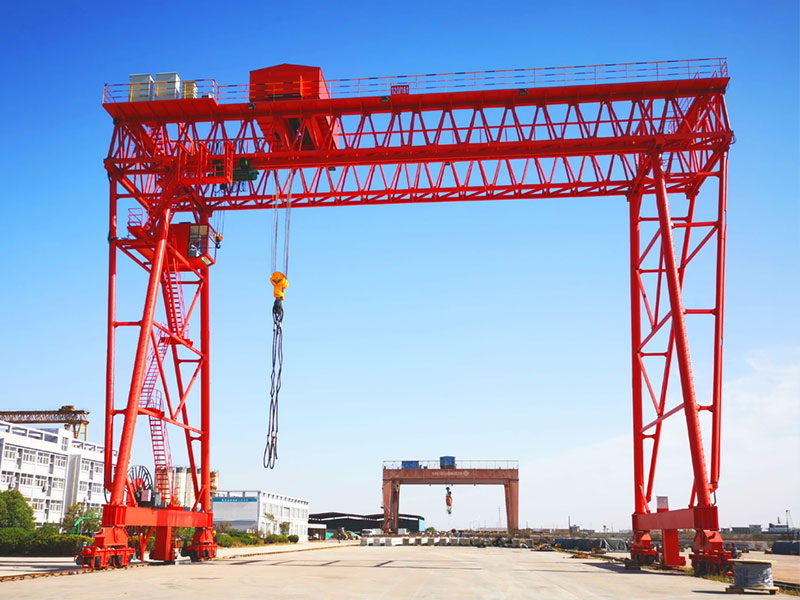
Gantry crane
Single Girder Gantry Crane for Sale: Cost-Effective Lifting for Yards and Workshops
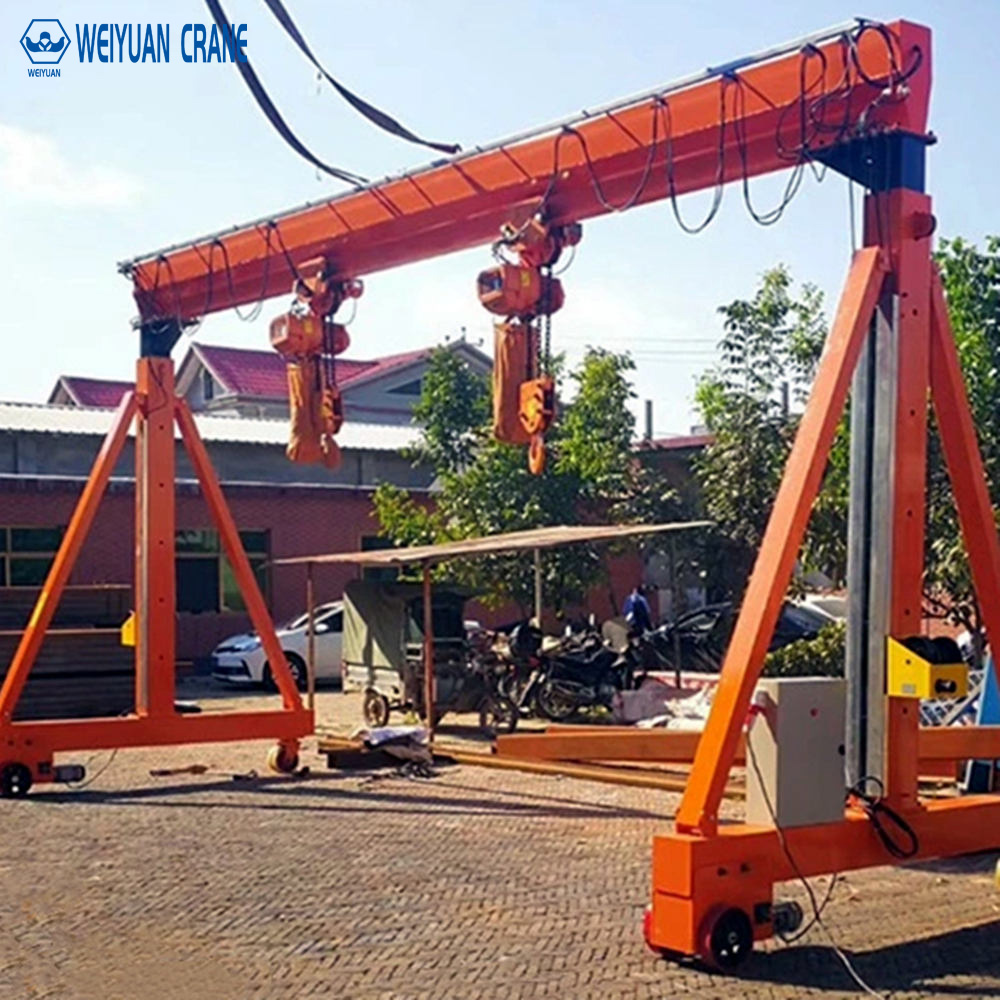
A single girder gantry crane is the workhorse of light-to-medium capacity outdoor and workshop lifting — the option most facilities reach for first when they need mechanized lifting without a building to hang a crane from, and without the cost of a double-girder structure they don’t actually need. The mistake many buyers make is either underpricing safety margin to save on the quote, or overpaying for a double girder gantry crane when a single girder design would have covered the job at meaningfully lower cost.
Weiyuan’s single girder gantry crane range covers 1 to 32 tons across rail-mounted and rubber-tyred configurations, sized to the buyer’s actual span and site conditions rather than a generic catalogue span.
What Makes a Single Girder Gantry Crane Different
A single girder gantry crane uses one main structural beam between the legs, with the hoist trolley riding directly on top of or along that single girder. Compared to a double girder gantry crane, this means a lighter overall structure, lower fabrication and installation cost, and — because there’s less steel to install — typically a faster project timeline.
The trade-off is capacity and hook approach: a single girder design tops out lower than an equivalent double girder gantry crane, and the trolley sitting on top of a single beam (rather than between two girders) results in a higher hook position for a given girder height, meaning slightly less usable lift height beneath the crane at the same building or leg clearance.
Single Girder Gantry Crane Configurations
Light-Duty Workshop Configuration
Sized for general workshop and small-yard use, often rail-mounted on a short travel path or configured as a semi-portable unit.
- Capacity: 1–10 tons
- Span: 9–20 meters
- Best for: small workshops, maintenance bays, light material handling yards
Medium-Duty Yard Configuration
The most common configuration for outdoor stockyards, precast concrete production, and general industrial material handling.
- Capacity: 10–20 tons
- Span: 15–28 meters
- Best for: steel and metals stockyards, precast concrete yards, general-cargo handling areas
Heavy Single Girder Configuration
The upper end of single girder capability before a double girder gantry crane becomes the more structurally efficient choice.
- Capacity: 20–32 tons
- Span: up to 35 meters
- Best for: larger stockyards and industrial sites where capacity needs approach, but don’t exceed, single girder design limits
Rail-Mounted vs. Rubber-Tyred Travel
A single girder gantry crane can be specified with either rail-mounted travel, for fixed, repeatable lanes, or rubber tyres, for flexible repositioning across a yard — the girder and capacity logic is the same either way; only the travel mechanism changes.
Featured Product: Weiyuan SG-Series Single Girder Gantry Crane
[Product image placeholder]
The Weiyuan SG-Series is available from 3 to 32 tons, in rail-mounted or rubber-tyred configurations, with span options engineered to the customer’s actual yard or building layout rather than fixed catalogue increments.
[View Product / Get Quote →]
How to Choose the Right Single Girder Gantry Crane
- Confirm your capacity sits within single girder range — if your heaviest lift approaches or exceeds roughly 30 tons, compare the cost of a heavier single girder unit against a double girder gantry crane before committing.
- Measure your actual site span rather than estimating — span should come from your yard or building dimensions, not a catalogue guess.
- Choose rail or rubber-tyred travel based on whether your operation needs fixed, repeatable positioning or flexible repositioning across the site.
- Check available headroom, since a single girder design’s higher hook position matters more in headroom-constrained sites.
- Confirm your duty cycle — light, occasional lifting and frequent, near-continuous lifting call for different duty-class specifications even at the same tonnage.
Red Flags When Shopping for a Single Girder Gantry Crane
- Span quoted without a site survey or drawing review — an accurate span comes from your actual site dimensions, not a generic estimate.
- No duty class specified — as with any gantry crane, duty class materially affects service life and should be part of every quotation.
- Pushing a double girder design without explaining why — if your load is comfortably within single girder range, a supplier should be able to explain clearly why they’re recommending the more expensive option, if they do.
- No leg configuration discussion (full gantry vs. semi-gantry) — if part of your site has usable building structure, this should come up in the buying conversation, since it can meaningfully change cost.
Frequently Asked Questions
Q: What’s the maximum capacity for a single girder gantry crane? Single girder gantry cranes typically top out around 30–32 tons before a double girder gantry crane becomes the more structurally efficient and cost-effective choice at higher capacities.
Q: Is a single girder gantry crane cheaper than a double girder gantry crane? Generally yes, at capacities where both are viable options — a single girder design uses less structural steel and is typically faster to install, making it the more cost-effective choice whenever your load doesn’t require a double girder’s higher capacity or lower hook approach.
Q: Can a single girder gantry crane be used outdoors? Yes — single girder gantry cranes are commonly used outdoors in yards, precast facilities, and general-cargo areas, typically specified with weatherproof electrical components and, where relevant, corrosion-resistant coatings for the intended environment.
Q: What span options are available for a single girder gantry crane? Span is determined by your site’s actual width requirements rather than fixed catalogue steps, though most single girder gantry cranes fall in the 9 to 35 meter range depending on capacity and structural design.
Q: Rail-mounted or rubber-tyred — which should I choose for a single girder gantry crane? Rail-mounted travel suits fixed, repeatable lanes and offers more precise positioning; rubber-tyred travel suits sites needing flexible repositioning without fixed rail infrastructure. The girder and capacity specification is the same either way — only the travel method changes.
