


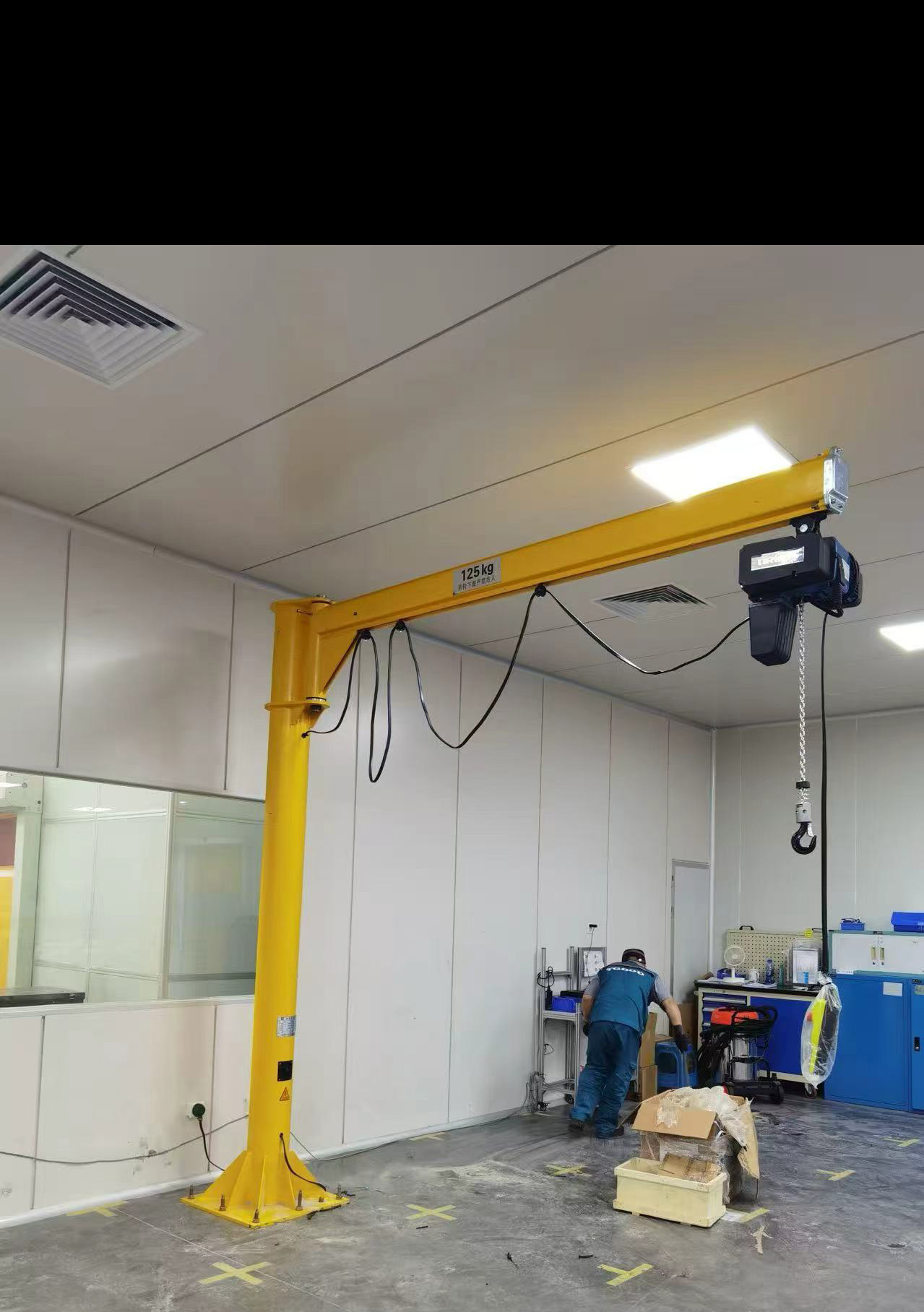
Jib Crane
Jib Crane Preventive Maintenance Guide: Extending Equipment Life & Preventing Costly Downtime

A jib crane is an indispensable lifting asset in modern machine shops, warehouses, and industrial plants. While structurally straightforward, its mechanical slewing bearings, gear reducers, structural joints, and electric hoists are subject to continuous dynamic loading and operational wear. Implementing a structured preventive maintenance program protects your capital investment, ensures continuous production uptime, and prevents minor mechanical issues from escalating into expensive emergency repairs.
Why Proactive Jib Crane Maintenance Matters
Waiting for a jib crane to break down before performing maintenance is the most expensive way to manage lifting equipment. An unexpected hoist breakdown or seized slewing bearing halts localized production, delays customer orders, and introduces safety hazards. A scheduled preventive maintenance program ensures that:
- Mechanical wear on gears, bearings, and wire ropes/chains is identified before failure occurs
- Lubrication films are maintained, significantly reducing friction, noise, and power consumption
- Structural integrity of column anchor bolts, boom welds, and pivots is verified systematically
- Equipment operating life is extended from 5–8 years to 15–20+ years of dependable service
- Repair costs are planned within scheduled maintenance windows rather than emergency shutdowns
Consistent preventive maintenance transforms equipment upkeep from an unpredictable cost center into an organized, value-preserving operational routine.
Key Strategies for an Effective Jib Crane Maintenance Program
- Establish a Rigorous Lubrication Schedule
Inadequate lubrication is the primary cause of premature component failure:
- Slewing Bearings & Pivot Bushings: Grease heavy-duty slewing ring bearings and top pivot pins every 1 to 3 months using high-pressure lithium grease. Rotate the boom during greasing to distribute lubricant evenly.
- Hoist Wire Rope / Load Chain: Apply approved wire rope lubricant or chain oil monthly. Lubricant penetrates inner strand cores, preventing internal friction and rust.
- Trolley Wheel Bearings & Pinions: Clean and re-grease drive pinions and trolley wheel bearings every 6 months to ensure smooth, low-effort traversing along the I-beam.
- Monitor Foundation Anchor Bolt Torque and Baseplate Grout
The foundation bolts of a freestanding jib crane absorb immense cyclic overturning moments:
- Check the tightening torque of Grade 8.8 / 10.9 anchor bolts using a calibrated torque wrench every 3 months during the first year, and semi-annually thereafter.
- Inspect foundation concrete grout pads for chipping, cracking, or water pooling that could cause sub-surface bolt corrosion.
- Inspect Cantilever Beam Deflection and Flange Wear
The lower flange of the jib arm acts as the running track for the hoist trolley:
- Measure lower flange thickness periodically to detect abrasive wear caused by steel trolley wheels.
- Inspect the cantilever weld seam at the column pivot for micro-cracks or fatigue signs using visual inspection or liquid penetrant testing (PT).
- Verify that mechanical end-stops and rubber buffers are securely bolted at the tip of the boom.
- Service the Electric Hoist and Motor Brake Assembly
The hoist motor brake is the critical component holding suspended loads:
- Measure brake lining wear and check the armature air gap semi-annually per the manufacturer’s manual.
- Test upper and lower travel limit switches under no-load conditions to confirm immediate power cut-off.
- Inspect the wire rope guide ring for groove wear to prevent rope cross-winding on the drum.
- Inspect Electrical Wiring, Festoons, and Collector Rings
Continuous 360-degree rotation or 180-degree swinging can cause wear on electrical supply lines:
- Inspect C-track festoon cable trolleys to ensure smooth gliding without pinched or sagging flat cables.
- On continuous 360-degree motorized cranes, inspect slip-ring carbon brushes for wear, dust buildup, and secure electrical contact.
- Test the emergency stop button on the operator pendant or wireless remote to confirm instant main-contactor drop-out.
Real-World Examples of Maintenance Cost Savings
A structural steel fabrication shop in Birmingham instituted a quarterly torque and lubrication audit for its six pillar jib cranes. During an audit, technicians discovered three loose anchor bolts on a 3-ton crane before any structural shifting occurred. Correcting the torque prevented severe foundation failure, saving an estimated £12,000 in concrete re-pouring and production downtime.
Similarly, a logistics warehouse in Antwerp replaced traditional manual greasing with an automatic single-point lubricator on the top pivot pins of its wall-mounted jib cranes. The consistent lubrication extended bushing life by over 300% and reduced scheduled maintenance labor hours by 40 hours annually.
Benefits for Local Businesses
A proactive maintenance strategy delivers immediate and long-term business returns:
- Maximum Uptime: Eliminates unexpected workstation downtime and keeps production schedules on track.
- Lower Lifetime Costs: Routine grease and bolt checks cost a fraction of emergency component replacements.
- Enhanced Workplace Safety: Ensures structural and electrical safety devices operate reliably when needed most.
- Higher Asset Value: Well-maintained lifting equipment retains higher resale and operational value over decades.
- Streamlined Regulatory Audits: Documented maintenance records provide indisputable proof of safety compliance for insurance and regulatory inspectors.
Preventive maintenance is the cornerstone of safe, cost-effective lifting operations. By adhering to systematic lubrication, structural torque audits, and electrical inspections, industrial facilities can ensure their jib cranes remain productive, safe, and dependable assets for decades to come.
