


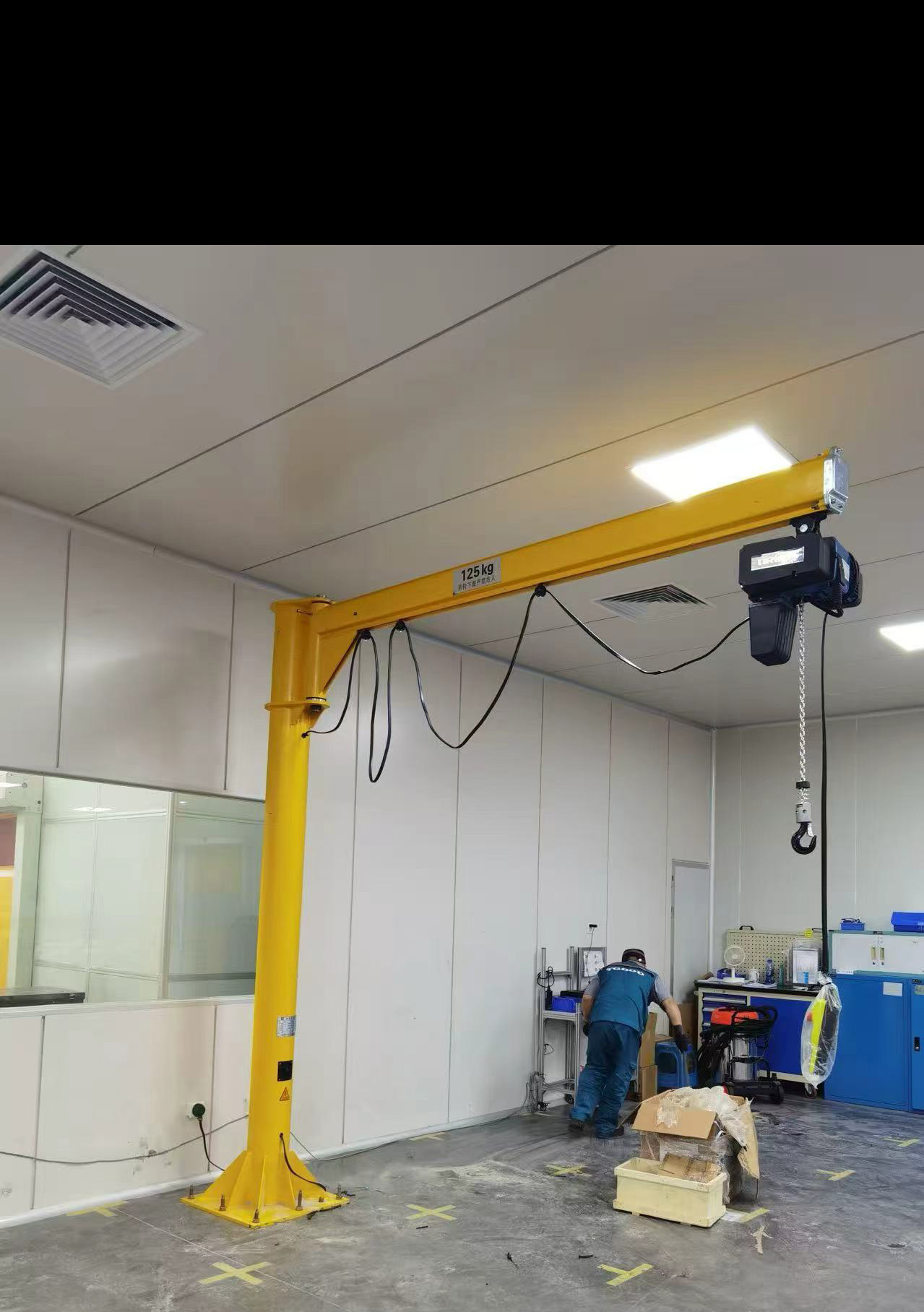
Jib Crane
Wall Mounted Jib Crane for Sale: Dedicated Lifting Without a Foundation
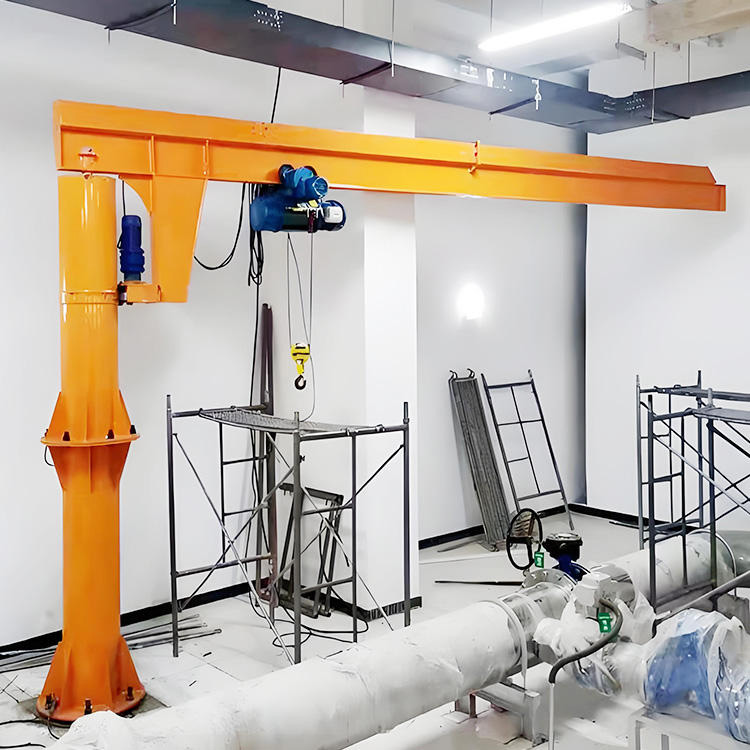
A wall mounted jib crane solves a problem a shared bridge crane can’t: one workstation that needs its own always-available lifting point, without the cost of a new foundation. Bolted to an existing wall or building column, it rotates through up to 180° to serve exactly the working radius that station needs — but only if the wall it’s attached to was actually verified for the rotational loading a jib arm creates, which is where a surprising number of buyers get caught out after installation.
Weiyuan’s wall mounted jib crane range covers 125 kg to 5 tons, engineered to the customer’s confirmed wall or column rating rather than a generic bracket size.
What Makes a Wall Mounted Jib Crane Different
Unlike a floor-mounted (pillar) jib crane, which stands on its own independent foundation, a wall mounted jib crane attaches directly to an existing wall bracket or building column, using that structure to carry both the crane’s weight and the moment loading created by a rated load at full arm extension through the rotation range. Where adequate wall support already exists, this generally makes a wall-mounted unit the more economical choice — no separate foundation pad required.
The trade-off is rotation range: a wall-mounted jib crane typically covers up to 180°, compared to the full 270°–360° a floor-mounted unit can achieve, since the wall itself sits along one side of the crane’s potential swing.
Wall Mounted Jib Crane Configurations
Light-Duty Precision Configuration
| Model | Capacity | Reach (Arm Length) | Typical Applications | Control | Hoist Type |
|---|---|---|---|---|---|
| WY-WJ-03 | 125–500 kg | 2–4 m | Electronics assembly, precision small-parts handling | Pendant/remote | Chain hoist |
| WY-WJ-05 | 0.5–1 ton | 3–5 m | General workshop lifting, tool room support | Pendant/remote | Chain hoist |
| WY-WJ-10 | 1–2 tons | 3–6 m | CNC machine loading, maintenance bay lifting | Pendant/remote | Chain or wire rope |
| WY-WJ-16 | 2–3.5 tons | 4–7 m | Medium-duty fabrication station lifting | Remote | Wire rope |
| WY-WJ-20 | 3.5–5 tons | 4–8 m | Upper limit of wall-mounted range — heavier fabrication and larger machine-loading stations | Remote | Wire rope |
Sized for precision assembly, electronics, and light machine-loading work where fine positioning matters more than raw capacity.
- Capacity: 125–500 kg
- Arm length: 2–4 meters
- Best for: electronics assembly, small parts handling, precision workstations
Standard Workshop Configuration
The most common configuration for general machine shop and workshop wall-mounted applications.
- Capacity: 0.5–2 tons
- Arm length: 3–6 meters
- Best for: CNC machine loading, general workshop lifting, maintenance bays
Heavy-Duty Wall Mounted Configuration
The upper end of wall-mounted capability, requiring a more substantial wall or column rating to support.
- Capacity: 2–5 tons
- Arm length: 4–8 meters
- Best for: larger fabrication stations and heavier machine-loading applications where wall structure is adequately rated
Mast-Style Alternative
Where the ideal mounting location is a building column rather than a flat wall, a mast-style jib crane ties into that column directly — covering the same rotation range as a wall-mounted unit but using a different structural connection detail.
Featured Product: Weiyuan WJ-Series Wall Mounted Jib Crane
[Product image placeholder]
The Weiyuan WJ-Series is available from 125 kg to 5 tons, with arm lengths engineered to the customer’s actual workstation radius and wall or column structural rating confirmed before fabrication.
[View Product / Get Quote →]
How to Choose the Right Wall Mounted Jib Crane
- Get your wall or column structurally assessed first — feasibility depends entirely on confirmed moment-loading capacity, not how substantial the wall looks.
- Confirm your heaviest actual lift at the workstation, including tooling and a safety margin.
- Measure the actual working radius the station needs, rather than assuming a standard arm length.
- Map your required rotation angle — most wall-mounted applications need well under the full 180° maximum, which can affect bracket positioning.
- Check for any obstruction within the planned swing radius before finalizing arm length and mounting position.
Red Flags When Shopping for a Wall Mounted Jib Crane
- No structural assessment of the mounting wall or column — this is the single most important, and most commonly skipped, verification step.
- A capacity quote with no moment-loading data — a wall-mounted jib crane’s rating depends on rotational loading, not just static weight; a quote without this data is incomplete.
- No rotation stop specification — mechanical rotation stops are a safety-critical feature and should be part of every wall-mounted jib crane order.
- Assuming existing bolts or brackets from a prior installation are adequate — reused mounting hardware should be re-verified for the new crane’s specific load, not assumed to carry over.
Frequently Asked Questions
Q: How do I know if my wall can support a wall mounted jib crane? This requires a structural engineering assessment confirming the wall or column can carry the moment loading created by a rated load at full arm extension through the crane’s rotation range — not just its static weight. This should be confirmed before ordering, not assumed from the wall’s general appearance.
Q: What rotation range does a wall mounted jib crane typically cover? Most wall-mounted jib cranes rotate up to 180°, since the wall itself occupies one side of the crane’s potential swing. If you need full 360° coverage, a floor-mounted (pillar) jib crane is the appropriate alternative.
Q: What’s the difference between a wall-mounted and a mast-style jib crane? A wall-mounted jib crane attaches to a flat wall bracket; a mast-style jib crane ties into an existing building column instead. Both cover similar rotation ranges and serve the same purpose — the choice depends on which structural element is available and adequately rated at your workstation.
Q: How much weight can a wall mounted jib crane lift? Wall mounted jib cranes typically range from 125 kg for light precision work up to about 5 tons for heavier workshop applications, with the exact capacity limited by both the crane’s own design and the wall or column’s confirmed structural rating.
Q: Can a wall mounted jib crane be relocated to a different wall later? Generally not without re-verifying the new wall’s structural rating from scratch and re-installing the mounting bracket — relocation is more involved than for some other equipment types, so it’s worth confirming the mounting location is a long-term fit before installation.