


Jib Crane
Wall-Mounted vs. Freestanding Jib Cranes: How to Choose the Right System for Your Facility
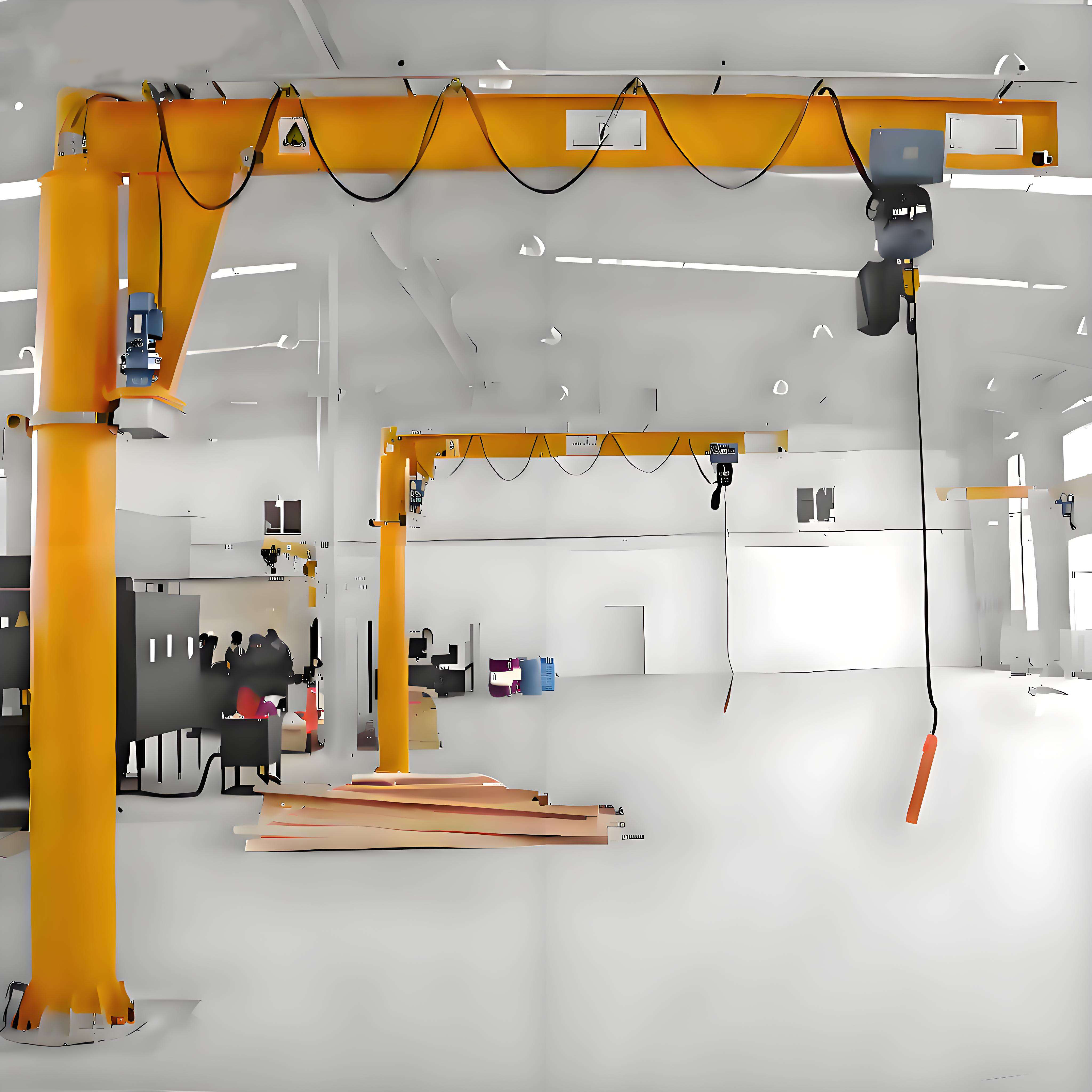
Selecting the right workstation crane is a critical capital decision for industrial plant managers, warehouse supervisors, and manufacturing engineers. Jib cranes offer an efficient, cost-effective way to handle localized lifting up to 16 tons, but choosing between a freestanding pillar model and a wall-mounted bracket system often determines the overall success of the installation. Both systems provide localized lifting coverage, but they differ significantly in structural requirements, rotation capabilities, floor footprint, and total installation costs.
Why Choosing the Right Jib Crane Configuration Matters
Installing the wrong crane configuration can result in costly building modifications, restricted material flow, or inadequate lifting radius. Local manufacturing bays often operate with tight floor space and complex overhead utilities. Choosing the optimal configuration ensures that:
- Floor space is utilized efficiently without obstructing forklift travel or production lines
- Building structural columns are not subjected to unverified torsional and pull-out stresses
- Lifting hook coverage matches the precise layout of workstations and staging areas
- Installation downtime is minimized through pre-engineered mounting methods
- Equipment capital costs align directly with project budget constraints
A properly matched jib crane system eliminates production bottlenecks while maximizing the utility of existing building structures.
Key Strategies for Selecting the Optimal Jib Crane
- Evaluate Facility Floor Space and Traffic Flow
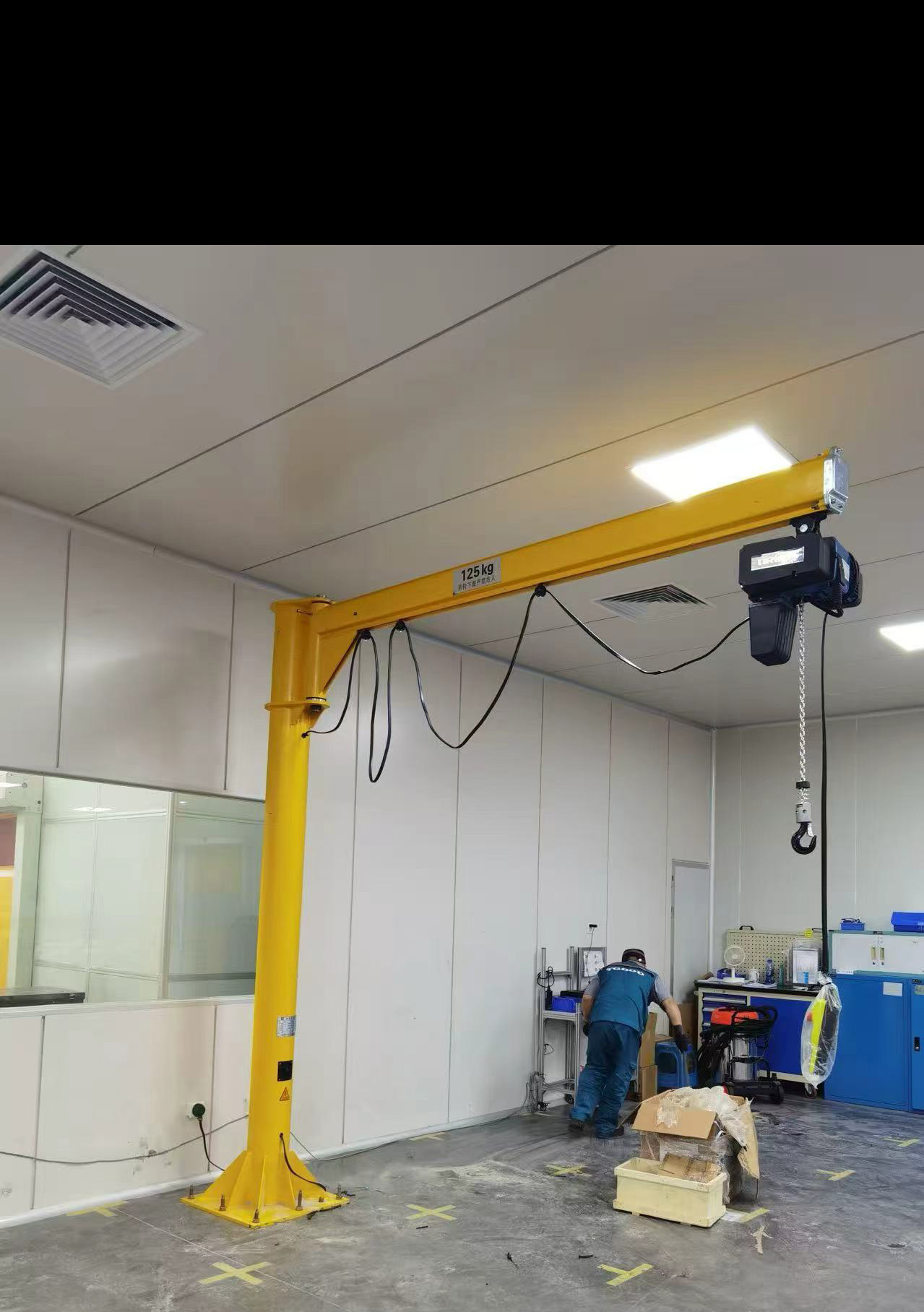
Freestanding jib cranes require a dedicated concrete foundation and baseplate, occupying a small portion of floor space. If shop-floor space is at a premium or forklift traffic runs close to building walls, a wall-mounted or column-mounted jib crane eliminates floor obstruction entirely, keeping travel aisles clear. - Analyze Rotation Angle and Hook Coverage Requirements
Determine the required slewing angle for your material transfer:
- Freestanding Jib Cranes: Offer full 360-degree rotation (or 270-degree with mechanical stops), making them ideal for servicing circular work cells or bridging two parallel workstations.
- Wall-Mounted Jib Cranes: Typically provide 180-degree to 200-degree rotation along a building wall or column, ideal for linear workstations positioned along exterior walls.
- Verify Building Structural Integrity and Foundation Capacity
Wall-mounted cranes transfer high pull-out and thrust forces into existing building columns. A certified structural engineering review of the building column, welds, and footings is mandatory before installation. Freestanding cranes require an independent reinforced concrete foundation pad, making them suitable for pre-engineered metal buildings with lighter wall columns. - Compare Total Installation Cost and Lead Time
Wall-mounted cranes generally have lower equipment costs and require no foundation excavation, provided the building columns are structurally certified. Freestanding cranes involve higher equipment costs and foundation concrete pouring, but they offer complete independence from building columns and can be positioned anywhere on the factory floor. - Assess Future Facility Reconfigurability
Consider whether your production layout is permanent or subject to periodic changes. Freestanding jib cranes mounted on portable baseplates or standard chemical anchor bolts can be relocated to new workstations more easily than wall-mounted systems tied into specific building structural columns.
Real-World Examples of Efficiency Gains
A packaging machinery manufacturer in Milwaukee installed five wall-mounted tie-rod jib cranes along the structural building columns of its final assembly bay. By mounting directly to the existing steel columns, the plant saved over $25,000 in concrete excavation costs and kept the central assembly aisle completely open for rolling transport carts.
Conversely, an agricultural equipment repair shop in Calgary chose two 5-ton freestanding pillar jib cranes positioned in the center of their maintenance bays. The 360-degree rotation allowed each crane to service four separate repair bays simultaneously, reducing overall crane investment by 50% compared to installing separate wall units.
Benefits for Local Businesses
Understanding the structural and operational differences between jib crane types helps facilities achieve:
- Optimized Space Utilization: Preserves valuable floor square footage or capitalizes on open central shop floor areas.
- Reduced Capital Expenditure: Matches crane mounting to existing structural capabilities without unnecessary building reinforcement.
- Improved Ergonomic Safety: Provides tailored lifting power that eliminates manual handling across diverse workstation layouts.
- Targeted Production Velocity: Positions hoisting power directly where repetitive lifts occur, reducing machine wait times.
- Faster Project Commissioning: Smooth project execution through verified engineering drawings and foundation templates.
Both freestanding and wall-mounted jib cranes provide exceptional workstation lifting efficiency when properly matched to site conditions. By carefully evaluating building structural limits, rotation requirements, and floor space constraints, plant managers can select the perfect jib crane configuration to support long-term operational success.
