


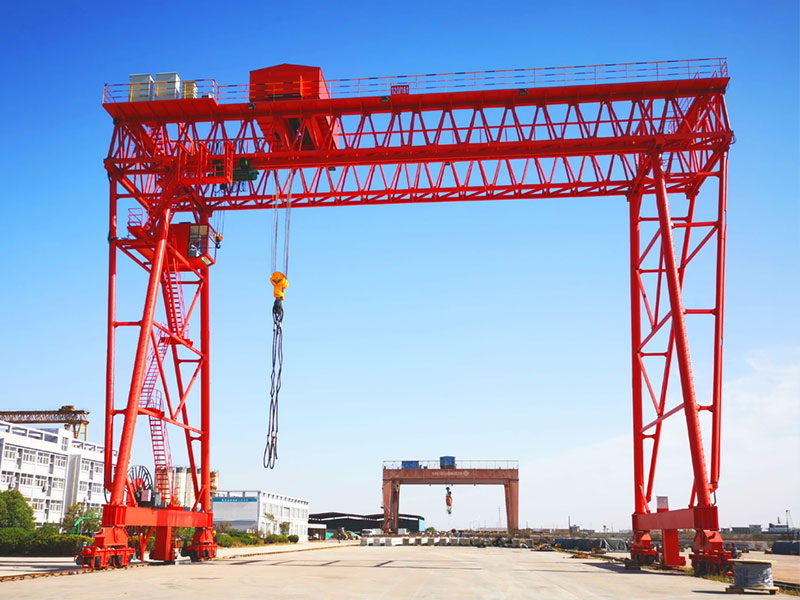
Gantry crane
Rubber Tyred Gantry Crane for Sale: Flexible Yard and Port Lifting
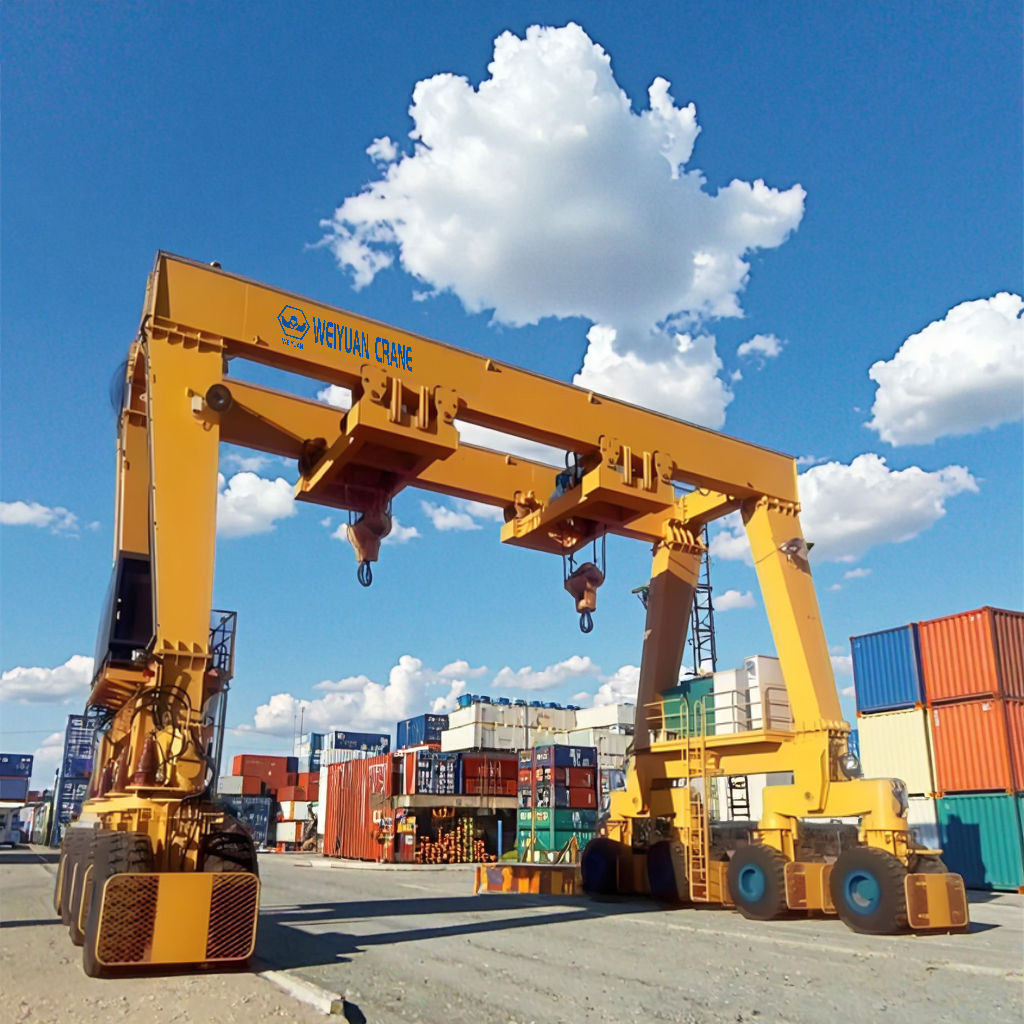
A rubber tyred gantry crane — commonly called an RTG crane — earns its keep in exactly the situation where a rail-mounted crane can’t: a yard or terminal where the crane needs to reposition between rows, steer around obstacles, or cover a layout that changes as operations grow. Buying an RTG without confirming your surface rating, steering requirements, and duty cycle is one of the more expensive mistakes a terminal or yard operator can make — these are large capital purchases with long service lives, and the wrong configuration is difficult to correct after installation.
Weiyuan supplies rubber tyred gantry cranes from general-duty yard configurations through container-handling specifications, engineered around the specific operating pattern of your site rather than a generic catalogue spec.
What Makes a Rubber Tyred Gantry Crane Different
Unlike a rail-mounted gantry crane (RMG) or a fixed-rail full gantry crane, an RTG crane travels on rubber tyres across a paved surface — no rail infrastructure required. This gives an RTG crane a flexibility that neither a rail-mounted gantry nor an indoor overhead crane can match: it can reposition between yard rows, and steering-equipped models can even turn to work a different lane entirely.
That flexibility comes with trade-offs worth understanding before you buy: tyre wear is an ongoing operating cost that rail-mounted wheels don’t carry, achievable travel speed is typically lower than an equivalent RMG crane, and the paved surface itself needs to be engineered to the crane’s tyre-load rating — a cost that’s easy to underestimate during initial budgeting.
Rubber Tyred Gantry Crane Types
Container-Handling RTG
Built to the dimensional and lifting-capacity standards used across container terminals, with a spreader-compatible hoist and a span sized for standard container stack widths.
- Capacity: 35–65 tons under the spreader
- Stacking height: typically five to seven containers high
- Best for: container terminals and intermodal yards
General-Duty Yard RTG
A lighter-capacity configuration for general cargo, steel, or bulk-material yards that don’t require container-spec dimensions or stacking heights.
- Capacity: 10–35 tons
- Best for: general-cargo ports, steel yards, and industrial material yards needing flexible positioning without container-terminal-scale investment
Steering vs. Non-Steering Configuration
A non-steering RTG crane travels in a straight line along its operating lane; a steering-equipped RTG can turn to reposition between lanes entirely, at added mechanical complexity and cost. Steering capability is worth specifying only where your actual yard layout requires cross-lane repositioning — many single-lane operations don’t need it.
Featured Product: Weiyuan RTG-Series Rubber Tyred Gantry Crane
[Product image placeholder]
The Weiyuan RTG-Series is available in 20, 35, and 50-ton configurations, with optional steering axles and a control cab or remote-operation package. Each unit is engineered to the customer’s specific yard layout and paved surface rating rather than a fixed catalogue span.
[View Product / Get Quote →]
How to Choose the Right Rubber Tyred Gantry Crane
- Confirm your actual container or load weight range, not an assumed industry-standard figure — general cargo and container specs differ significantly.
- Map your yard layout to decide whether steering capability is genuinely needed or whether a non-steering configuration covers your operating pattern.
- Verify your paved surface rating against the crane’s tyre-load specification before finalizing an order — this is a common and costly oversight.
- Decide on cab vs. remote operation, based on your staffing model and whether operator sightlines across the yard are adequate for remote control.
- Confirm span and stacking height against your actual yard dimensions, not a generic container-terminal standard, if you’re not running container-spec operations.
Red Flags When Shopping for a Rubber Tyred Gantry Crane
- No stated tyre-load rating — this determines your paved-surface requirement and is essential for budgeting site preparation correctly.
- Vague duty-cycle classification — an RTG crane specified for occasional use will wear out fast under continuous port operations; confirm the quoted duty class matches your actual usage pattern.
- Steering capability bundled in without asking whether you need it — a needless added cost if your yard layout doesn’t require cross-lane repositioning.
- No commissioning or load-testing plan included — an RTG crane of this scale should never go into service without documented load testing across its full travel range.
Frequently Asked Questions
Q: What’s the difference between an RTG crane and an RMG crane? An RTG (rubber tyred gantry) crane travels on rubber tyres across a paved surface, allowing it to reposition or steer between lanes without fixed rail infrastructure. An RMG (rail-mounted gantry) crane travels on a fixed rail, offering more precise positioning and higher achievable speed, but less flexibility to reposition outside its rail path.
Q: Do I need a container-spec RTG crane for a general cargo yard? No — container-handling RTG cranes are built to specific dimensional standards for container stacking that general cargo, steel, or bulk-material yards don’t need. A general-duty yard RTG configuration is typically more cost-effective for non-container applications.
Q: What surface do I need for a rubber tyred gantry crane? A paved, load-rated travel surface across the crane’s full operating area, engineered to the crane’s tyre-load specification under full working capacity. This should be confirmed with a civil engineer against the crane manufacturer’s load data before construction.
Q: How often do RTG crane tyres need to be replaced? This depends heavily on duty cycle, load, and surface quality — high-cycle container terminal operations wear tyres faster than light general-duty use. Your supplier should be able to provide an expected service interval based on your specific operating pattern.
Q: Can an RTG crane be converted to rail-mounted operation later? Generally no — RTG and RMG cranes are different structural and mechanical designs from the ground up. If there’s a realistic chance you’ll want fixed-rail operation later, that decision is worth making before purchase, not after.
