


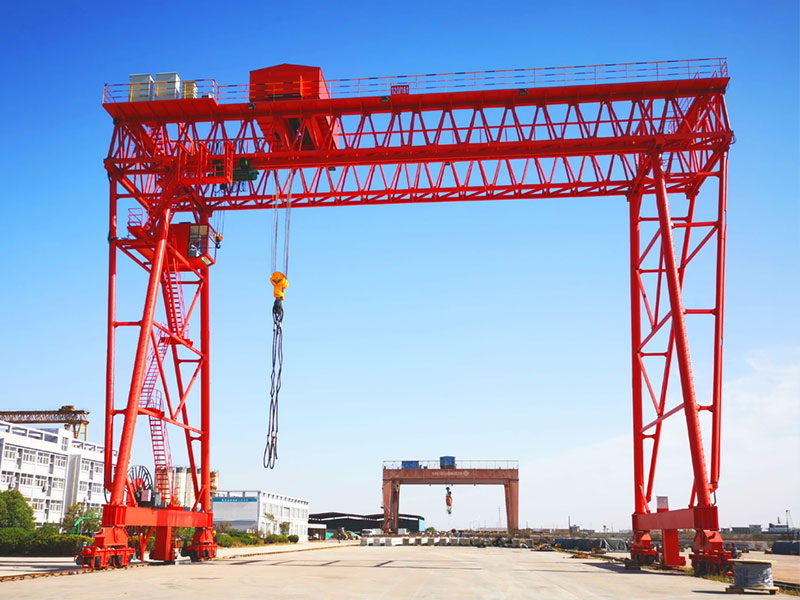
Gantry crane
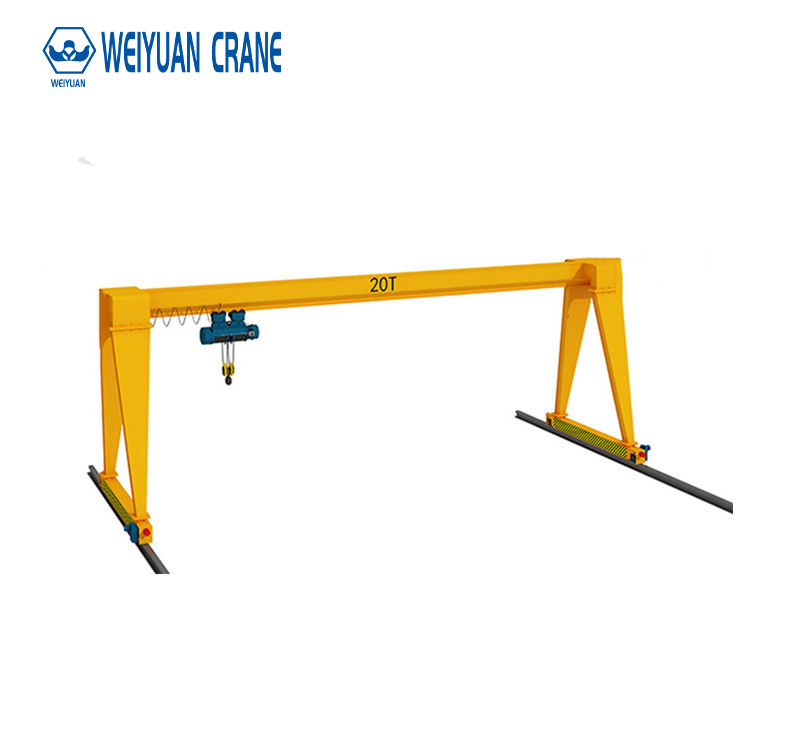
Semi-Gantry Crane (Single-Leg Type)
Product Overview
The Semi-Gantry Crane combines one end running on an elevated runway (like a standard overhead crane) with the opposite end supported by a ground-level leg running on a floor-mounted rail. This hybrid configuration is chosen when an existing building structure can support a runway beam on one side only, or when full gantry legs on both sides would obstruct floor space or existing equipment.
Structure Composition
- Main Girder: Single or double girder, sized according to capacity and span, same as a standard bridge crane girder.
- Elevated End: An end truck runs directly on an overhead runway beam, supported by the building’s columns or a dedicated steel structure — no ground-level leg on this side.
- Ground Leg: A single vertical leg supports the opposite end of the girder, running on a rail fixed to the floor.
- Trolley/Hoist: Electric hoist trolley (single girder) or crab trolley (double girder), depending on capacity.
Application
- Facilities where one side of the building has adequate structural steel for a runway, but the other side is open floor space
- Retrofits where installing a full gantry or full overhead crane is impractical
- Workshops with existing equipment or obstructions along one side that a floor-mounted leg would avoid
Key Features
- Reduces the amount of new structural steel needed compared to a full overhead crane runway on both sides
- Avoids obstructing floor space on the runway side, while still providing floor-level support flexibility on the leg side
- Can be engineered as single or double girder depending on capacity and span requirements
Technical Parameters (Reference Range)
Lifting Capacity: 1–50 t
Span: 6–25 m
Working Class: A4–A6
Control Mode: Cab, pendant, or remote control
Safety Devices
Overload limiter, hoist and travel limit switches, rail clamps on the ground-leg side, anti-collision devices, emergency stop system.
Customization Options
Leg height and rail gauge to match existing floor layout, runway-side end truck sized to match the existing building’s runway beam and rail, capacity and span engineered to the specific structural constraints of the site.
